

With more people reading manga and webtoons (aka vertical scroll comics) than ever before, Beat’s Bizarre Adventure gives three writers an opportunity each week to recommend some of their favorite books and series from Japan, Korea, and elsewhere. This week we have hunting dragons in the clouds, priestesses on the run, and, of course, young working adult malaise. And cats.
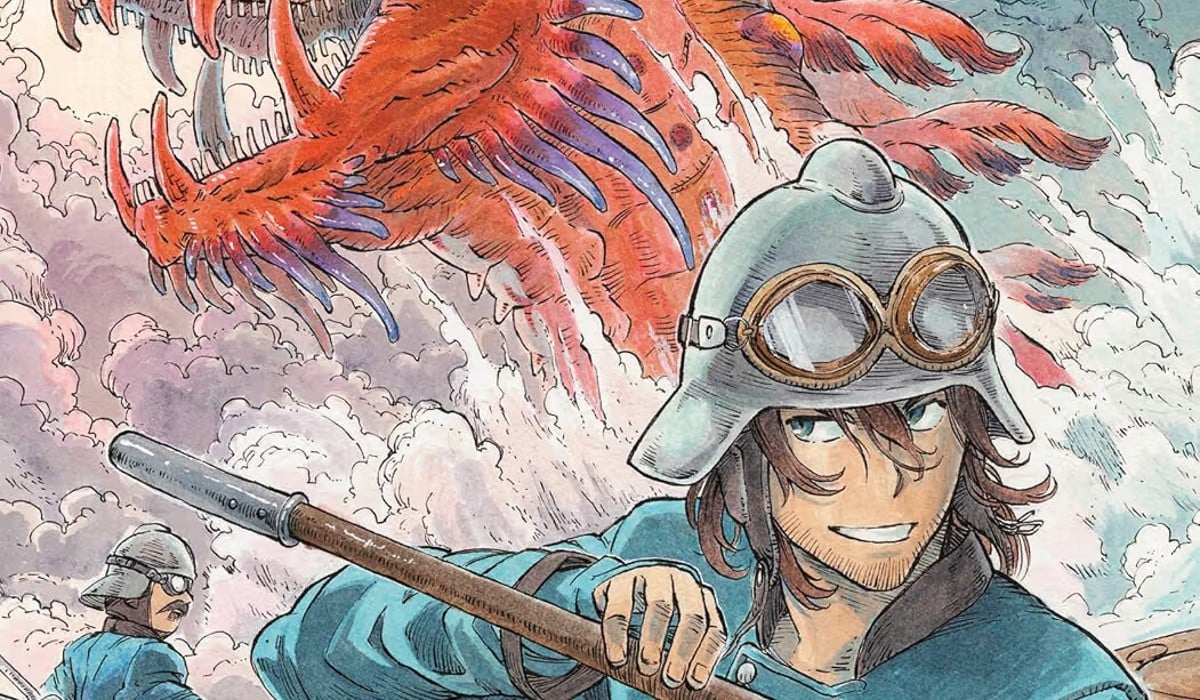
Drifting Dragons
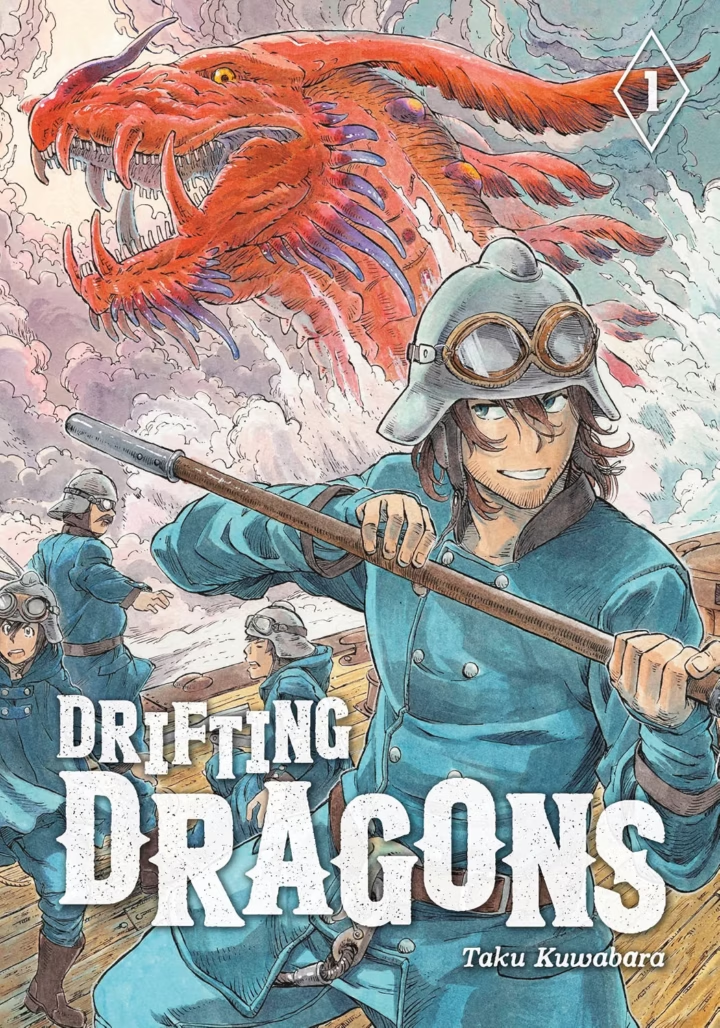
Writer/Artist: Taku Kuwabara
Translation: Adam Hirsch
Lettering: Thea Willis
Editing: Sarah Tilson
Publisher: Kodansha
Imagine a world where dragons are like whales in the sky, sought after by “drakers”, specialized air ships designed for the equivalent of whaling in this world. This is the tale of the Quin Zaza, one such draker vessel that soars through the clouds as it hunts for dragons in the sky.
Drifting Dragons carries a hint of the Monster Hunter series, as well as Delicious in Dungeon, as the Quin Zaza hunts dragons for their meat. Depending on the type of dragon, their meat can be made into Dragon Tail Meat Sandwiches, Dragonet Alla Diavola (Rotisserie Dragon), Pressed Dragon Liver Confit, and so on. There is such attention to detail with the variety of meals and how they sustain the crew of the Quin Zaza, as well as the locals who rely on drakers to provide them with food.
The artist Taku Kuwabara’s use of hatching adds so much detail, all while giving the art a fantasy-esque feel. The hatching is crucial, because Kuwabara otherwise makes very sparse use of screen tones and draws characters with simple designs. It’s impressive technical work that works so well for this type of story.
The early chapters of Drifting Dragons bring dragon-of-the-week energy with a main dish or meal as the focus. They also leave space for the reader to soak in the world-building that is slowly being established as the chapters go on. With a premise as strong as this, there is no doubt there is a lot to explore with the characters, the setting, and even the dragons themselves.
Not enough people are talking about this series, and it’s a shame! It deserves so much more. — Justin Guerrero
The Inconvenient Life of an Arousing Priestess
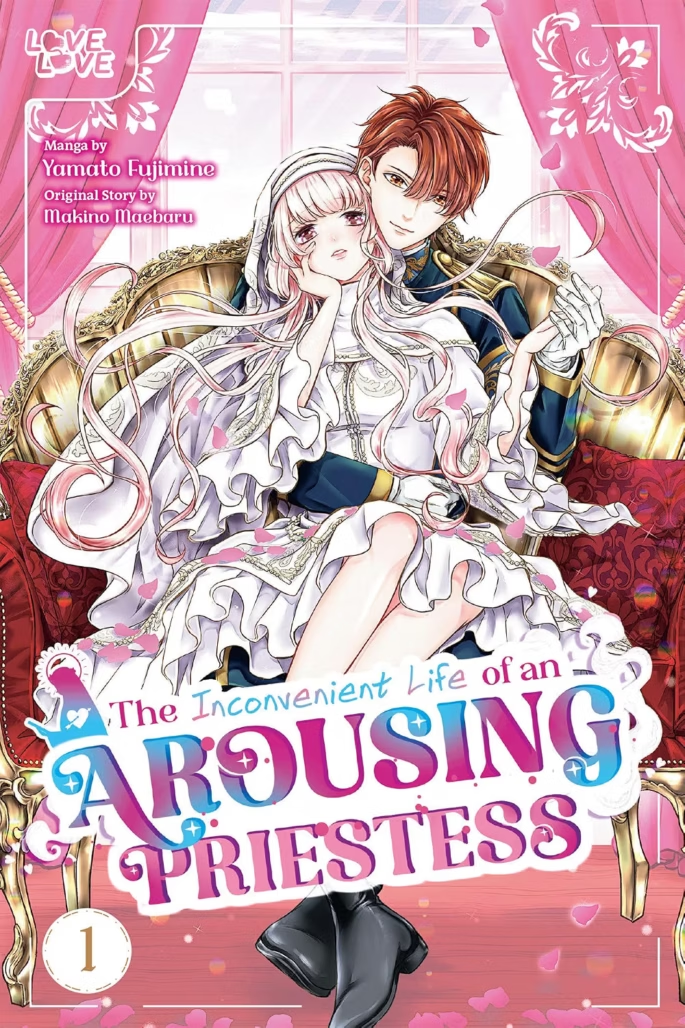
Original Story: Makino Maebaru
Adaptation and Art: by Yamato Fujimine
Translation: Jacqueline Fung
Lettering: Vibrant Publishing Studio
Editor: Becca Chen
Publisher: TOKYOPOP
“My Priestess Powers are far stronger than most. Many people would get aroused from just one spell.”
A manga adaptation of Makino Maebaru‘s original novel series, published under TOKYOPOP’s LoveLove romance imprint, Yamato Fujimine‘s The Inconvenient Life of an Arousing Priestess follows the adventures of “the Lecherous Priestess” of the Kingdom of Koffe, Monica Leglus, and the prince of the Empire of Belktrias, Richard il Belktrias. At the start of the story, ‘Miss Monica’ (as Richard calls her) is exiled from her home country upon unfounded accusations of infidelity made by the prince—and her one time fiancé—of Koffe. Her close friend Richard invites her back to his kingdom for safe-haven and to aid him in his own efforts.
Positive points first: I do like the characters of Arousing Priestess, from Miss Monica, to Richard, to the king and queen of Belktria, as well as supporting characters Dalius and Celaras. The series approaches themes of sexual repression and prudence, the casting aside of women’s bodies when they are no longer seen as useful. Not to mention how the machinations of society can lead someone to isolate themselves from those around them. These themes are never made explicit in the dialogue, but are ever-present nevertheless. It’s powerful stuff when put to good use within the story.
Negative points: the lack of drama between the characters left me wanting a meatier story. While there is intrigue happening behind the scenes, not enough bubbled to the forefront to compel me. The selective deployment of Miss Monica’s unique arousing abilities within the story leads to scenes that can be either pretty strong or lackluster, which frustrated and impressed me at different times. There’s also lots of background information peeking through that I wish received more attention or was easier to understand.
Fujimine’s art fits the shojo style quite well. Everyone is doe eyed and all smiles, which makes for a welcoming atmosphere. The designs are also a Trojan Horse for more adult or gory moments. Although this book is rated 12+, there are a few scenes where it becomes 15+ or even 18+ depending on how you look at it.
The Inconvenient Life of an Arousing Priestess is not for everyone. But there are plenty of people out there who I think would enjoy it, so I want to put it on their radar. — Derrick Crow
She and Her Cat
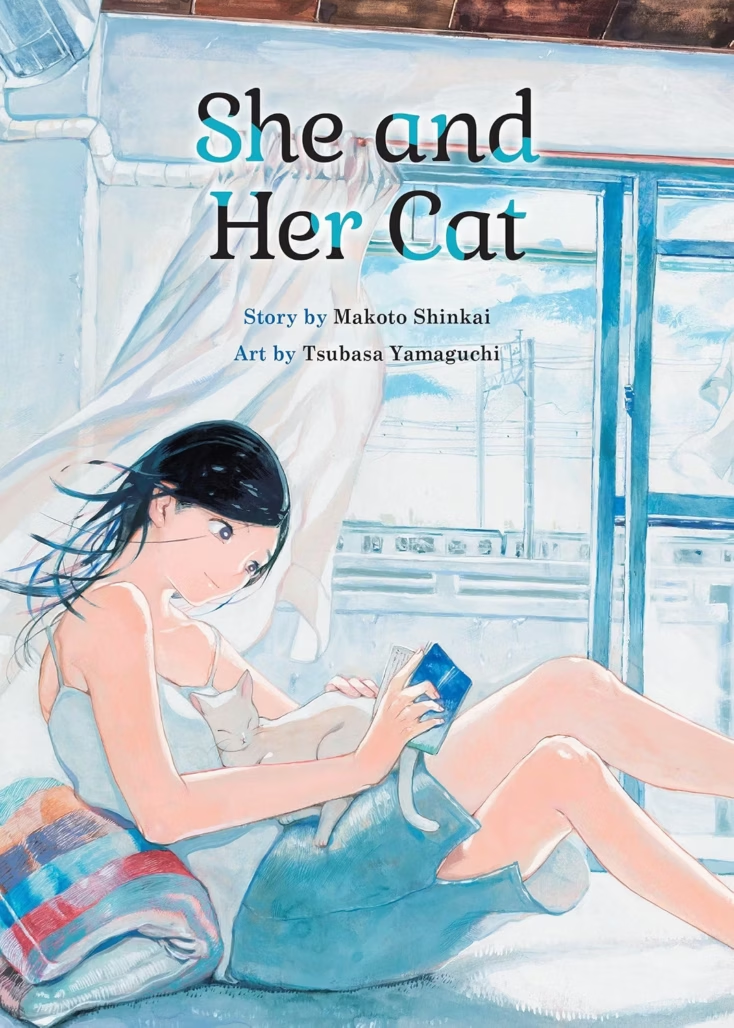
Original Creator: Makoto Shinkai
Adaptation: Tsubasa Yamaguchi
Translation: Kumar Sivasubramanian
Production: Grace Lu
Publisher: Kodansha
Here’s my deep, dark secret: I have never watched a Makoto Shinkai movie. Your Name and his subsequent films like Weathering With You and Suzume just didn’t appeal to me. They felt too shiny and melodramatic. So I went into She and Her Cat with some skepticism.
This was Tsubasa Yamagachi’s first manga series before she launched Blue Period. Although her artwork isn’t something I would normally gravitate towards, I thought her style was a perfect fit for the story that She and Her Cat was telling.
I was surprised by how simple yet relatable the single volume manga was. She and Her Cat follows a young woman named Miyu who finds an abandoned cat and adopts him. Now named Chobi, the story is told from the cat’s perspective as he watches Miyu go about her everyday life. Chobi doesn’t leave the apartment much except to visit his girlfriend Mimi, so much of what he sees is limited to whenever Miyu is home from work. Because the manga is told from the perspective of a cat, it creates an almost detached but not unwarm feeling.
Although Chobi’s understanding of what he sees and hears is somewhat simplistic, he knows that Miyu is sad. We, as readers, have a more acute understanding of Miyu’s struggles. Readers who are Miyu’s age will relate to the crushing loneliness of living independently, not knowing how to ask for help, and navigating life as a young adult.
Chobi can’t do much. He can’t talk to Miyu, cook for her, or wipe her tears. He doesn’t even understand why she’s sad. Isn’t that so very relatable? How many times have you seen a loved one hurting but didn’t know why, or how to talk to them?
That’s what makes the ending, when Chobi goes in search of Miyu, so powerful. Sometimes, just being there for someone is enough for them to find the strength to ask for help. — Hilary Leung
Follow Beat’s Bizarre Adventure to get weekly manga and webtoon recommendations!