
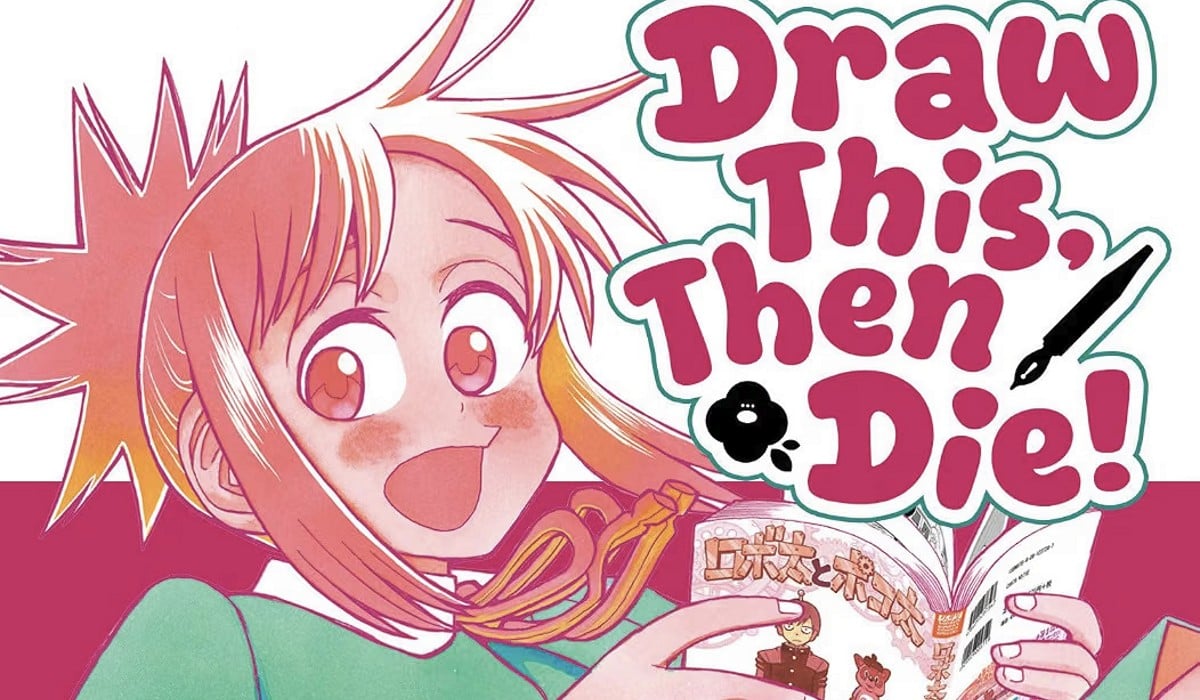
With more people reading manga and webtoons (aka vertical scroll comics) than ever before, Beat’s Bizarre Adventure gives three writers an opportunity each week to recommend some of their favorite books and series from Japan, Korea, and elsewhere. This week we have manga about making manga, a sweet and heartbreaking BL series, and, of course, babies.
Draw This, Then Die!
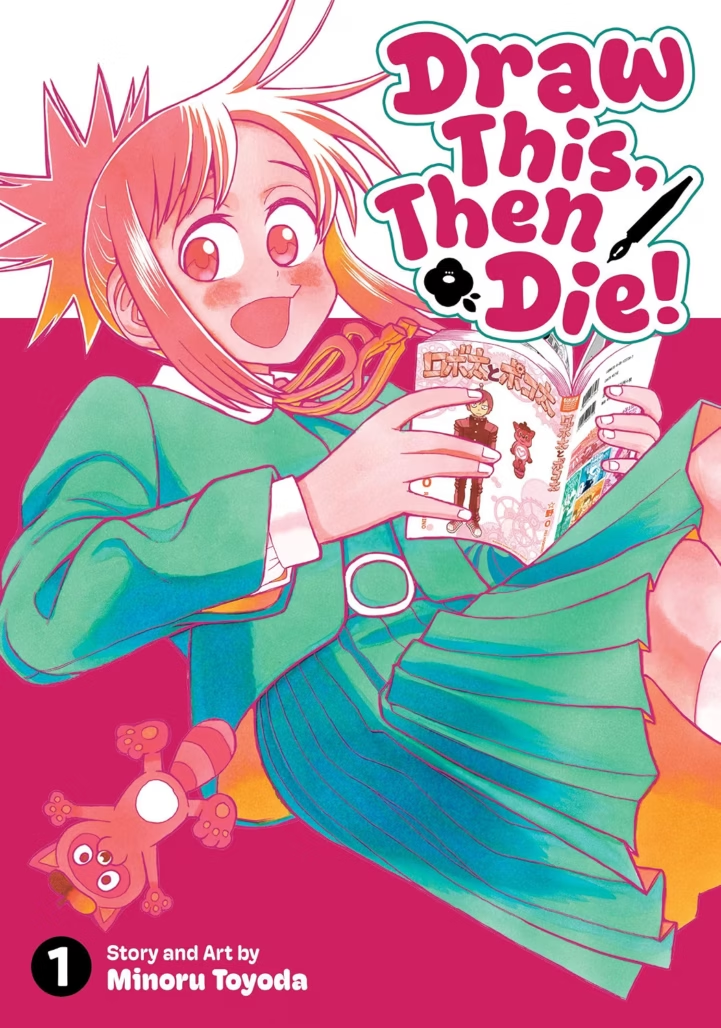
Writer/Artist: Minoru Toyoda
Translation: Evan Ward
Lettering: Isabell Struble
Editing: K. McDonald
Publisher: Seven Seas
What does it mean to create? That is the question plaguing Yasumi Ai in Draw This, Then Die! Living on a remote island, Yasumi’s manga opportunities are limited. When she learns her favorite indie manga artist will be at Comitia in Tokyo, she hatches a plan to get there no matter what. But once she’s there, meeting her idol doesn’t go as exactly as planned. That might have been a little disappointing but Yasumi has an epiphany: she can draw her own manga!
As an extremely nosey person, I love any type of behind-the-scenes industry story. So of course, a manga about making manga is high on my list. But Draw This, Then Die! is not a “how to make manga” guide. It instead digs deep into what it means to love a medium, how that love for something can drive you to make your own version, and what creating it actually entails.
The first volume covers so many fundamentals of being an artist. Yasumi’s first manga is bad; the art is poor and the story lacks a cohesive or believable plot. Even so, her love of making manga shines through. With that as a starting place, the rest of what is needed can be learned, right?
Since I consider myself a creative person, this manga series resonated with me. But I don’t think its takeaways apply only to creating things. There are so many nuggets about inspiration, appreciation, and finding solace in art and stories. Not to mention collaboration and the importance of having people around you who support your pursuits.
The best part about this story so far is how Minoru Toyoda weaves these important lessons with unique art style and humor. I mean, half of the quotable wisdom comes from an imaginary mascot Yasumi talks to. The lessons are embedded into the story in a way that doesn’t feel forced or after-school special-y. It’s an “if you know, you know” for creatives. — Lisa De La Cruz
Between the Lines
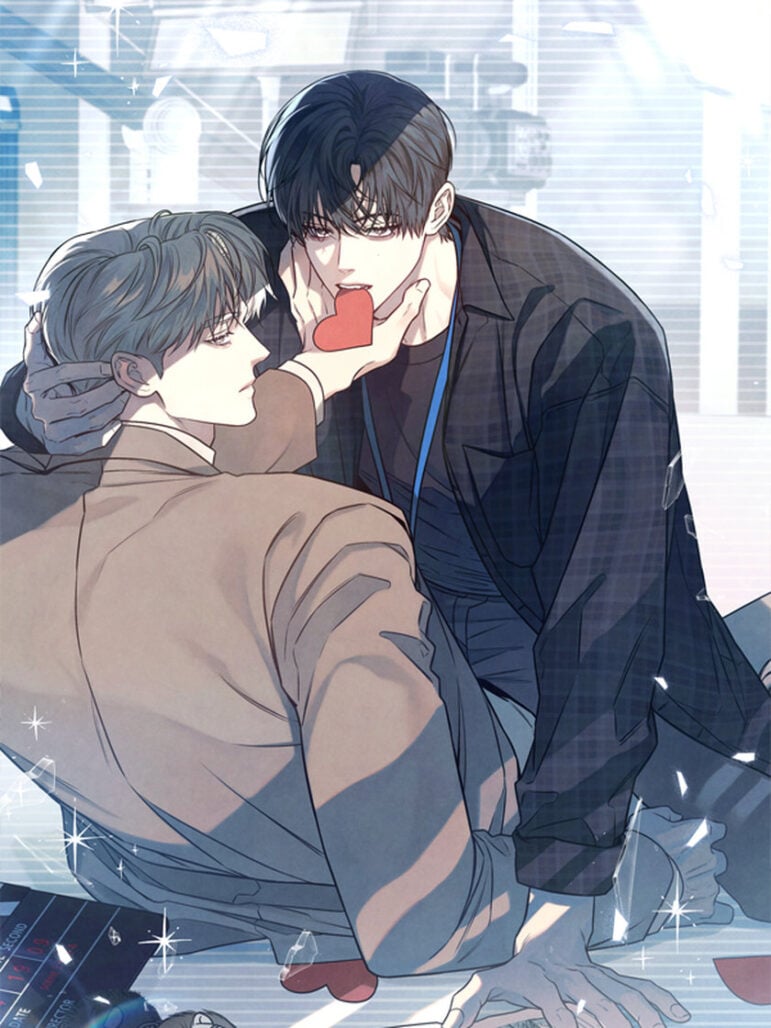
Writer/Artist: Hodot
Platform: Lezhin
Dohu writes Boys’ Love webnovels for a living while studying. He loves his characters messed up and relationships tangled. So when he’s struggling with a writer’s block and his friend suggests he switch things up, maybe write a nice guy for a change, he refuses. Goody-two-shoes types, to Dohu, taste as bland as unseasoned chicken. He does agree to meet up however, and soon finds out that the “free” meal comes with strings attached.
Enter Juheon, the angelic boyfriend material who’s all smiles and benevolence. The exact type of person Dohu finds bland. Turns out, he’s trying to lure him in with meat and booze to get him to write another script for the video production club. Little does Dohu expect to find the inspiration he’s been searching for in someone like him. Life sometimes has the habit of unfolding the way a BL webnovel does!
The bare bones of Between the Lines is not all that different from your usual university BL manhwa. The leads find love and heartbreak while discovering unexpected sides to places and people. They go through mishaps, get close in the meantime, and then feelings enter the arena. But seasoned romance lovers know that life is not always kind to those who find happiness after trials and tribulations.
What made me warm up to the series is that the conflict arises from who Juheon and Dohu are as characters. Their ways of thinking and communicating cause conflict rather than external events not aligning. Dohu appeals to neurodivergent people for a reason. He approaches people as he does his novel characters—from an analytical lens. He’s particular, and doesn’t conform to what constitutes “normal“.
Juheon finds comfort in Dohu’s unusual cadence and straightforwardness, as well as a space where he can finally be vulnerable. Unfortunately, the very characteristics you love in someone might one day become the very reasons you hate them. Both Dohu and Juheon will learn this lesson the hard way.
Between the Lines is not Hodot’s first commercial BL. Before came Big Apple, a collaboration between Hodot and Harusan, which was first released digitally on Tappytoon and then in print by Seven Seas. So while I can’t say the art in Between the Lines is bad from a technical point of view, there’s not much to write home about either. It’s uninteresting at best, but does the job of conveying the story Hodot wants to tell.
I’d recommend this series to BL fans looking for an ongoing manhwa that’s steamy, sweet and heartbreaking. If that describes you, you’ve come to the right place! — Merve Giray
My Mom is Easily Flustered
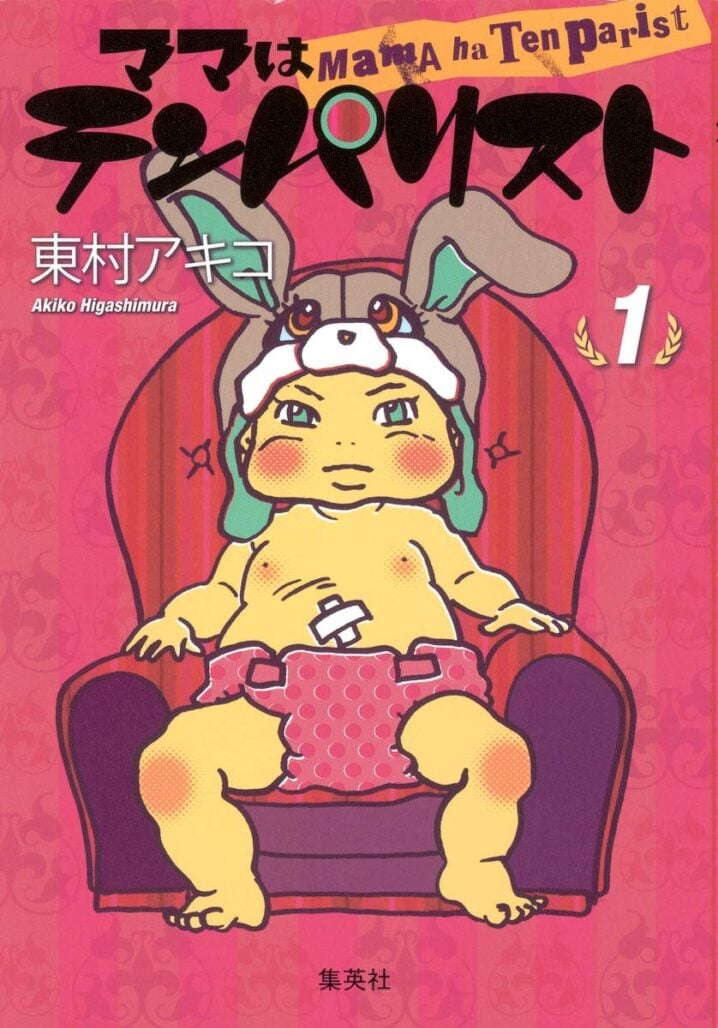
Writer/Artist: Akiko Higashimura
Translation: Flitto Japan Inc.
Lettering: Flitto Japan Inc.
Editing: Flitto Japan Inc.
Platform: MANGA MILLION
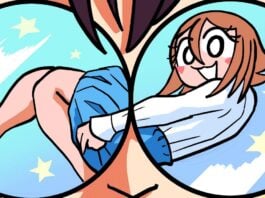
Many manga readers in the United States know Akiko Higashimura through her series Princess Jellyfish and Blank Canvas: My So-Called Artist’s Journey. But her real breakthrough work wasn’t either of these. It was My Mom is Easily Flustered, a diary comic about her experience giving birth to and raising her son Baby Go. Now, thanks to the MANGA MILLION project, English readers can finally read the comic that made Japan sit up and take notice.
What makes My Mom is Easily Flustered stand out compared to countless other parenting books and memoirs, including those from other languages? Well, I’ll quote an early line of dialogue from Higashimura herself. When her mother asks her to describe the pain she feels from giving birth, she says, “it felt like an ogre had shoved a huge club in me, and slowly spun it around inside.” The following chapters keep up that outrageous streak. Whether Higashimura’s recalling the time she was accosted by a neighbor’s dogs after accidentally leaking breast milk, or the time she drew the face of Duke Togo on her boob to scare her son into feeding from bottles, every chapter has a scene that will make you say, “huh?!?!”
But of course, that’s what it’s really like to raise a child, right? Films and television inform us that early parenthood is a sacred time of peace and contentment. In reality, it’s a succession of bizarre trials and tribulations that you must survive, no matter what, because your baby is vulnerable and needs your help. Not to mention that the process of having a baby itself is a whole other can of worms. Frankly it’s a miracle that children are born and raised all the time without the majority of them exploding or falling off cliffs to their doom. (Of course, everybody I know who has had and/or raised a child is glad they did it! It’s just a lot of work.)
Higashimura’s genius goes beyond just realizing that the absurdity of raising babies is very funny. It’s that she latches onto specific details that go beyond the cliches and make you say to yourself, “so this is what motherhood is like.” Specifically, it’s what working motherhood is like, because Higashimura was drawing manga the whole time she was raising Baby Go. My Mom is Easily Flustered is therefore essential to understanding Higashimura’s career as a manga artist. But it’s also hilarious, so don’t go in expecting it to be homework or anything. — Adam Wescott
Follow Beat’s Bizarre Adventure to get weekly manga and webtoon recommendations!