
It’s no easy feat making a place feel like you’re in Puerto Rico, surrounded by an energy that reminds of the tropical warmth that informs such an important part of the island’s identity. This is precisely what the New York Public Library achieved with its Library After Hours: ¡WEPA! Puerto Ricans in the World of Comics event, which took place on February 27th, 2026, at the Stephen A. Schwarzman building located on Bryant Park.
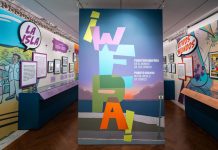
The event came about as the WEPA exhibit nears the end of its run (March 8th is the last day anyone can make the trip to see it), and it certainly felt like a victory lap. But it didn’t settle on being merely that. Instead, the programming immediately pointed to a desire to expand WEPA’s scope and to show just how deep Puerto Rican creativity runs in the world of comics. And how eager it is to spill into other areas.
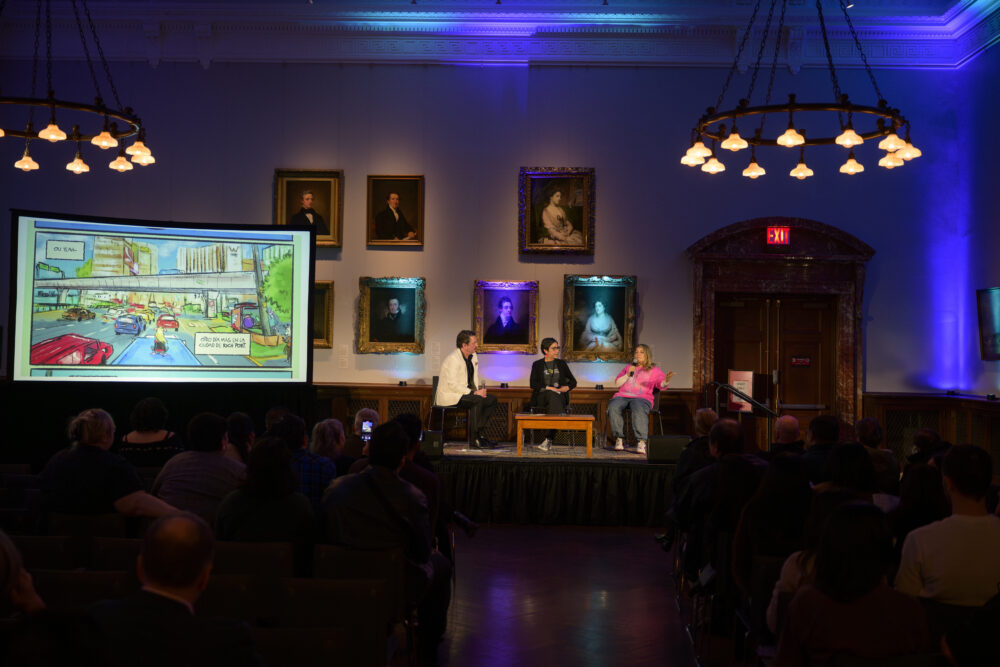
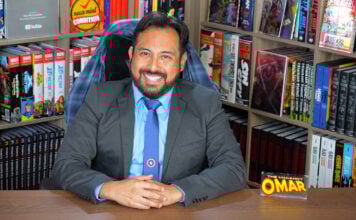
The night’s programming was flexible but focused. Exhibit curators Paloma Celis Carbajal and Charles Cuykendall Carter held creator talks in the Edna Barnes Salomon Room where artists that are featured in the exhibit were given the chance to discuss influences and how the Puerto Rican experience shaped their storytelling methods.
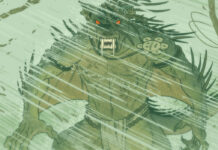
Rangely García Colón was a highlight. She spoke about how her pregnancy led to the creation of comics that helped her process all the new fears and anxieties that came with becoming a mother. It extended into talk of her comic NonPack, which is a comedic take on crime with animal characters that represent different gangs in the fictional city of Rich Port (the literal English translation of Puerto Rico). Fans of Blacksad will find a lot to love here. It has extensive worldbuilding and it unfolds like an urban fantasy story with humor that is uniquely Puerto Rican.
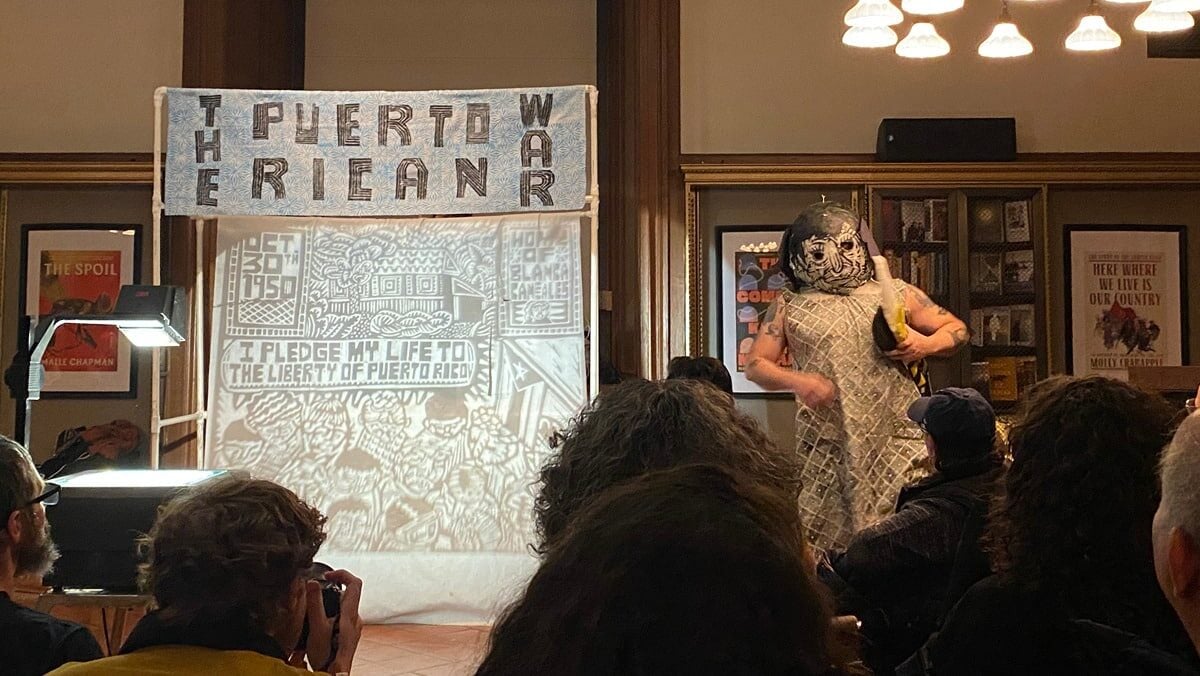
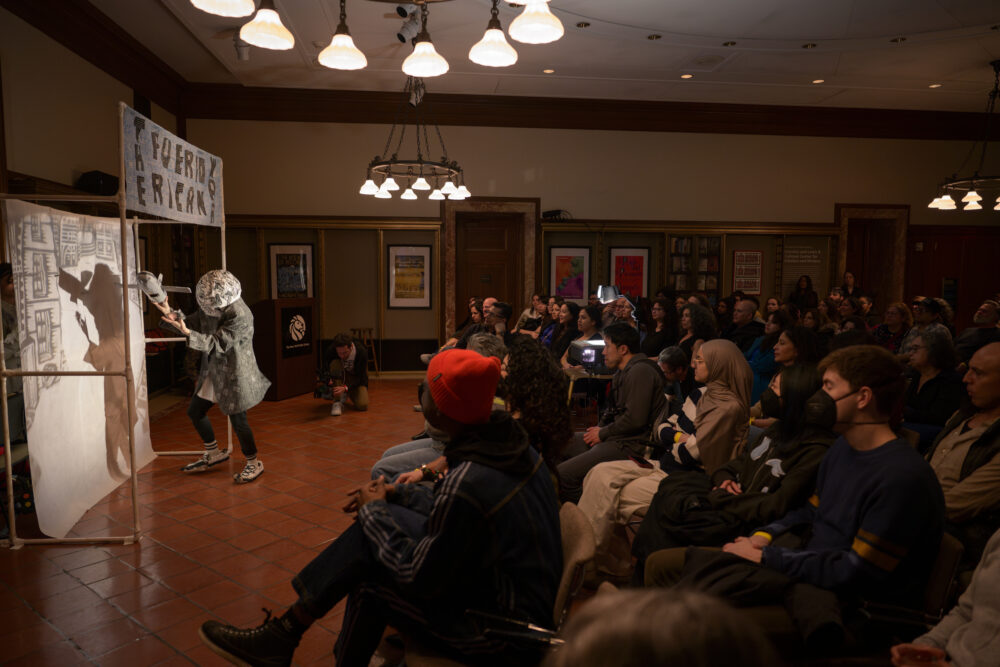
The creator of The Puerto Rican War book, John Vásquez Mejías, put on a puppet performance based on his book in the Margaret Liebman Berger Forum at the library’s second floor. It tells a condensed version of the history the book covers, but it injects a bit of humor into it to bring out the more theatrical elements of the comic’s visuals onto the stage. It’s a performance that likes to spill over to the crowd, making it more intimate and urgent.
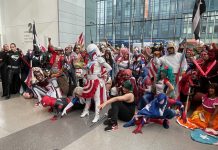
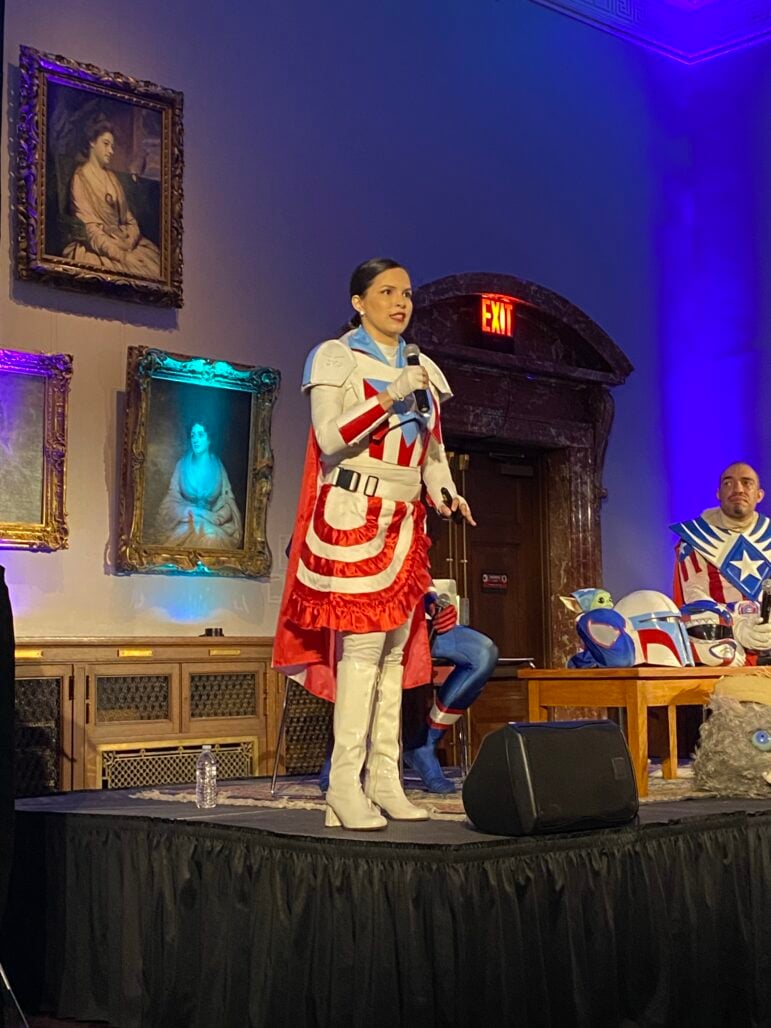
The Boricuaverse Cosplay community also had their spotlight moment with a talk that centered on how Puerto Rican geekdom always find a way to slap the colors of the island’s flag on whatever it touches. The community’s leading figure, Lilibeth Torres, was accompanied by fellow cosplayers here, all in costume. Her cosplay is a variation on The Mandalorian that sports the colors of the Puerto Rican flag on it, complete with a Baby Yoda dressed in a PR t-shirt.
Torres framed Puerto Rican geekdom as both a statement on identity and as an act of resistance through representation. While explaining how she made her Mandalorian cosplay more criollo, especially the helmet, she said “I [put our] flag on it, because that’s what we do.” Everyone in the room knew exactly what she meant.
One of the most impressive parts of the After Hours event, and one I believe should be a staple of the library experience, was the Live Music and Comics Activities section that was set up in the Rose Main Room. Bassist Alex “Apolo” Ayala and vibraphonist Felipe Fournier kept the mood light and inviting with instrumental renditions of Bad Bunny songs and other easily recognizable pieces of music while guests sat down to either color pages taken from the comics on the exhibit or to read from a selection of comics featured in it.
This felt like the heart of the event. It perfectly captured what a library is, can be, and should be. The coloring activities pulled double duty as they offered a fun way to put their spin on the pages and covers printed on the handouts. People could color the very images that were on display at the exhibit (which was open to the public as well, and busy), which also worked to introduce people to books they perhaps weren’t aware of or wanted to know more of. But it was the reading tables that really brought people together with the comics we were honoring that night.
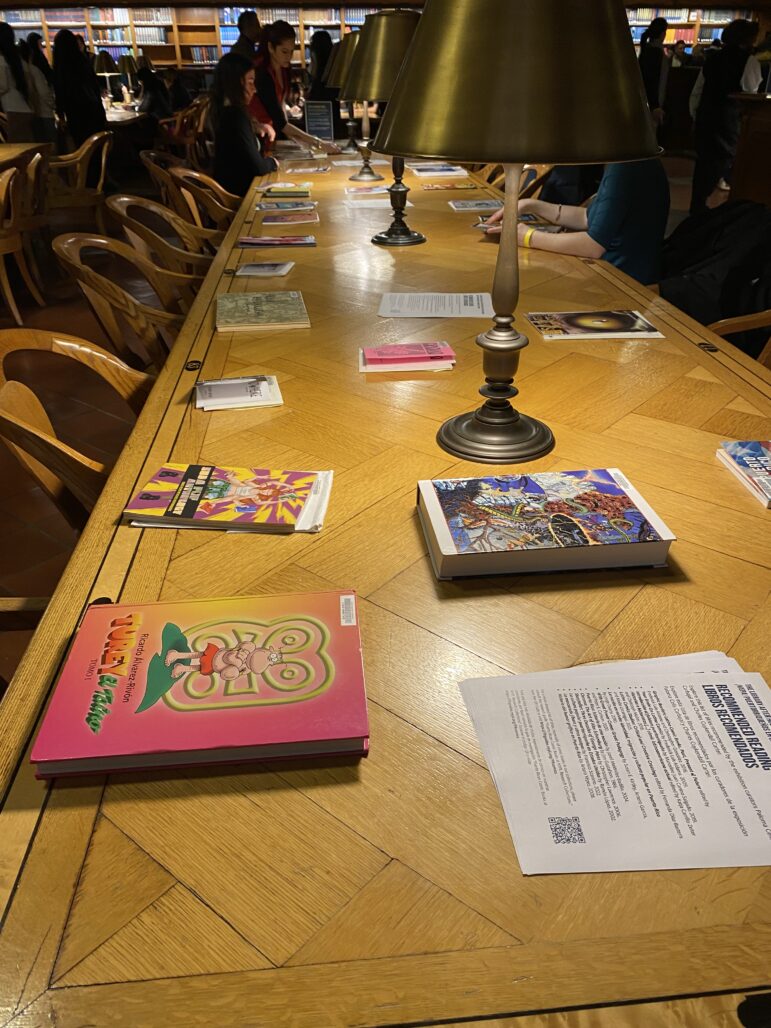
The large reading table was simply magnetic, a spot with considerable pull. It was like a buffet of rare artifacts there for archeologists to inspect at their leisure. Reading was encouraged, and not in a cursory manner. Single issues could be picked up and experienced all the way through. Anthologies and shorter works were also available, carefully selected to foster quick but complete reads.
It’s not necessarily easy or feasible to ask people at a large event to pick up a prose book and read through 20 or 30 pages of it, fast and in one sitting, only to then have them move on to the next book and repeat the process. Comics read different. They have their own pace and their own specificities, and they’re very library-friendly. They’re perfect to get people in and out of reading and then on to the next activity. They’re full meals. As such, people stand to leave the room more than satisfied with what they could get their hands on.
I saw a lot of people extend their stay in the reading table once they sat down. Some looked like they weren’t expecting to stay longer than they did, in a good way. The lesson here is, always have comics on a long table or two for people to pick up and read. They can be tied to a current exhibit or presented as part of a monthly theme. Whatever the reason, this kind of setup will make people want to invest more of their time in the library.
Once each activity was visited upon, the sounds of Bad Bunny music led people to the main floor for dance and drink, where DJ Perly gave people what they clearly wanted. By then, you were in Puerto Rico, getting a taste of what’s status quo back home. Capturing the spirit of something as strong as this requires a massive concentration of appreciation and recognition for the place at the center of the exhibit. The New York Public Library successfully channeled this. And so, rather than exiting through the gift shop, we exited through a party none of us wanted to say goodbye to.