
UPDATED with a statement from Flying Bark, a statement from Avatar Aang: The Last Airbender production designer Jake Panian, and a statement from Abrams Books.
Original Story
On Thursday at San Diego Comic-Con, the cast and crew of the new Avatar Aang: The Last Airbender film gathered for a panel discussing the film’s artistic process, including character designs and how they evolved over time. Unfortunately, one slide shown at the panel cited ChatGPT as a research source, setting off a wave of controversy around a highly-anticipated movie that’s already had a difficult lead-up to its premiere.
During the section of the panel about Tagah (Dave Bautista), Avatar Aang‘s main antagonist, a slide showing the research and design process for his face shape and hairstyle featured text in the upper right corner that read, in part, “Also according to chatgpt [sic], ‘In general it is not common for South East Asian cultures to emphasize or traditionally have a strong association with beards.'”
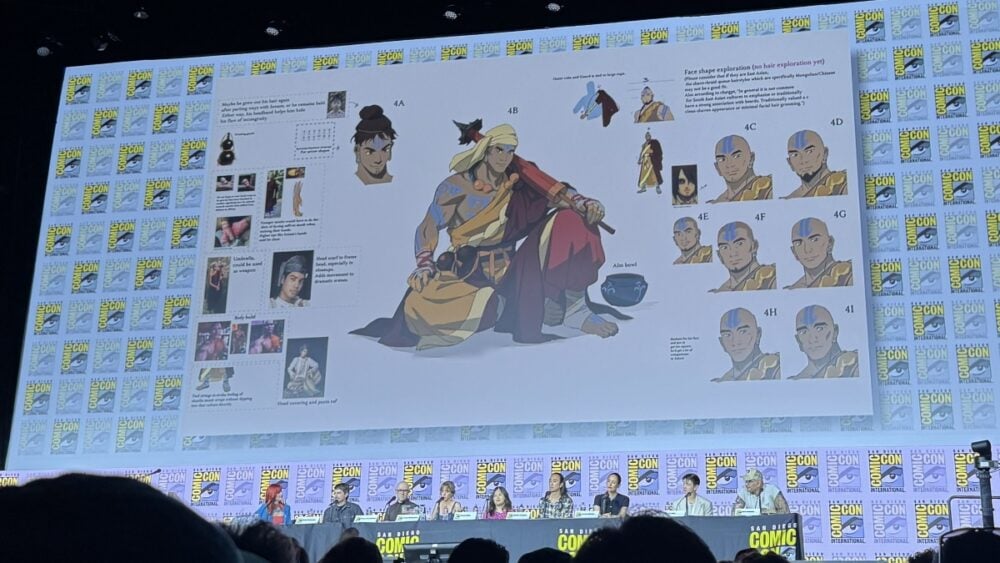
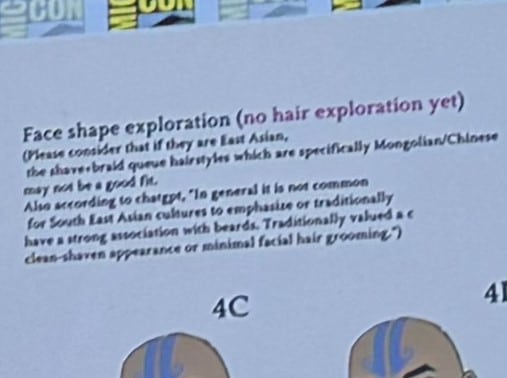
A panel attendee shared a photo of the slide on Reddit, prompting fans to question whether the ChatGPT was used for more than just the Avatar Aang SDCC presentation slide.
Following the panel, a fan commented on a Bluesky post by visual development artist Kat Tsai, who worked on the film, to ask about the extent of AI use in the art and design process, writing, “It seems the Avatar team listed ChatGPT at the recent Comic-Con panel as a creative source, and now there’s a lot of confusion.”
Tsai responded, “Absolutely no AI whatsoever in the art / design process!” When another fan asked for “context” around the slide, Tsai wrote, “I have no clue why it was on that slide or who put it there, and every member of the crew I worked with is 100% against AI. Every aspect of the animation is handcrafted by real artists and I hope that people don’t use this slide as a reason to detract from how much love and labor went into the film.”
So… did Avatar Aang use ChatGPT?
At time of writing, the short answer seems to be that no one on the Avatar Aang team used AI in the creation of the film.
On Sunday, a social media user who claims to “work in events and see alot [sic] of crap that isn’t correct” dug into the controversy and theorized that the slide isn’t from the movie or any materials technically associated with the team behind it, but from the upcoming Avatar Aang: The Last Airbender: The Art of the Movie art book by Ramin Zahed, slated for publication by Abrams Books on November 10.
Publishers like Abrams release a lot of art books featuring early concept sketches, designs, environmental paintings, models, and more from the likes of movies, video games, animated series, and more. In nearly every case, the authors of these books are not directly involved in the project they’re covering, but are experts in a particular genre or medium.
Zahed’s bio from the Abrams website says he “is a Los Angeles–based author and editor in chief of Animation Magazine. His books include the New York Times bestselling Spider-Man: Across the Spider-Verse: The Art of the Movie, as well as The Art of DreamWorks Puss in Boots: The Last Wish, Spider-Man: Into the Spider-Verse: The Art of the Movie, The Art of Love, Death + Robots, The Art of DreamWorks Animation, and more.”
Avatar Aang director Lauren Montgomery wrote the foreword for the book, which is also common practice for these hardcover coffee table collectibles. Oftentimes, publishers will commission someone who is involved with a project to contribute a brief introduction to both lend credibility and give readers an insider’s thoughts.
It’s unclear how much of the art book Montgomery saw before writing the foreword, if she saw any of it. It’s also unclear who approved the use of the page with the ChatGPT citation for inclusion in the Avatar Aang SDCC panel, or how many eyes landed on it and missed the attribution before it reached the public.
At time of writing, the film’s Avatar Studios and Flying Bark Production have not released a statement, nor has Abrams Books. The Beat has reached out to both studios and the publisher for comment, and will update our coverage if we receive a response.
Avatar Aang: The Last Airbender is now streaming on Paramount+.
Stay tuned to The Beat for more news from SDCC ’26.
Update: July 27, 2026
On Monday, Flying Bark CEO Barbara Stephen sent the following statement to The Beat via e-mail:
The precision of artistry and animation in every frame of Avatar Aang: The Last Airbender should be celebrated. It is the result of incredible collaboration across every department and discipline, culminating in a breathtaking masterpiece led by an exceptional creative leadership team. The entire crew from each studio worked incredibly hard, imagining a cinematic adaptation worthy of both fans and newcomers.
Flying Bark practices a traditionally influenced hand-drawn animation style, relying on industry software including Harmony, Maya, Houdini and Nuke. Our talented artists produced everything for Aang in the studio using traditional methods.
The best way to show appreciation for this highly artistic, human-crafted work is to enjoy the film on Paramount+ (ideally on repeat!).
Meanwhile, Avatar Aang: The Last Airbender production designer Jake Panian posted the following on Instagram in response to a fan comment:
If you’re referring to the artist that used ChatGPT according to what was shared at Comic-Con, very early on, I guess a character artist tried it for background research. As far as I know this never happened again. But absolutely no artwork on this movie is AI-generated. All the art on this show was done by hand. As the AI movement gained momentum, we took a stance and saw ourselves standing against it in the most opposite way possible. Everything in this movie is carefully and aggressively hand done by talented and amazing humans.
In a follow-up comment, Panian continued, “It’s not like it was a directed thing. In my opinion people are allowed to make mistakes and move on with their lives. I’m not a big fan of doxing and crucifying people.”
This information clarifies the appearance of a ChatGPT citation on a page from Ramin Zahed’s Avatar Aang: The Last Airbender: The Art of the Movie art book, which became a slide for the film’s SDCC panel. It was likely pulled directly from development notes provided by the film team and put to page without editorialization from Zahed or anyone at Abrams Books.
Avatar Studios has not released an official statement or responded to The Beat‘s request for comment at press time for this update, nor has Abrams Books. The Beat will update our coverage if statements are shared or if we receive a response.
Update: July 30, 2026
On Wednesday, Abrams Books sent the following statement to The Beat via e-mail:
We can confirm that the images and content in question are not tied in any way to Abrams’ Avatar Aang: The Last Airbender: The Art of the Movie by Ramin Zahed or to any of the other Avatar Aang: The Last Airbender movie tie-in titles published by Abrams.
Taken at face value, this statement debunks the theory that the slide shown at SDCC citing ChatGPT for character design research in Avatar Aang is from the upcoming Abrams art book.