
ComiXology’s Chip Mosher of Marketing and PR moderated a panel with Jeremy Atkins of Dark Horse, Dirk Wood of IDW, Mel Caylo of Archaia, and addition Hunter Gorinson of Valiant Comics with the goal of sharing tips and pro experience with indie creators and future marketers on Friday, March 29th at WonderCon. The result was quite an entertaining panel featuring their professional blunders and secret discoveries about he ins and outs of comics promotion.
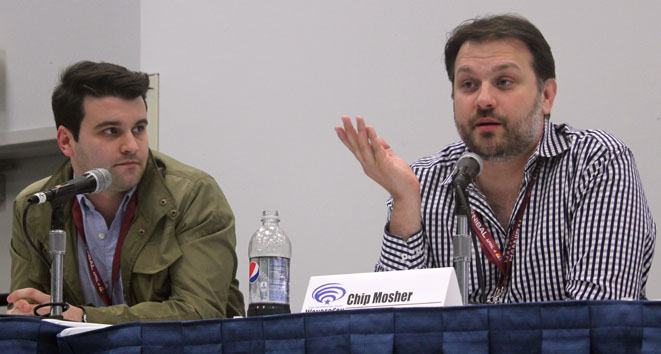 Mosher started out by asking for the embarrassing stories each had accrued in their work experience, “professional blunders” that contained teachable moments. Atkins admitted to the cringeworthy common mishap of hitting “reply all” on an email and copying a person specifically to be excluded from a conversation, with plenty of sympathetic groans from the audience. Mosher’s own tale of woe was equally relatable, reading an e-mail from Emerald City Con and then forgetting to reply afterward, thereby losing booth space for BOOM that year. Wood was more circumspect about his failures, noting that “25% of marketing is what I would call blunders” that can lead either to success or to a “thud”, and that he finds it impossible to tell which will happen in some circumstances. Persistence, he advised, is the key to forge ahead despite an unpredictable market.
Caylo dredged up his own worst moments with a story of “drunk tweeting” from the wrong account, declaring his love for someone, a tweet that remained up on a company account overnight whereas Gorinson stuck to the ever-present bugaboo of typos in press releases regardless of how many times the releases are checked before sending them out. Wood’s observation that some blunders can have positive results prompted the panel to consider whether they had similar lucky moments. Wood, particularly, “stumbled into successes” by having random, unlikely ideas for promotion like sending Godzilla costumed promo agents to “smash” stores, something that met with great success. The panel quickly turned interactive, fielding questions from the floor, and the first question, probably also the first on everyone’s mind, was how to run PR and marketing strategies on a shoe-string budget.
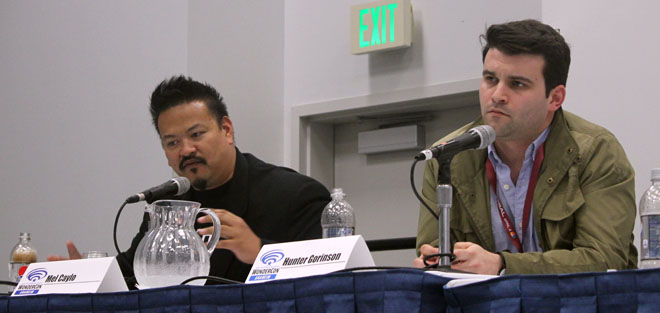 Mosher wittily commented, “This guy thinks that we have budgets” to his fellow panellists before Caylo took up the question with what became perhaps the strongest message of the panel event: “It’s all about relationships”. He suggested that those seeking press for comics go to shows, have e-mail conversations that are “not always pitching”, so that it’s easier when you do want to ask a favor to bring it up. He also added that “offer giveaways” on sites that increase “cross-promotion” are a very smart move. Atkins, who was particularly earnest and animated throughout the panel suggested that Twitter is a major player in promotion for building and continuing to cultivate professional relationships, including the retail industry in your list of contacts. Wood spoke to the indie creator’s situation trying to get books distributed. “Nothing speaks louder than a consignment situation”, he said, and pointed out that Top Shelf started through delivering consignment issues to comic shops, “giving books” to shops and allowing them to sell them rather than seeking solicitation. This involves “relentless beating of the pavement” since there is “no replacing grassroots”.
Atkins used this idea to springboard into a gambling metaphor: “In gambling and in life, you only win when you can afford to lose”. You shouldn’t expect return immediately, he warned, but trying different approaches and continuing to do so as long as possible is key. Mosher had strong feelings on the subject, reflecting on the example of a student protester who brough the New York Stock Exchange to a standstill by busking for dollar bills all day, then throwing a hundred bills onto the exchange floor. It was the perfect example, for Mosher, of “getting attention at low cost” and using the least resources to garner the “biggest impact”.
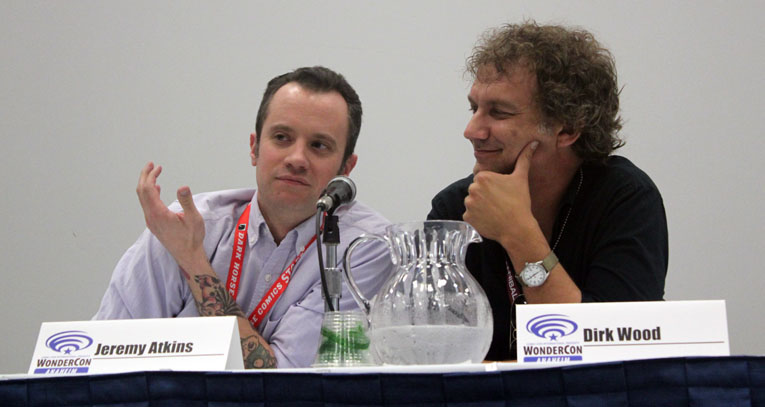 Gorinson focused on knowing your material and audience to get attention. Knowing the pitch well, and the many angles from which it might be interpreted, breaking out of narrow genre definitions, for instance, may win the day. He recommended top comics news sites as vehicles for spreading the word, as well as working “with anyone and everyone”, including small blog sites. Mosher’s experience at BOOM confirmed this premise. Starting out publishing only 4 to 7 books a month, he scoured blogs, put people in press lists, and sent them PDF review copies in an era before most comics companies were using PDFs in this way, and thereby grew a press list of 400 contacts.
Wood added that looking at comparable publishers and types of titles to the comic you are trying to circulate is a good starting point, looking to see how and where they are doing their marketing and focus your attack in that way. A common pitfall the panellists all agreed on is when creators send a pitch to a company for a comic series that’s a 12 issue proposal or longer. Companies aren’t willing to take the risk, they advised, and a 3-4 issue format is much more appealing at the outset of a project.
A follow up question from the audience regarded strategies to capitalize on the rash of superhero movies and growing movie fans who might never have read a comic. Several panellists felt that there’s no one single approach to bring film fans into comics, but a more surefire method is to “start them young”, reaching young readers with comics visual literacy. Mosher agreed, stating that there are more kids comics today than in the past decade, and comics continue to have unique qualities of storytelling that continue to appeal as a child grows up reading them. Gorinson added that Free Comic Book Day is an excellent opportunity to “get into as many shops as possible” and reach new, young readers. Mosher and Caylo both returned to the subject of cross promotion between films, tv, and comics, like the inclusion of ashcan comics in dvd box sets to show fans what comics alternatives are available for their favorite products.
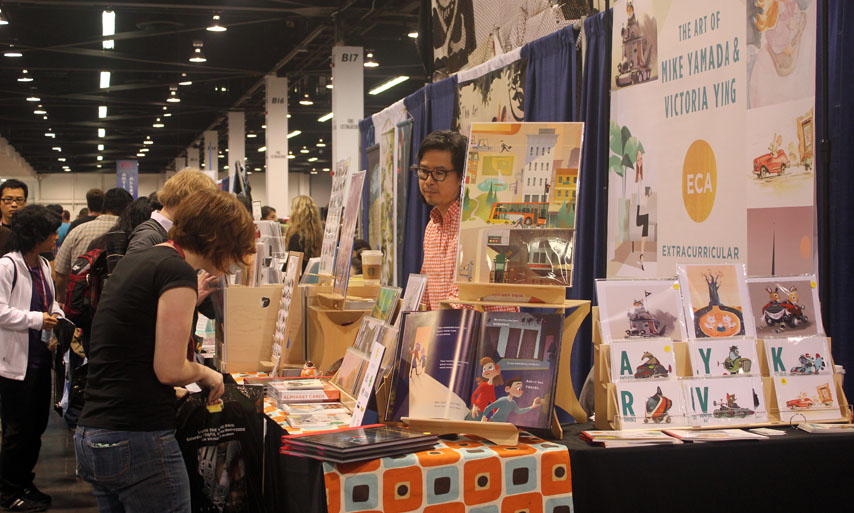 A direct marketing question from the floor focused on the similarities or differences between selling comics and other products, like household items. Atkins felt there was very little difference at all, except that it’s more possible in comics to “know who that person is” you are targeting since “They are me, or some version of me”, as a comics fan. He continued with some other salient advice, such as “You have to believe in what you’re selling” and believe that you are “one of the best advocates for it”. Gorinson felt that marketing comics is different from marketing other consumer products because he often feels an “obligation” to live up to the quality of the work he’s promoting in his own efforts.
Gorinson and Atkins also suggested doing some research into major news sites to find out who on staff might be a comics fan, “finding” that contact, or locating dedicated geek blogging attached to news sites. Atkins and Mosher commented that using social media makes reaching out to news writers more and more direct. Mosher admitted that not everyone may have the desire or “skill set” to promote their comics properly despite attempts, and in that case, he advised, you should find a friend who thrives on that kind of work and collaborate on promotion.
The final big topic addressed by the panel, and one which inspired some lively reactions from the speakers, was the use of transmedia and multiple media formats to draw attention to comics. Caylo said that it’s all about “synergy” between comics, films, and related video games, based on his work at Archaia. Atkins clarified, however, that adding transmedia content to promote comics, such as an app or video game should still be “meaningful to the overall story.
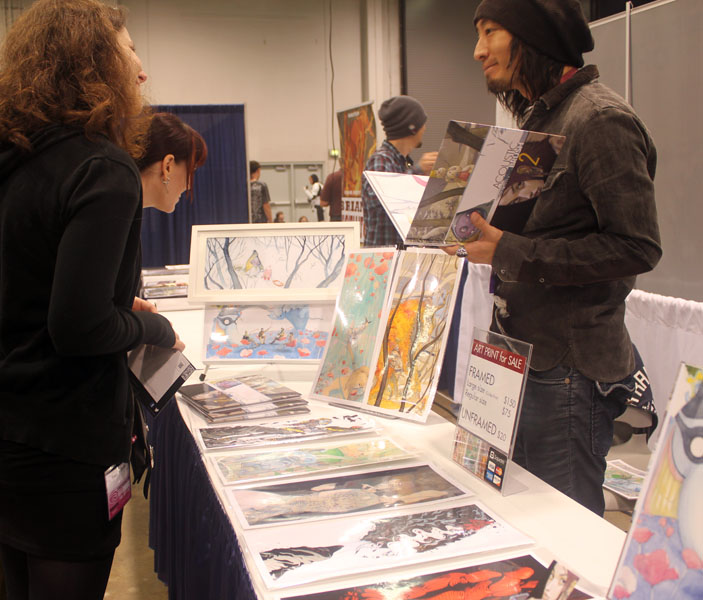 I posed a last question to the panel before it came to a close, wondering what the biggest pros and cons are to using social media as a promotional tool. Gorinson replied that you have to be “clever” in different ways to use social media properly for this purpose, while Mosher commented simply, but with some emotion, “Trolls!” as his biggest con. Caylo was the most personally engaged by the question and gave the following run down: social media’s benefits are “accessibility” and the quickness and “ease” of getting the word out about your product, especially when doing it for free. The “dangers”, however, are that “You are open to trolls and people who want to bait you”. “Ignore them”, he recommended, since once they “engage” you, they’ve “got you”. Block them if necessary, and learn to take “the bad with the good” when it comes to social media.
The panel was surprisingly lively, with all the panellists more than willing to share from their personal struggles to find the golden balance when it comes to marketing with limited budgets, and each expressed an obvious commitment to the survival and growth of worthy comics through good strategies and trying innovative methods to see what works for each book and each particular situation. Building personal relationships, watching out for the wrong kind of blunders, and learning from them when they occur, were paramount for these indie publishing marketers.
Photo Credits: All photos in this article were taken by semi-professional photographer and pop culture scholar Michele Brittany. She’s an avid photographer of pop culture events. You can learn more about her photography and pop culture scholarship here.
Hannah Means-Shannon writes and blogs about comics for TRIP CITY and Sequart.org and is currently working on books about Neil Gaiman and Alan Moore for Sequart. She is @hannahmenzies on Twitter and hannahmenziesblog on WordPress.





Nice rundown. Thanks. This is the sort of think that helps when you read it once a month, because it’s easy to forget some of this stuff.
I agree with the points regarding relationship building as a way to promote your work. Look at other people as colleagues or partners, and that will pay dividends.
A general suggestion for all creators:
See if your local university or community college runs a continuing or professional studies program. (Back in the day, we called this “night school”.)
Some, like NYU (where I have studied in the past) even offer professional licensing programs, where one can achieve certification in a specific field.
But here’s the one thing people don’t realize:
You tuition is tax deductible. (Consult your accountant.)
So take a course on marketing (if only so you can speak the lingo when talking with a huckster). Take one on business planning or incorporating or running a small business (like your studio).
Another thorough article of panel coverage by Means-Shannon. These are really nicely done. Thank you.
Everyone forgets to market to us retailers! If you have books you want to pimp, send review copies to stores – a low-res pdf is fine. Maybe someone will read it and order your book. If they don’t have the time to read it, you’ve wasted a whole few seconds sending an email.
We once got a review copy for some comic involving dogs (I don’t remember what it was called). I read it, made a list of customers who will buy anything about dogs, and ordered the appropriate amount of copies. Without the review copy, we would have ordered zero.
It is a mystery to me why every publisher does not send out digital review copies of their books to retailers (thank you, Marvel and Image, for making my life easier). Not every customer reads comics news sites. The retailer can be a major source of promotion for your books, which ultimately will help with ongoing subscriptions, reorders, and collection sales.
Also, probably do not call stores. You will probably not talk to a person who is ordering the books. If you must call, DO NOT CALL ON A WEDNESDAY. Seriously.
Thanks Shark Jumper! That’s very kind.
Great discussion here in comments guys- I’m learning more just reading your feedback.
This was the first con I exhibited at the small press area and while I did not sell well, and it was a total disaster, I learned a lot about how these conventions and consumers work. First of all, I realized I need to get over my hate of facebook and social media and get as big of a web presence as possible. The people next to me did web comics and even though they had a small fan base, their fans would seek out their table just to talk to them. Not developing a fan base and going to a convention of this size was not a good idea (should have waited for APE con).
Next thing I realized is that most people at conventions will not give your book a chance. For some reason I imagined more people stopping at my booth picking up a copy and reading it before deciding if they wanted it or not. Most people won’t even give your book a glance or give you a response when you say hello. I definitely need to think about getting nicer displays and stuff.
The most depressing thing was not many people there would buy any awesome comics that all these awesome artists and writers (everybody in the small press area that I met were really cool people), spent years working on but were willing to pony up $20 to buy a cardboard head of a minecraft character. It is like seriously cardboard! you can make that same thing on your own for like $19.50 cheaper.
But the best thing that happened at the convention though, was when one of the few people that bought my book came back the next day. He said he read my book and really enjoyed it and came back so I can sign it. Honestly that was one of the coolest feelings I ever had and it made me happy that I decided to pursue and continue to pursue creating comic books. Really, that made the whole trip worth it.
Nico:
Thanks for the interesting post and lessons learned. I checked out your website and your comics look interesting! A little social outreach would have gone a long way, I think, but…lessons learned.
Comments are closed.