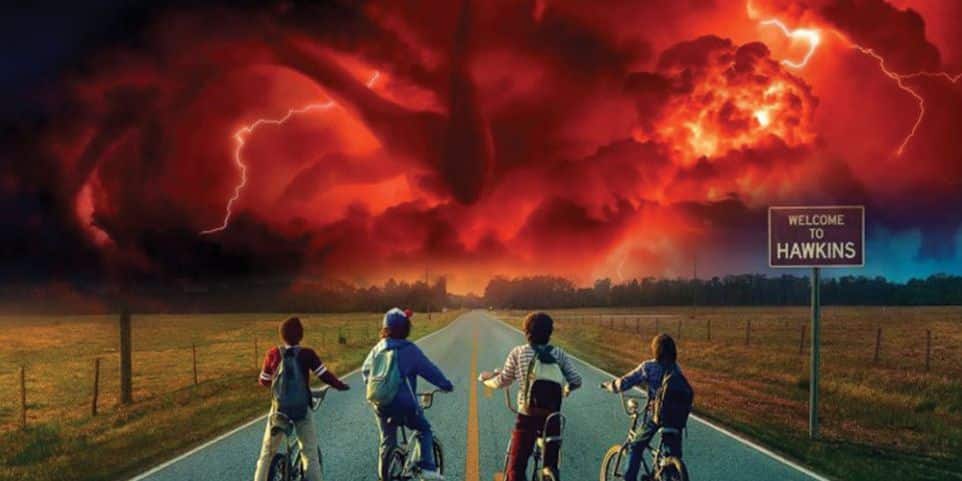

When Stranger Things debuted all the way back in the summer of 2016, nearly ten years ago, the world was a very different place. One pandemic and two Trump terms later, instead of the monoculture that made it an instant hit we have something more like Joyce Byer’s living room: a depressing shambles of broken walls and children’s crayon drawings.
Back in ‘16 we still had viral hits that weren’t on TikTok. I don’t pay too much attention to TV/streaming, but at that year’s San Diego Comic Con many people were talking about Stranger Things, and it was soon so ubiquitous that I realized I had to watch it out of self-defense.
Of course it turned out to be quite entertaining, a pastiche of 80s kid heroes on bikes and cheesy horror movies enlivened with smart dialog, endearing characters and an unhinged performance by Winona Ryder. as a mom with a missing child. It might be hard to remember now, but Stranger Things single-handedly spearheaded the Dungeons and Dragons comeback.
The next three seasons rolled out with increasingly long delays – Season Five arrives with the original teenagers now played by actors in their 30s and the kids all grown up, some of them married. The excitement over “appointment viewing” has also died down…but that’s more a result of the end of social media and regular media.
The cast has also had its ups and downs. Child stars are particularly prone to the pressures of stardom, and sadly, as we’ve watched them grow up they’ve been the subject of a lot of gossip and criticism. Some of it earned, but most of it, particularly for the female stars, not. David Harbour has gone from a lovable bit player turned leading man to a movie star to the subject of his soon to be ex-wife’s album calling him out for cheating, and ongoing accusations about bullying on the set. Maybe the only player to walk away unscathed (thus far) is Joseph Quinn, who got away with a one and done season. (Okay Maya Hawke was fine before, during and after.)
With all that in mind and a three year gap since Season 4 leaving details hazy, and armed with a four day weekend, I decided to do a rewatch before jumping into Season 5. The first four episodes have been released with a second quartet coming on Christmas and the grand finale on New Year’s Eve, so I have plenty of time.
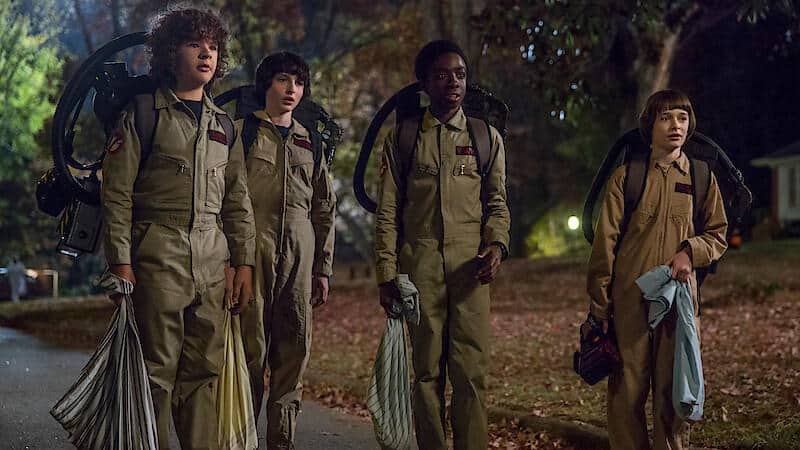
I have to stress that this is a normal rewatch by contemporary standards: I have the TV on while I’m doing other things. I didn’t sit down and watch every episode notebook at hand, but I did manage to do a big living room reorg while the show was playing, with some stops for particularly notable episodes. I was able to binge the first two seasons quite easily over the Thanksgiving holiday and enjoyed it quite a bit.
The first thing that struck me is that the creators, the Duffer Brothers themselves, twins Matt and Ross, have had their own haunted hayride for the last decade. While they were hailed as genius showrunners after the first season, they haven’t actually done much of anything else in all those years! They are no Ryan Murphy/Aaron Spellings, turning out hit after hit, year after year. They are more like the ill-fated duo of David Benioff and D. B. Weiss, whose attempts to make something other than Game of Thrones were thwarted for years by having really shitty ideas. That pair seems to have come out of purgatory with Three Body Problem, the successful adaptation of the Chinese SF classic, but being too popular is a real problem for some, especially when the fandom gets toxic and reaches for the pitchforks and torches.
The Duffers may avoid this fate – after Season 5 they are leaving for a new four-year deal at Paramount, so we’ll see if they have a second act. (Their previous deal at Netflix resulted in the aforementioned not much of anything.)
The second thing about the Duffers is that they were born in 1984 – the year that Season 1 takes place. Their memories of the 80s are based on growing up watching 80s movies not the actual culture. That’s clear from their casting of 80s icons like Ryder, Sean Astin, Paul Reiser and now Linda Hamilton.
On the rewatch I was struck by the lack of authentic 80s details, beyond superficial references to Ronald Reagan and a few updated blow-outs and mullets – clearly created with modern hair styling products and not Vidal Sassoon mousse. Of course, making everyone look attractive by mid-2000s standards is part of what made the show popular. Had they gone full 80s, it would have been a freak show. (My north star for everything in life is Garth Marenghi’s Dark Place, which faithfully recreated cheesy 80s tv shows right down to using vintage cameras – and the result is alarming.)
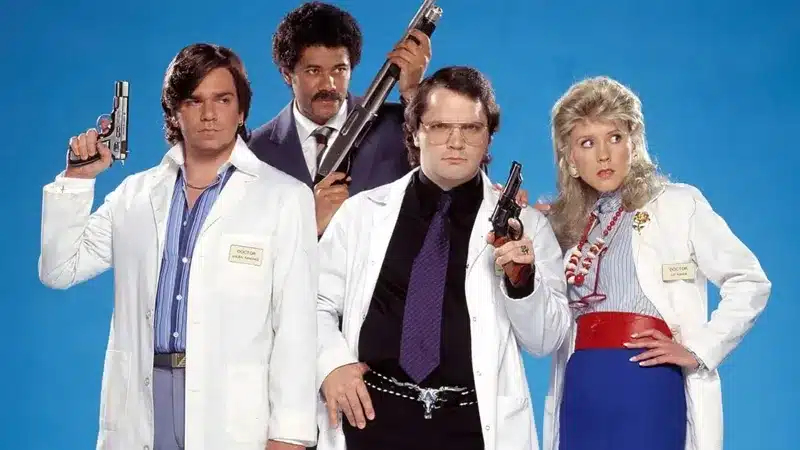
Anyway, this is an imagined 80s not the real 80s, and on that level it works just fine to draw us into a world that is familiar enough to be torn apart.
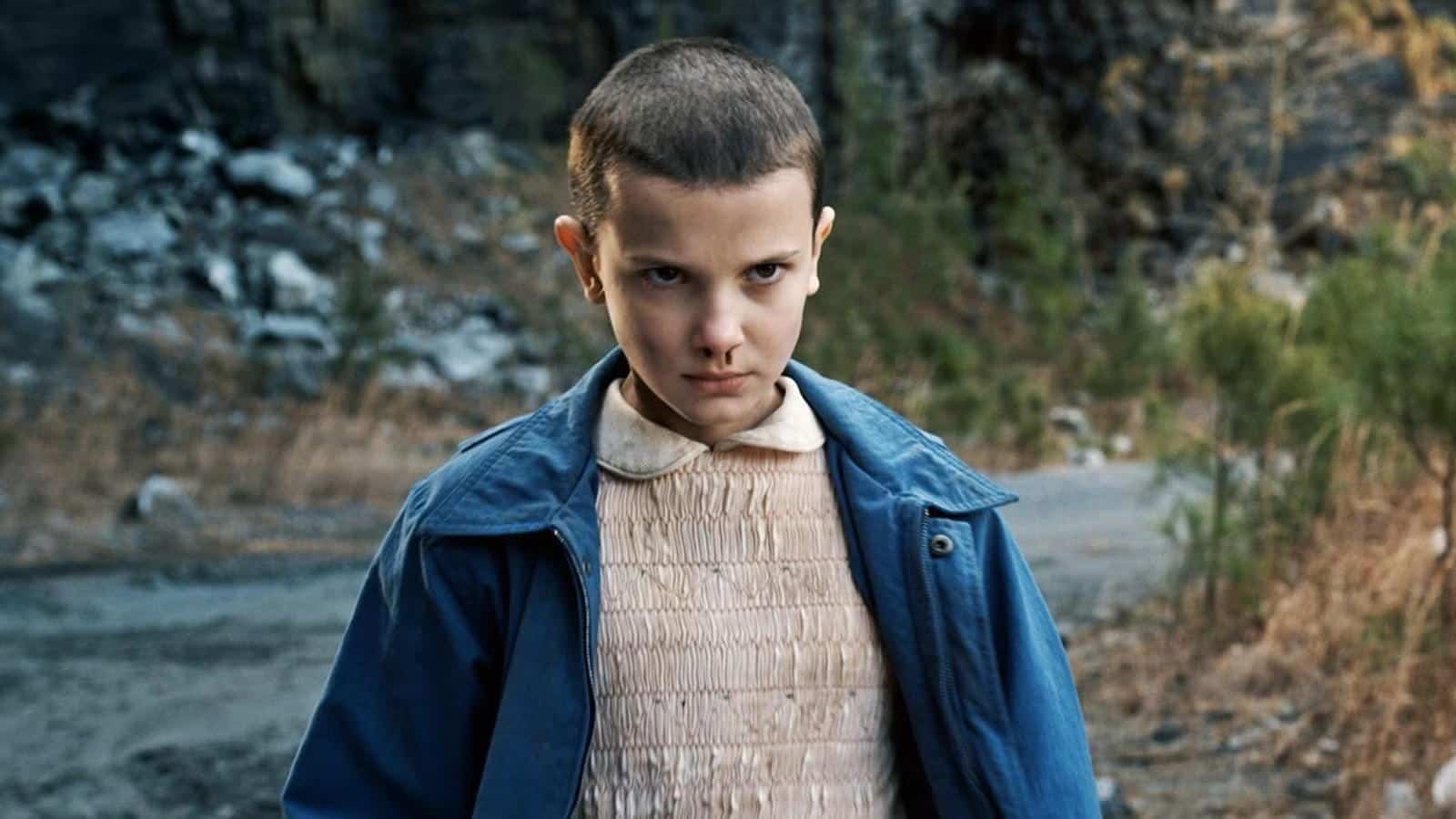
In case you have been living under a rock, the story involves four kids aged 11-12 living in fictional Hawkins Indiana who lives are upended when one of them, Will Byers (Noah Schnapp) is kidnapped to “the Upside Down” an evil parallel world populated by demogorgons and The Mindflayer. It turns out that this is all related to the local Hawkins National Laboratory, where sinister experiments into ESP and other trending topics are being conducted. Those experiments result in the series’ most iconic character Eleven (Millie Bobby Brown) a young girl with a shaved head who can kill people with her emerging psychic powers.
In season one, we’re introduced to all the kids and their various siblings and parents, and the bad guys at the Lab. All of the characters became instant memes and it’s easy to see why: they’re all exceedingly well cast and well written. The characters in Stranger Things are all recognizable, relatable cliches but with twists and quirks that make them irresistible. For instance, Gaten Matarazzo’s Dustin Henderson is the joking wiseguy of the group – the Corey Feldman role, if you will. Casting an actor with a disability (cleidocranial dysplasia) is an accurate reflection of how our friend groups evolve, and an endearing characteristic that isn’t dwelled on.
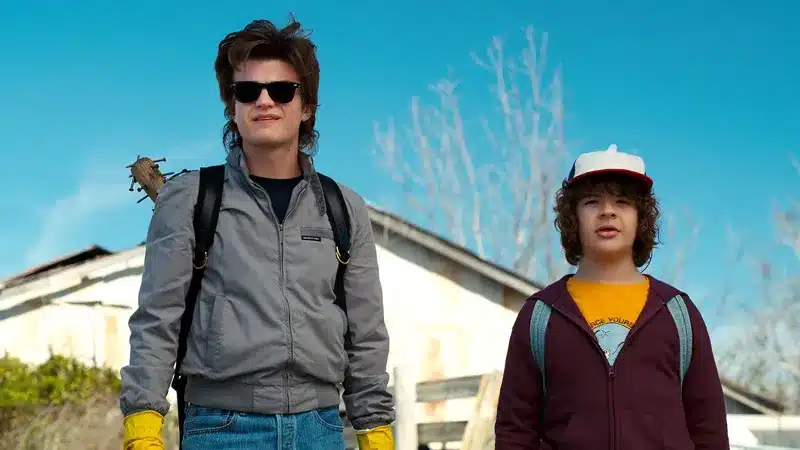
I’ve seen Joe Keery’s hair in person and it is spectacular. Steve Harrington would nominally be the leader of the group of kids, but he’s a bit slow on the uptake, terrible in fights and more than a bit of a dope. Of course, he grabs his nail studded baseball bat when called on, but that’s part of the fun.
It’s part of the pleasure of these kinds of stories to watch people rise to the occasion of fighting the supernatural invasion of Hawkins. Overcoming skepticism and getting people to accept that something weird is happening is another standard part of the story, but it isn’t drawn out to annoying lengths. The goings on are arcane enough that people quickly figure out something terrible is happening and they need to get their shit together. In Season Two, Sadie Sink’s Max is a newcomer to the group and spends quite a bit of time disbelieving, but she comes around and joins the fray – her villainous step-brother Billy isn’t in on it yet…but he will be in Season Three. (Speaking of Billy, check out this banger from the Beat archives on that character’s surprising subtext.)
Winona Ryder’s distraught mother, Joyce Byers, was a bit of a comeback role for her, and she has a ball with it. On the rewatch I especially loved that she is totally bonkers, annoying, and unafraid to knock down the walls in her house to get her son back.
By Season Four, (as I remember it) all involved are regular Navy Seals of fighting the supernatural, however. One might refer to this as the “Fast and Furious-ization” of Stranger Things. Threats get bigger and more world crushing with every season, and the heroes must progress along similar lines.
I don’t have much more to say about the story that hasn’t been written about endlessly over the last decade: after years of gossip and missteps, it was fun to just see the kids and the rest as we first discovered them, Millie Bobby Brown’s Eleven both achingly vulnerable and terrifyingly powerful; Sheriff Hopper as a seedy loser struggling with his own tragedies who still knows how to investigate a crime. It was a lot of fun to relive!
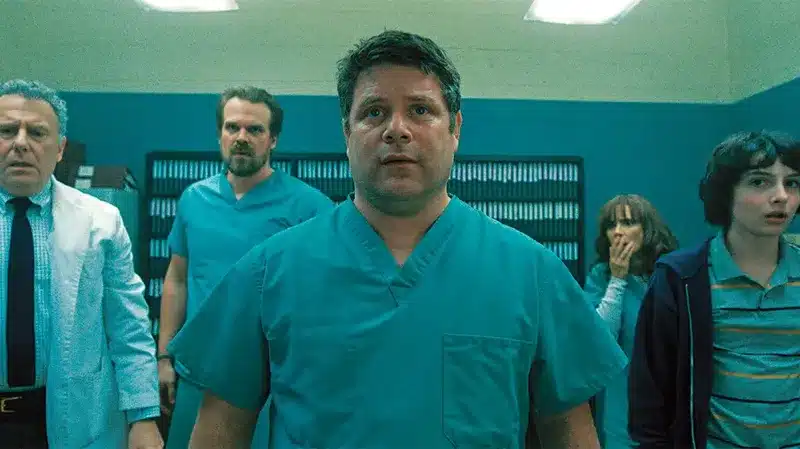
One thing I did note on the rewatch: Hawkins is a cold and forbidding place. From the Byers’ gloomy wreck of a house to Eleven’s bleak cabin hiding place, to the halls of middle school where a taunt and possible first fight is always around the corner. There’s no warm and cuddly refuge from all the evil and experimentation, no Arnold’s Drive In where everyone is safe and secure. (At least in season One, the friendly science teacher Scott Clark is the closest thing to a normal and helpful adult.) Parents are distant or disengaged, or obsessed like Joyce or weak like Hopper. A warm, friendly guy like Bob (Sean Astin) is able to help the team but doesn’t survive one season. No wonder the kids have to jump on their bikes and save themselves.
Which brings me back to the biggest change since Season One debuted. I definitely saw some billboards and promos for the Season Five finale, but the social media “chatter” around it has been subdued. And yet, it is Netflix’s number one show, and the service actually crashed briefly when Season Five went live despite having “increased bandwidth by 30 percent to avoid a crash” according to Ross Duffer. And I’m not the only one doing a rewatch:
During the week of Nov. 17-23, “Stranger Things” Season 1 was the No. 3 most-watched English-language series with 4.1 million views, followed by Season 4 in fifth place with 3.3 million views. Season 2 landed at No. 7 with Season 3 at No. 9, though both seasons tied (along with No. 8 title “Gabby’s Dollhouse”) with about 3.1 million views.
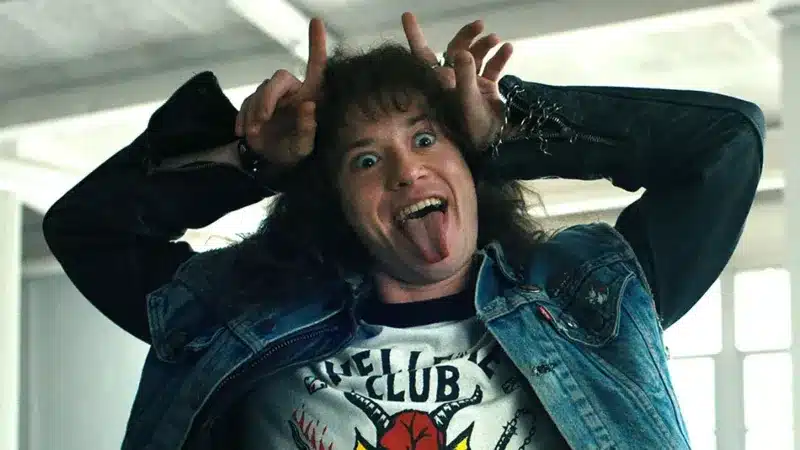
While I’m trying to avoid spoilers before I get caught up on Season Five, it’s clear that “buzz” as we once knew it is much more difficult to create on social media. When Stranger Things debuted, Twitter was still called Twitter and was an international water cooler, not a cesspool of propaganda. The iconic image of Eleven in her Peter Pan-collared dress and shaved head was instantly everywhere. Even in 2022, when Season Four debuted, Quinn’s Eddie Munson was an immediate hit, reclaiming 80s metal heads for the modern audience. Notably, Season Four wrapped up in July 2022. Elon Musk bought Twitter in October 2022. The social media era was always going to die away, but that lowered the coffin a lot faster.
That said, I need to hurry up with my rewatch because a LOT of people are watching Season Five and I‘m going to get spoiled if I’m not careful – but only for the first half of the final season.
Because that’s one other notable aspect of the Stranger Things evolution. Netflix is the most powerful media company in the world, and they stick by their guns about two things:
-
- They aren’t going to release movies theatrically
- They aren’t going to release episodic shows on a weekly basis.
This is their business model and they are not changing – which I get. But it’s also kind of stupid because both theatrical releases AND weekly episodes are both proven to create more engagement and buzz. This weekend I also found time to catch Rian Johnson’s Wake up Dead Man in a theater for its one week art house run because I enjoy movies about 500% more in theater than at home. A personal quirk, I know. It’s a wonderful film that would benefit from the heft of a theatrical run but Netflix be Netflix, ad tei model is home viewing, even if they are beginning to show some signs of cracking.
The no weekly episodes thing is even more ingrained, but with Stranger Things, they are splitting up the final season into three drops, as mentioned. The last two episodes of Season Four also dropped separately but that was supposedly to give a bit more time to finish up the VFX.
Still, the breaks can only HELP people enjoy this season. Lost was the first TV success of the social media era – podcasts and online speculation were part of the enjoyment of the show as it unfolded week by week. Netflix’s insistence on binge watching is taking away part of the fun of anticipation.
That brings me to one final aspect of Stranger Things that seems worth mentioning: untl a few months ago, it was the only successful IP that Netflix owns. (No one bring up the Millarverse.) Netflix is such a hugely successful business that they don’t need to worry about income from licensing and spinoffs. But it is nice to have…All those Stranger Things toys and even comic books are a drop in the bucket for Netflix’s profits, but with the future of streaming itself in question, maybe the bucket will need to get filled up some other way…one day. Now they own Kpop Demon Hunters, as well, so Netflix may some day want to become a bigger player in the IP game.
But for all my talk of buzz and platforms and IP, it’s still the basic truth that stories matter. At its heart, Stranger Things is still a good story and that’s why we still care about Hawkins, ten years later.






“It might be hard to remember now, but Stranger Things single-handedly spearheaded the Dungeons and Dragons comeback”
I think The Adventure Zone and Critical Role may want a word.
Clive, yes for sure, but Stranger Things reminded the more msinstream audience of the game’s existence. And of course the pandemic boosted it even more. But yeah single-handededly was a stretch, I will concede.
Community and Futurama both had stellar D&D episodes as well!
Comments are closed.