
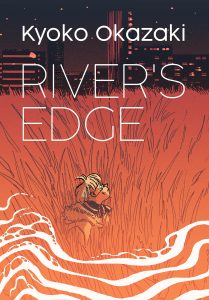
 River’s Edge
Written and illustrated by Kyoko Okazaki
Translated by Alexa Frank
English production by Risa Cho, Pei Ann Yeap, and Lorina Mapa
Edited by Ajani Oloye
Published by Vertical Comics/Kodansha
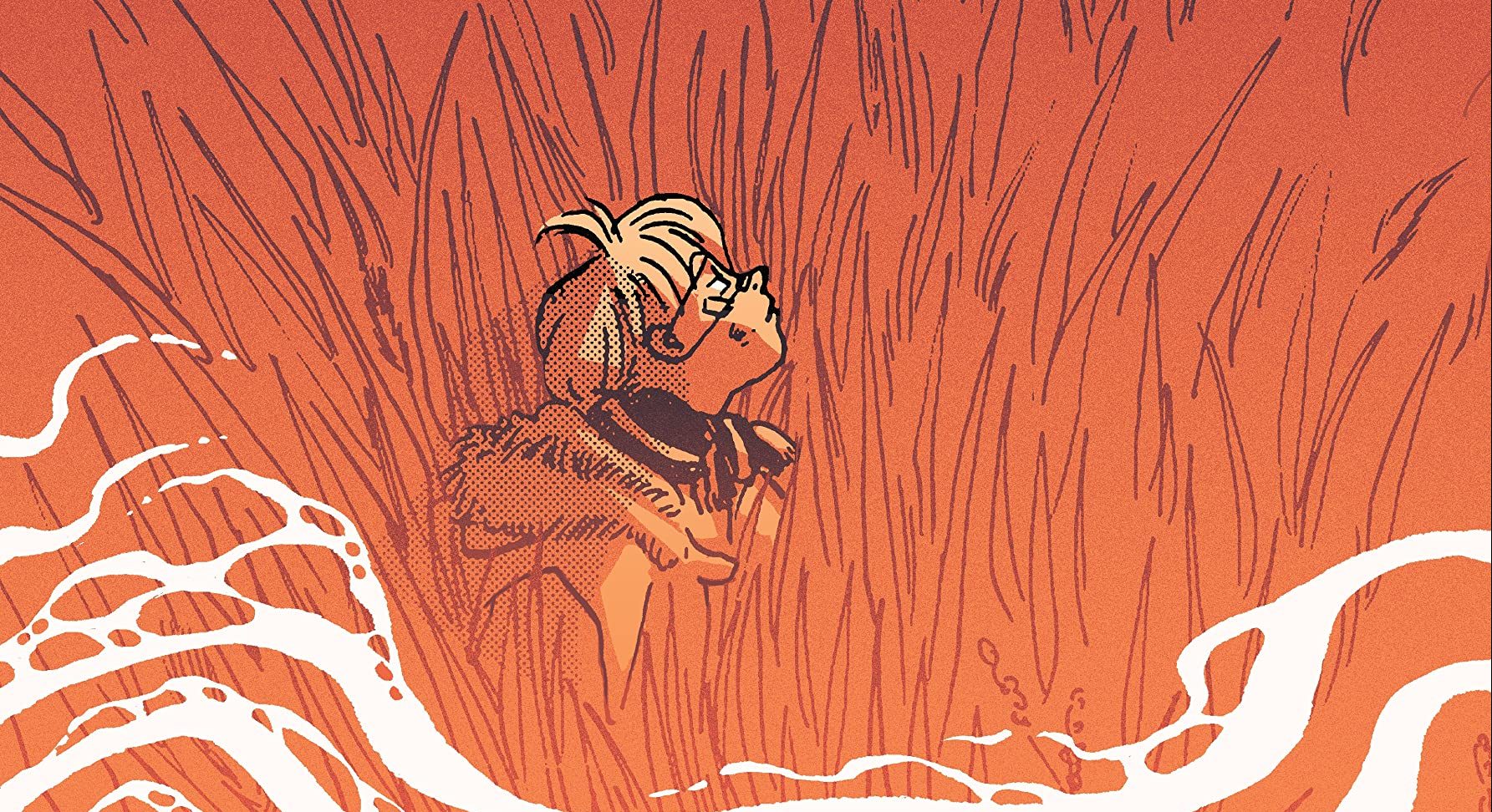
They say that there’s money buried out in the weedy flats by the water behind the school. But that’s only half-true. There’s treasure out there alright: River’s Edge is a manga full of poorly kept secrets. Wet lips. Bloody knuckles and bruised cheeks. Jealous cruelty leads to an unlikely friendship. Damage spirals out into the social circle like falling dominoes. But Kyoko Okazaki is just keeping it real with her unapologetic, immodest portrayal of teenage kicks.
It’s full of high schoolers doing drugs, screwing up consent, getting abortions, losing control and trying to kill each other. Okazaki’s story is like a Gregg Araki movie, flush with sanguine darkness. River’s Edge, where the heroes are deadbeats. Sweetheart screw-ups. The art style adds to the manga’s moral uncertainty, Okazaki’s stylized and compelling line work is definitely 90s and not 30s, the look isn’t vintage. But it is retro informed, like the controlled cartoonists’ flow of Eleanor Davis’ Hard Tomorrow or Marc Hempel’s work on Sandman. Okazaki’s story twists and turns but her art is always a celebration of hedonism and temptation. Of being ungovernable.
Explosive fits of sex and violence, frequently mixed together and directed toward girls, is not uncommon in comics. Nor is the josei manga convention of showing such subjects from the girl’s perspective (thanks, in part, to cartoonists like Okazaki). However, treating trauma with sophistication while making it an aspect of the story- one of life’s slices, not the key to the narrative- makes River’s Edge stand out. Like Araki, its the normal, everyday world that’s rotten. Outsiders are angelic despite their flaws, fitting in is what makes them fall.
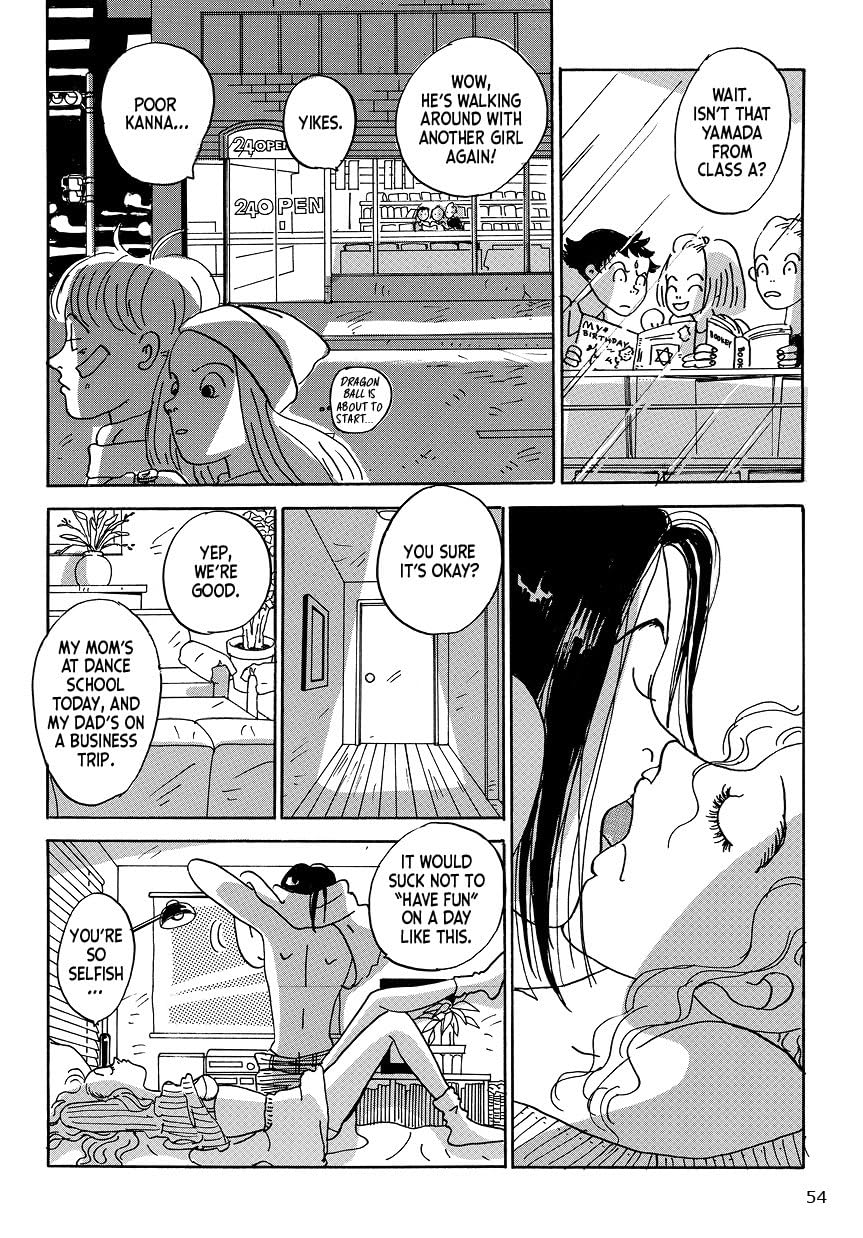 So yes a shocking comic. Sexual assault, animal abuse, physical abuse, drug abuse; to say nothing of the dead body. Adolescence is an age of uncontrollable desire. And the unredeemed rarely have their stories told; folks who turn their lives around get their say, but those who fall through the cracks do it into silence. You might find some joy and beauty in this manga as well. Okazaki depicting destructive behavior affectionately works for me because it puts the strength of the person going through it before the power atrocities have on the reader.
This comic is not afraid of portraying the way burnout kids really act when adults aren’t around. Dirtbag authenticity is powerful stuff! River’s Edge is secrets, a diary. The confession no one else hears. Found families are nice but a circle of broken people can still spectacularly fail each other, and do. The conflict between the mundane and the chaotic inner life of youth sparks, ignites, and the story rolls to a boil.
Alexa Frank and Ajani Oloye‘s translation puts in the work. The comic is full of bespoke hip references, and the 2023 Kodansha edition (with a sweet Becky Cloonan cover) hosts an invading army of explanatory footnotes. I don’t think that Okazaki would have explained all of her references in the original? And while it was cool to get let in on the jokes and jingles and backstories, I found myself jumping. The interrupted flow of the story and the Pop-Up Video explanations of the dialog was not for me. So I let all the references land without context, and it worked fine. Like Robert Altman doing his sea of voices sound design, it doesn’t matter whether you catch the quote, what counts is feeling immersed in reality. The bustle of a lunchroom becomes a texture, a liminal space.
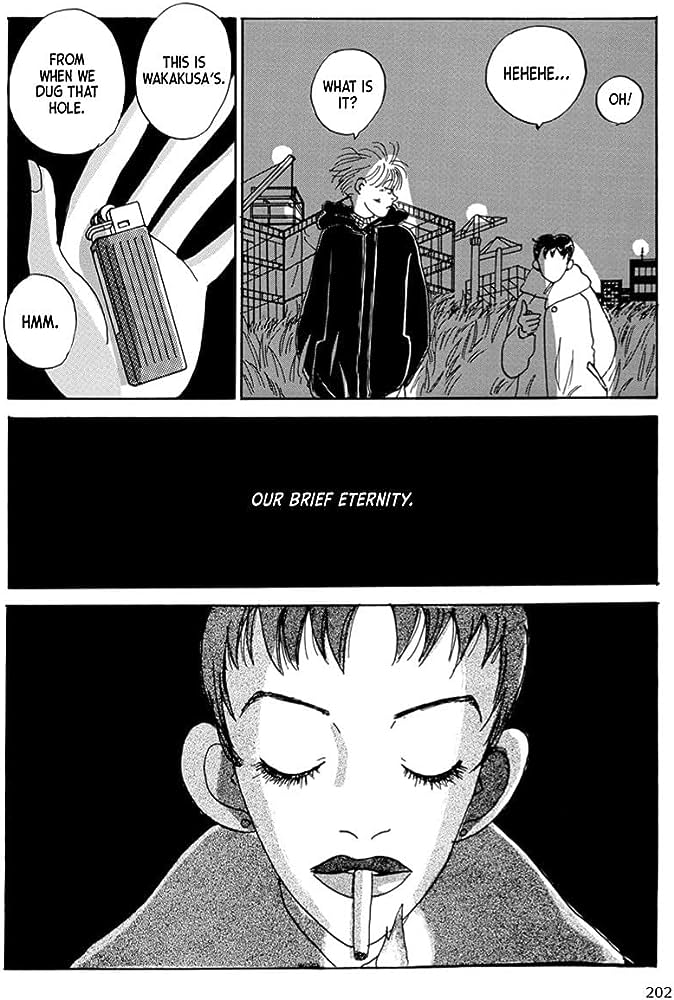 Okazaki is incredibly mindful of how the big moments are presented to the reader. The boom is an interior breakthrough, not the bridge blowing up. But the wide shot River’s Edge pulls back to when the story takes an emotionally gigantic turn? It works. The setting is the manga’s titular character and gets its own POV moments. The story is dynamically framed, cinematic when it suits the author. At the same time, it’s cartoonish and expressive. The qualities we think of in zines and doodles and ones from viewing a scene through a lens are just as likely to grace Okazaki’s pages.
Cool shit. Okazaki, I compare thee to Julie Doucet. You brought an uncompromising raw personality to comics. You created the kind of manga you wanted to read because no one else was, which in turn changed how we talk about the medium. River’s Edge indulges in the artifice of storytelling without compromising reality’s resonance in its characters’ faults.
River’s Edge is available from Kodansha and wherever fine comics, manga, and books are sold.






Is there some connection between this manga and the 1986 film of the same name?
Just a spiritual one, I think! “Some teens find a dead body by the side of a river, and…”
I assume Okazaki was inspired by the film, at least title-wise.
Comments are closed.