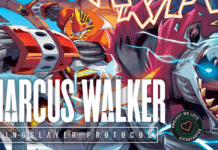
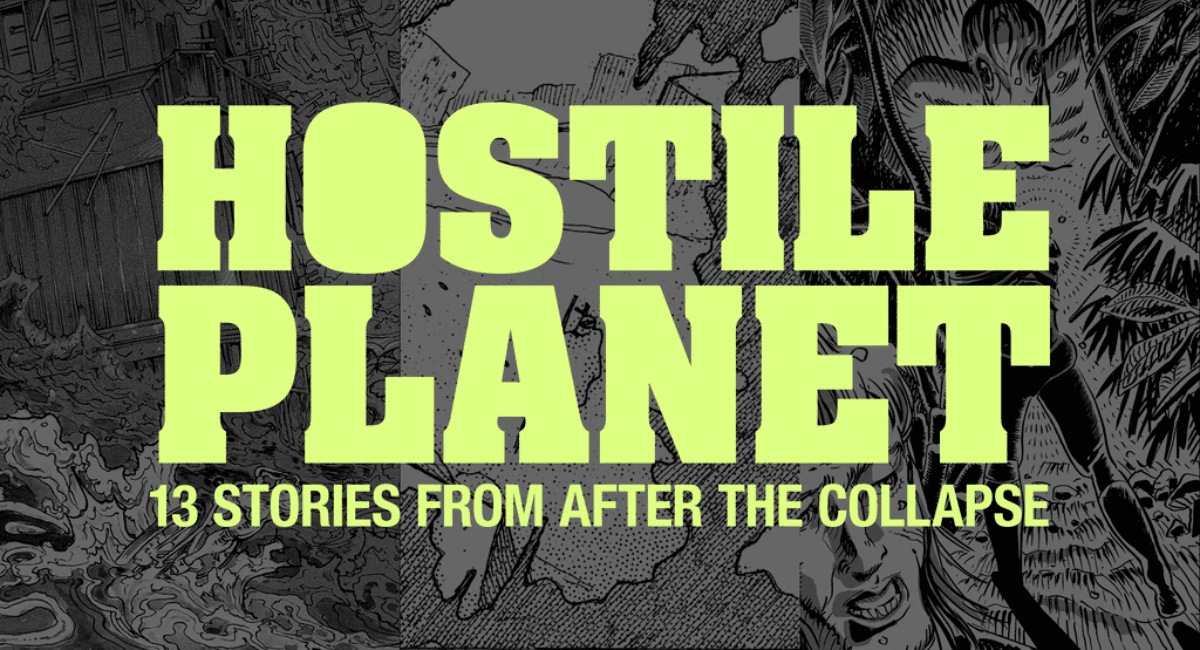

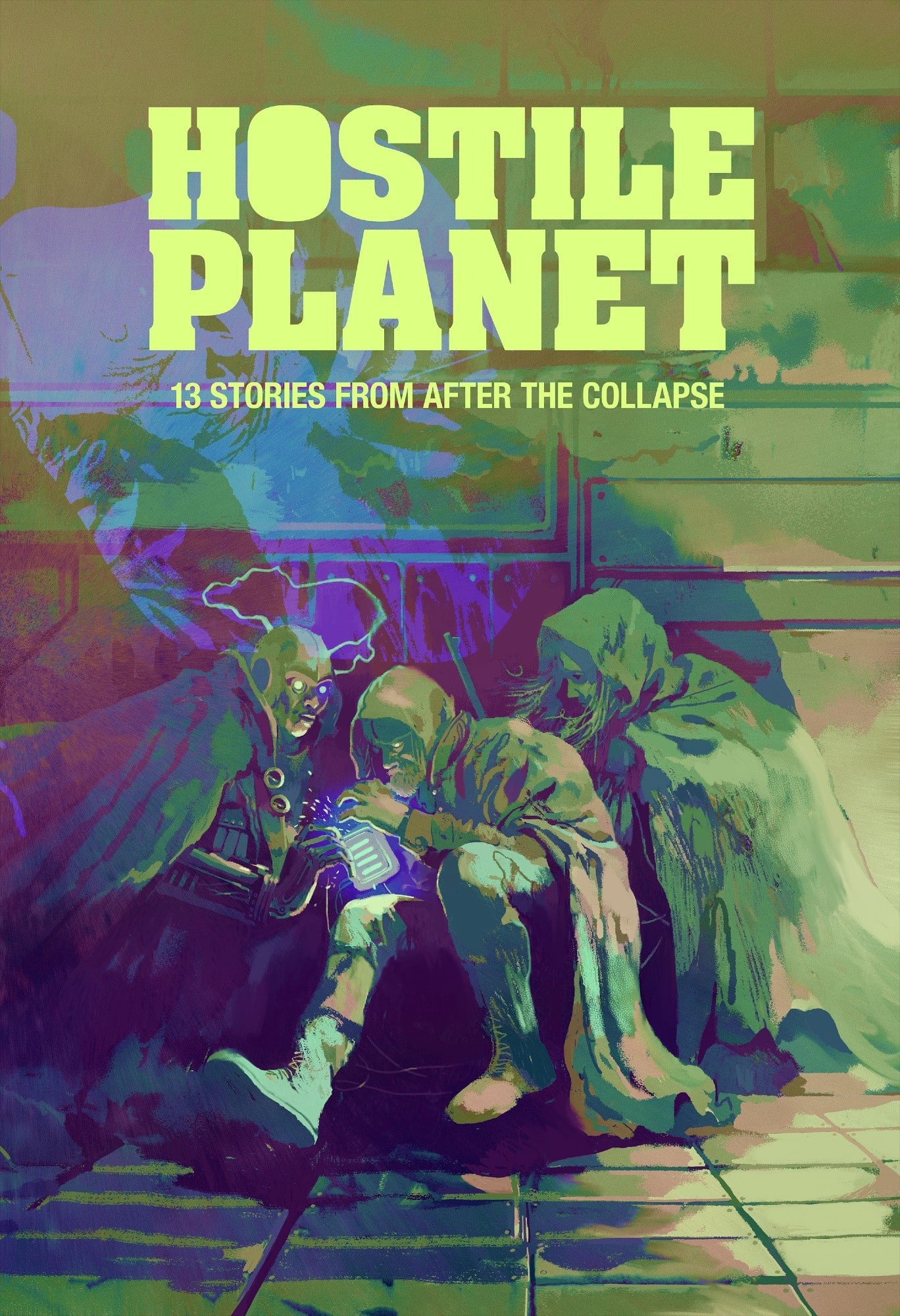
Known for celebrating overlooked artists and pushing the edges of genre comics, Strangers Publishing is charting a new frontier with Hostile Planet. The environmental science fiction anthology is a two-year passion project born from publisher Eddie Raymond and longtime collaborator Tom Kneeshaw, who set out to honor the creators who shaped their friendship. Influences like Mad Max, the Armored Core franchise, and the stark techno-landscapes of Tsutomu Nihei still echo in its DNA, but the project has evolved far beyond those early sparks.
Reimagined, expanded, and finally ready for readers, Hostile Planet gathers 13 creators from across the globe to tell stories about what remains after ecological collapse. From post-capitalist wastelands to wind-scarred deserts, each piece is a glimpse into resilience after ruin. The Beat reached out via email to discuss it further.
Diego Higuera: What inspired the creation of Hostile Planet, and how did the concept evolve from its early influences into a 13-creator anthology?
Eddie Raymond: Tom Kneeshaw and I had been in discussion for awhile about collaborating on a project for awhile. We were both really inspired by anthologies like Ex.mag and Dagger Dagger and wanted to do something that had the same aesthetic sensibilities with it’s own unique theme. I think I might’ve pitched him on some shower thought I had about doing something around a “solar punk” theme and he started sharing me games like Armored Core, etc. and eventually the project was born. Originally it was supposed to be more than 13, but we ended up cutting it down as folks dropped out, etc.
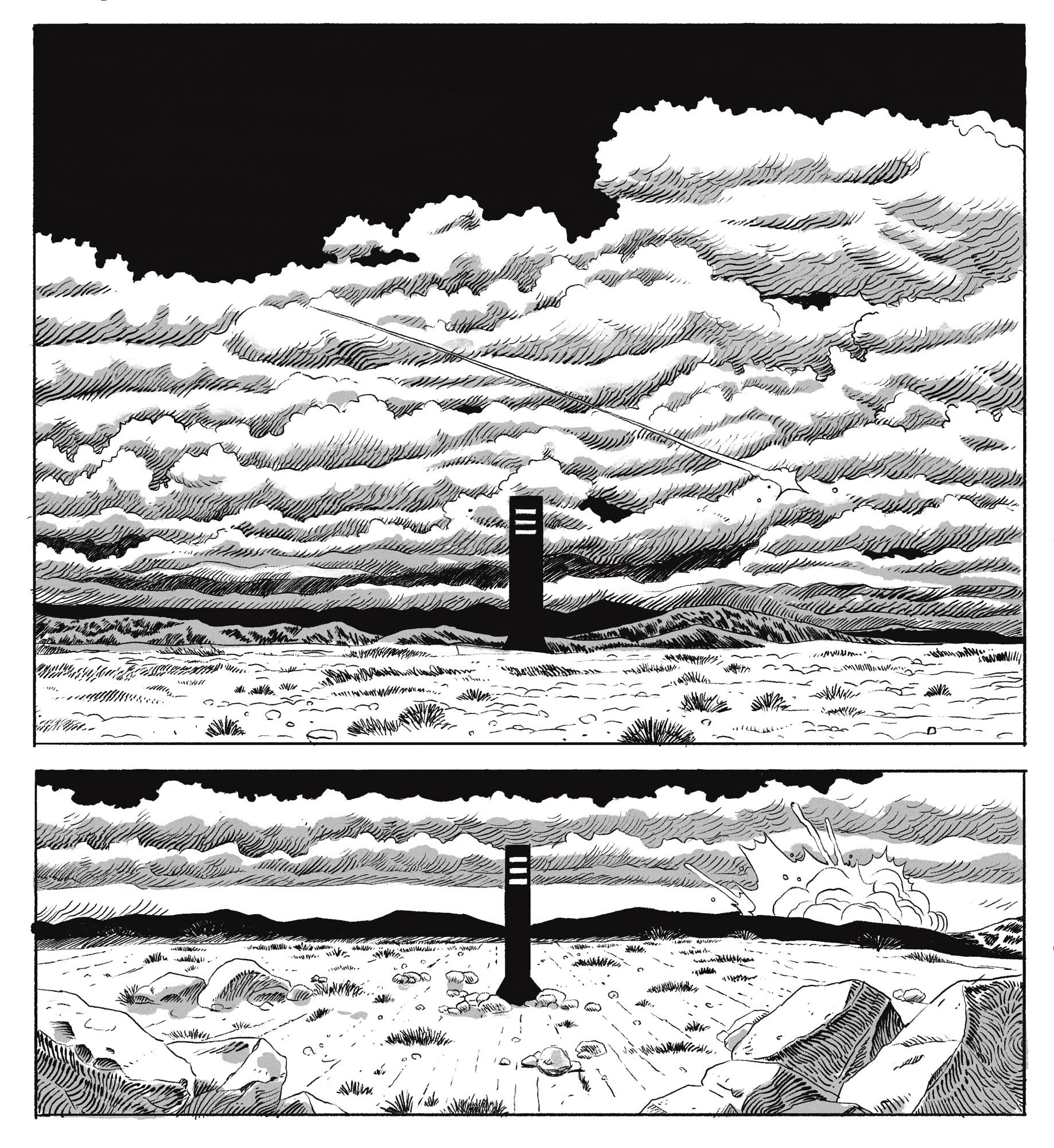
Higuera: How did you curate such a diverse international group of artists while
maintaining a cohesive vision for the book?
Raymond: Thankfully, Tom and I are both drawn to very similar types of art style so we had gathered this “wish list” that we’d pick through, throw names back and forth to see what fit together. It helps a lot that I spend arguably too much time scouring Instagram for new artists but it did mean that over the years, I naturally built a good bench of global artists that I was already interested in working with.
Additionally, it was a really great opportunity for us to connect with some artists that we’ve been wanting to work with but the stars haven’t aligned due to the bandwidth to put out a full book on either side of the aisle. It also gave the chance to get some lesser-known artists we’ve been admiring, who haven’t had the opportunity to get their work out there into the fold with Strangers and hopefully help get their work seen by more people.
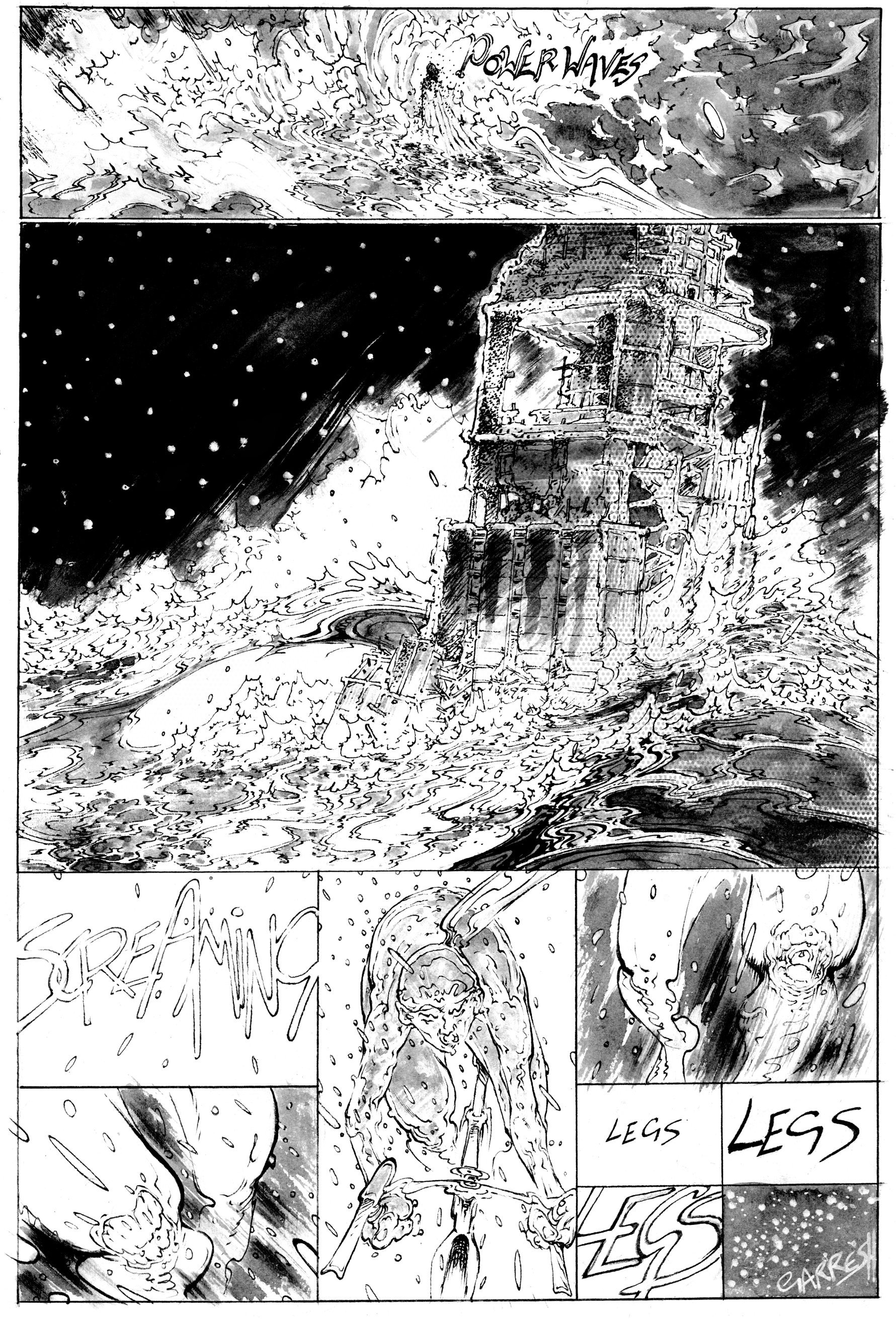
Higuera: Environmental collapse is central to every story. How did the creators
approach this theme without repeating one another?
Raymond: First, Tom and I reviewed all of the pitches to make sure nobody was crossing over. Certain themes did seem to come out commonly, “new gods” being one, interesting enough. In our initial prompt, I think one of the things that really helped guide folks into expanding their thinking is that we simply told folks “it doesn’t have to all be bad.” We told folks they could focus on human resilience, small stories, worlds built a new.
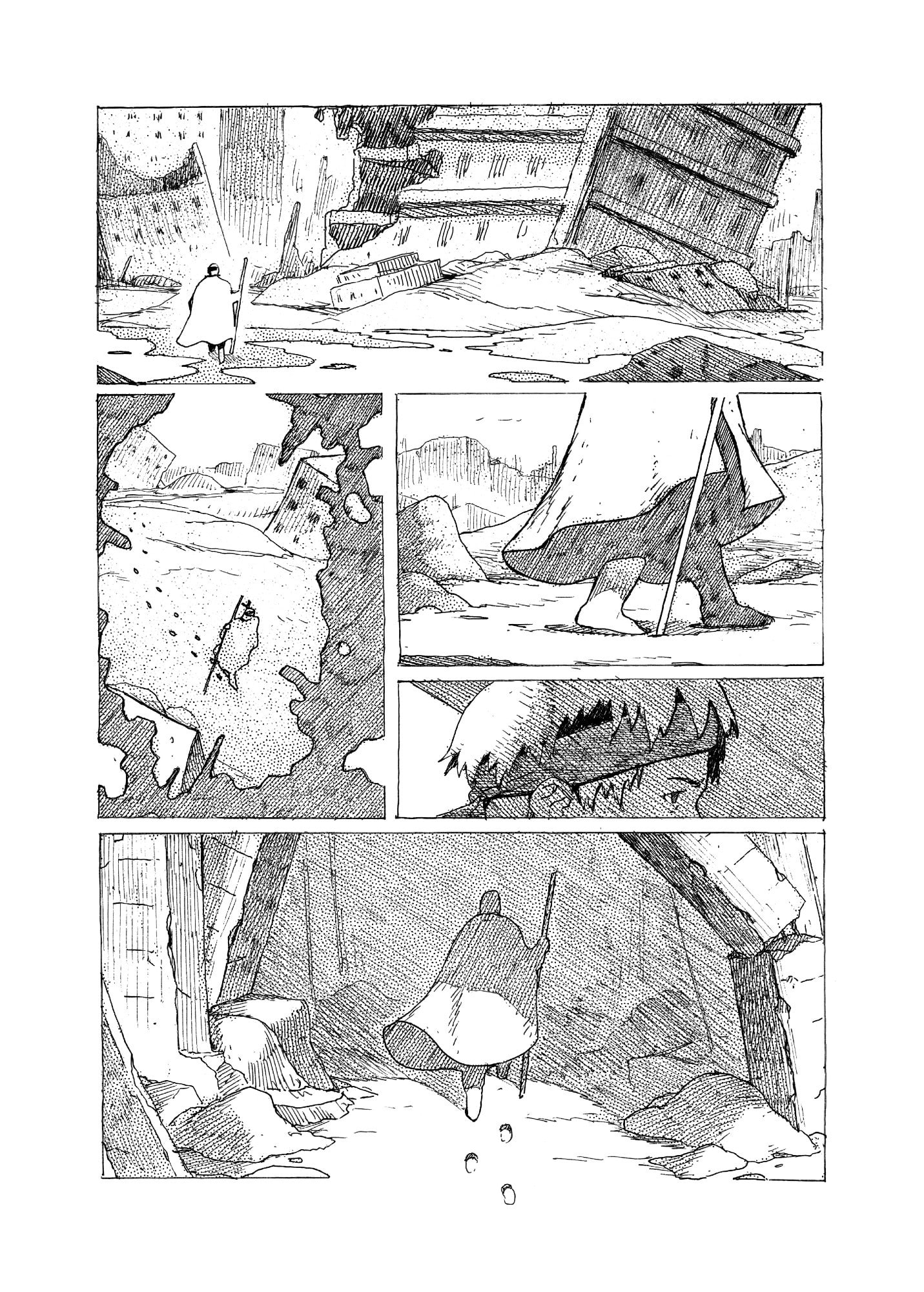
Higuera: What unique perspectives or surprises emerged from the global
contributors as they imagined a post-collapse world?
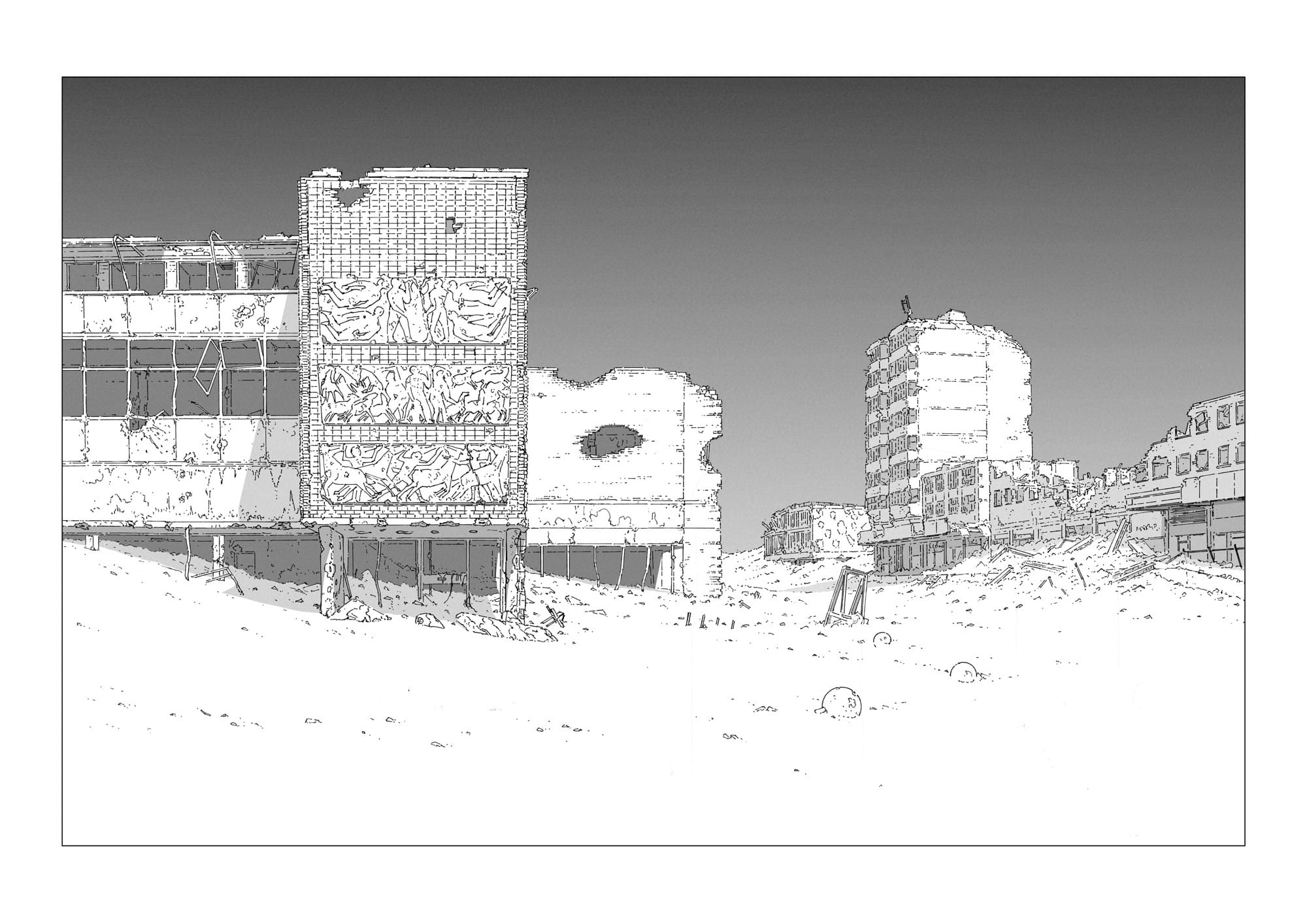
Raymond: I wouldn’t say unique perspectives, but one of the things I found interesting was what type of landscapes everyone ended up focusing on. Tyler Landry up in cold Canada has his story set in the snow, Lando in England has these portrait studies of like blown out buildings and just disaster lain cities. They were also versions of the town he grew up in.
Maybe I’m reading too much into the British psyche, but I’ve spent enough time driving through England where I can see where those old factories and post World War II built communities can affect that type of view on the environment around them.

Higuera: Why was prioritizing fair payment, like the $50/page stretch goal, so
important for this project?
Raymond: I think compensating creators for their work period is not just fair, but the only way of doing things. $50/page as a minimum seems like the most obtainable rate to start at and hopefully get further past. I know other anthologies will do things like a certain amount of comp copies to each artist in lieu of payment, but since we’re working with creators from all over, that also becomes a lot more challenging and cost-prohibitive.
Higuera: This isn’t Strangers Publishings first project, what made this one different from the others?
Raymond: I’ve been jokingly calling Hostile Planet our magnum opus. I’ve had this
vision in my head of what I’ve wanted Strangers to look like as a publisher
and have slowly been working towards over the years with the books I’ve
published and connections I’ve made. This project feels like a true defining
statement of what I want Strangers to represent: singular-vision genre
comics on a global scale.
Higuera: What were you able to improve on, especially as an indie publisher?
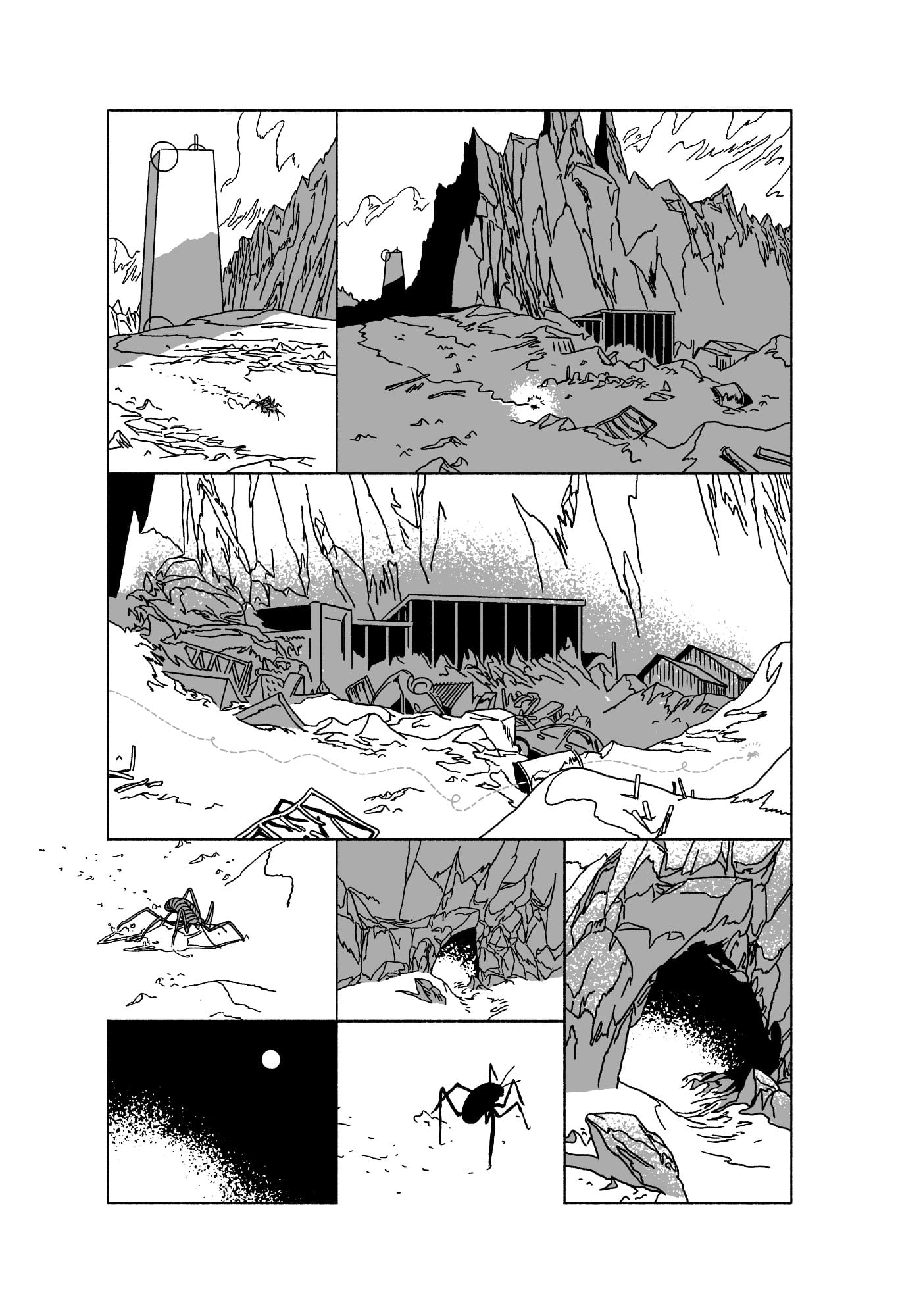
Raymond: I’m not sure I can say we improved on much from how we usually do things. If anything, I’ll have improved a lot on how we’re approaching Volume 2. Tom and I started on this project almost two years ago at this point and I think we were giving far too much grace in terms of deadlines, hoping to keep certain creators involved only for them to drop out and that ultimately left the project sitting around for a long time.
Going forward we’ve created a lot clearer deadlines that we’re going to hold firm to, but also adding in some buffer periods to allow some of the creators we’re working with grace where needed. Tom made a good point that it was also a really nice boost in confidence for some of the creators we received yeses from, or just engaged with the project, that were interested and couldn’t do it for one [reason] or the other. It helped us set our sights further on Volume 2 and whether they all shake out is to be determined, but so far we’ve gotten ‘yes’ from 8 out of the 13 creators we’ve reached out to thus far.
Higuera: What do you hope readers take away about humanity and resilience after experiencing the anthology?
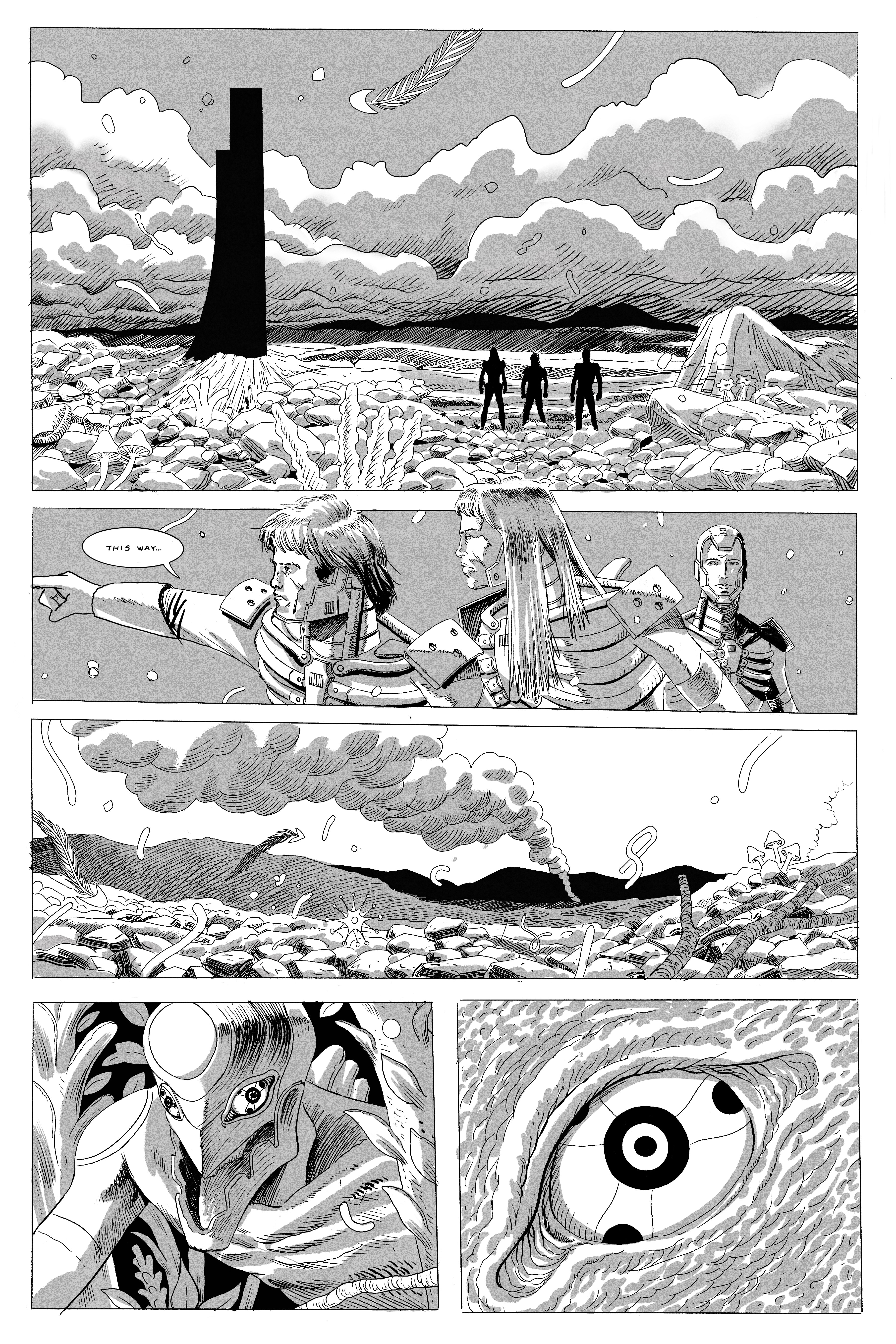
Tom Kneeshaw: We emphasized that we weren’t looking for post-apocalyptic stories of all despair and hopelessness. I think it’s important that we showed that even through the darkest times and complete collapse, there is hope and there can be bright spots involved. This is something that I think Margot [Ferrick] did really well by writing about a small moment of playfulness.
For more information, check out the project here before it’s too late!