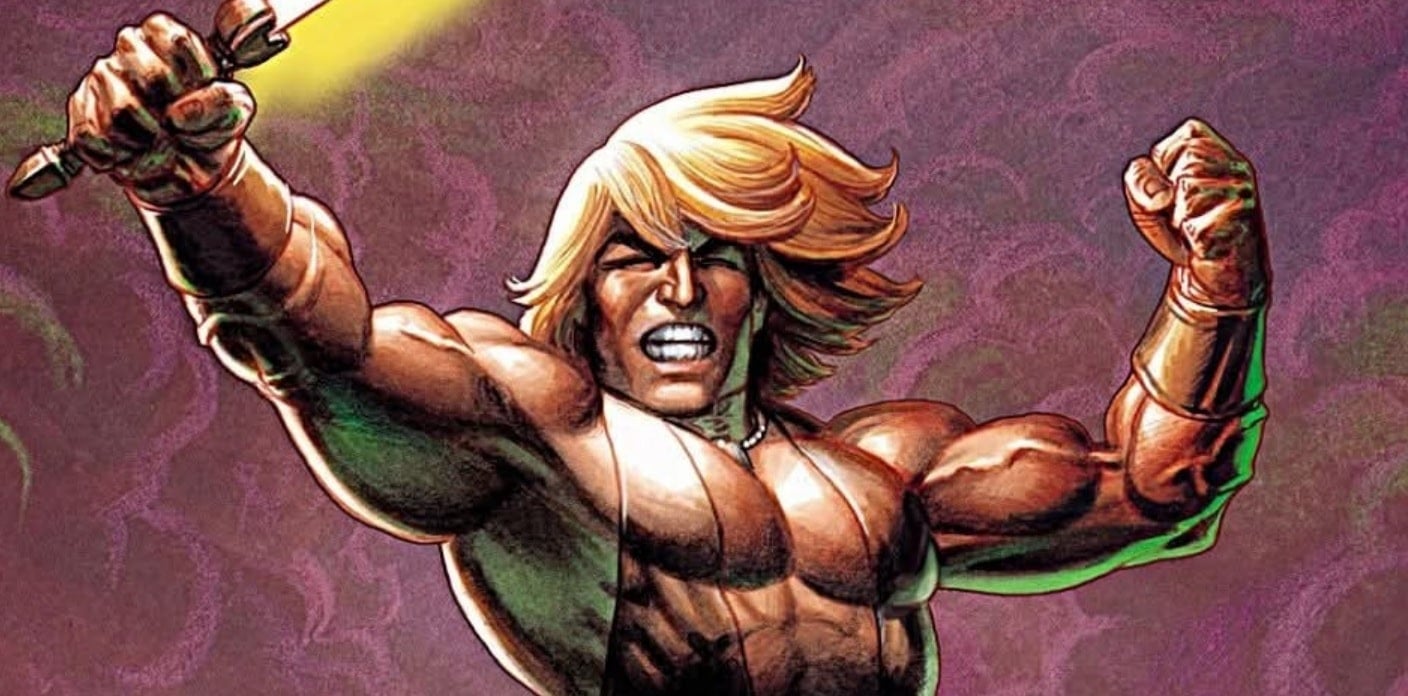

During New York Comic Con last October, Dynamite announced a new Thundarr the Barbarian comic from the creative team of writer Jason Aaron and artist Kewber Baal. Based on the eponymous Saturday Morning cartoon of the same name from the early ’80s, Thundarr only lasted two seasons consisting of twenty-one episodes. Despite its relative brevity on television, the animated series has developed over the decades. Set in a post-apocalyptic vision of our world nearly 2,000 years in the future, the show followed the titular Thundarr and his companions Princess Ariel and Ookla the Mok fighting to save the world’s last surviving humans from enslavement by mutants and wizards.

Ahead of the release of the first issue of Thundarr the Barbarian this week, The Beat had the pleasure of chatting with writer Jason Aaron who wears his love of the original animated cartoon on his sleeve. During our conversation, Aaron discussed how he came onto this project, expanding the show’s original lore, and much more!
The interview has been edited for length and clarity.
Taimur Dar: Although Thundarr the Barbarian came out before I was born, I definitely watched some episodes in the ‘90s when Cartoon Network aired reruns. When did you first encounter the character and show?
Jason Aaron: Thundarr was one of the staples of Saturday morning for me in the early 80s. I was old enough that I had discovered the Mad Max movies and Planet of the Apes. I was already big into post-apocalyptic stories. I had just started to discover comic books above the spinner rack. And then I was falling in love with Conan stories from the Robert E. Howard paper books I’d found at a local used bookstore. All the ingredients that went into Thundarr were kind of already things I was into. And so Thundarr felt like this great gumbo of all this stuff that I was already getting really excited about.
Taimur Dar: When I first watched Thundarr, I was too young to appreciate that so many major players in the comics industry were involved in the production of the show including Steve Gerber, Alex Toth, and of course Jack Kirby. When did you come to discover that the show boasted such big names in the comic industry.
Jason Aaron: I don’t think I understood that at the time when I was a kid watching that show. I don’t think I knew who Steve Gerber was or Alex Toth. I think I had come to understand who Jack Kirby was. I didn’t figure that part of the equation out until years later. And you’re right, there’s so many comic creators who worked on cartoons back in those days. But Thundarr in particular feels like a murderer’s row of comic book talent that worked on it. Steve Gerber was one of the main guys who created it. And Alex Toth did a lot of those original character designs.
And then when the show moved forward, Jack Kirby came on and did a ton of work on it. And you can see Kirby’s influence in so many episodes. So many characters look like they stepped out of Kirby’s Thor or one of the DC Fourth World titles. It’s a pretty incredible list of comic book talent. I became a huge Steve Gerber fan since then. He’s one of my favorite comic writers of that period. He was a guy who seemed like he was always pushing the envelope and doing stuff that was so much weirder and going in so many different directions. In the ‘70s, when lots of guys were doing weird stuff, Steve Gerber still managed to be the weirdest of all of them, which I love.
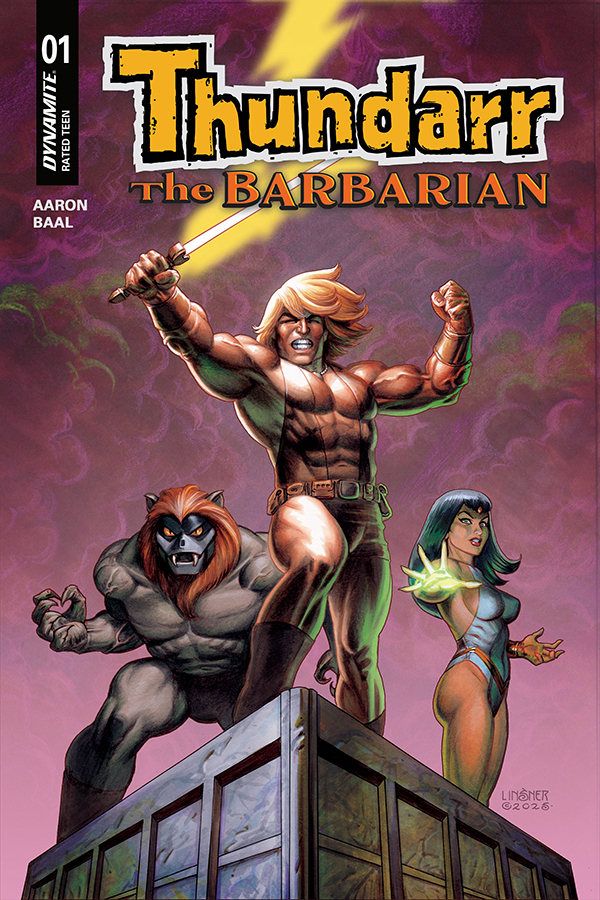
Taimur Dar: Writing Thundarr seems like such an obvious project for you given your past work with the sword and sorcery genre such as the Conan the Barbarian comics. How did you get approached for this Thundarr the Barbarian comic series and were you at all hesitant for fear of being typecast as the “barbarian” writer?
Jason Aaron: I certainly do love doing different kinds of things. I think that just stems from the fact I read a lot of different stuff. My comic book reading has always been a lot of stuff across the board, which I think comes from growing up in the ‘80s when there was that explosion of indie titles. I was reading Dark Knight Returns and Alan Moore‘s Swamp Thing and X-Men and all that stuff. But I was also reading American Flag, Grim Jack, Scout, and all those great comics that covered all different genres. I think as a creator, I always like doing different things. I think I get bored if I’m doing the same style of comics with the same voice, over and over again. I like mixing it up.
I never had any hesitation about doing Thundarr. Quite the opposite. Nick Barrucci I have known him for years and he’s talked to me before about doing something for Dynamite. It’s never worked out but when he asked me about being part of all the Hanna-Barbera and the cartoon [comic projects], which have all been great, I told him, “Give me a call if you get the rights to Thundarr.” A couple of weeks later he emailed me and he had gotten it done. So I had to say yes for multiple reasons.
One, that show was just so special and important to me as a kid. So much of my career has not been based upon or driven by that. I haven’t gone through comics chasing jobs of the characters that I loved when I was ten years old. So much of what I’m known for in comics is not that. It was not just the stuff that I was reading during those formative years. It was sort of what spoke to me in that moment and if I felt like I could tell an interesting story.
But there are some of those characters. Conan was one of them where if the opportunity comes along, it’s very much speaking to me as that kid finding the stuff that was going to be a huge influence on me. What I did on Thor was in large part influenced by my love of Conan and I think also my love of Thundarr. You can see the threads of that through a lot of the stuff I’ve done. Also like you said, that cartoon had such an incredible pedigree of comic book creators who put it together. But there’s never been a comic book of Thundarr. It’s never come to life in comic book form.

Taimur Dar: This comic will finally provide an origin for Thundarr. Obviously, you don’t want to divulge too much but what can you tease for fans?
Jason Aaron It really came from the approach that I took when I did Star Wars a few years back for Marvel, where I wanted it to feel like a big, important book that is not just stuff that happened on a random Tuesday between the movies. the book to be that. I wanted to feel like this is meaty and important. These are big beats and big moments that happened between the films and to make it as essential to the to the overall mythology as you could. And so I wanted to take the same approach with Thundarr. This is not just an average, everyday episode of the cartoon. It very much has that feel and it’s full of references to specific moments and characters from the show. But I want this to feel like the biggest episode of Thundarr you’ve ever seen.
So the threat that Thundarr is facing is huge. The ramifications of what happens as the story goes are huge. And as a part of that, I wanted to explore some of the characters’ origins in there. You’re right. The show never got to that. Steve Gerber definitely had a story sketched out, which he sort of talks about in interviews from that time period. And you get some clues also in the show’s opening credits. So you kind of put those pieces together and you can get a picture of where Thundarr came from, how he first met Ariel and Ookla. How he first came into possession of the Sun Sword. So that those are stories that we’ll be telling over the course of the miniseries, which also connect to the rest of the story and to the threat that Thundarr is facing.
Taimur Dar: One of the staples of the show was the usual of real-world locations. What places can readers expect to see in the comic?
Jason Aaron: For the first issue, I live in Kansas City, so I had to put Kansas City in there right away. We go to Chicago as well. We go to a couple of recognizable cities. We go back to a couple of locations from the show. This would be a mix of both new spots and old spots as well.
Taimur Dar: I’m curious if this was the first time you’ve rewatched Thundarr the Barbarian since childhood? Were there any episodes that specifically influenced this comic series?
Jason Aaron: I certainly went back and rewatched the episodes and made a bunch of notes as part of working on the book. But that was not the first time I’d rewatched them since I was a kid. I’ve still got VHS copies of the episodes. I bought them as soon as they were available on DVDs. I’ve watched them plenty of times over the years. The very first scene of the first issue is full of references to specific episodes. We see multiple clans of mutants, multiple different wizards from throughout the show. The show didn’t have a ton of recurring characters beyond kind of the, Thundarr, Ookla, and Ariel.
But one of the only bad guys who popped up multiple times was Gemini, who’s one of the best and most memorable designs of any of the characters. He’s got two different faces. His head kind of twists around and the other face is angrier. Seems like the kind of guy who was destined to be an action figure. He’s one of the main villains in it. We bring together several of the evil wizards from the show. Every episode was kind of Thundarr and his friends fighting a different wizard with a few references thrown in here and there to some sort of council of wizards. In this story, we bring those evil sorcerers together to see that council for the first time.
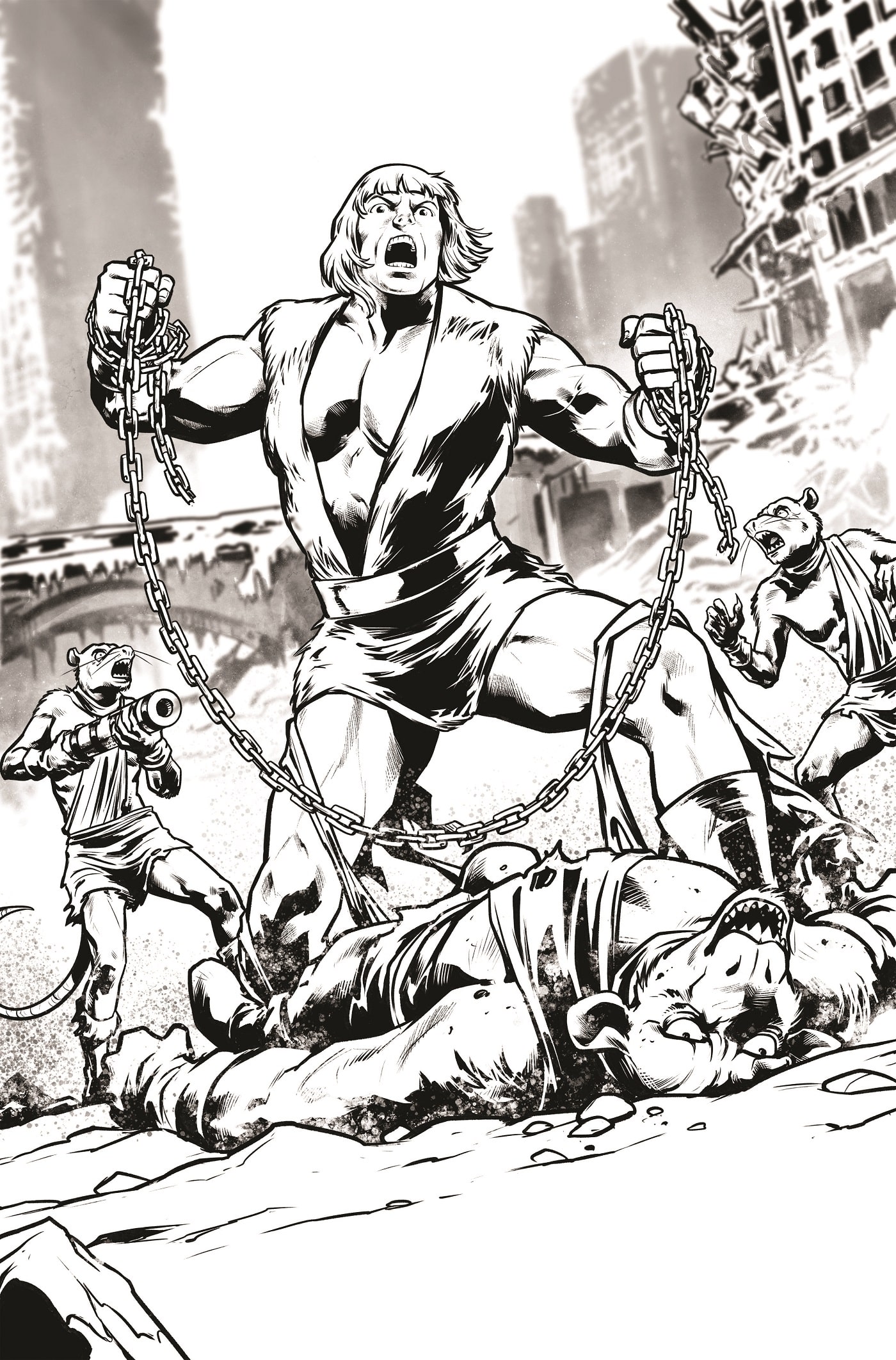
Taimur Dar: The artist for this Thundarr comic is Kewber Baal. I believe this is the first time you’ve worked together, so I’d love to hear how the working relationship has been?
Jason Aaron: Working with Kewber has been great. I think he’s been really killing it right from the get-go with a licensed project like this and something that is based directly on a show that people grew up loving. A big part of that is capturing the look and feel of that original show, which was very important to me in this. I didn’t want this to be a far flung, radical take on the show.
It’s important that this look and feel, to a certain extent, like the cartoon from the ‘80s. We still push some things in terms of the emotional weight of it and certainly the violence to be beyond the limits of the show. But for the most part, this should feel like the same world from that cartoon.
And I think Kewber’s done an incredible job of capturing that setting. The setting is one of the most important parts of Thundarr, certainly one of the most interesting, exciting parts of this ruined futuristic landscape mixed with sword and sorcery elements. And he’s done an incredible job filling the backgrounds and the landscapes with awesome details and capturing the likenesses of countless characters from the show.
But again, we’re also trying to take it a little bit beyond that. And a large part of that is the action and violence. I think he’s doing an incredible job with that in particular. I think fans of the cartoon will be happy. But I also want this to be a comic that will appeal to people who never heard of Thundarr before and never watched a single episode of the cartoon. If Kewber and I are doing our job properly, you shouldn’t need to go back and watch any of them to pick up issue one and understand it.
Taimur Dar: How long will you be on this Thundarr the Barbarian title?
Jason Aaron: This is a six-issue story. Beyond that, we’ll see. Just like with Conan, I think Thundarr could be a character that I have other stories to tell. But this is a six-issue story.
Thundarr the Barbarian arrives in comic shops Wednesday, February 4th.