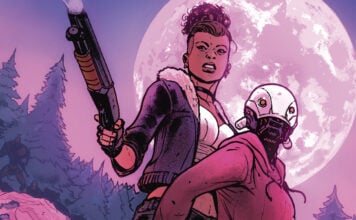

Lost Fantasy is a magical monster hunter story set in the modern world from the creative team of writer Curt Pires and artist Luca Casalanguida. Rookie monster hunter Henry Blackheart is keeping mythical creatures from coming into our world. The story is incredible, and the world-building is superb. The series also features back-up tales that continue Pires’ series Indigo Children.
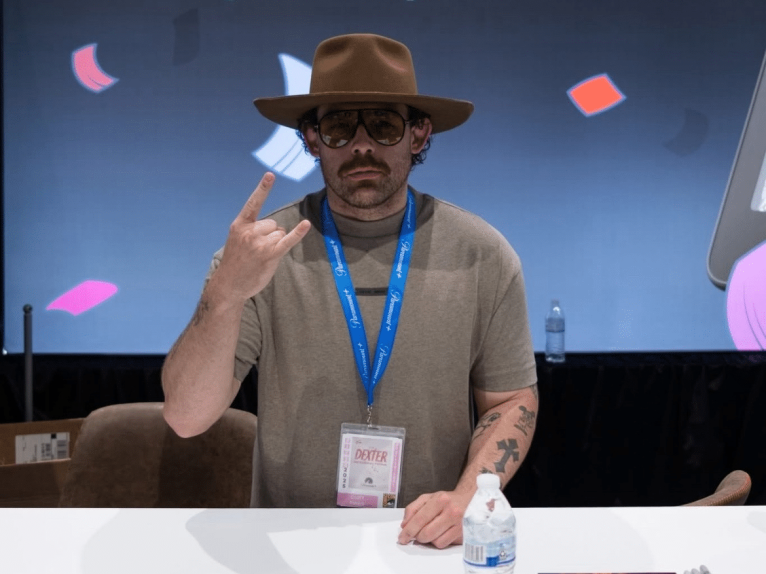
At San Diego Comic-Con 2025, The Beat caught up with Pires to discuss the future of Indigo Children and Lost Fantasy, the connection between comics and other media, and the importance of asking for forgiveness rather than permission.
This interview has been edited for length and clarity.
JAVIER PEREZ: I wanted to ask you about Indigo Children because it’s been continued in the back of Lost Fantasy. Is there a Volume 2 in the works?
CURT PIRES: The plan is for the story to be continued, and there’s a bridge between Volume 1 and Volume 2, that’s both a sort of prequel and origin story. Then, eventually, we’ll set the table and bridge the gap. Our focus right now is on finishing that story, which will be ongoing in Lost Fantasy as a backup for a bit, probably for at least the first eight issues. Once we’re done with that, we’ll figure out what everyone’s schedule looks like to wrap up Indigo Children with Volume 2.
PEREZ: So the stuff going in Last Fantasy, like the Mars story?
PIRES: Exactly, it’s gonna show how they got to Earth in the first place and how the children got their superpowers and their memories. Near the end, it’s gonna catch up more to the present day. Like, I don’t want to say too much because I’m getting in spoiler territory, but it’s kind of a unique thing where it’s both a prequel and a sequel, and the idea is set the table for volume two, but also if it’s the first time someone’s read it, they’ll read it. Then they can go and pick up Volume One and not be lost. There won’t be redundancy, you know what I mean? So it’s kind of like I was trying to thread the needle.
PEREZ: I do like that part of it in the sense that there’s something else I need to follow up on, and I think that momentum helps the book.
PIRES: It’s so funny because Indigo Children did really well, like Lost Fantasy is definitely like my breakout book, where it’s just bigger than anything else, but Indigo Children has hardcore fans.
PEREZ: Can we switch to Lost Fantasy? How many issues are out?
PIRES: Three. I timed issue three to come out before San Diego Comic-Con. So, issue three just came out a couple of days ago. It’s my current ongoing Image series, and issue four is out at the end of August and wraps the first arc. And then we’re coming back for issue five. The first trade paperback will also be released on the same day, November 19th.
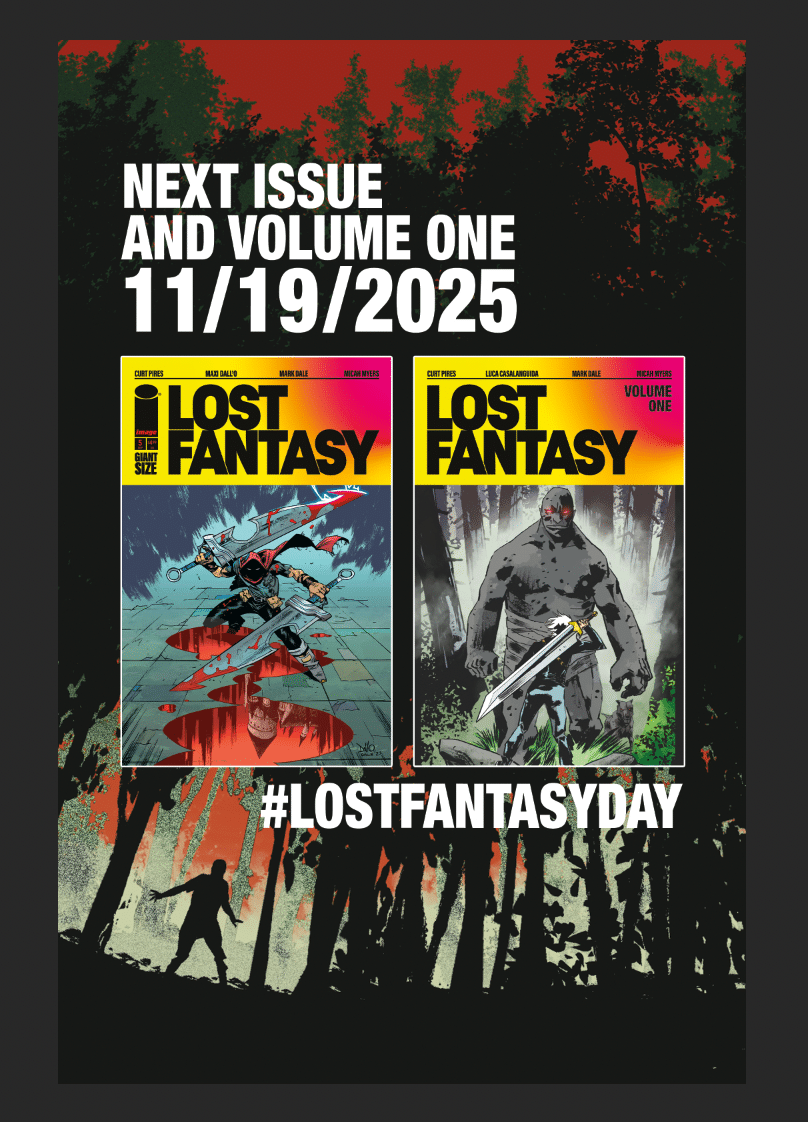
I have a bunch of big plans for that, essentially to make it like an event, because when I first started wanting to write comics was during the early 2010s. It was when Image was experiencing its own kind of renaissance, I would call it that. I’d love it when you go to the store and there’s this new Image book you want to check out. And the first trade is out. And then also the next issue. So I’d always like to grab both, right? And so, when I was planning this, I had that in mind.
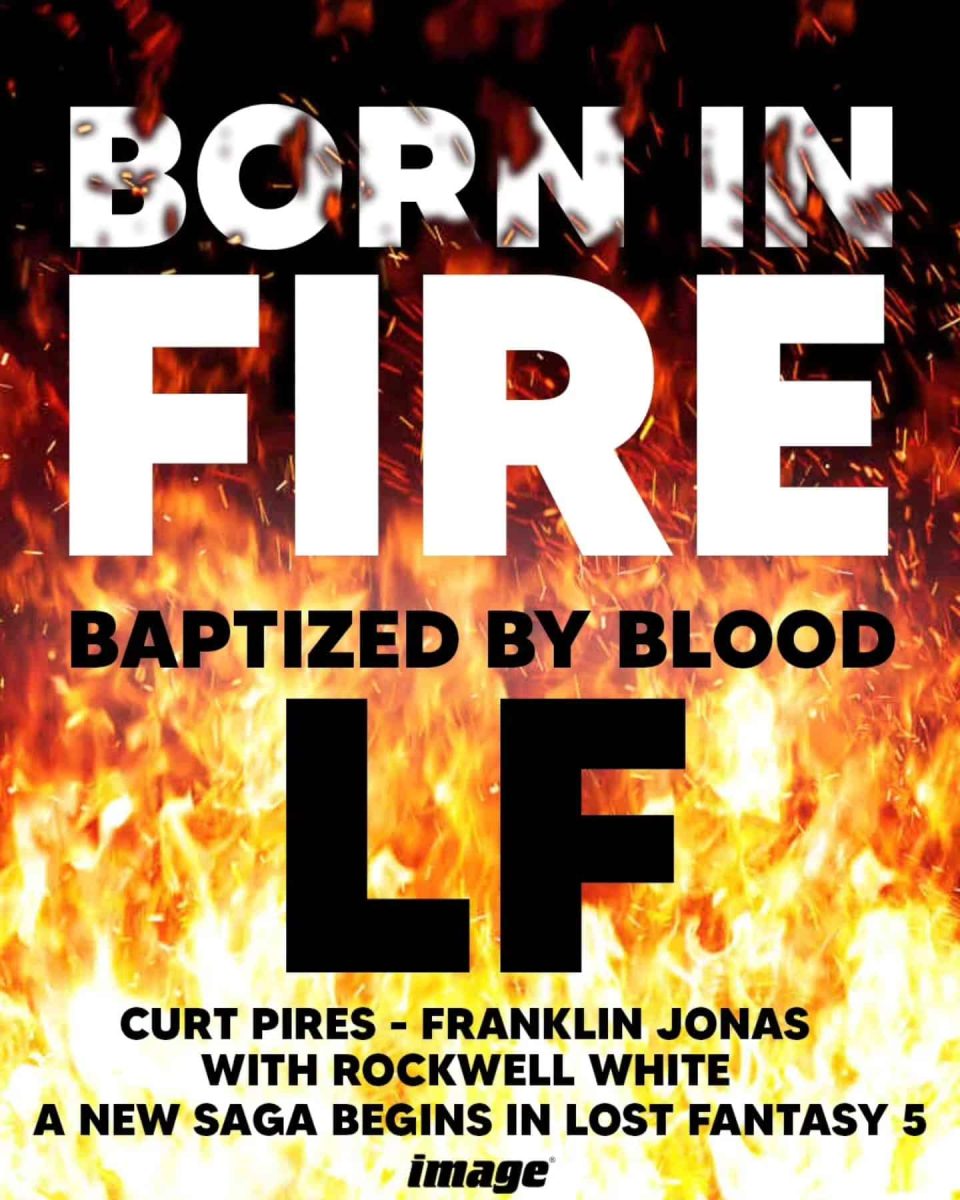
And so we are announcing that a Lost Fantasy spin-off book is coming. That’s written by me, and the really talented, creative Frankie Jonas, who is of the Jonas family. It’s kind of weird, but he is a Lost Fantasy super fan. And so I met him and we started talking. He has so many creative ideas and is brimming with a passion for the medium. And we got talking about this idea I had, and he wants to come help us with it.
The first look at this will be in the back of Lost Fantasy issue #5, which again is going to be out the same day as the trade paperback. It features a first story introducing a new character who will be the lead of the second Lost Fantasy book.
PEREZ: Just as a fan, when I get something I’m like, “No, I need more. Give me more story.”
PIRES: So with this, it’s like giving people more, but in a way that it has to be as cool as the main book. Because the problem with comics, and honestly everything right now, is it’s so diluted. And they’re just putting out too much stuff where everything is a universe now, right? Oh, this is the Peter Pan universe. That doesn’t need to be a universe. But just start with one thing. And if you can build it into two, then it’ll be good. Do that. If it’s good enough.
Like the MCU when it started, why it worked so well was that it started with a great Iron Man movie. And then it was Thor, right? I think so. Thor, and then Captain America, and then the Avengers. Each movie was great, and then we put them together. It wasn’t, “Oh, we’re throwing everything at the wall. Here are seven movies.” Maybe two of them are good, but we’re still going to put all of them, right? But you have to watch them if you want to keep up with what we’re doing. And that’s what they’ve gotten back to now with Fantastic Four and Superman, they individually work as movies that are supposed to build into other things. That’s essentially my philosophy on expanding my comic content into larger worlds or universes. It has to function as its own self-contained entity and also work in the way it interacts with the broader universe and world. Otherwise, we’re just contributing to the slop, frankly. Which is an extremely blunt way to put it, but it’s true. There’s just way too much bad storytelling.
PEREZ: It’s an economy of choice. I get you. Honestly, sometimes it’s way too much.
PIRES: Exactly. That’s an ongoing effort to expand Lost Fantasy. Because it’s something that people are responding to, and it’s doing extremely well, but doing it in a way that is not going to cheapen the core book. And it will be a rewarding experience on its own. So it’s kind of like, I feel the challenge is to make it as excellent as the main book.
PEREZ: It seems like you like to be referential about events or history, or with the covers for Lost Fantasy, featuring PlayStation 1 homages. Do you aim to go to those parts, or is it just something you could throw in?
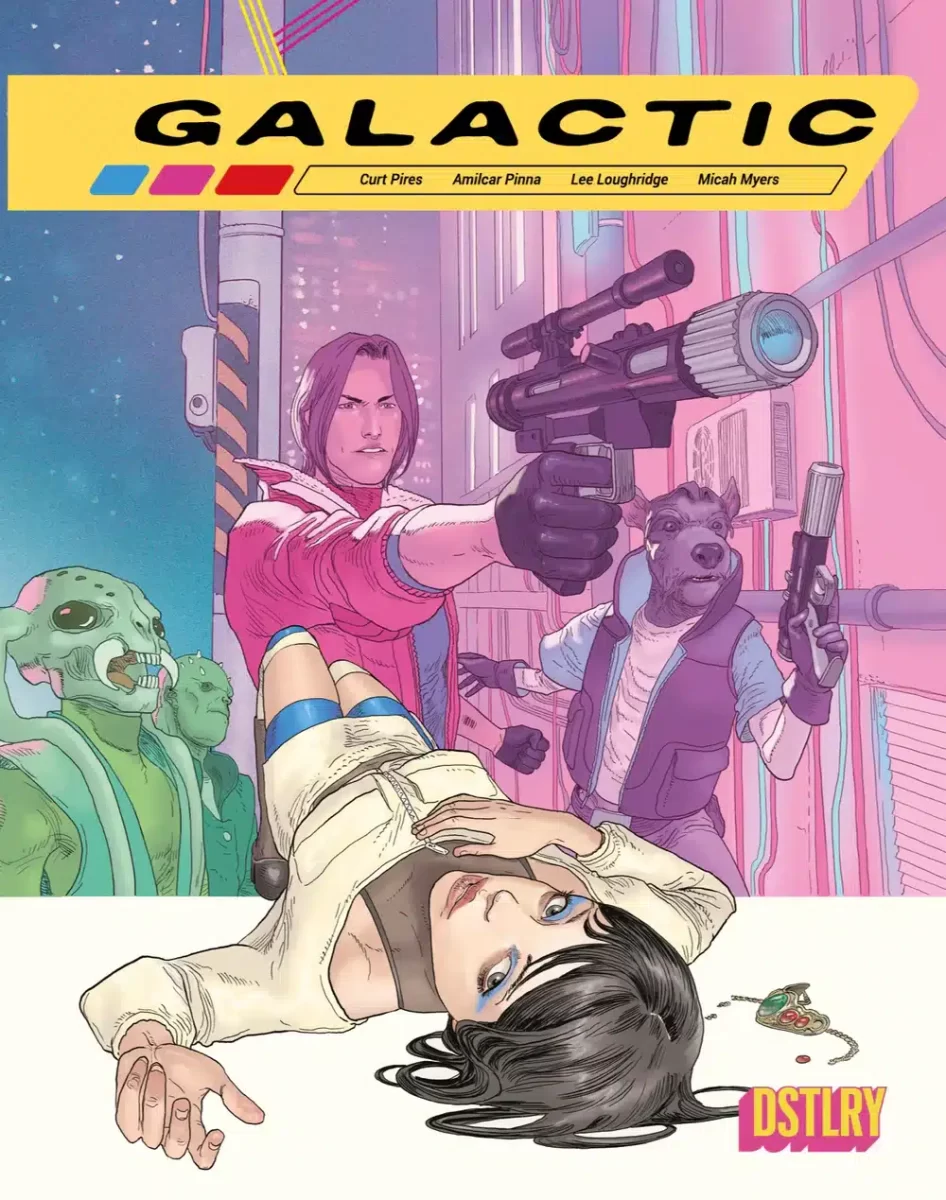
PIRES: So one of my friends, collaborators, and mentors was talking about my writing once, and he was pretty much saying what you’re saying. The reason he says it works so well is that I kind of cut samples the way that hip-hop producers do. This is one of my other publishers, Chip, and we’re actually doing a book together, titled Galactic, out in November. And it sorta does for sci-fi what Lost Fantasy does for the fantasy genre, giving readers an accessible way in. Something grounded, gritty, dirty, visceral, and kind of sexy too—and not sexy in a corny way. And again, it’s like me cutting a sample and saying, “I found something I like in Star Wars,” but then I’m going to like dirty it up a bit. And it’s got a bit of like Quentin Tarantino in there and all this other stuff I really like and respond to. And, the guy drawing it, Amilcar Pinna, is drawing it like basically Moebius in this clean line style.
PEREZ: Yeah, because I even see some like current events stuff. I mean, I’m not sure how current it could be, considering the release of comic books. But I’m wondering, are you watching the news? And being like, oh, that could be something good.
PIRES: I’m super online; I’m more online than I would like to be. I get in too news, basically. When I’m working on something, I always compulsively check X (formerly Twitter) and all this other stuff because I’m kind of addicted to information. I always just follow along with basically the absurdity of our world. I think that when you can tell a story and include some of that, it becomes way more relatable, grounded, and interesting. It becomes easier to buy into because it’s not a far-off fantasy world or a sort of corny, high-science fiction thing. It’s kind of got a foot in our reality.
PEREZ: Do you have an endpoint, and then try to get there? Or just “Let’s see where this goes.”
PIRES: It’s more just like stream of consciousness, right? It’s kind of like I build the ideas on the fly, and then I’m just thinking about them and sort of turning them over in my head until I figure out exactly how I want to do it. I’d like to pull it back to the ComiXology project, Stillman number one. I knew I wanted to start him in his home in New Jersey and then have him go into the city to kill someone. And I’m like, well, who’s he gonna kill? And like, I think the week or two after I started working on that was when all the Epstein stuff was coming out, when he got killed. So I was like, “Oh, I’m gonna just have him be the one who did it,” and I’ll show how he got in there and how he leveraged information and his skill set to exploit the people into doing it. And it kind of makes you feel bad for the people whom he basically extorts. Because you’re like, well, if I were in their situation, you would basically have to do the same thing, right? I like storytelling like that, where it’s kind of complicated and a bit messy.
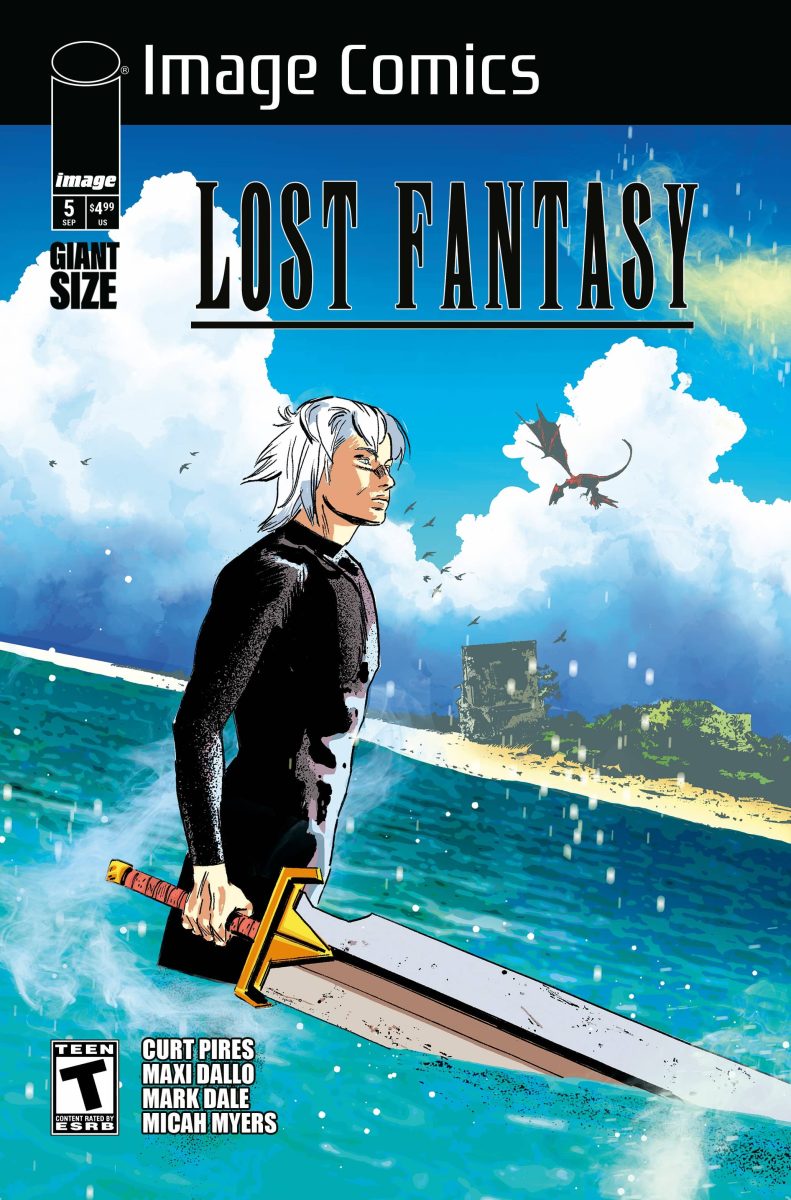
PEREZ: But speaking of referential writing, I think of the nostalgia of the covers, I think you play well with it. So, the PS1 covers – how did that idea come about?
PIRES: I wanted to do some sort of homage cover. Well, it’s kind of weird because it didn’t start as a whole variant cover program. It began as a reference to the book, because it was inspired by Final Fantasy 7. I thought we had to do a cover that’s an homage to that, right? And so we did that. And, honestly, I’ve gone out of my way to give credit for this because I’m not pretending the first person to do this. But Tony Fleecs did the amazing variant cover program for Stray Dogs and Feral.
PEREZ: Yeah, the movie posters, right?
PIRES: Yes, and so I saw that, and how many people were freaking out about them. I’m like, “You know, there’s a way to do this that’s my spin on it” because the movie poster thing is his thing. I’ll certainly dip my toes in that water once in a while, but the video game aspect felt even more interesting to me because it’s the largest medium now. It’s a good way to pull people who are into video games but might not be as into comics into comics, which I’m always trying to do, because I think comics are the best storytelling medium.
I love video games, movies, and all that, but comics hold a special place in my heart. And so I’m always trying to find a way to draw more people into it. And I think it’s kind of like the responsibility of comic creators to not just create stuff for the audience that’s already here, but to try and, like, grow it, you know? So that’s my way of doing that.
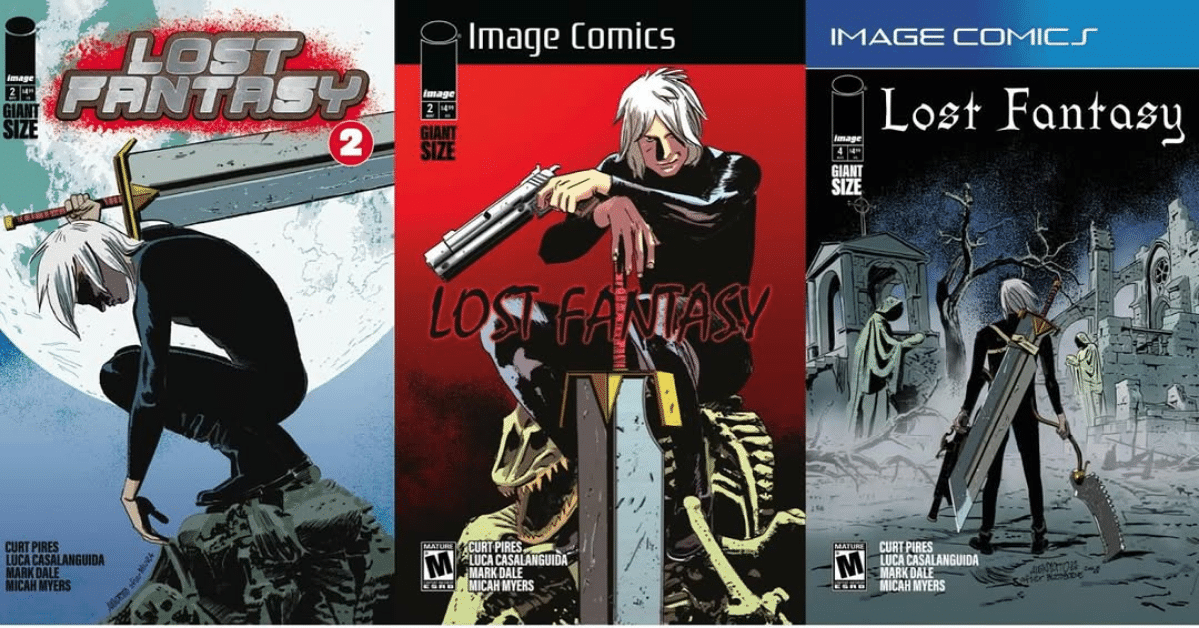
-Lost Fantasy #2 Cover B Alex Diotto Variant
-Lost Fantasy #3 Cover B Alex Diotto Variant
-Lost Fantasy #4 Cover B Alex Diotto Variant
PEREZ: Yeah, I wanted to ask you about the covers that you picked, were they games that you liked?
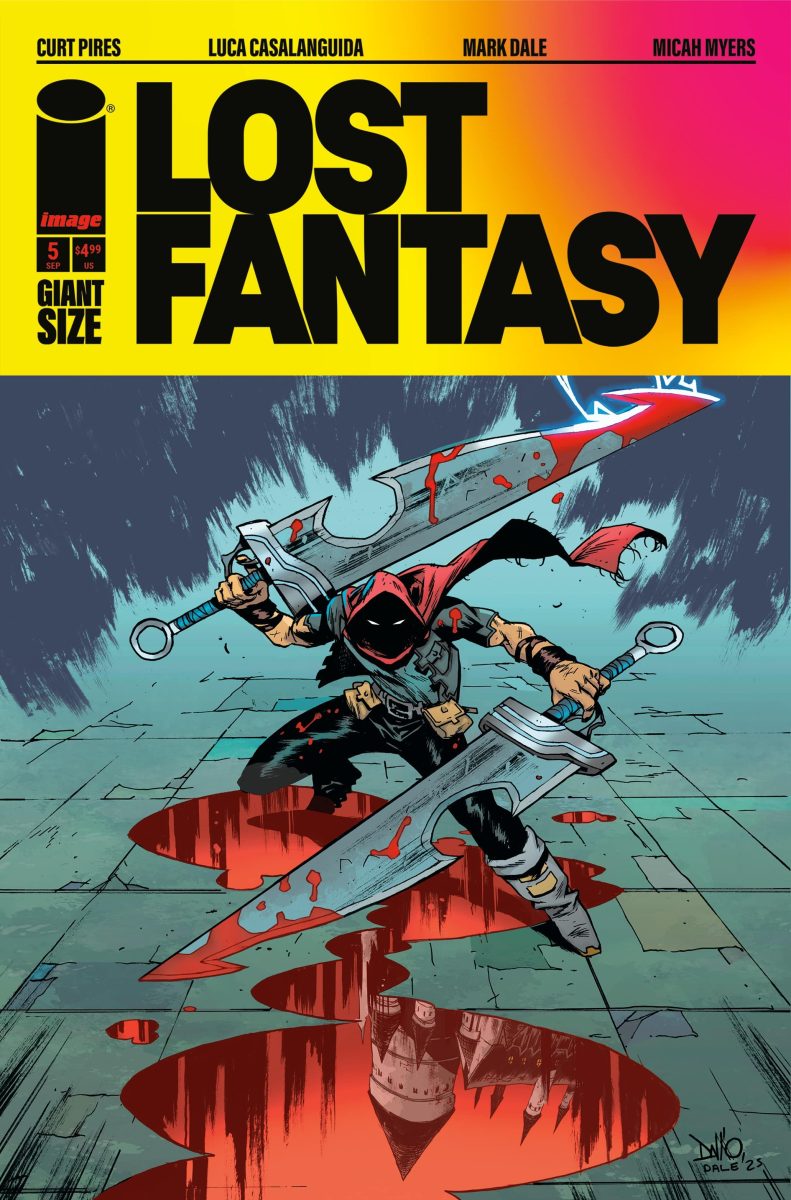
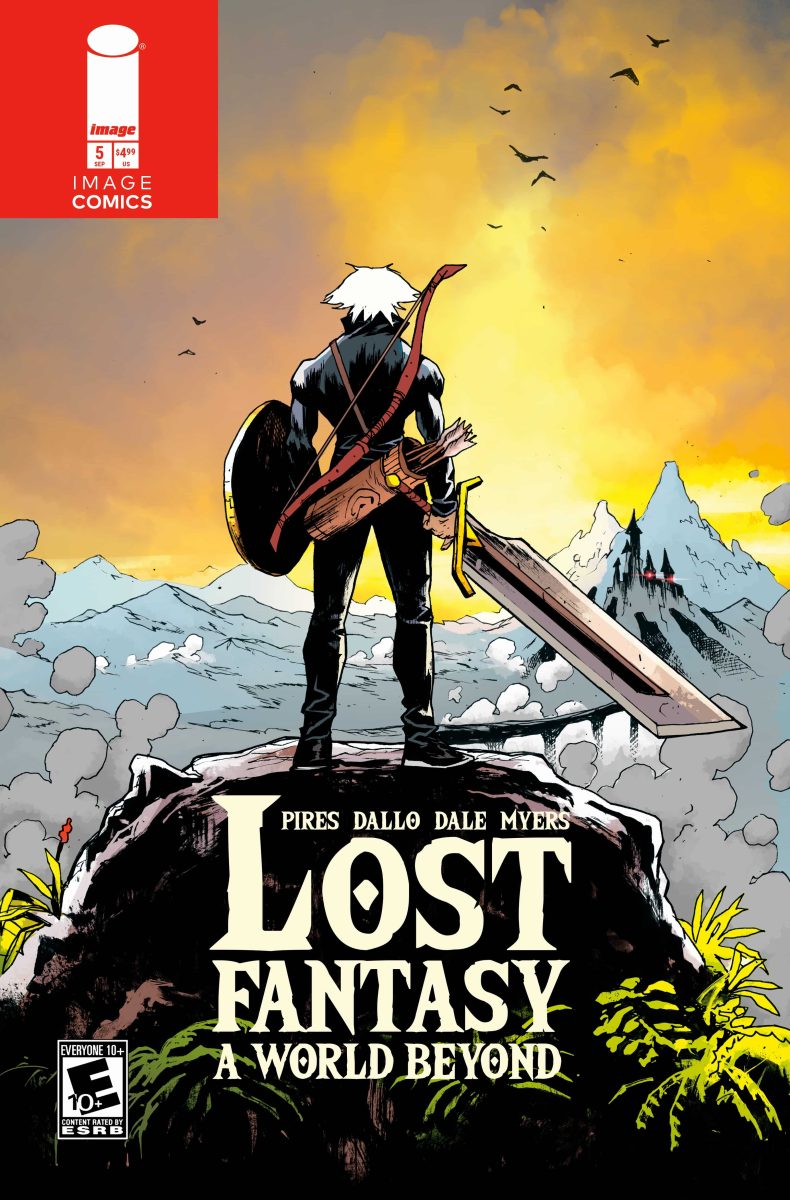
PIRES: It was, but also games that shared DNA or were influences on Lost Fantasy, right? So, Final Fantasy 7 is the biggest one. Devil May Cry, I chose because he’s, like, a monster hunter as well. And it’s such a cool image that I thought it would work well. Issue #4, we have Bloodborne, where that one’s kind of a monster hunter thing again, and I thought it vibed really well with the themes and aesthetics of the book. Then, moving forward we just did a Metal Gear Solid one. There’s no big sword directly on the cover, but there are big swords in the game, you know, Ninja. That’s one of my favorite games, and so I wanted to do that.
For issue #5, we have a Final Fantasy X homage cover. That’s another one of my favorite games from when I was a kid, so I wanted to do another Final Fantasy one because there are some Final Fantasies that I love, but are just lesser known. Also, for issue five, we have one that’s Breath of the Wild, right? That’s an example of the others, which were primarily nostalgia, but I’m wondering, “What if there’s a kid at the store?” Because that game’s only ten years old. A kid goes into the comic shop and sees that, it might be their first comic, right?
So, again, it’s a way to pull in a new audience. That’s what I like so much about the covers, I think we figured out a great way to make them work as both a comic, where if you just want that instead of the main cover, it’s good, but it’s also a great collectible. It’s only four or five dollars, and you’re getting something you could frame or put on your wall or whatever. That’s a homage to your favorite video game.
PEREZ: That’s cool because for me, you got me immediately with it. I didn’t even know what the book was about at first, but when I saw that PS1 homage, I was hooked.
PIRES: Exactly, yeah. But also the attention to detail, right? I think there were earlier versions of the covers where we didn’t have the fonts and everything exactly right, and I wasn’t happy with them. And so, I spent time, and I do on all the covers, making sure we get it as close as possible within the parameters we have.
PEREZ: So, I was wondering, like, if you don’t mind, how is the process of making sure that you’re within those lines? Do you have a lawyer?
PIRES: No, just shoot first, ask questions later. Because, honestly, I’ll tell you something, and I was talking to someone about this, like 10 years ago or something, when Sex Criminals got pulled off of all the digital app stores for nudity or whatever that was the best thing that ever happened in that book because it got Matt Fraction and Chip Zdarsky on TV. So, I’m like, “Okay, if any company wants to strike any of my covers, or if any of these covers get struck, it’s just going to be great marketing for the book because I’m just going to go out there and talk about the book to anyone who will listen to it.”
So everything is an opportunity in a way, right? Even bad situations you get into can create opportunity zones for you. I always just think of everything through that lens. However, I obviously don’t want to get sued by a giant corporation.
PEREZ: I just think it’s funny, kind of like, ask for forgiveness, not permission, kind of a situation.
PIRES: It’s honestly the best. When you’re in comics or something, when you’re in the entertainment industry, it’s an industry for hustlers. So, you can’t be saying, “Hey guys, do you mind if I do this little homage?” It’s like, “No, fuck it, we’ll do it.” And if we get in trouble, we get in trouble, we’ll figure it out, right? Like, let it ride.
PEREZ: Are there any other books you’d like to discuss?
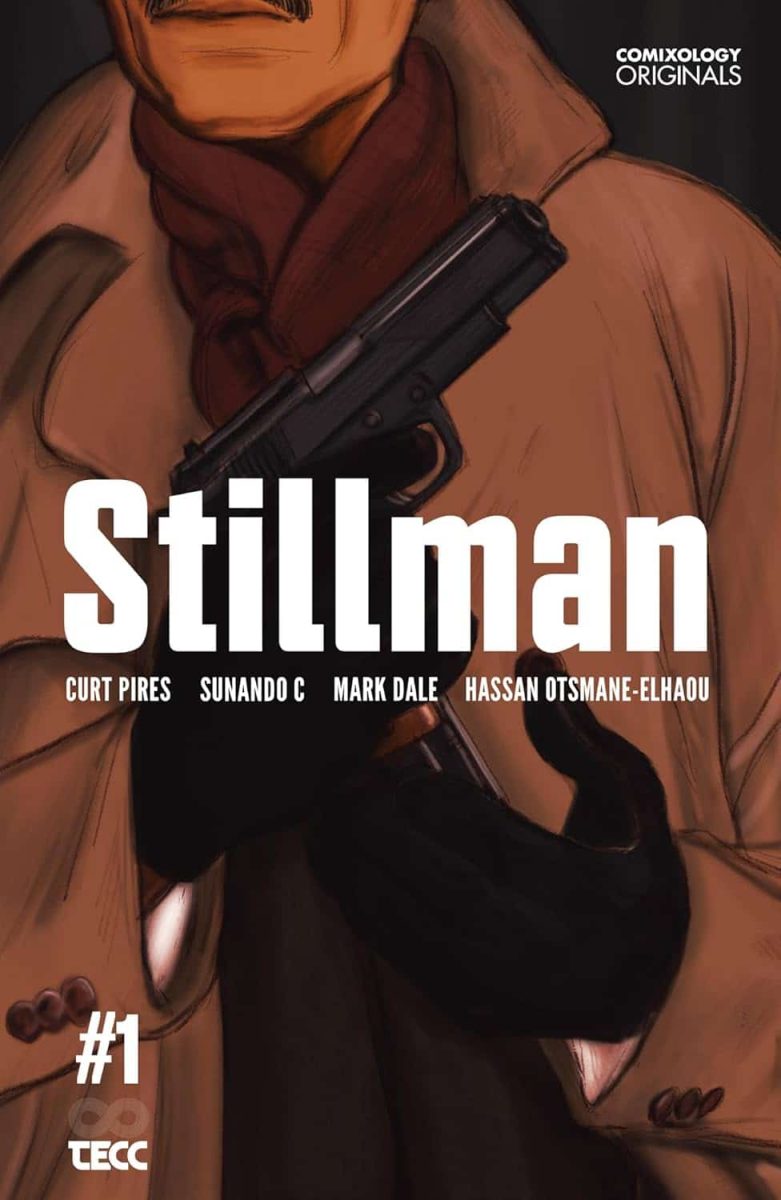
PIRES: Yeah, I want to make sure to mention Stillman, which is out now through Comixology Originals. You can read the first issue, and then subsequent issues will be published monthly. Free to read if you have an Amazon Prime or Comixology subscription.
And then, we’ll have more announcements throughout the year. Specifically, I aim to have an update on the John Romita Jr. project at DSTLRY at New York Comic Con. We’re working on it. I’ve got a bunch of pages in and it looks great. We just want to make sure that once we announce a release date, we don’t have to move on it. And so, it’s kind of like, it’s almost like with the new Grand Theft Auto, right? They’re sort of taking their time and making it perfect. And so, the update is coming, but we want to make sure we deliver.
PEREZ: Anything else you would like to add?
PIRES: I just want to thank you for talking to me. And thanks to everyone who’s reading the books.
Stay tuned to The Beat for more coverage from SDCC ’25.