
Indie comics have always run on the mentality of “if you build it, they will come.” It speaks to the struggle of going at it alone while acknowledging the willingness of an audience to support things that come straight from the blood, sweat, and tears of the creators that brave it. This still holds true today, but the mentality has to be tweaked to be more specific to our times. It should now be “if you Kickstart it, they will come.” Legendary comics creator Stephen Bissette is certainly taking to it as he goes the crowdfunding route to bring back his unfinished dinosaur comic Tyrant in a new collected edition.
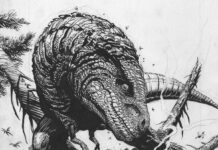
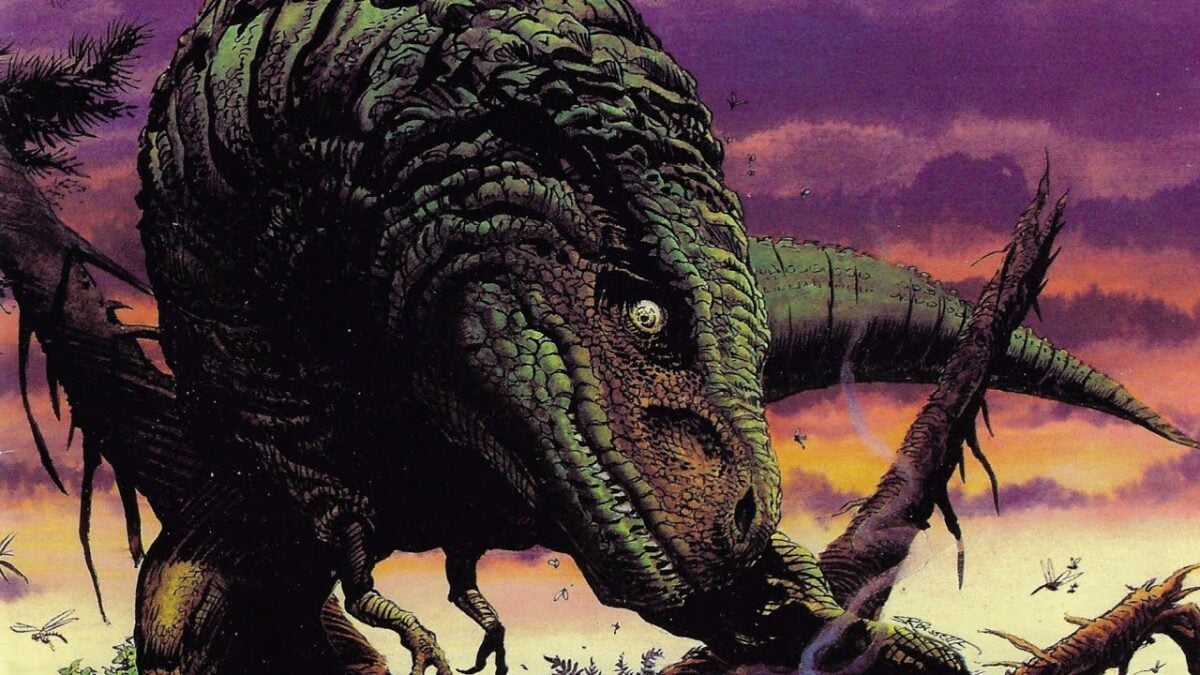
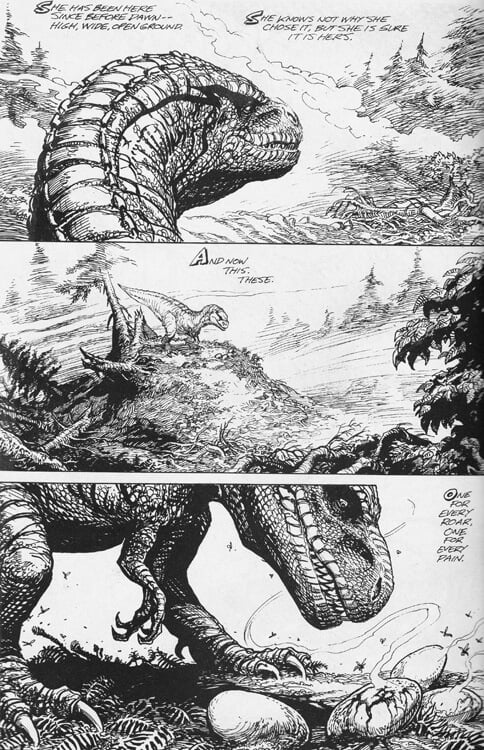
Tyrant was a four-issue series written and illustrated by Bissette that focused on the biography of a Tyrannosaurus Rex and its struggle for survival. It’s known for its highly detailed and exhaustively researched dino illustrations, which were based on the research that was available to the Swamp Thing artist at the time. From the densely scaled skins of these large reptiles to the geographical intricacies of their biomes, Tyrant is one the most technically impressive and visually striking dinosaur comics ever made.
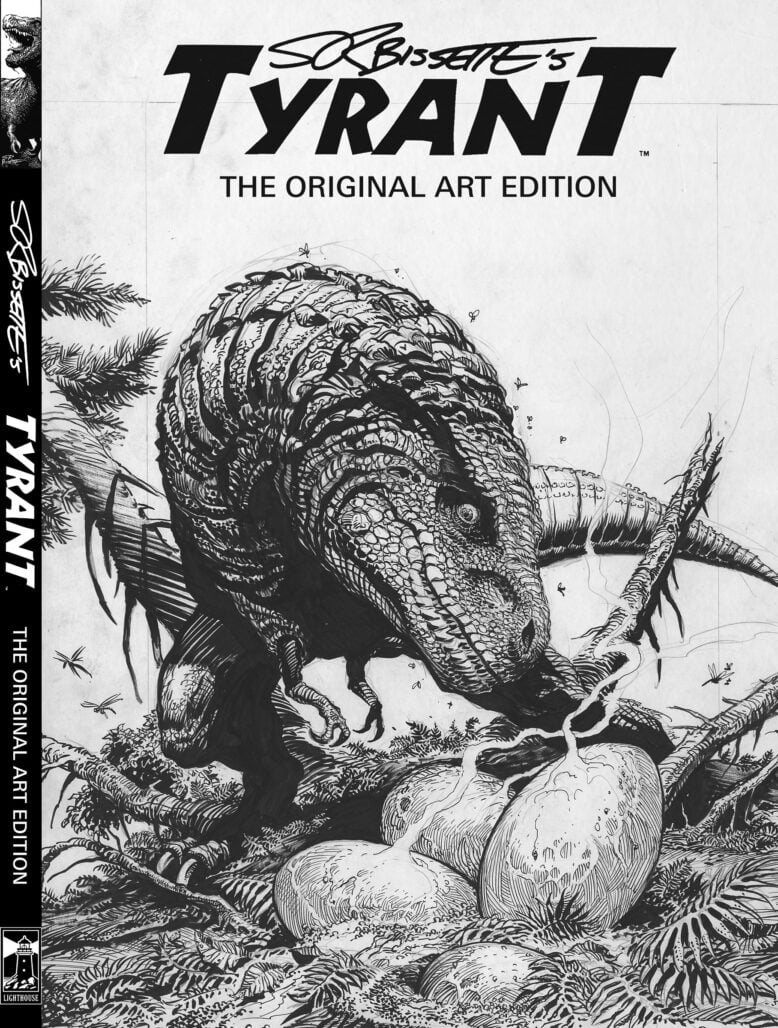
The short-lived series, published under Bissette’s Spiderbaby Grafix company from 1994-1996, is now getting rereleased as a collected edition via Kickstarter, with Jim Rugg working on the book’s design. It’ll feature all the behind-the-scenes goodies we’ve come to expect from these types of projects along with the original backmatter that accompanied each of the single issues.
The trade book will be published by Lighthouse Press once the Kickstarter campaign, which launches in early March, reaches its goals. An oversized “original art” edition is also in the works with scans coming directly from Bissette’s hand-drawn pages. The art reproduction itself is being overseen by Sean Michael Robinson.
I sat down with Bissette to talk Tyrant and how crowdfunding has made its return possible. Chris Stevens, the head of Lighthouse Press, steps in momentarily to talk about the project and its origins as well.
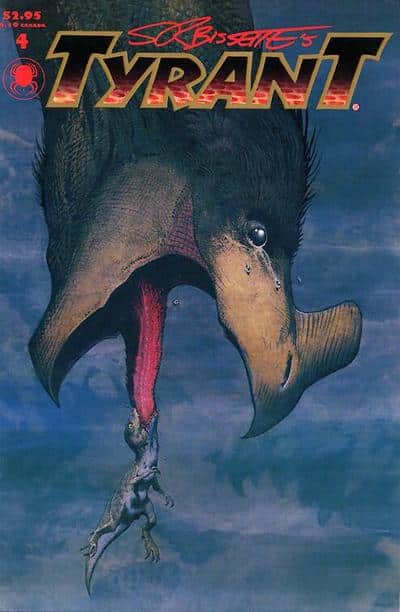
RICARDO SERRANO: Realistic depictions of anything means an indulgence in detail. Your dinosaur illustrations certainly thrive in that. What made you want to pour over details with dinosaurs?
STEPHEN BISSETTE: Well, I grew up loving dinosaurs. I never outgrew them. Call it an obsession. That’s what it is. That’s what it was. Tyrant was an opportunity for me to not just work from the kind of reference books that were accessible to me as a lay person, but also a chance to strike up friendships with paleontologists like Michael Ryan. Ryan opened up the whole world of professional paleontology to me, or as much of that world as I could digest.
The amount of information that I was privy to was just astonishing. And bear in mind, this is a body of work that I did back in the mid-1990s. The field of paleontology has changed dramatically since then, and so has our understanding of these amazing prehistoric creatures. The representations in Tyrant were current to the thinking back then and to the reconstruction models that were shared within the community.
Michael and I are still good friends, actually. Every semester, he invites me in to speak to his class. He teaches at Carleton University in Ottawa. He’s assured me that, with precious few exceptions, I pretty much got it right with the dinosaurs.
SERRANO: Can you speak a bit on why Tyrant remained unfinished and why you decided now was the right time to bring the original run back?
BISSETTE: I see this as an archival project. This is preserving a body of work I did at a very specific time in my life. I was really drawing and writing at the peak of my abilities, and I don’t think I could do it better today. In fact, one of my worries getting older is that I can’t do it again.
I’m also really indebted to Jim Rugg and Ed Piskor. They did an installment of their Cartoonist Kayfabe series where they sat down with all four issues of Tyrant and went through it page by page, in the way that Jim and Ed used to do so lovingly. The morning after that episode, I woke up to a pile of messages in my inbox. All sorts of people were emailing me the link.
Jim and Ed essentially argued that the four issues of the comic read as a full arc. It was a satisfying read that didn’t feel unfinished. It was complete as a reading experience.
As to the reason why it went unfinished, blame the collapse of the distribution market. When I started my publishing company Spiderbaby Grafix, the market was still thriving. It wasn’t just Diamond. There was Capital City and other big distributors. So you have an idea of what it was like back then, the Diamond check alone would pay for my entire print bill. That meant that the Capital Distribution check and every other distributor check I got after was pure profit. And that’s not counting overhead.
I was able to support two households during that entire time. And then it imploded.
All of a sudden, the Diamond check was the only check, and it wasn’t covering everything. The model just wasn’t going to work for me any longer. On a good month I could pay my print bills, but then I’d need to take on additional work to make ends meet. It just wasn’t feasible. So I pulled the plug.
I remember the last Capital City Distribution show. Meetings were taking place behind closed doors. When word came down that Image had gone direct with Diamond, we knew it was over. I had comic shop owners come up to shake my hand and tell me they were closing up their stores to later reopen as tobacco shops.
SERRANO: Crowdfunding has been good to comics both old and new. Some creators have even built a successful following on Kickstarter, turning it into main mode of distribution. Would you have been a Kickstarter creator when Tyrant was coming out so you could see the series all the way through?
BISSETTE: I see crowdfunding as being one of the most current, viable means for independent publishers to make their work exist and get it to its potential readership. Crowdfunding achieves in a short time what used to take us months to do. I’d have to prepare a solicitation and send it to the distributors so it would then appear in their catalog. It was a time investment.
This was a months-long process that took place way before the comic ever made it to the shelf. Crowdfunding really compresses the process very effectively. Packaging, promotion, distribution, and publishing became a more cohesive and focused endeavor. If this were available to me then, I would be doing print on demand without question. It would give me a much better handle on how to sell the books I was working on, as well as who to sell the books to.
SERRANO: Switching over to Chris really quick, was there ever any worry over audience reception for Tyrant? That maybe it wouldn’t resonate with modern fans?
CHRIS STEVENS: Never. I feel as strongly about it now than I did a few years ago when I started considering the collection as a potential project. I work with younger creators a lot, and I got to say that that Cartoonist Kayfabe episode Stephen mentioned really got the comic into a lot of people’s minds. I don’t hear it every day, but I hear about it every week. I get messages, or I’m in touch with someone over some facet of what we’re trying to put together and suddenly it comes up in the conversation.
The excitement that that video generated is palpable. Also, the work itself and Stephen’s place in comics just sells it. Jim Rugg is designing the book and he always reminds us that dinosaurs are evergreen whenever we talk about how best to present the project. I have to say, Jim has been fantastic. He could design a milk carton and it would look amazing. He loves this work as much as we do and wants it to have the physical presence it deserves.
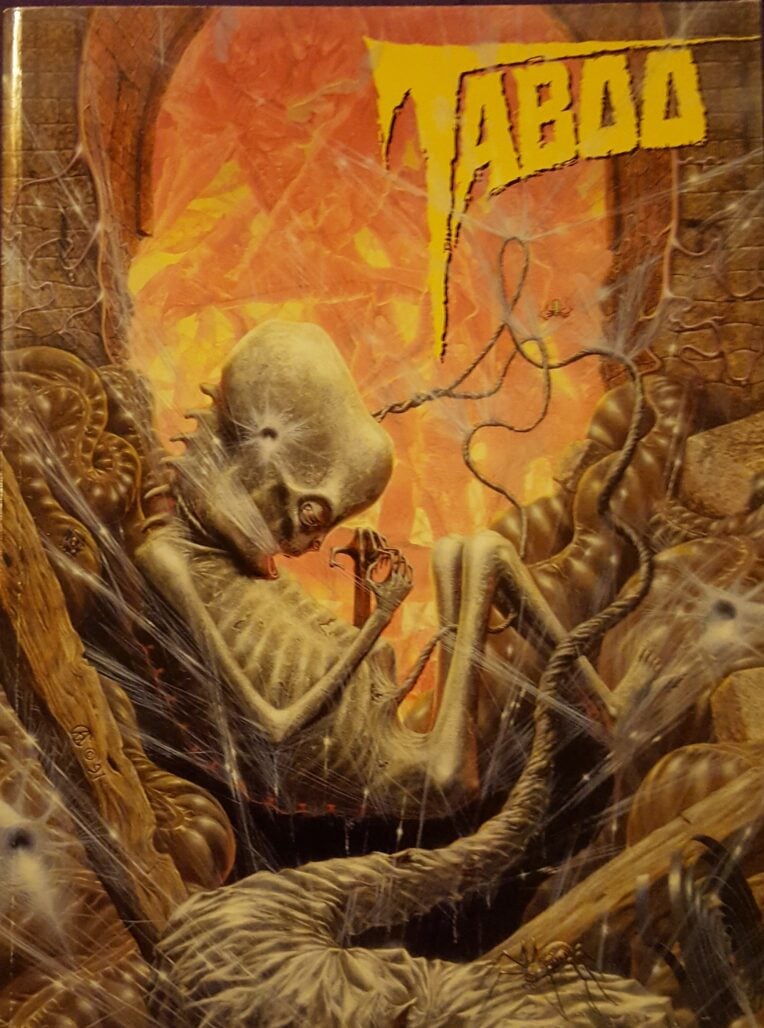
SERRANO: Along these lines, could it also be time to bring back Taboo in collected fashion through crowdfunding?
BISSETTE: I have been approached repeatedly over the years, sometimes by fellow creators. You know, my good friend Chris Golden, a best-selling novelist who works in the horror genre by and large, approached me once about resurrecting Taboo.
That book was an adventure, to say the least. I got busted in every English-speaking country on planet Earth. At customs, every issue of Taboo got busted, some of them repeatedly. The only country I ever got a full report of sales from was New Zealand. I still have the bound copy of the document. They read it, reviewed it, and decided it was not only great but also more than okay for it to be on shelves. In their assessment, they said the introductions to each issue make it clear what this material is and that it’s for adult readers. So God bless you, New Zealand.
In most other countries, the books just got pulped or burned, whatever they do with them. This meant that I was smuggling issues to the contributors when I travelled to their home countries, especially the UK and Canada where import of Taboo was banned as well. Some shops even risked being told on for having our issues on their shelves. But the demand was there and shop owners wanted to have them on display.
I would also have to smuggle copies to Alan Moore, Clive Barker, Eddie Campbell and so on. That said, I only optioned first publishing rights. I don’t have the reprint rights to anything that appeared in Taboo. It would require negotiating with everybody.
I remember that when John Totleben and I pitched the idea of a horror anthology to Dave Sim, he told us he’d publish anything we wanted to do. And he extended the same invite to Alan Moore, Bill Sienkiewicz, Frank Miller. Dave’s idea, I know because he said it at the time, was for Alan, John and I to pull up stakes from DC and do our own swamp monster comic. That’s what he was hoping would happen.
Instead, John and I came to him and said we wanted to do a cutting edge horror anthology, because no one was publishing adult or mature horror at the time. There were individual stories that would appear in Raw or in a few self-standing anthologies out there where there’s one horror story in the midst of three or four issues. But nobody was doing the kind of genre work that we felt needed to exist in the 1980s.
We wanted to align the comics genre with what was happening in every other media. Stephen King, Ramsey Campbell, and Clive Barker in literature. David Cronenberg, John Carpenter, and Joe Dante in film. Horror had really matured by the early 80s, but comics were stuck trying to recreate the EC pre-code comics of the early 50s. It was just toothless.
I knew that we had made the impression we wanted to make when I got a phone call from Karen Berger at DC, asking if I would share contact information for some of the contributors that worked on Taboo. And the way Karen phrased it at the time, we’re talking about doing something like our anthology but on a bigger scale. Well, that went on to become Vertigo, right?
Once Vertigo existed, I felt like, okay, we did it. There’s no more need for Taboo. The transformation of the industry had occurred, and I feel like we did our part. What John, my first wife Marlene, and I did with the first couple issues along with the creators and everyone involved, it felt like we had done something special.