
There are as many theories in circulation on who Jack the Ripper really was as there are of who was behind the assassination of President Kennedy in 1963 (or whether he even died at all). It’s what happens with era-defining mysteries and unsolved cases. In our search of the ultimate release that comes with confirmation, our minds continue searching for puzzle pieces that fit the spots left empty by the absence of evidence.
Incidentally, this also gives fiction a lot of room to maneuver, and Jack the Ripper has been one of the most popular beneficiaries of this. Robert Bloch, Harlan Ellison, Alan Moore, Eddie Campbell, Kim Newman, and many others have all had a hand in shaping the public’s imagination regarding the serial killer that stalked the streets of Whitechapel, London in 1888.
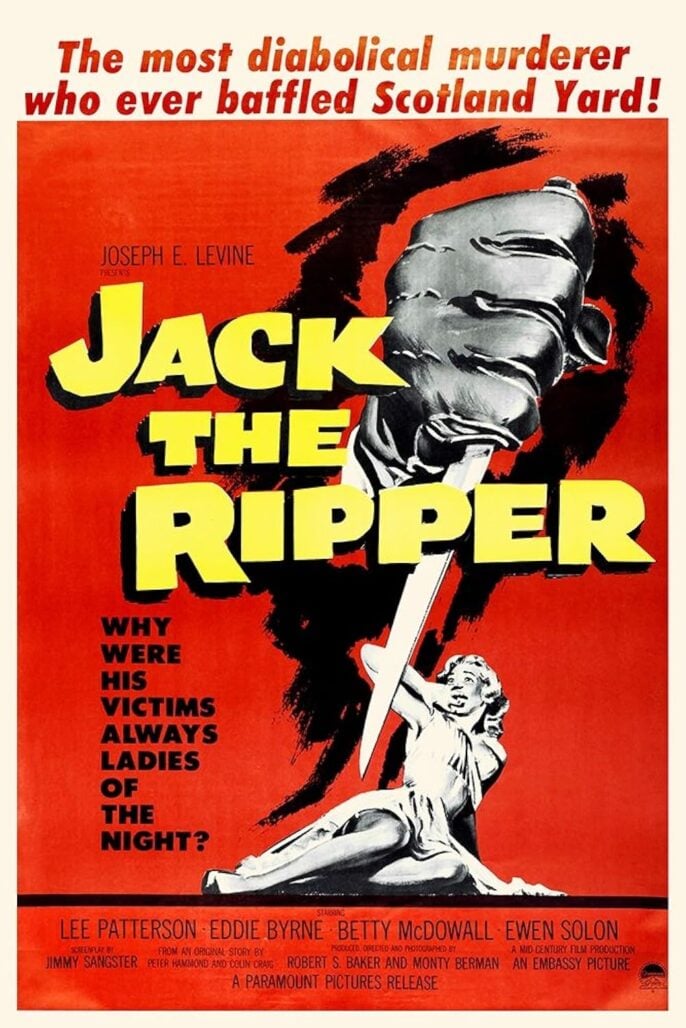
One movie, though, managed to scandalize its audience with its take on the Ripper story, more so than some of the others, to the point of becoming infamous in its own right when it was released in 1959. It was simply called Jack the Ripper, and it was written by famed Hammer Film screenwriter Jimmy Sangster, with directors/producers Monty Berman and Robert S. Baker at the helm. It possesses the best explanation as to why Saucy Jack was never captured.
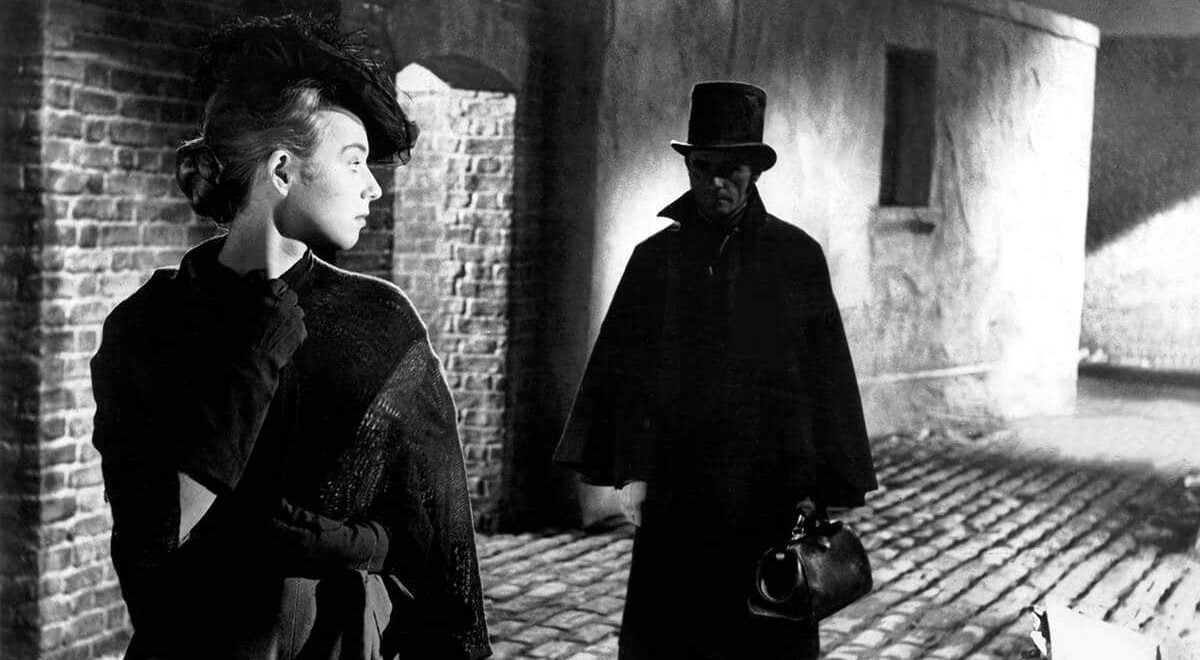
Jack the Ripper follows a cast of characters that range from doctors to detectives to mobs of concerned Londoners that are overtaken by panic as new Ripper victims start piling up. It’s a classic ‘whodunit’ that heavily relies on blood and nudity to capture the threat of violence that hung over Whitechapel in 1888. Red herrings and misdirects abound, owing more to Hitchcock than to Herschell Gordon Lewis.
The movie, which was presented in black & white, plays it fast and loose with facts of the case. Neither of the two detectives that are hunting down the Ripper are British, which means no Inspector Aberdeen, Edmund Reid, or Chief Inspector Edward Swanson here. Instead, we’re introduced to an American Inspector called O’Neill (Eddie Byrne) and his old friend Sam Lowry (Lee Paterson), an American sent to the UK by the NYPD to study the Ripper case. They standout for their very American approach to shaking down suspects and rowdy citizens. Shirt collars get ruffled and threats of retaliatory “justice” abound. More Mickey Spillane than Arthur Conan Doyle.
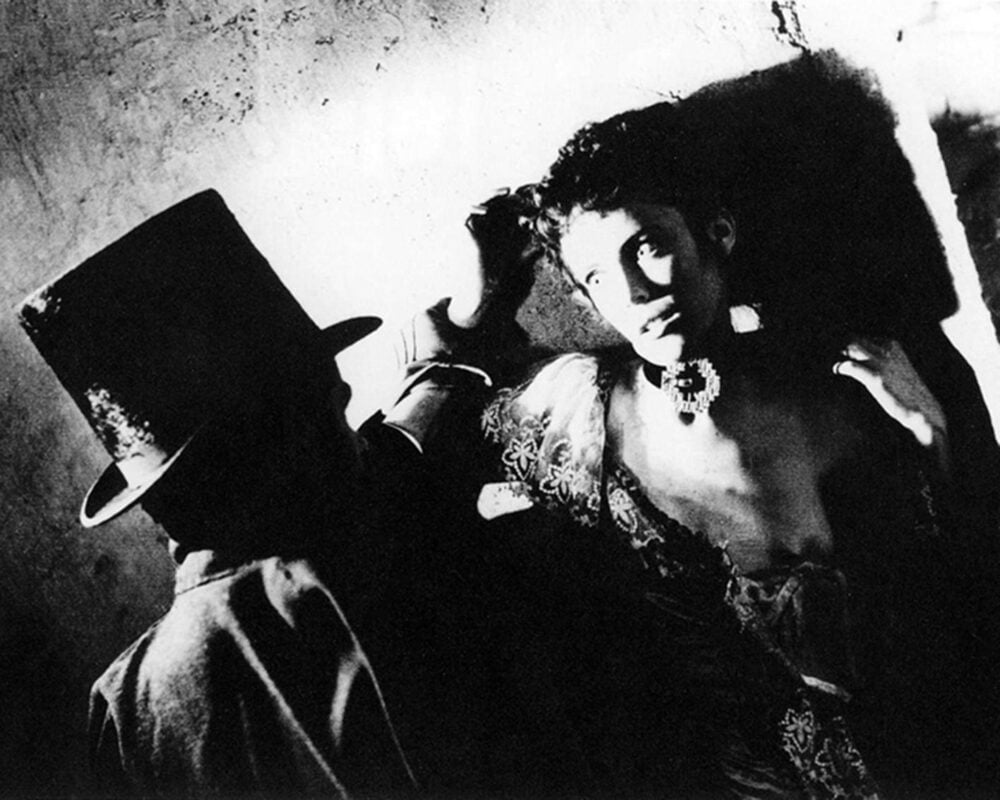
The story is loosely based on the book The Mystery of Jack the Ripper by Leonard Matthers, in which it is theorized that a doctor is responsible for the killings of Whitechapel’s sex workers (also referred to as ‘the Canonical Five’). This time around, Jack is specifically looking for one woman in particular, the mysterious Mary Clarke. Hints of a dark past between them guide the Ripper’s blade, giving a bit more definition to the madness that colors the real case.
Accuracy is not the goal with Jack the Ripper. What the movie aims for is capturing the spirit of the times, to get a sense of the powder keg-like conditions that London was under as a gruesome serial killer stalked its streets.
For instance, directors Berman and Baker put heavy emphasis on mobs and the idea of misguided retribution they can represent. The minute a new victim is discovered, people converge on the scene, like moths to a flame. The violence is palpable. It bubbles up fast and threatens to upend the social order in the face of Scotland Yard’s inability to capture Jack. It’s a movie that keeps everyone constantly on edge, be it on the promise of further deaths or the risks inherent in laying the blame on the wrong party.
While it’s true the film was considered by some to be made in poor taste when it originally released, it barely registers as such by today’s standards. The actual murders, for instance, frightened an entire populace due to the degree of mutilation present in each victim, each one worse than the last. The movie settles for splotches of blood around visually negligeable knife wounds. The crime scenes are unremarkable, too, the exact opposite of what they were in reality.
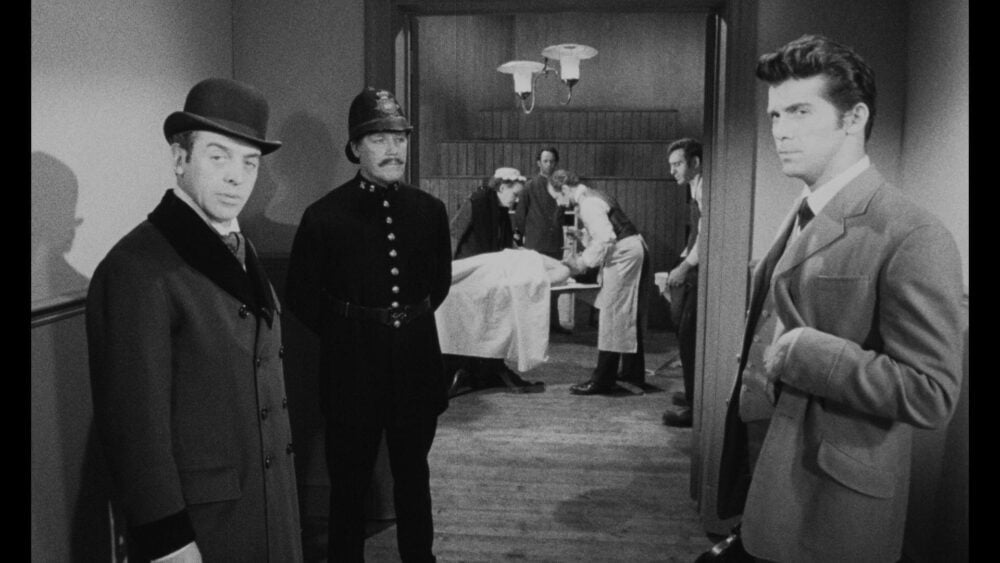
The black & white aesthetic leaves some of the violence up to the imagination, and it works to make it somewhat more disturbing. But there’s very little in it that’s shocking. It’s not until the very end, when we get a very brief but effective switch to color, that the gore ever gets interesting. It’s so well done, in fact, that it makes the argument that the entire movie should’ve been done in color.
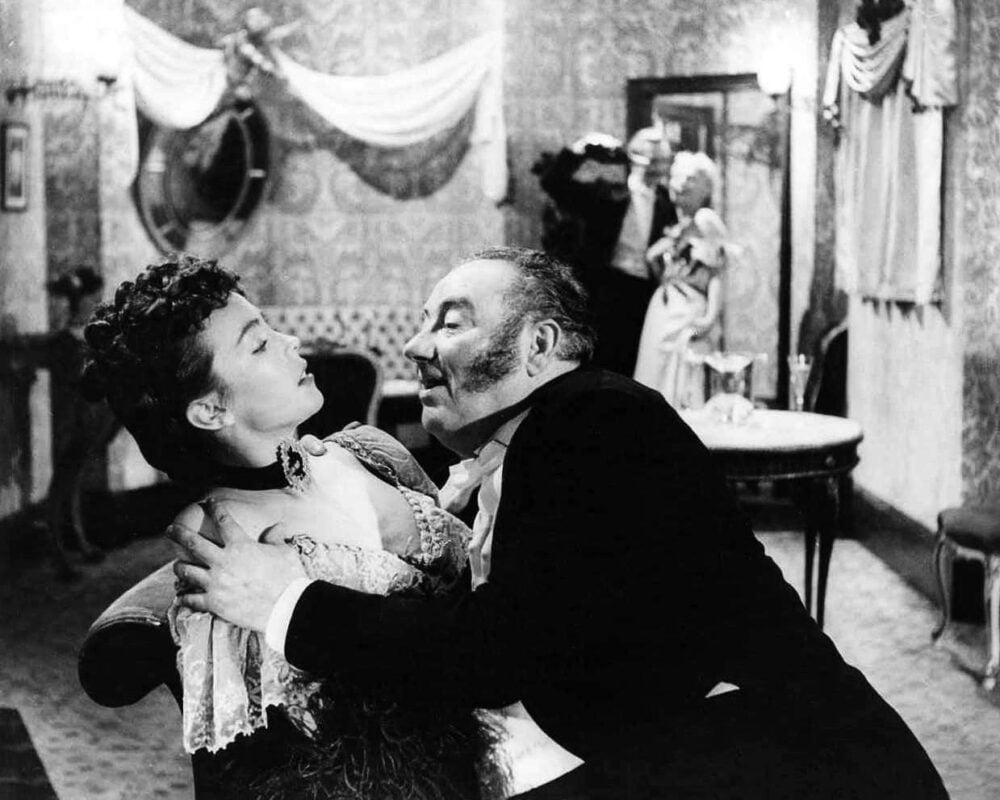
When it comes to nudity, gratuity reigns. There’s a scene where a few dancers are changing into costume for a burlesque dance number and most all of them are topless. Nothing that’ll make anyone swoon today. If anything, the scene stands out for offering very little in terms of story other than setting up another murder sequence shortly after. Scandalous in the late 50s perhaps (the decade had been experimenting with nudity for a while already, with Playboy magazine releasing its first ever issue released in December of 1953).
Without spoiling the ending, Jack the Ripper does offer a truly fascinating reason why the titular killer’s identity has remained shrouded in darkness for so long. It’s here that movie dabbles in a clever bit of color to accentuate an important instance of bloodletting. It leaves a lasting impression. The scene gives a definitive answer to an elusive question, and it invites thought. An elevator is involved. The cleverness behind it is devilishly delightful and satisfying. This alone warrants a watch.
Severin Films put out a 4K edition of Jack the Ripper that comes filled with extras that nurture future discussions of the film and its subject matter. It’s also available on Tubi, though the picture quality suffers noticeably. What’s important, though, is that there are multiple ways to watch this curious interpretation of one of history’s most terrifying serial killer cases. It might not be the most faithful attempt at putting reality on film, but it is certainly one of the most bold if only by virtue of its excellent ending.