
Recent weather reports are pointing to a stretch of harsh winter days. In other words, the best time to stay home and read, watch, and listen to horror. It puts the genre at an advantage as the cold starts burrowing under the skin in search of bones to chill.
Despite the cold being a natural phenomenon that doesn’t need seasonal permission to make an appearance in all parts of the world, its presence and the snowy elements that accompany it are often used to categorize cold horror as Christmas horror. This is inaccurate.
A lot more has to go into a story for it be considered Christmasy, namely the horrification of jolly and festive ideas that make it more easily fall under the genre’s umbrella (evil Santas, killer elves, murderous holiday spirits, escaped convicts driven by a need for blood).
Cold horror goes for a deeper sense of disturbance. It sees in snow the stuff that covers the long-forgotten graves of ancient monsters and demons. It sees in freezing winds the violent intent of vengeful spirits. It sees snowstorms as the heralds of silent killers.
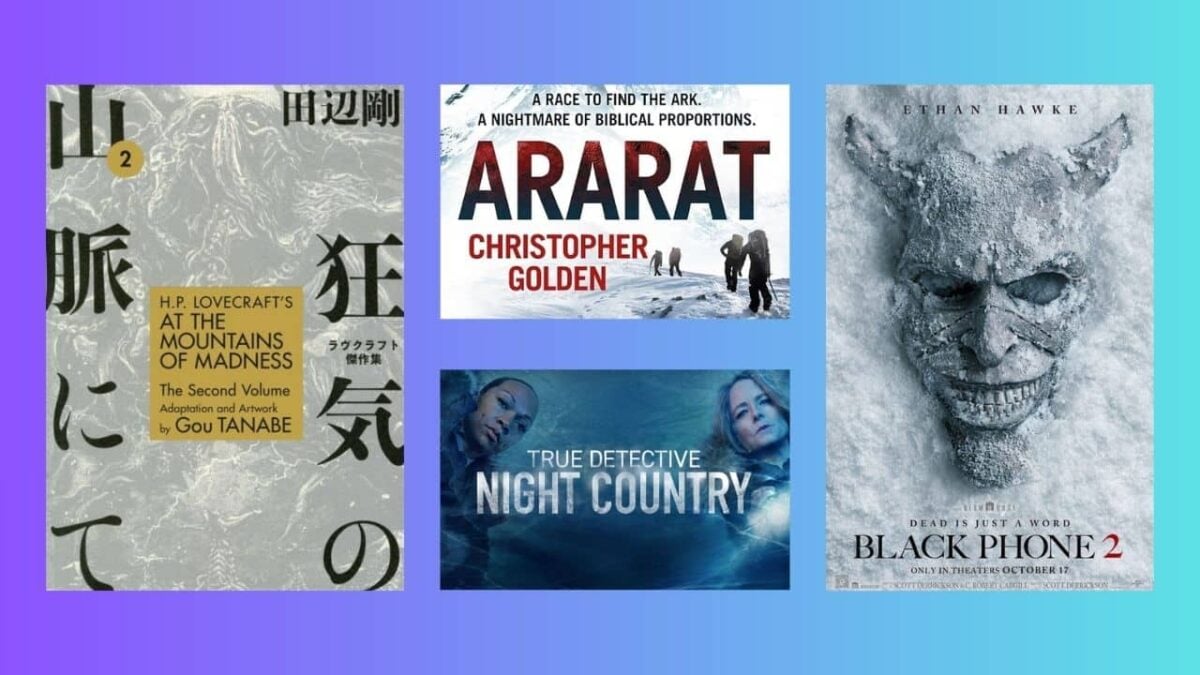
Here are four stories that welcome the cold. Each one masterfully takes to harsh environments and frigid temperatures to unleash terrifying things with an ugly disposition towards humanity, especially those who purposefully set out to uncover the mysteries the ice has kept hidden for so long.
Get under a blanket, don’t turn the heater up too much, and enjoy the chill.
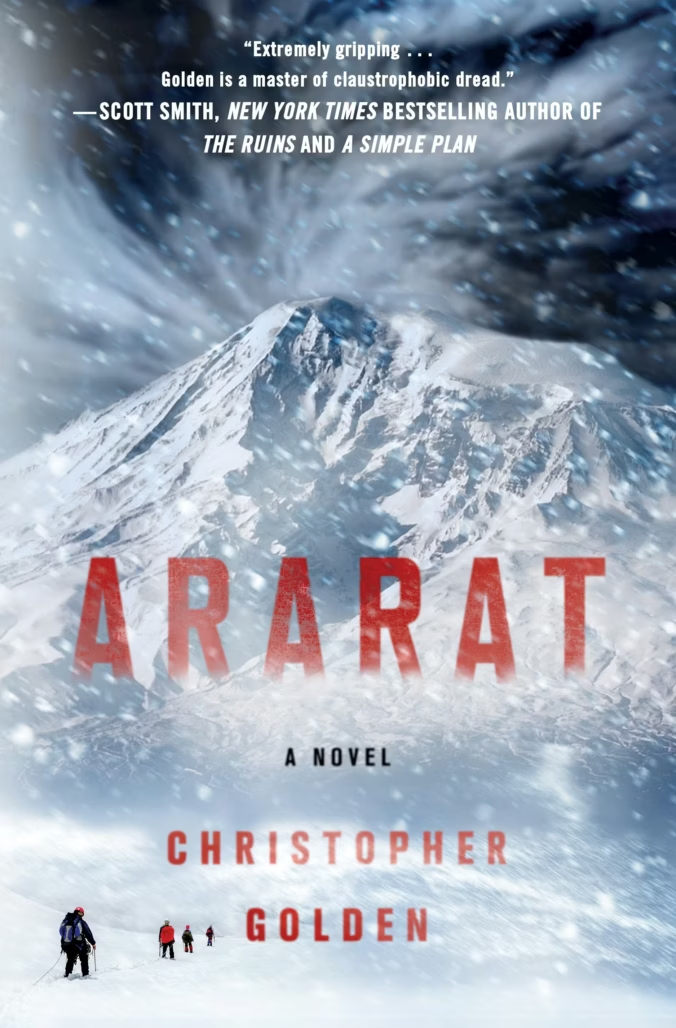
- Ararat, written by Christopher Golden (2017)
Few things unsettle as deeply as the possibility of confirming the existence of things described in the Bible. If one part of it is real, then surely the rest must be given the same consideration. You can’t have angels without demons. In the case of Christopher Golden’s Ararat, you can’t have Noah’s Ark without a devil.
The novel follows a married couple that consider themselves Ark Hunters, people that search the globe for the real Noah’s Ark. They finally come across the very thing they were hoping to discover high up in snowy Mount Ararat in Turkey (which some Biblical researchers believe is the ark’s actual resting place). An earthquake opens up a hidden cave that leads to it. They quickly find something that apparently hitched a ride with Noah, something that’s been longing for release.
Golden succeeds at both creating complex and ethically-compromised characters while also developing a supernatural threat that summons a unique brand of terror based on its ancient origins (most notably in terms of what it reveals about evil in Christian philosophy). It’s a very concentrated study on secrets and the monsters it creates, like phantoms with a desperate hunger for possession. The bitter cold of the mountain is felt throughout, and it gives the story added bite.
- True Detective: Night Country, written and directed by Issa López (2024)
Season 4 of True Detective took many by surprise when it went the complete opposite direction of the Southern Gothic stylings that defined the first season and that still managed to add flavoring to seasons two and three of the HBO series. Suddenly, it went to the cold of Alaska for a story that borrowed more from horror than any other genre to develop its mystery. Mexican director Issa López had a lot to do with that given her work in the genre, especially with the critically acclaimed Tigers Are Not Afraid (2017), which took on narco violence with a dark fairytale approach that put kids and their ghosts in distressing and heartbreakingly emotional situations.
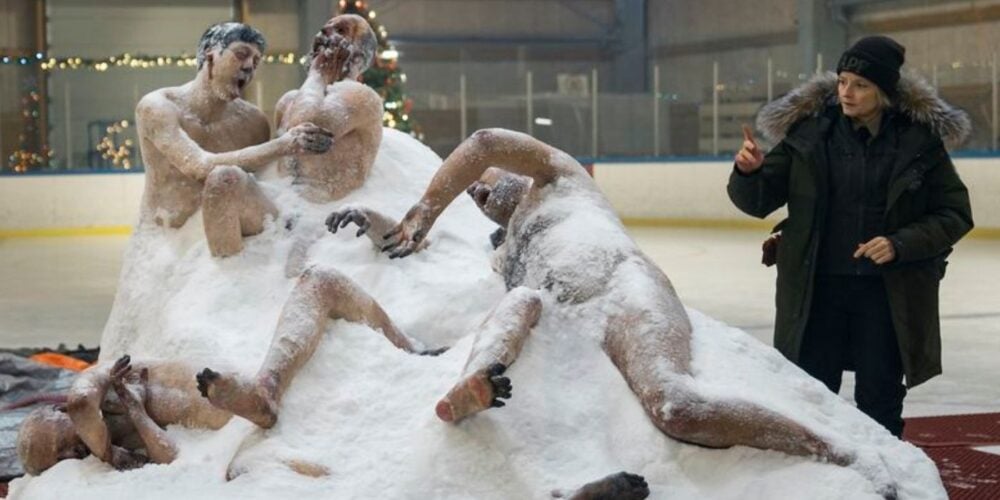
Night Country follows two detectives, played by Jodie Foster and Kali Reis, as they investigate the disappearance of 8 men that worked in a research station. Hints of spirits and dark magic linger, and they keep the case in a state of unpredictability. Gruesome and macabre discoveries marked the early episodes of the six-part series. Most notable among them was the popular ‘corpsicle’, a mess of naked bodies frozen together. Their faces looked as if they were locked in pure terror at the freezing point. This alone is worth the watch, but exceptional performances and a twisty narrative that never lets up on the horror makes it the perfect cold binge.
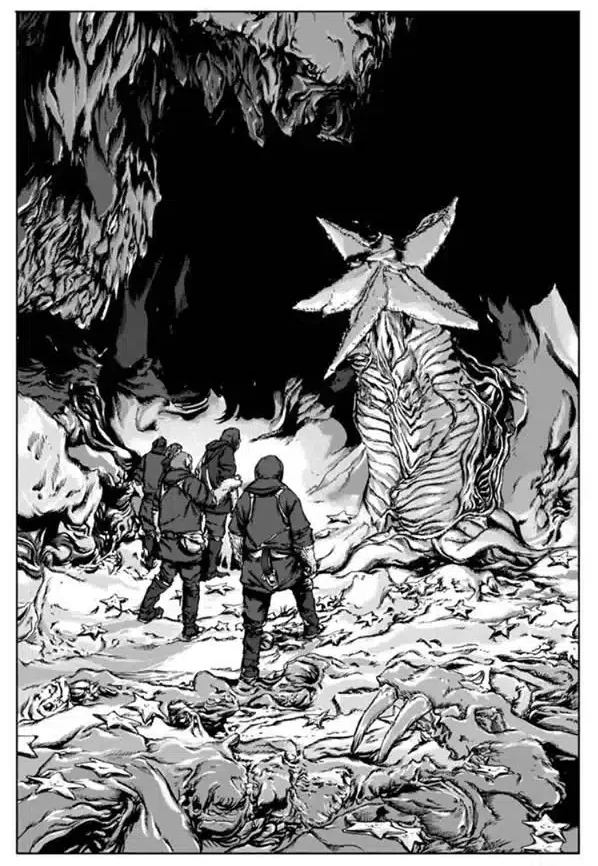
- At the Mountains of Madness, adapted by Gou Tanabe (2019)
H.P. Lovecraft’s 1931 novella At the Mountains of Madness is one of the cornerstones of cosmic horror fiction, a text that captures many of the elements that make Cthulhu the storytelling powerhouse it is today. Elder beings, Shoggoth, strangely angled rock formations, and slumbering creatures are all key components of the myth that get their time to shine here. There have been a few attempts to adapt the book into film, with Guillermo del Toro almost making one happen. It never panned out. Fortunately, we have Gou Tanabe’s manga adaptation of it, and it’ll be hard to top it terms of vision and scope in any medium.
At the Mountains at Madness follows a doomed Antarctic expedition from Miskatonic University that discovers the ruins of a non-human civilization. Some of these ancient beings start revealing themselves to the crew from Miskatonic, leading to the uncovering of a history that can alter the very fabric of reality and sanity.
Tanabe excels at capturing the otherworldly look of Lovecraft’s creations, most notably their impossible biology. They’re illustrated like animals you’d find in old taxonomy books, with an eye for believability within the story. In many respects, Tanabe’s designs have become the gold standard for Lovecraft adaptations, in this writer’s humble opinion. Their cold and writhing bodies are imbued with a sense of elderhood that honors the source material. Tanabe is who you go to when you need a faithful look at the hulking and tentacled monstrosities Lovecraft gave life to.
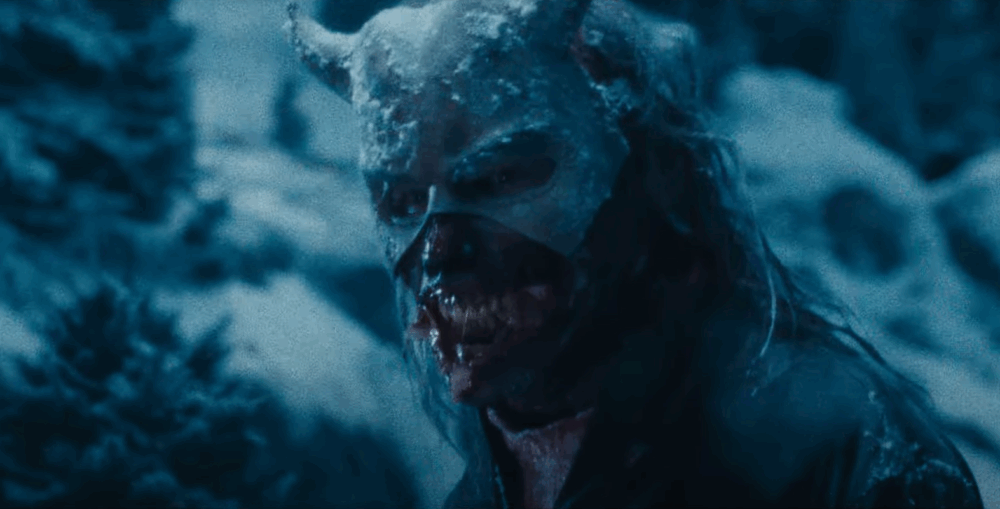
- Black Phone 2, directed and cowritten by Scott Derrickson/co-written by Robert Cargill (2025)
Sometimes recommendations can be based on a story’s strengths rather than the whole package. This is the case of Black Phone 2, a movie that delights just as much as it frustrates. And yet, in terms of cold horror, it excels. After Black Phone 1 basically closed the book on serial killer The Grabber (Ethan Hawke), director Scott Derrickson and co-screenwriter C. Robert Cargill found a way to squeeze a sequel out of it.
Siblings Finn and Gwen try to move on from their experience with The Grabber, a child killer that terrorized their hometown. Finn kills his kidnapper at the end of the first film, with a bit of supernatural help from the ghosts of the killer’s previous victims and his sister’s blossoming supernatural powers. It’s been four years after these events took place and Gwen starts having dreams of violent killings in a winter youth camp back in the fifties. These are visions of The Grabber’s first victims, and it looks like his ghost is back to haunt those responsible for his death.
Gwen’s nightmares are spinetingling, shot in a home video style that feels more true crime than fiction. It’s bolstered by Ethan Hawke’s masterful display of rage and vengeful hatred as The Grabber, which remains as theatrically sinister as in the first film. Unfortunately, you have to navigate some questionable Christian undertones as the movie progresses. They’re distracting and they feel random and undercooked. The story also loses steam in the second half. The first half, though, is cold horror at its finest and more than deserving of a watch.