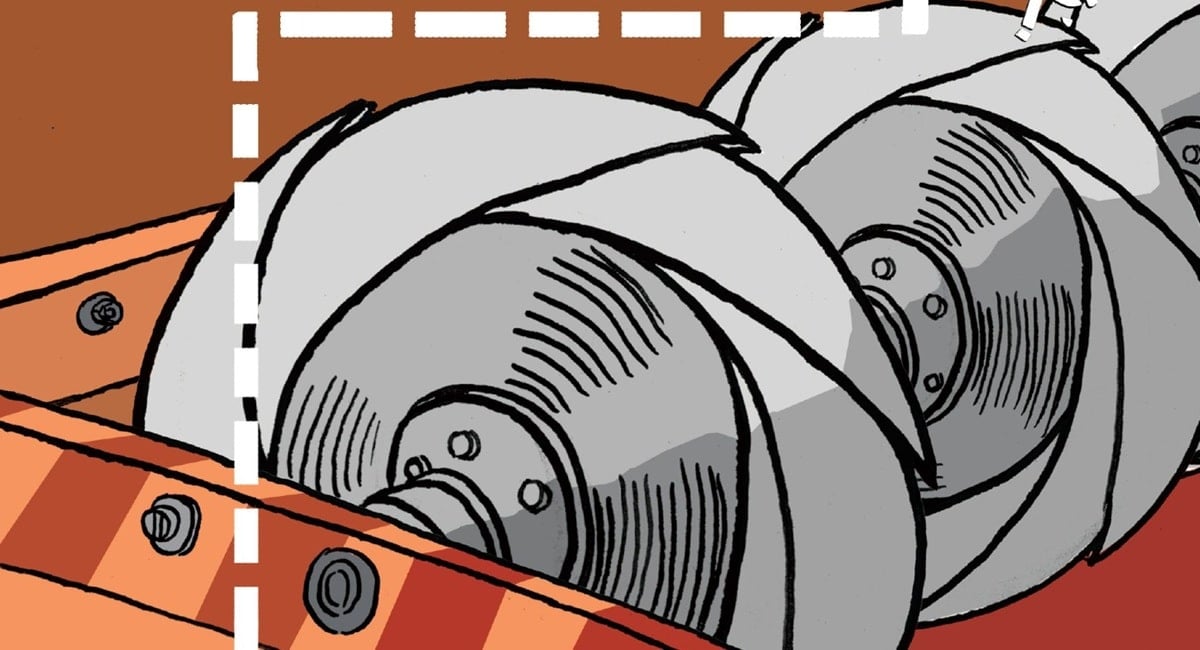

 The Woodchipper
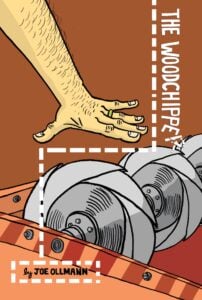 The Woodchipper
Cartoonist: Joe Ollmann
Publisher: Drawn & Quarterly
Publication Date: February 2026
It feels rare in the mainstream comics market to get a fully-formed, 200-plus-page collection of short stories. It’s somewhat less rare to get short comics stories that have appeared slowly over the years and are being collected for the first time. But a totally new book of fresh short comics, complete with great design and production, getting a wide release from a major publisher? I don’t know how many we get most years, but it’s not a lot.
In a perfect world that would change, however, and Joe Ollmann’s new book, The Woodchipper, is an excellent argument as for why. The Woodchipper contains five stories, spanning a total of 210 pages, and to my knowledge none of them were previously published. There’s a 3-page intro — essentially, a pithy meditation on the book’s form, along with a bit of prep so that it doesn’t catch readers off-guard — but the rest of the book is split into five distinct stories, with neat and satisfying endings, as well as distinct protagonists.
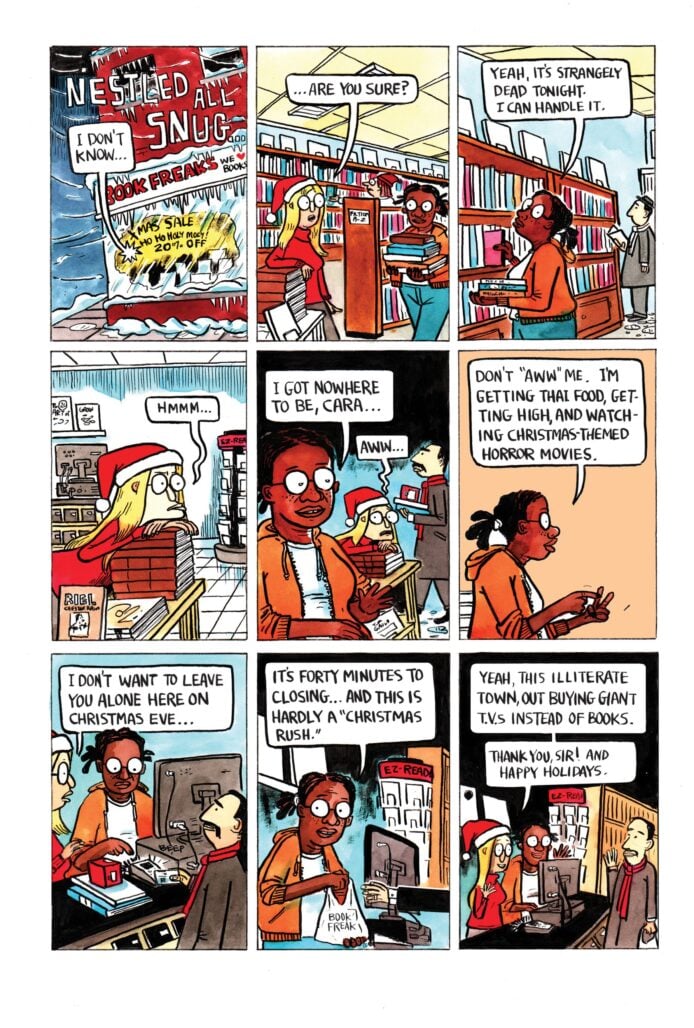
While the themes are varied, it does feel like The Woodchipper has a unifying quality in its stories, that being that existing in this confusing, chaotic stretch of the mid-2020s is tricky, soul-bruising business for everyone. It’s not that the people in this book don’t like their lives, but they all seem to be unsung and underappreciate, with problems that are very much of the now. Problems that if they did exist in other eras wouldn’t be nearly as severe, if they were even problems at all. In other words, it captures a lot of what I’ve been feeling lately, and I’d wager if you’re reading this, you might be with us, too.
Take for example the title story. I don’t want to spoil the details, but a man who has done his job without issue for many years is deeply rattled by the sudden negligence of a co-worker, a young co-worker who is massively distracted by his phone, putting himself in harms way and laughing it off after. It’s a story that hits hard, especially the reactions of those involved after the incident, and I just don’t think it would feel nearly as poignant without the slow-dawning feel I know I’ve had as late that we’re all being sucked into lesser versions of ourselves by these devices, many of us in ways that fan out and damage the world around us. But what I think really elevates this story is that the young co-worker isn’t injured, and there’s even some question over whether the protagonist need react the way he does.
In other words, is it really the youth and the times, or are things just difficult, and do we need to handle our lives, ourselves, and how everything unfolds with just a bit more grace? This is almost never a book that seeks to place blame on individuals, and I think it’s all the better for it (even if I do like to see myself in the sturdy, undersung types in these pages).
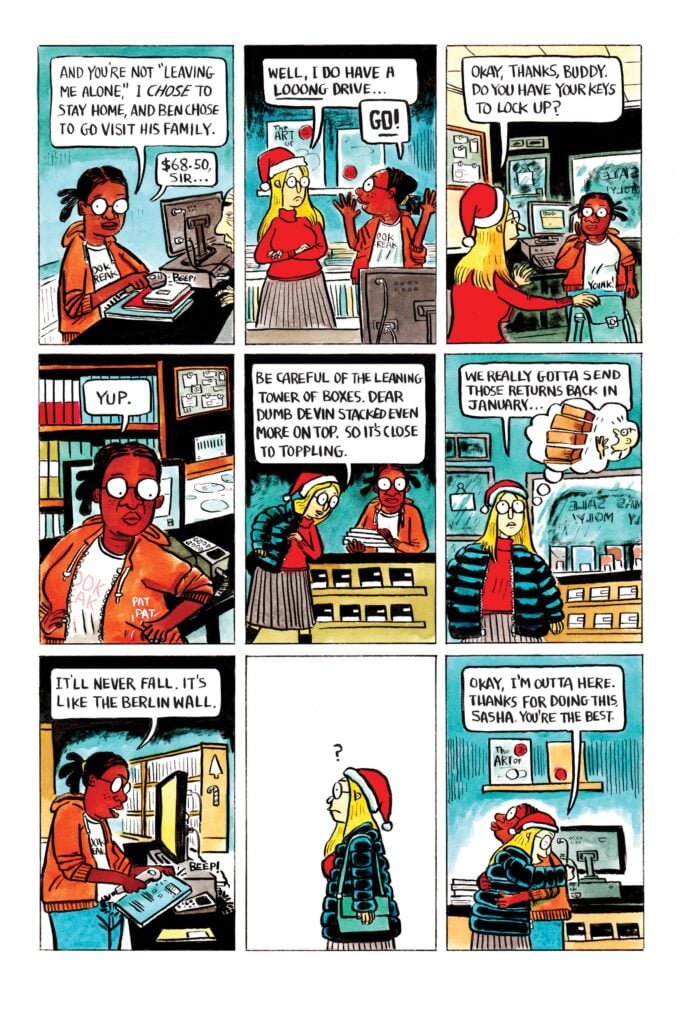
And while that first story is the title story (and a very good story, at that), I felt like the heart of this book was the third story, simply titled Meat. Essentially, the narrative core of it is that a security guard at a slaughterhouse / corporate laboratory befriends an activist who is actively protesting her employer. Despite being at odds essentially in every way, they strike up an unlikely bond, and it ends up being a match that burns the security guard’s current life to the ground, doing so in a way that leaves you wondering if she’s not changed and better for it.
This story could have stood alone as an absolutely wonderful graphic novella. It’s long, and it’s got rich characters throughout, as well as a mounting sense of mystery and tension that leads to one of the most striking reveals I’ve experienced in comics in some time. Meat tackles issues around the dearth of culture/employment opportunities in rural towns, conformity, activism, corporate malfeasance, and much more. I found it to be engrossing and deep, and reason enough to pick up The Woodchipper on its own merits. As with all the stories in this book, Meat just has such a sense of unpredictability around what its characters will do next and why.
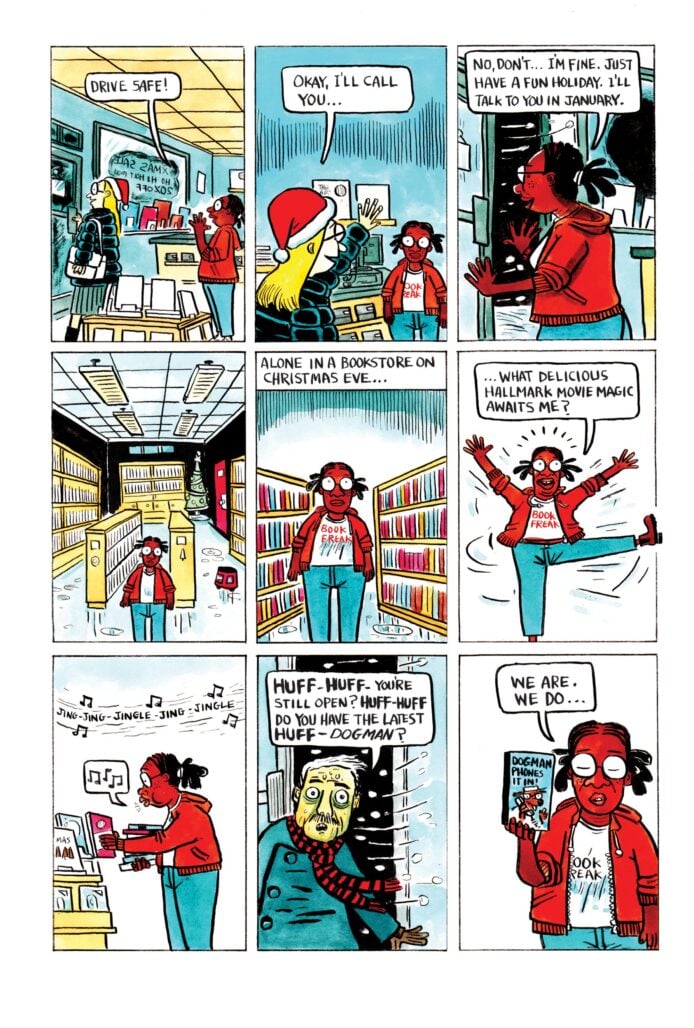
If I have a note for the book, it’s that I thought the final two stories didn’t land with their endings quite as hard as the first three. I was into both of them. One is about a man who ends up turning an infamous house into a doomed money pit AirBnB as the Gen Z employees of his family’s sandwich shop celebrate his every misfortune. While the other is about a faculty spouse who is smarter about film than his wife’s professor colleague who teaches film school.
They were both great setups, just not quite as developed in where they ultimately go as the three stories in the book’s front half. That’s such a small quibble though, and it’s also just the nature of a short story collection, be it comics or prose.
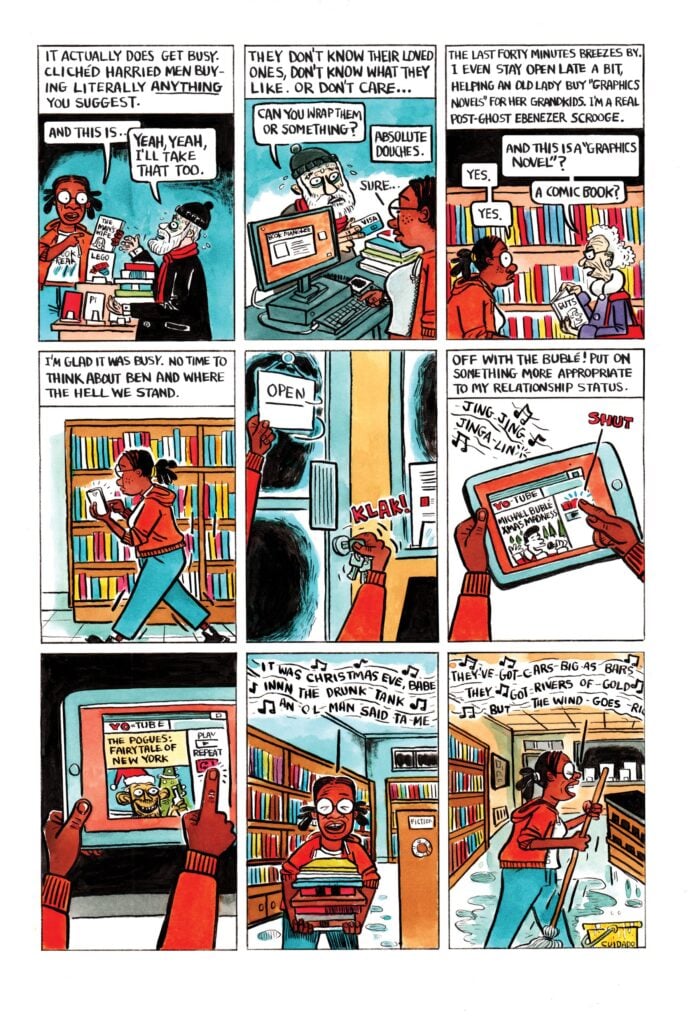
As I wrap up, I’d like to make one last point around the sense of now I started this piece with. What’s interesting to me is that Ollmann’s last book was sort of backwards-looking, drawn from the dying world of syndicated newspaper comic strips. This one is perhaps a polar opposite, concerning itself almost entirely with the matters of the day, from men who won’t get therapy to organized protest/advocacy to the promise of short-term rental properties turning into a money pit as the world castigates those who invest in them.
In thinking of these books together, though, I think they’re more clearly linked than I first suspected. They are both to some extent about changing times, what they do to us, and how we respond within them. Overall, I really enjoyed The Woodchipper, eagerly moving from story to story, and finding a lot to like about each of them.
The Woodchipper is out in February via Drawn & Quarterly
Read past entries in the weekly Wednesday Comics reviews series or check-out our other reviews here!