
 Pig Wife
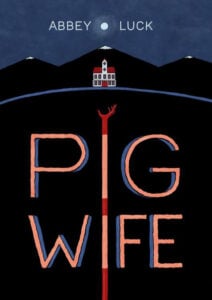 Pig Wife
Creator: Abbey Luck
Additional Art: Ruka Bravo
Publisher: Top Shelf Productions
Publication Date: January 2026
Abbey Luck’s debut graphic novel Pig Wife follows the horrifically unpleasant adventures of a teenager named Mary through the sprawling labyrinth of an abandoned mine. The dimly lit subterranean world is far from serene, and Mary must brave the horrors that lie at a confluence of family secrets if she ever wants to see the sun again.
Pig Wife opens with a family’s supremely awkward car trip to the isolated country house of a recently deceased relative, an old woman named Pearl rumored to be sitting on a vast fortune. Pearl was the aunt of Mary’s stepdad, an unpleasant man who treats Mary’s mother unkindly and doesn’t respond well to his stepdaughter’s teenage sass.
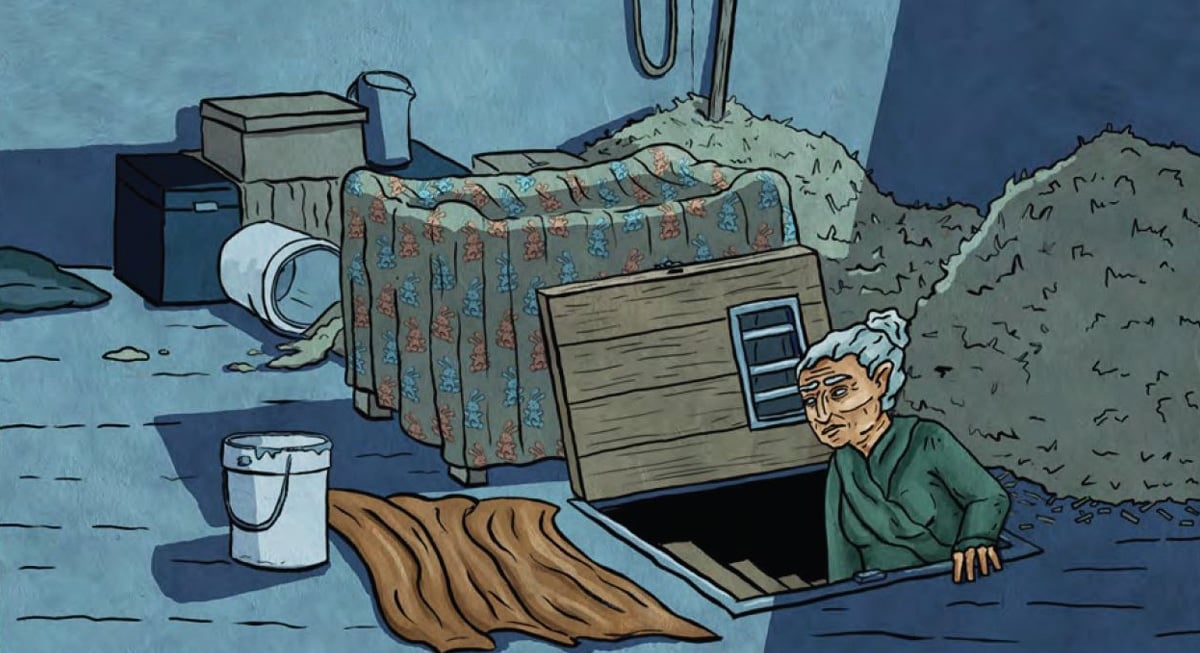
Everyone is one step away from a crashout by the time they reach Pearl’s house. Pearl was a hoarder, and her house is filthy and decrepit. While Mary’s stepdad searches for his aunt’s will in the mess, she steals a bottle of whiskey from his briefcase. Needless to say, he isn’t amused. To escape his wrath, Mary runs to Pearl’s pig shed. She finds a trapdoor in the floor and enters, thinking she’ll lay low until her stepdad calms down. The door can’t be opened from the inside, however, so Mary’s only option is to head deeper into the cellar.
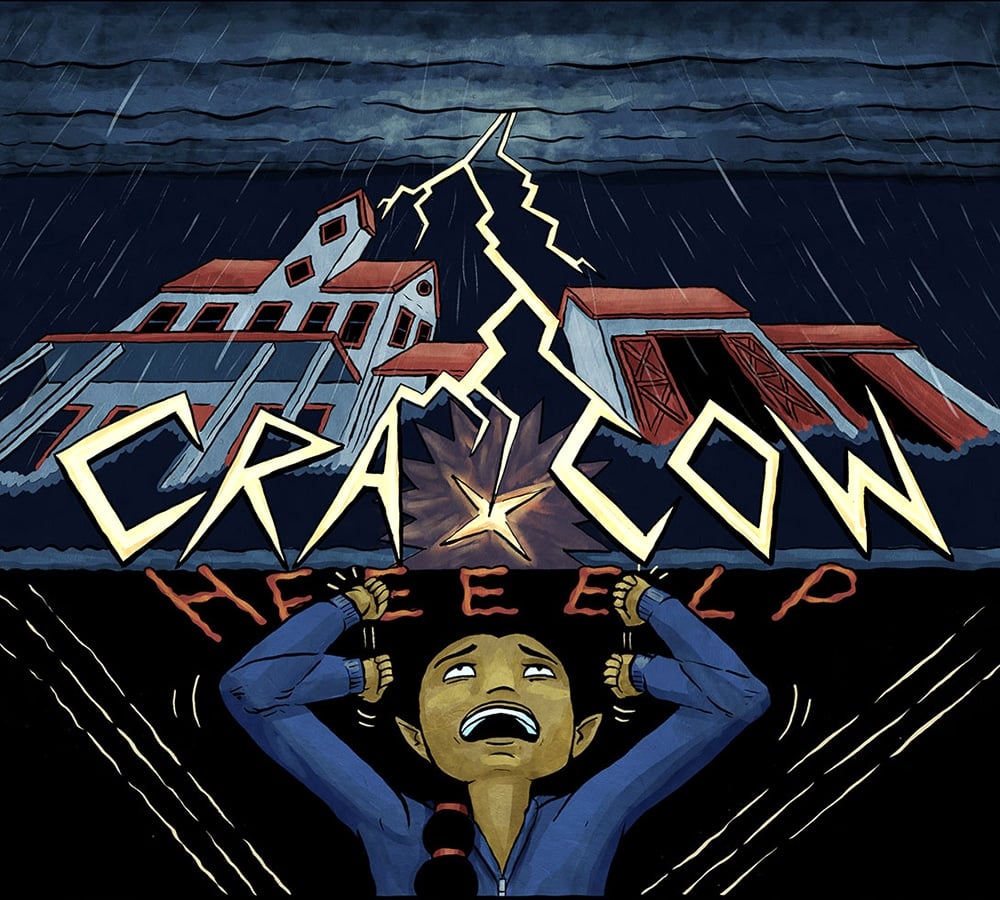
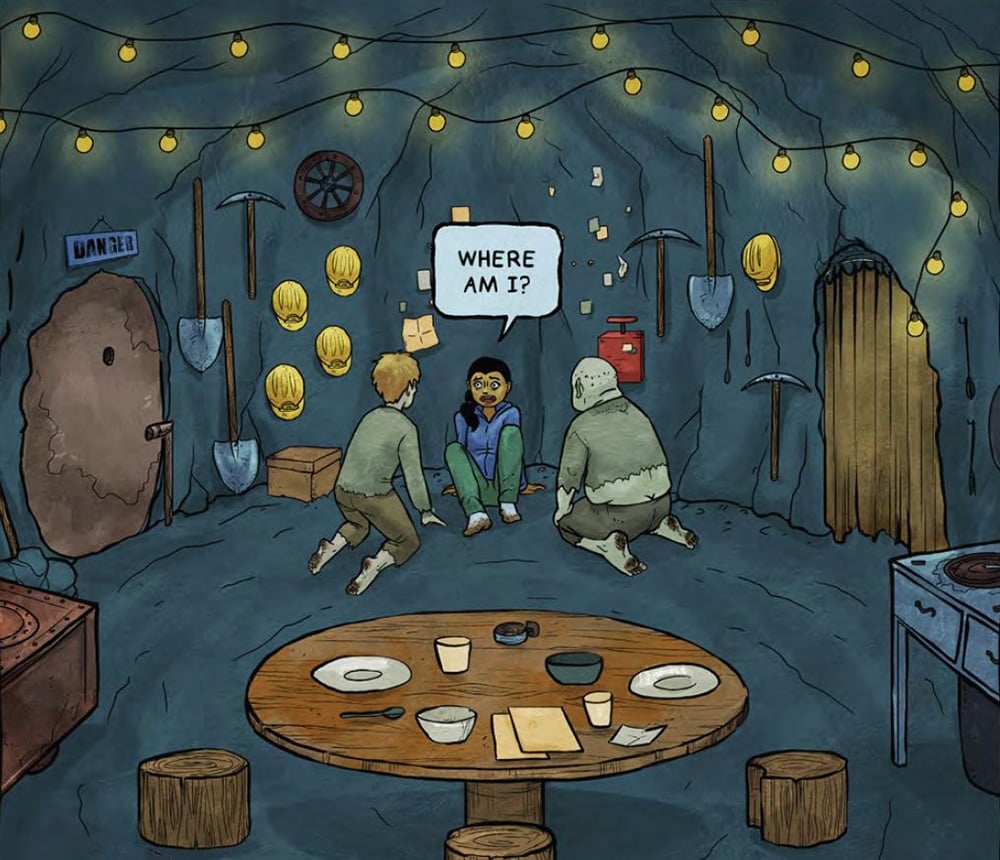
This is only the beginning of Pig Wife, the bulk of which is set in the sprawling tunnels of the abandoned mine that was once operated by Pearl’s family. In these tunnels, Mary is discovered by Pearl’s son Ed and his “brother” Tommy, who have been raised underground and told that the fires and fallout of an apocalypse have made the surface unsafe. The two teenage boys worship Pearl, whom they view as a hero who fights demons to procure food. Now that Mary has fallen into their hands, they believe that Pearl has sent them the ultimate gift – a wife.
Mary is understandably horrified by Ed and Tommy, especially given Tommy’s sniveling fear of Ed’s violent fits of rage. For better or worse, however, Mary has been prepared for this situation by her former life with her biological father, an alcoholic musician who depended on Mary’s mother for money. No one is coming to save her, so it’s up to Mary to figure out how to escape the tunnels while surviving Ed and Tommy’s good-intentioned but deeply disturbing behavior.
I’m going to say something that might sound negative at first, but hear me out.
The character writing in Pig Wife relies heavily on tropes and stereotypes. There’s the rebellious teenage protagonist who has no hobbies other than smoking cigarettes and getting into fights. There’s the deadbeat dad who relies on the women in his life to make ends meet. There’s the self-sacrificing mom who denies her own comfort for the sake of her daughter, as well as the selfish mom who literally keeps her children locked in a cage. The inner city is filled with trash and crime, while the countryside is populated by inbred yokels.
Because the reader is already familiar with these character tropes, Pig Wife is able to move at lightning-fast speed. Weighing in at more than five hundred pages, this is a monster of a graphic novel, but it’s entirely possible to read this massive book in one adrenaline-fueled sitting. By forgoing the nuances of character, Pig Wife can focus entirely on plot, and the plot is a well-oiled machine that grabs the reader and aggressively drags them down into the tunnels.
By virtue of the broad strokes of its characterization, Pig Wife is also able to convey the allegorical elements of its scenario. The coming-of-age story in which a young hero embarks on a journey has a universal appeal, but teenage girls (and slightly older girls, if they’re trans) often undergo a separate ascent from innocence to experience that I think of as “climbing out of the pit.” By “the pit,” I mean the everpresent tar pit of internalized sexism and misogyny, which can sometimes feel almost impossible to escape.
The mine tunnels of Pig Wife are as good of a visualization of this pit as any. While she’s underground, Mary must be clever enough to move past Ed, who represents her father’s violence, while also not relying too heavily on Tommy, who represents her father’s passivity. Aunt Pearl embodies the stereotype of adult femininity as overbearing and delusional, while the mysterious “pig wife” that this horrible family keeps behind a locked door is the conception of adult femininity as mindlessly sexual. In order to return to society with a more mature perspective, Mary must leave all of these gendered stereotypes and anxieties in the pit where they belong while finding her own way back outside.
Thankfully, no actual pigs are harmed. Many coming-of-age narratives use the death of an animal as a necessary symbolic sacrifice for the hero, but Pig Wife is a different sort of story. If the pigs don’t get a happy ending, Abbey Luck suggests, then none of us do.
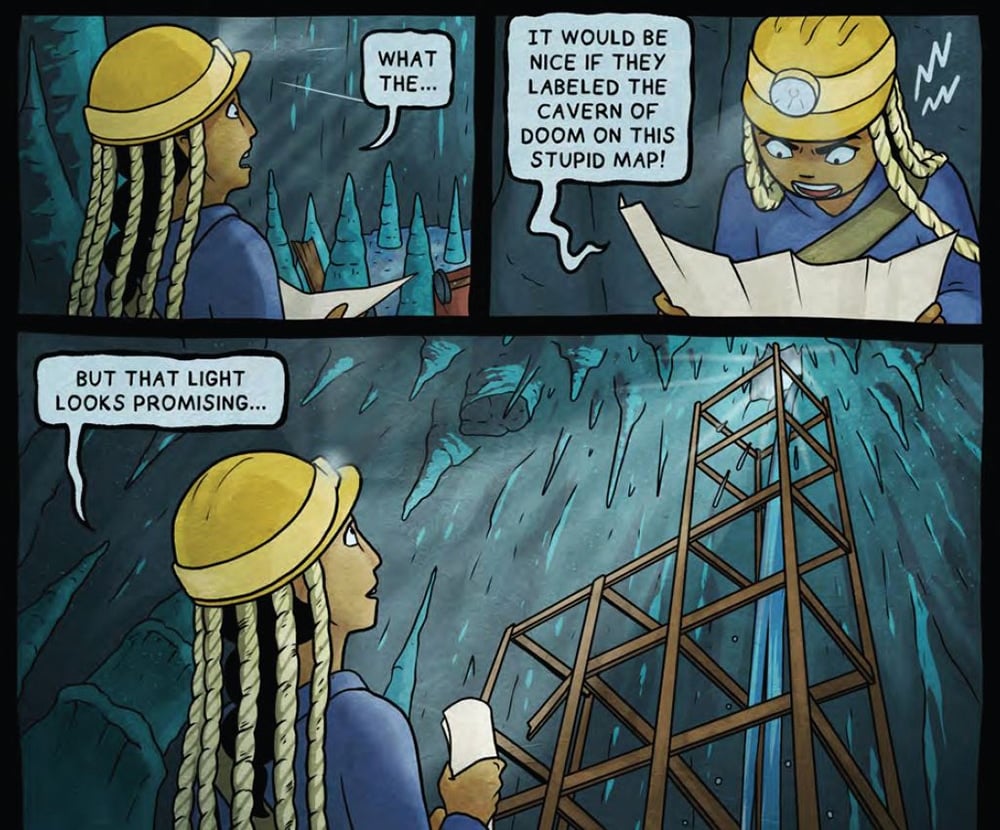
The art of Pig Wife, which was collaboratively created by Abbey Luck and Ruka Bravo, is distinctively stylized yet conveys the action effectively while basking in the strangeness of the setting. While Luck has produced animation for studios like Disney and Comedy Central, Bravo writes that she’s inspired by the coziness and warmth of Studio Ghibli. Although the opening pages of Pig Wife aim for a grittiness reminiscent of photocopied punk zines from an earlier decade, the art eventually settles into a more comfortable style that conveys the charm of the subterranean world, as well as the disquieting appeal of its inhabitants.
There’s a lot to unpack and meditate on in Pig Wife, which invites close reading and discussion. That being said, this graphic novel works remarkably well as Hollywood-style entertainment that invites readers on a roller coaster ride through a uniquely disturbing haunted house. Regardless of gender, we all have a teenage weird girl trapped in our hearts, and it can feel immensely cathartic to indulge in her dark fantasies before setting her free.
Pig Wife is available from Top Shelf Productions.
Read more great reviews from The Beat!