

By industry standards, this review of Come See Me in the Good Light is late. It’s also, perhaps, more obituary than review.
The documentary, which follows Colorado poet laureate Andrea Gibson after a terminal cancer diagnosis to their final live performance, hit the festival circuit earlier this year and then debuted on Apple TV+ in November.
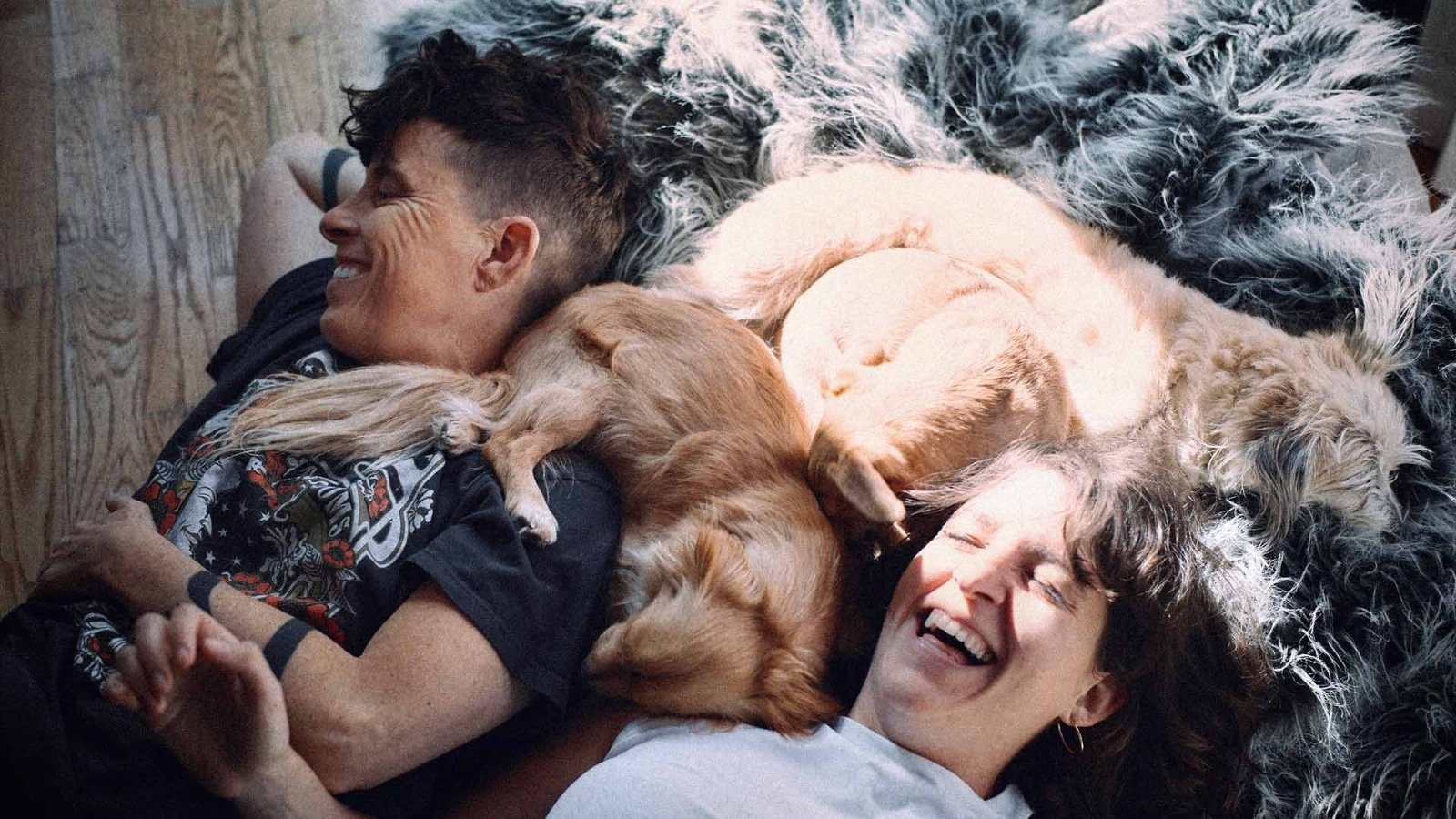
In July, Gibson died “surrounded by their wife, Meg, four ex-girlfriends, their mother and father, dozens of friends, and their three beloved dogs.” I cried as I read the Instagram post about their passing. I cried each time I read shared memories of them from their friends and fans. I cried watching their videos—of which we are blessed with so, so many—and I have cried each time their wife, Megan Falley, shares new writing, photos, or videos.
Following Gibson’s passing, I recalled that they had a documentary releasing this year and looked up the information so I could write down the date of its premiere. Although I knew, without a doubt, that watching it would be absolutely earth-shattering, I was also sure that nothing could keep me from watching it as soon as it was available to me.
The weekend Come See Me in the Good Light made it to Apple TV, disabled activist, author, and oracle Alice Wong died. Although my partners and I had plans to watch Gibson’s documentary, which closely follows their life with Falley, the weekend it came out, with the news of Wong’s death, we needed more time.
Lately, it feels like there is simply never enough time.
Every Second Is a Gift
It’s hard to review a documentary chronicling some of the final months of someone I didn’t personally know, but whose work has touched me deeply for more than a decade.
Come See Me in the Good Light isn’t sensational. It isn’t fast-paced. It meanders through Gibson and Falley’s memories of their early careers, of how Gibson got into spoken word poetry and became a figurehead of the art form in the early aughts because of how openly they talked about suicidality, gender, and queerness.
It features moments of intimacy between Gibson and Falley that are so soft, so indicative of how deeply they love each other, that I often found it difficult to breathe while watching.
Gibson, who spent so much of their early life wanting to die, cannot stop expressing their amazement at how much life is packed into every single second after their cancer diagnosis. Watching the film five months after their death feels like those seconds are offered to us, the viewers, as gifts. In particular, recorded footage from their final live show in Denver (which I couldn’t make as I was recovering from emergency surgery—something that hurt then and hurts more now, knowing the context of its planning and execution) feels like parting words.
In many ways, they are. The documentary wraps shortly after that performance, after Gibson’s blood tests reveal that the cancer has spread significantly. At many points, Falley explains how these tests—taken every three weeks, like clockwork—make their lives feel like they’re being lived in brief, haunting cycles. Their results indicate how the next three weeks will go, and how much dread will build up before the next one. Viewers witness a terrifying low followed by a euphoric high, followed again by an awful, awful low.
But as the credits roll, we are left with Gibson doing what made them so beloved for so many: speaking from the heart, with intention, without bullshitting—and with so much clarity that it aches.
Come See Me in the Good Light is a window, not a door

It may seem macabre for anyone to chronicle their life after a terminal diagnosis. It may feel even more macabre for hundreds of thousands of people to watch that chronicling. But Come See Me in the Good Life doesn’t play up the tragedy of Gibson’s diagnosis or their death. In many ways, it doesn’t even really feel like watching a movie.
The documentary features very little music, even fewer “talking heads”—and those that exist are from Falley and Gibson. There is so much humor imbued through its one hour and 44-minute runtime, including an ongoing war between Gibson and their mailbox that at one point results in them accidentally ordering (but then installing, because why not) a Fisher Price one.
The credits are packed with the names of Gibson’s friends, including comedian Tig Notaro and singer-songwriters Sara Bareilles and Brandi Carlile, who co-produced Come See Me in the Good Light. Perhaps it’s the fact that seemingly everyone involved in the project has a relationship with its subject that it doesn’t feel gruesome or pretentious or strange. Perhaps it’s Ryan White’s directing, which constantly breaks the fourth wall in a way that always feels organic, rather than forced.
Whatever the reason for this documentary’s unique warmth, speaking solely from the perspective of a fan, it feels right for Gibson and their legacy. It also feels right for Falley, whose work—as she explains while writing her memoir during the film—has been fundamentally altered by the loss of her partner. It’s a window into their lives that, even after Gibson’s passing, at no point feels like it’s shutting viewers out. What an admirable feat of documentary filmmaking.
If this is the first you’re hearing of Gibson, whose work touched creators across medium, form, and genre, their work is absolutely worth diving into. Their most recent collection, You Better Be Lightning, was released by Button Poetry in 2021.
Come See Me in the Good Light is streaming now on Apple TV.