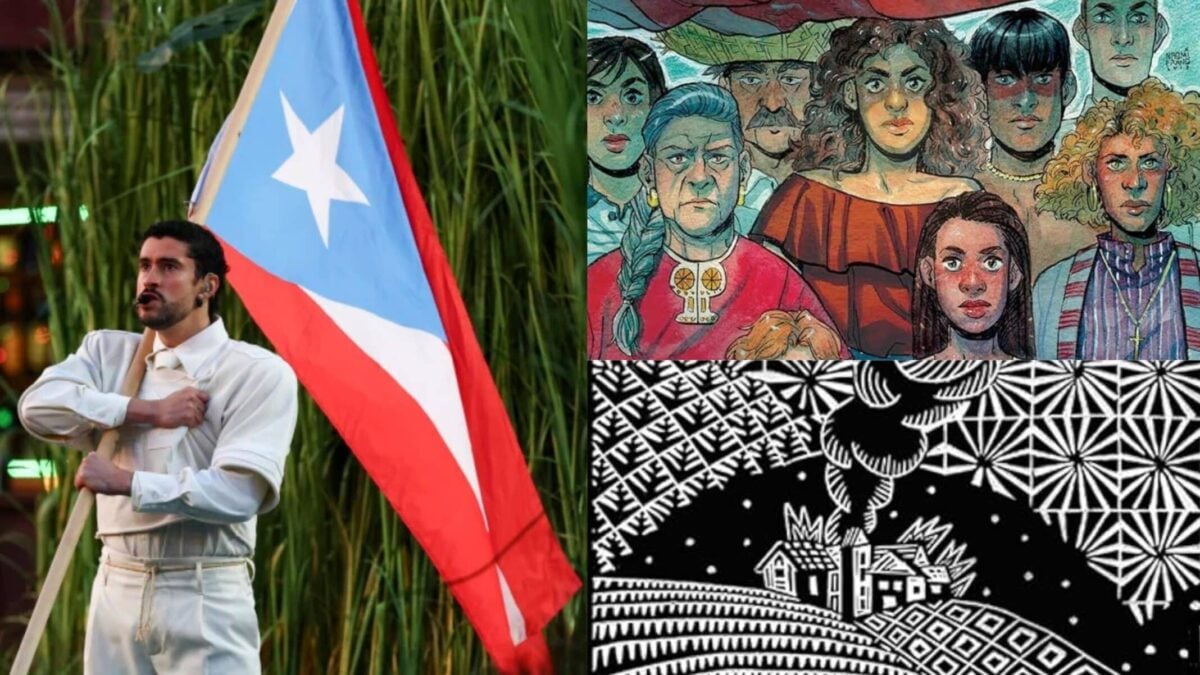

Bad Bunny’s Super Bowl Halftime Show felt like the culmination of a legendary run. It came after Benito’s historic win at the Grammy’s (first Album of the Year win to be entirely in Spanish), and it rode in on the high of a massively successful residency in Puerto Rico that turned the island into the hottest place on Earth.
It feels like Puerto Rico finally got its due, as if it finally got to show the world what its inhabitants have known all along: que Puerto Rico está cabrón.
Of course, this wave of success gathered its strength from the once-in-a-generation music phenomenon DeBÍ TiRAR MáS FOToS, an album that celebrates Puerto Rico while also allowing itself to work through the fears and anxieties that come with the constant reminders of the island’s colonial status (most explicitly addressed in the song “Lo que le pasó a Hawaii”) and how hurricane María reshaped life as we knew it. It’s one of the most raw and emotional explorations of the nation’s spirit and identity in recent years.
One of the most remarkable things about the Bad Bunny experience is that it makes you want to know more about Puerto Rico. It hits you with the full force of its people and their musical history, from plena to perreo. Each song in DTMF proudly declares an unapologetic and sometimes painful love for Puerto Rico, rooted in the reality it traverses.
Luckily, there are more than a few comics available, by Puerto Rican creators, that can help keep the DTMF vibes going while we wait for the Grammy Award-winner’s next industry-shattering move. Here are 4 of those comics, each one an invitation to go even deeper into the Puerto Rico Bad Bunny has put on the global stage.
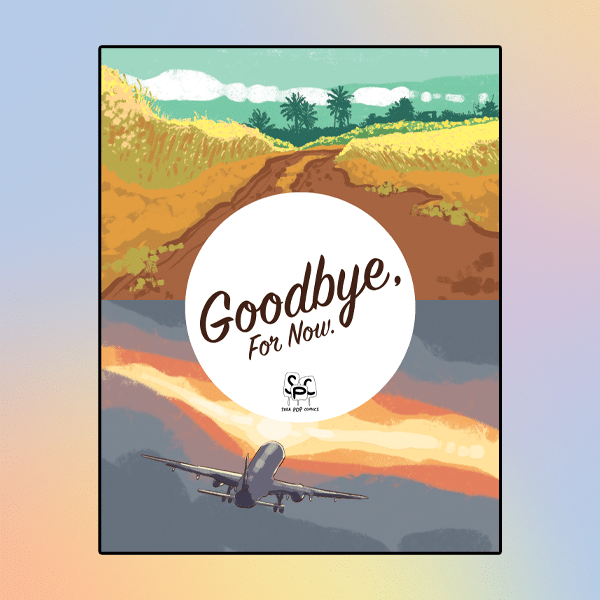
- Goodbye, For Now, written by Carla Rodríguez and illustrated by Rosa Colón (2016)
The premise of Goodbye, For Now hits especially hard for Puerto Ricans who were born and raised in the island. Sofia and Mari are best friends and they’re navigating one of the scariest moments of their friendship (of any real friendship, really): one of them is leaving the island for a chance at a better life in the States. They take a road trip before the inevitable comes to pass, to savor their last days together before it all becomes long distance.
The decision to leave your home because you feel it doesn’t let you make a decent living, or because it hasn’t laid the groundwork to help you develop professionally, is the stuff harsh realities are made of. A lot of the blame for this, in the context of Puerto Rico, falls on colonialism. The antiquated laws it authored simply crippled any chance of economic growth in the island, of homegrown industry at a large scale. As such, we leave not because we want to, but because we don’t have any other choice.
Rodríguez and Colón capture this in 24 emotionally intense comic pages, exploring sadness, despair, and hope. It even goes on to expose the idea of coming back home later on in life as an improbability that haunts those who leave more and more. It’s a sweet but hard read that also gives other Puerto Rican towns outside the metropolitan area a chance to shine.
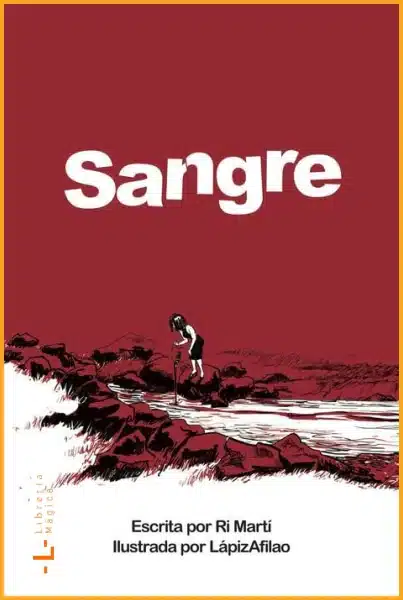
- Sangre, written by Ri Martí and illustrated by LápizAfilao (2019)
The idea of class in Puerto Rico is ready-made for satire. It’s enough to argue that there are several Puerto Ricos within the geographical confines of the island. Ri Martí and LápizAfilao lay bare the bizarre and eccentric intricacies of one such stratum in Sangre, a book that mixes horror, family drama, and class politics to explore the monsters that come out of Puerto Rico’s most privileged group of people.
Sangre follows a family, along with friends, that reunites to tackle a cooking competition they desperately want to win. Their reputation is on the line and the recipes they’ve come up with are lacking. That is, until the leader of the pack (one Don Antonio) finds the key to victory by accident while cutting vegetables in the kitchen one night (hint: look at the title). From there things turn weirder than they already were, with debauchery and madness coloring the proceedings.
This one’s more of an illustrated book than a full-on comic, but it experiments with the format in ways that owe more to comics than anything else. Speech bubbles break out at key moments and double page spreads pop with flashes of anger and rage contained within verbal expressions that are 100% Boricua. Sangre has a very distinctive cast of characters, reminiscent of the Roys from HBO’s Succession, and LápizAfilao’s character designs make each one stand out as representative of a specific type of privilege individually. Academics rub shoulders with restaurant owners and both think they’re owed more than they might be. What Martí doesn’t explicitly say, LápizAfilao fills in with her illustrations. Sangre is a gem worth seeking out.
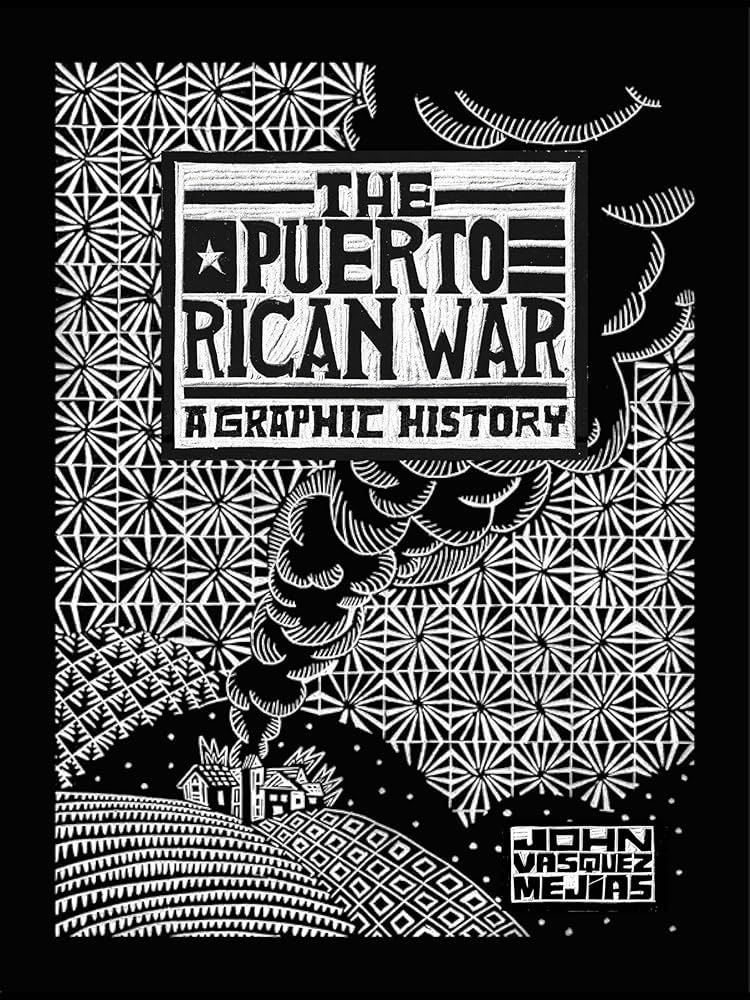
- The Puerto Rican War: A Graphic History, by John Vásquez Mejías (2024)
The Puerto Rican War is an important work of non-fiction, certainly one of the best of the 21st century. It’s a graphic retelling of the 1950 insurrection by Boricua freedom fighters against colonial repression which took place both in the island and in the halls of power in Washington, DC (which culminated in the failed assassination attempt of President Truman). It’s monumental, and it should be considered required reading for anyone interested in the history of 20th century PR and beyond.
The book presents the 1950 insurrection in a woodcut style that lends the narrative a fable-like quality. Characters are heavily stylized, but they carry the historical weight they deserve. This feeds into John Vásquez Mejías’ greatest achievement: the ability to present the figures of the insurrection as belonging to the same revolutionary bloodline that includes Ghandi and Michael Collins, titans of resistance. Puerto Rico’s rebellious history suddenly takes its rightful place in the larger revolutionary narrative.
The story’s fable-like inclinations make the most heartbreaking aspects of this history even more tragic, but it also makes them more admirable. It might illustrate a failed attempt at freedom and self-determination, and it’ll make you feel the pain that came with it, but it also inspires pride. Puerto Rico stoked the fires of revolution, and nothing can take that history away from us.
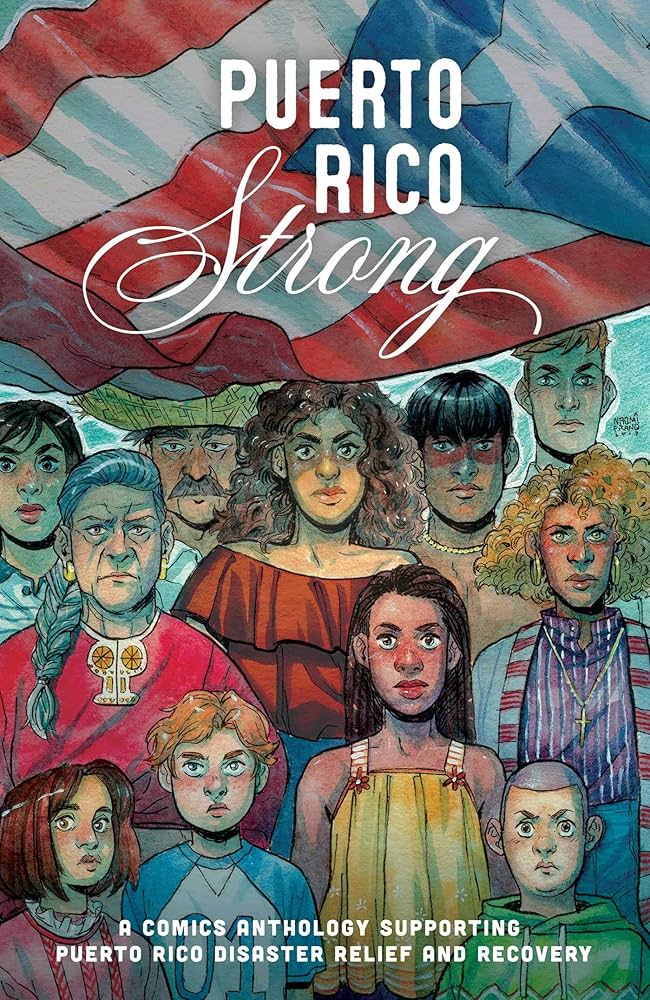
- Puerto Rico Strong: A Comics Anthology Supporting Puerto Rico Disaster Relief and Recovery, by Rosa Colón, Vita Ayala, Fabian Nicieza, Ariela Kristantina, Daniel Irizarri Oquendo, Hazel Newlevant, and others (2018)
The passing of Hurricane María in September 2017 marked a before-and-after moment in Puerto Rico’s history. It left the kind of devastation that marks a generation. Recovery efforts and disaster relief created its own problems, most notably local corruption and the misuse of funds. This is why recovery fundraisers were such a huge part of the island’s reconstruction efforts, and comics had a big hand in it. Puerto Rico Strong was among those at the forefront, featuring a more indie-focused group of creators that took it upon themselves to not only address the hurricane directly but also to celebrate Puerto Rican culture and history.
The anthology features non-fiction, folk tales, historical analysis, and individual stories that capture the experience of living through the hurricane both in the leadup and in the aftermath. One story, titled “What Remains in the Dark” (by Amparo Ortiz and Eliana Falcón), explores darkness as a result of electric power outages. It stands out because it makes a fairy tale out of a common disruption of services, something that’s become a constant part of life in the island.
Other stories look at Taíno resistance, a group of young students in the future as they learn about Puerto Rico, and colonial laws that are still in effect. Puerto Rico Strong is a great representation of the island’s cultural richness and how it’s survived despite attempts to rob its people of the things that make them Puerto Rican. Listen to “Lo que le pasó a Hawaii” with this one. You’ll feel it.






Thank you. I loved co-creating and spearheading Puerto Rico Strong. That book was a very proud moment for me and everyone involved.
Comments are closed.