

THIS WEEK: Checking out Bleeding Hearts #1, Absolute Wonder Woman Annual #1, Sirens – Love Hurts #1, and Batman and Robin #30.
Note: the review below contains spoilers. If you want a quick, spoiler-free buy/pass recommendation on the comics in question, check out the bottom of the article for our final verdict.
Sirens: Love Hurts #1
Writer: Tini Howard
Artist: Babs Tarr
Colorist: Miquel Muerto
Letterer: Becca Carey
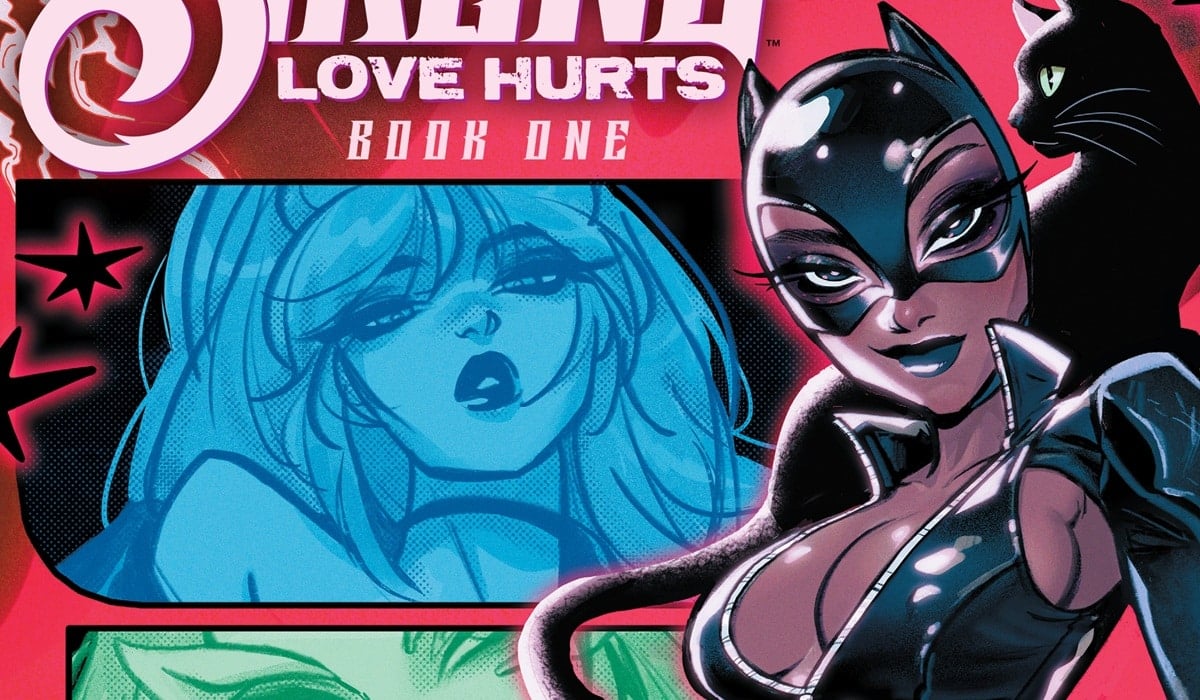
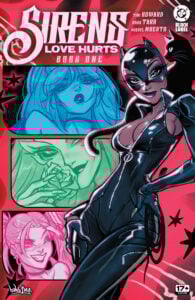
As soon as Sirens: Love Hurts was announced, I was excited that writer Tini Howard would be teaming up with renowned artist Babs Tarr. Both of these exceptional creators would be focusing on the Gotham City Sirens, and luckily, the first issue of this new Black Label series does not disappoint.
As a Black Label book, this story is not trying to fit neatly into established canon. Instead, it fully commits to Howard and Tarr’s vision, resulting in a beautifully-colored, boldly-drawn, and strikingly-bright-yet-bloody comic. Howard’s writing chooses to lean into heightened emotion and identity, while Tarr’s art embraces expressive design and vibrant energy.
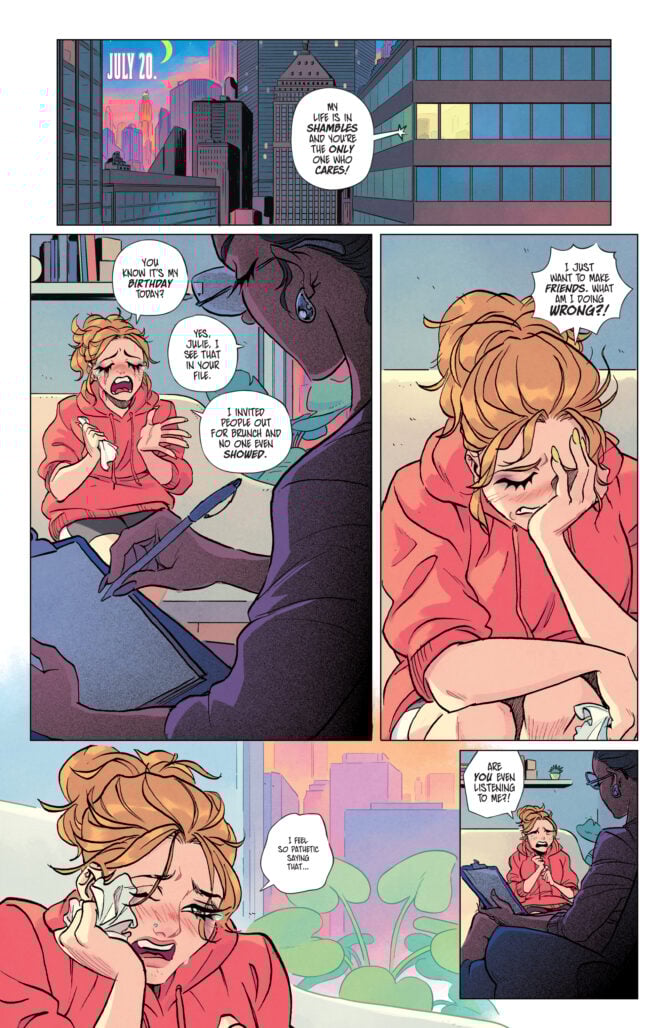
Its the best of both worlds and Tarr truly captured the spirit of the project perfectly in an Instagram post, writing, “This is for the girls, the gays, and the theys who love comics.”
That sentiment runs through every page, giving Sirens: Love Hurts a confidence that never wavers. Going into the book, I expected a slice-of-life comedic crime drama, and I was pleasantly surprised by how much more it offered.
In the story, it is Black Canary’s first time meeting the whole group; her chemistry with them feels effortless, mirroring the kind of banter I have seen among friends in real life. They don’t shy away from fully embracing the world these creators have brought to life, giving the Sirens interactions that feel natural and lived-in. I found myself laughing along, fully ready to spend more time in this version of Gotham. Even when Ivy, Catwoman, and Harley leave Canary at brunch, the transition into their criminal side of Gotham feels seamless, even when the story takes a sharp turn.
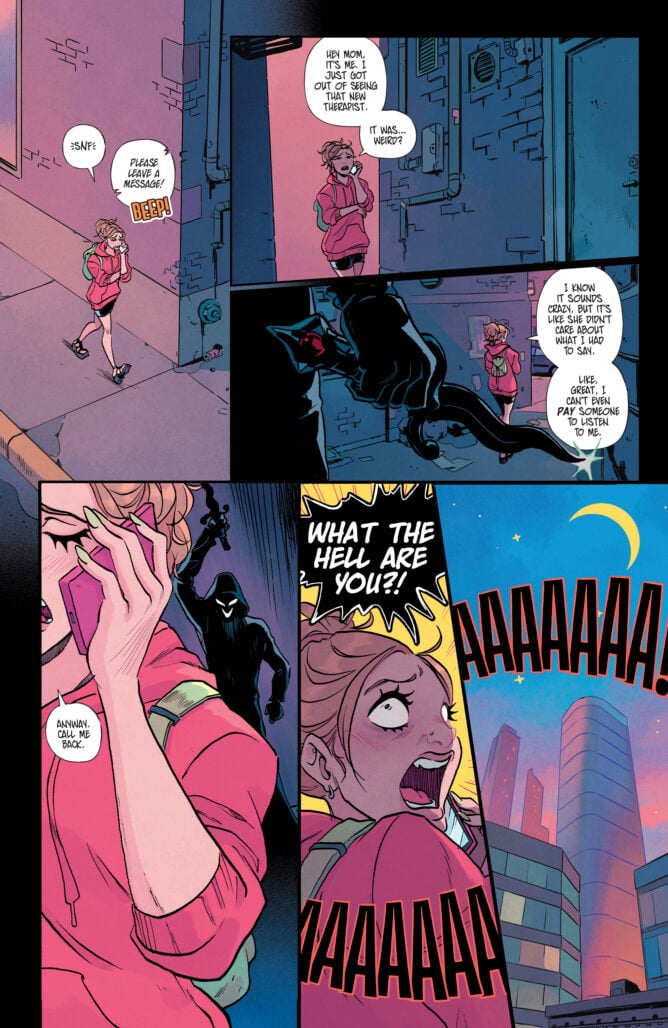
Without warning, the comic cuts to the aftermath of a ritualistic murder, and the shift is startling. Tarr’s art, often associated with fun, bright energy, now feels unsettling as that same visual language is drenched in blood. As the others flee when the police arrive, Canary stays behind with the victim. Earlier in the issue, she expresses her desire to make Gotham safer for all women, villains included, and that moment pays off here. She tells Julie, the victim, that she will stay with her, and the emotional throughline snaps into focus. Canary’s choice is not framed as if it is meant to be heroic; it is presented as deep care and a natural reaction to tragedy. She does not fight, moralize, or act holier than thou. She just listens and in her own way, mourns for a stranger she knows all too well.
In Sirens: Love Hurts, Howard and Tarr are doing far more than telling a story about glamorous women in striking costumes. They are telling a story that is emotionally and socially conscious, showing that these characters can be playful, confident, and stylish while deeply caring and morally engaged. The Sirens’ investigation refuses to let societal bias dictate justice. Just because the victim, Julie, worked a service job or had a history of depression does not make her life, or her death, any less significant. These women are thoughtful, proactive, and unwilling to let the world devalue anyone.
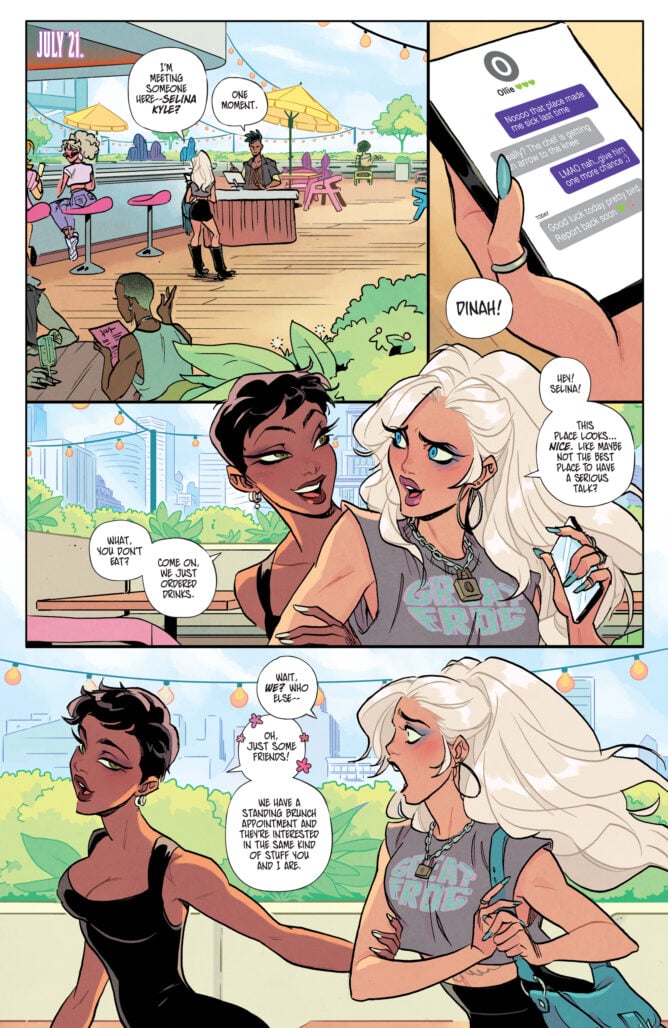
At the same time, the comic leans into humor, spice, and friendship without undermining its weighty themes. Ivy, Catwoman, and Harley’s interactions are joyful, funny, and relatable. Howard and Tarr show that these women can confront violence, systemic injustice, and misogyny head-on while still being stylish and funny. Sirens: Love Hurts entertains, makes you laugh, delivers thrilling crime drama, and leaves you thinking about who gets seen, who gets dismissed, and what it truly means to take care of others in a world that would rather look away.
Verdict: BUY
 Vertigo Round-Up – Bleeding Hearts #1
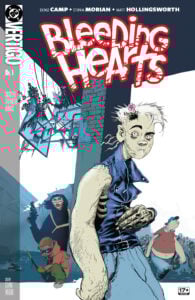 Vertigo Round-Up – Bleeding Hearts #1
Writer: Deniz Camp
Artist: Stipan Morian Colorist: Matt Hollingsworth Letterer: Hassan Otsmane-Elhaou
I had no idea what I was getting into with Bleeding Hearts #1, but I quickly found out. Within the first two pages, a man is violently torn apart by a horde of the undead, setting a tone that is brutal, unsettling, and immediately gripping.
Soon after, we are introduced to our protagonist, Mouse-Pokes-Golf-Ball-Out-of-Head-Hole. Yes, that is his name. Poke is an undead citizen in a society of zombie overlords. Most of humanity has been wiped out, and the survivors are hunted down and devoured.
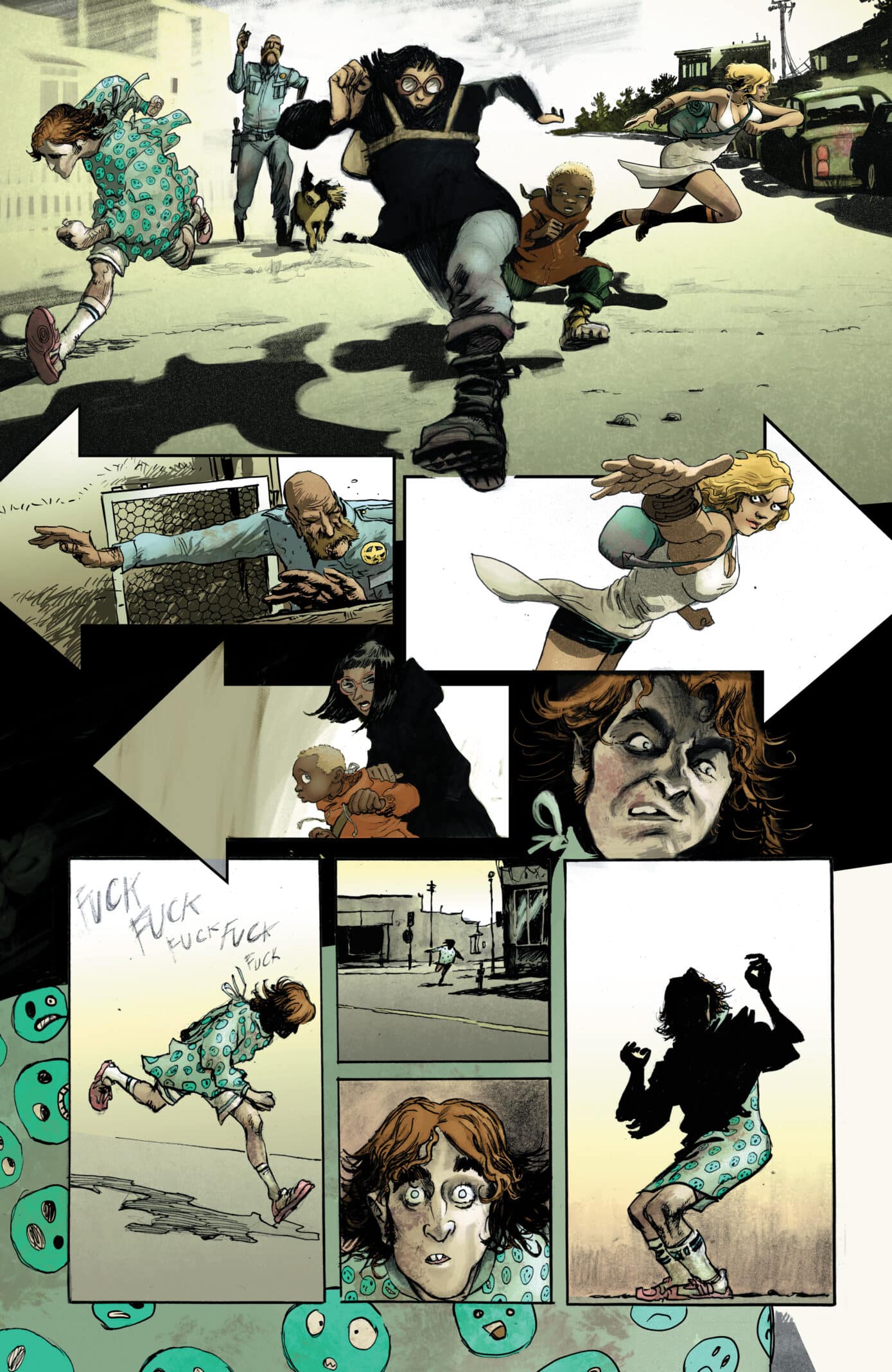
These zombies are not mindless. They have organized hordes, food must be shared, and exile awaits the selfish. Their days are filled with communal bonding. Even the act of eating the living becomes a social ritual, a way to grow closer to one another. They think deeply about who they are, what they should become, and what comes next for their world.
There is one problem, though. Poke’s heart has started beating again. He begins to regain emotion, becomes sickened by what they eat, and slowly finds himself drifting back toward humanity. His very existence contradicts everything this undead society believes.
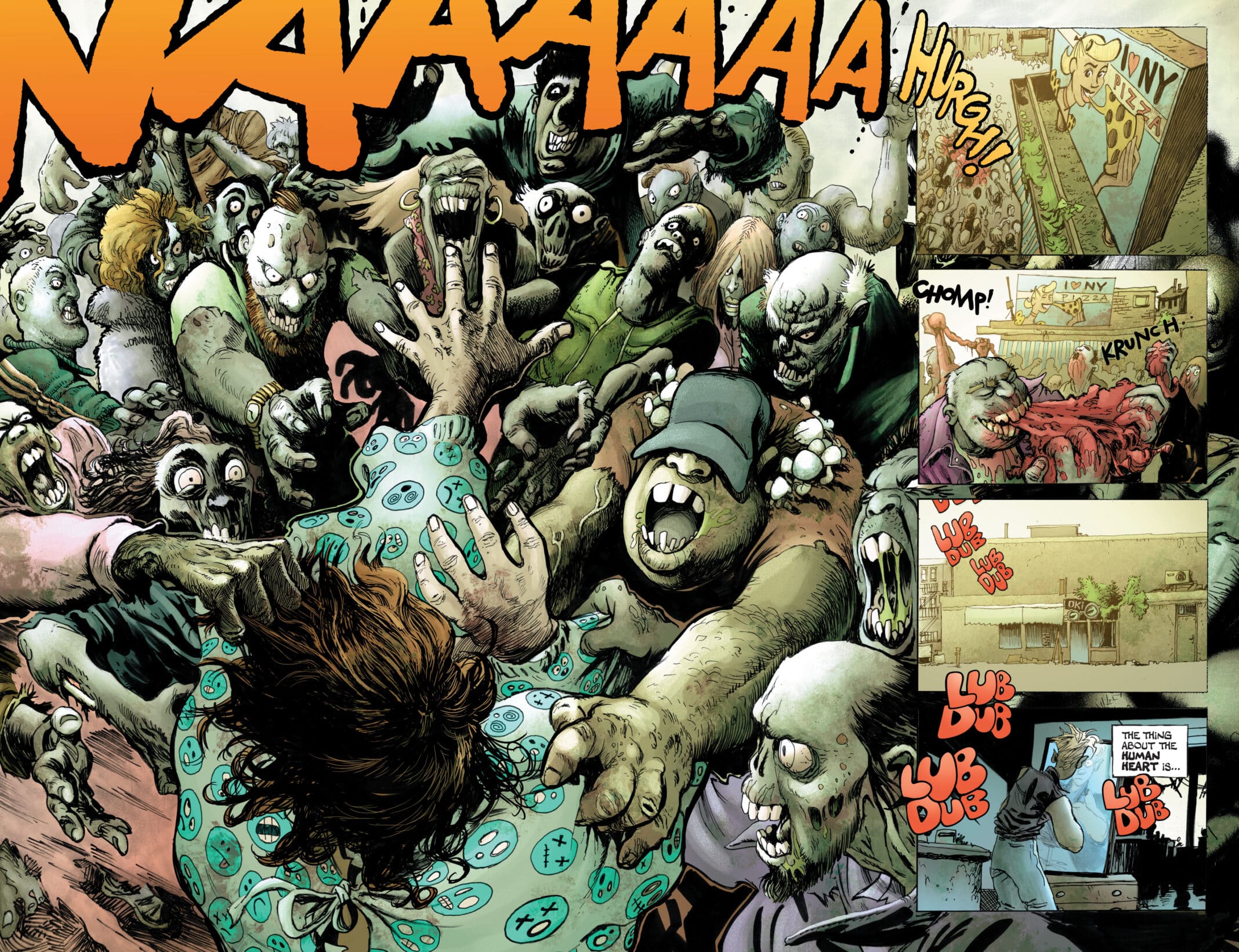
Through Poke, the issue dives into a sustained psychological examination of zombie culture. Yes, much of this functions as exposition and world-building, but it is handled with such clarity that it never feels tedious. I was fully immersed from start to finish, and the story only grows stronger as it progresses. Writer Deniz Camp excels here, especially when Poke reflects on how deeply the undead love life.
While Camp lays the foundation for this unsettling world with their writing, Stipan Morian brings its decaying body to life through his art. Each zombie is distinct, filled with personality and history through visual design alone. One has their face ripped off, another wears a steering wheel around their head, and another has a pole skewered through their mouth. Even one zombie was just a pair of legs; he had no top half, literally a walking pair of legs dubbed “Legs-without-top-part-but-doesn’t-let-that-stop-him,” which I could not stop laughing at because Camp had even come up with a form of disability in a zombie-infested society, only it’s reversed.
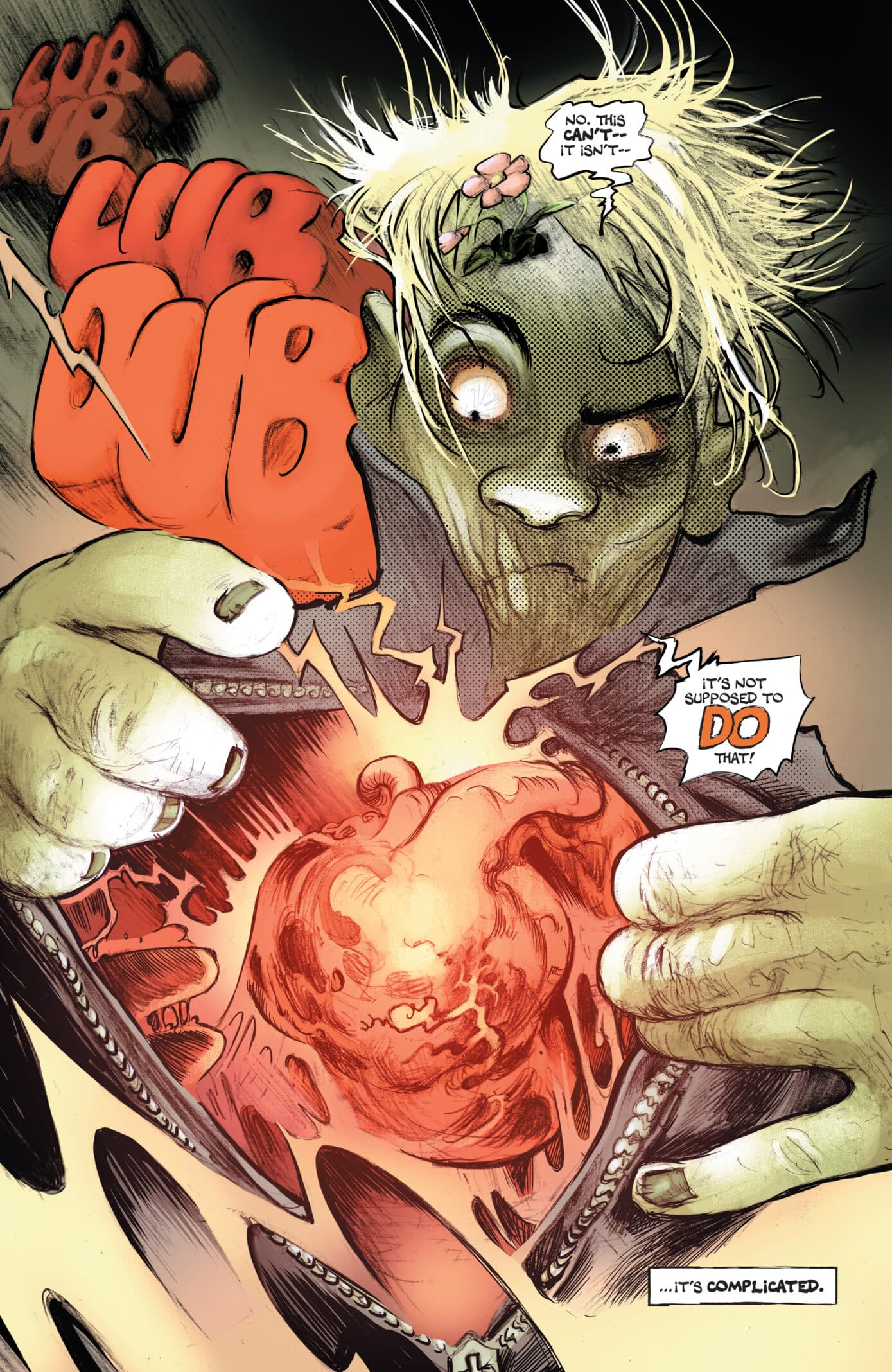
Where we in our own society would say that about someone with no legs, this society says that about a zombie with no head, arms, or torso. It’s phenomenal, and despite their grotesque appearances, they greet one another casually like neighbors chatting on the sidewalk. That contrast between horror and normalcy is where the book truly shines, and this creative team nails it.
I could not help but feel rattled again and again by this story. The core idea centers on a new society rising from the decimation of our own. Even as I found myself chuckling at the zombies and their grotesque gimmicks, Camp and Morian never let you forget that life as we knew it is over.
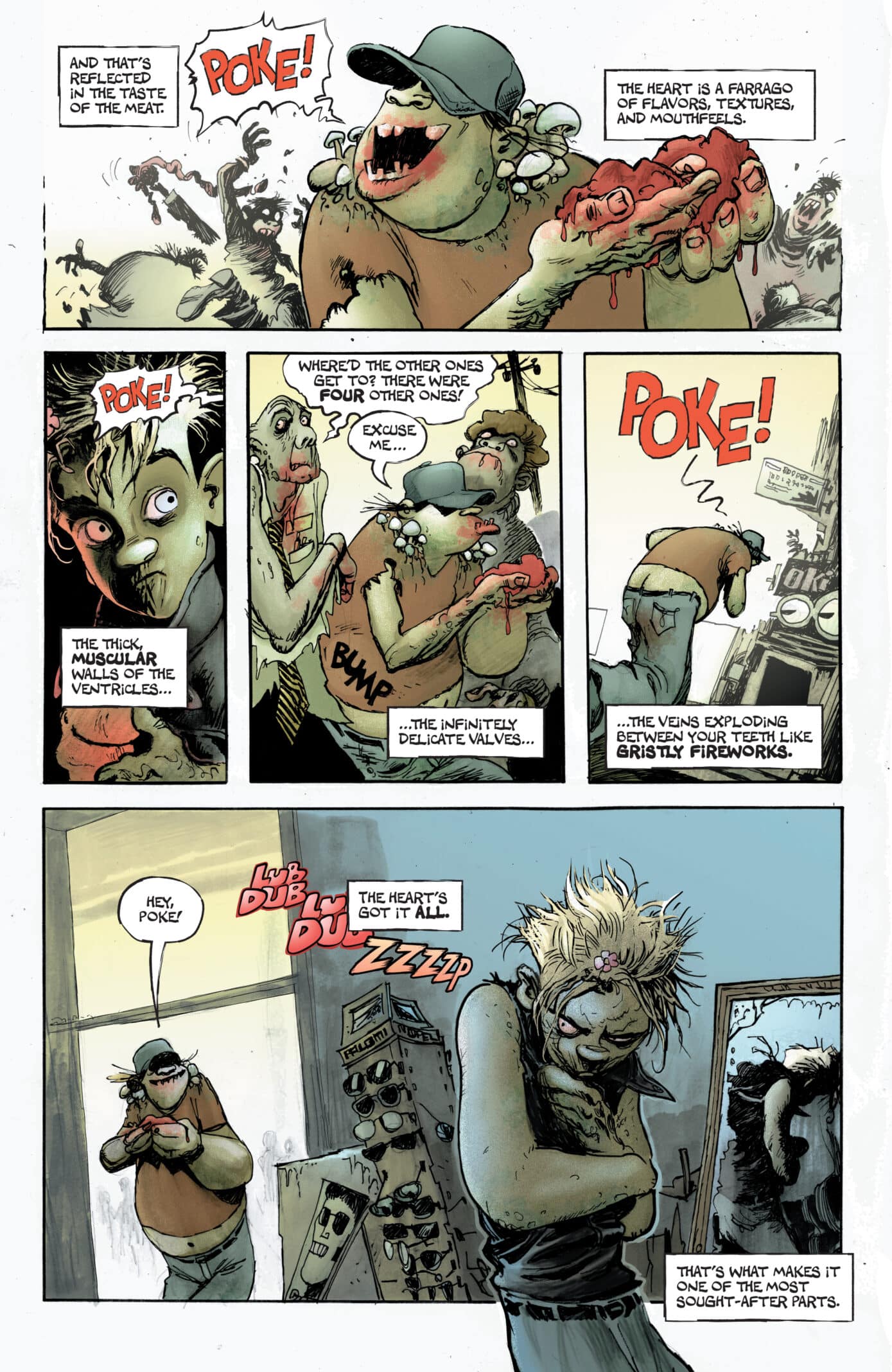
We see people give up and get eaten, commit suicide, or even mercy kill one another. These are genuinely dark themes, layered beneath moments of grim humor. The pacing is relentless, to the point where I found myself flipping back through pages because events unfold so quickly that it is easy to miss details. That speed adds to the unease.
Poke remains a deeply sympathetic figure, especially when he describes first realizing something is wrong with him. He reminisces about when his problem first began. How he felt the beating in his chest for the first time when the horde had consumed a mother and father who had just killed their own children out of mercy, only to be eaten alive themselves. All of this in the background as the horde found another survivor who, instead of fighting back, locks himself in a church, gets on his knees, and prays to a statue of a crucified Jesus Christ as he is inevitably torn apart. The juxtaposition is horrifying. It is quiet, cruel, and deeply unsettling.
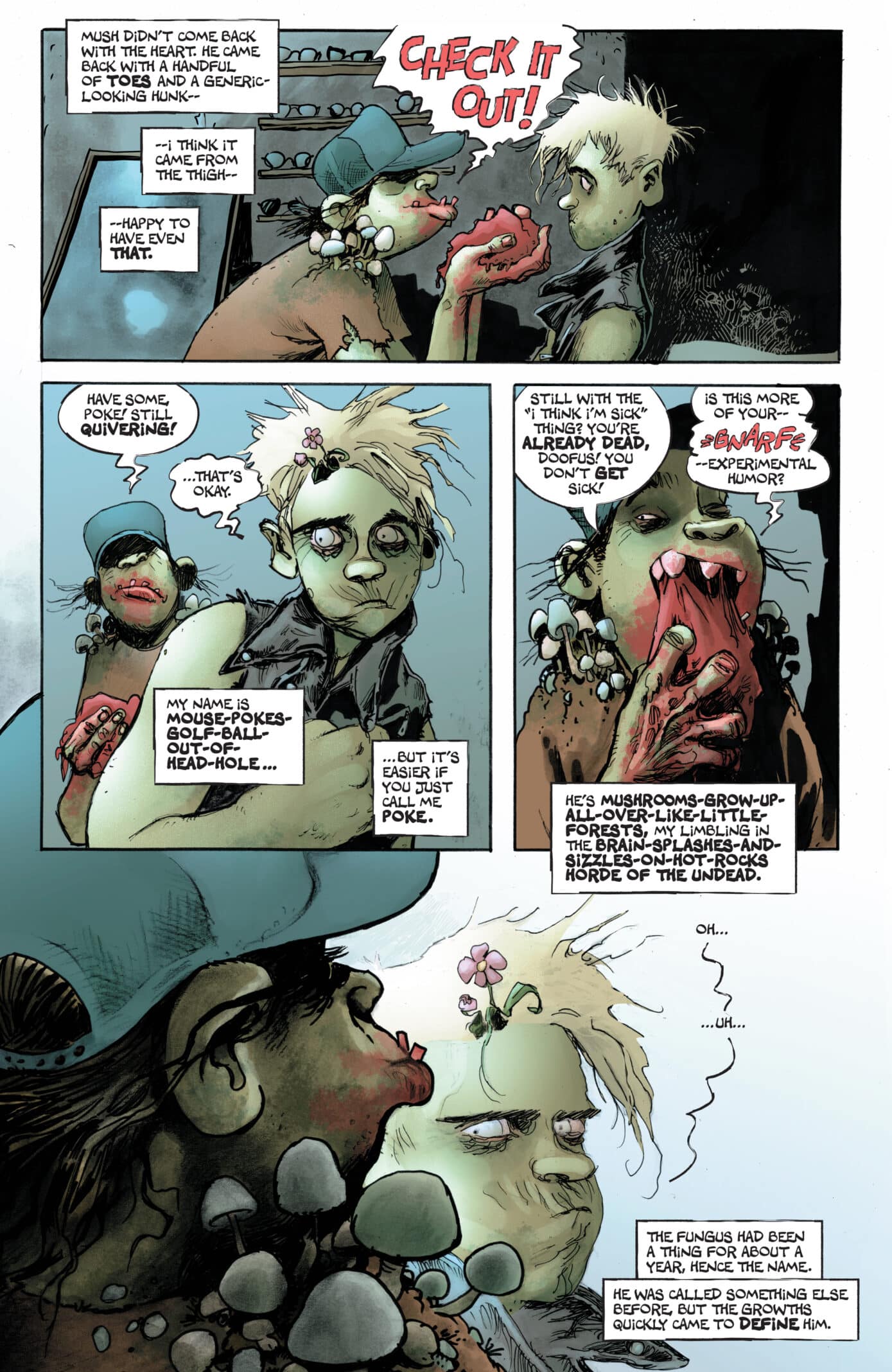
That moment lingered with me long after I finished the issue. It was chilling.
Even worse, Poke asks his friend Mush if they are evil. That moment really made me pause. Poke goes on to explain how the horde had exterminated ten billion people, how he has been noticing these abandoned houses, and what they truly used to be when they were human. Then the comic ends with Poke discovering two survivors, a gun pointed right at his head.
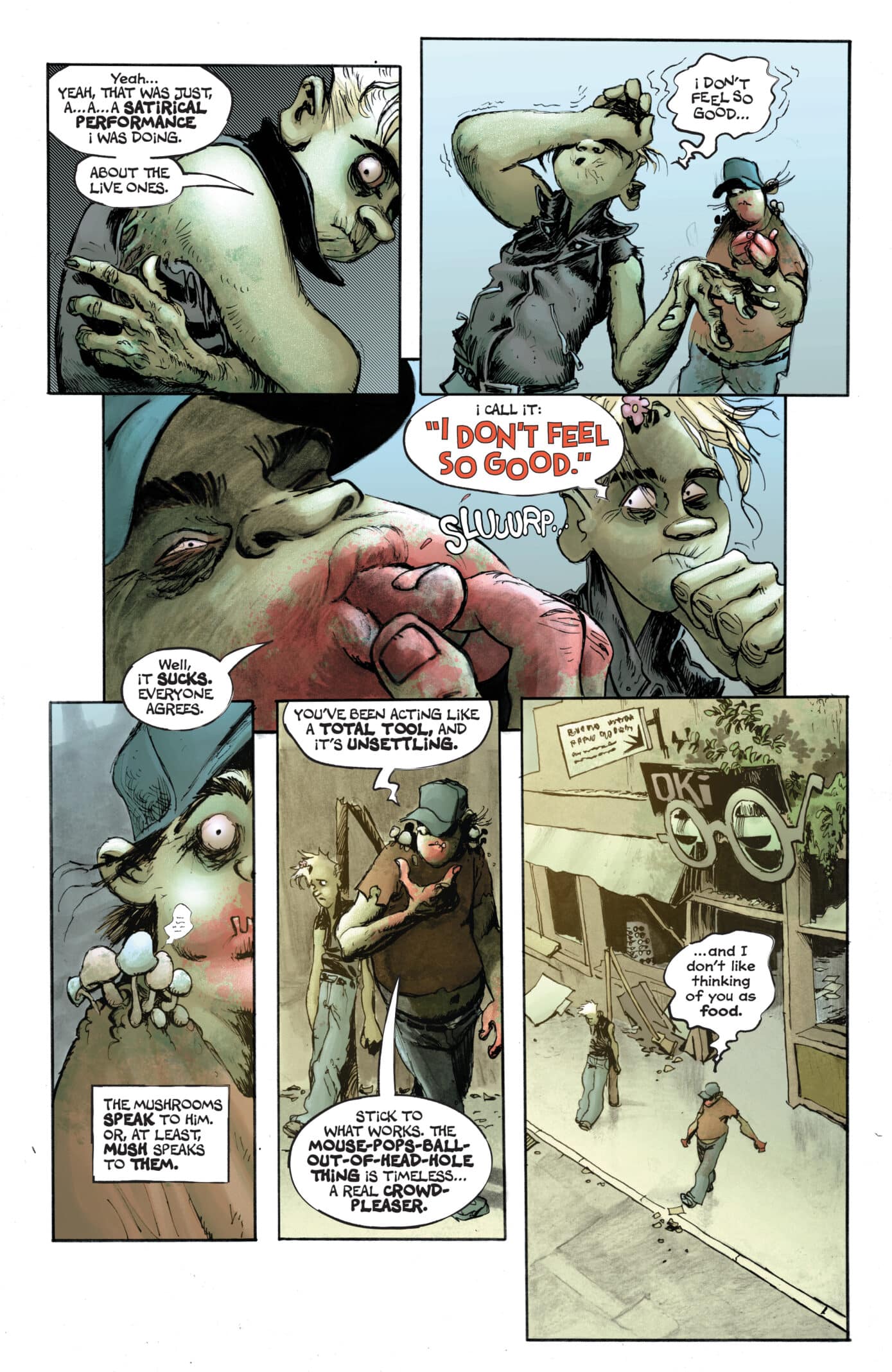
Camp and Morian leave the reader with no comfort, only recognition. The horror here is not the undead, but how easily meaning, morality, and empathy can be rebuilt around violence once survival demands it. Bleeding Hearts #1 lingers because it refuses to reassure while at the same time it asks you to laugh, then punishes you for doing so, and finally demands that you consider who the real monsters are when the world ends, and something else learns how to live in its place.
Bleeding Hearts is disturbing, thoughtful, and strangely intimate. It is a horror comic that understands its monsters well enough to make them feel uncomfortably human, and god I can’t wait for more.
Verdict: BUY
- In Absolute Wonder Woman Annual #1, writer Kelly Thompson and guest artist Mattia De Iulis tell a phenomenal story. It involves Wonder Woman operating without her powers, trying to correct an injustice that has happened to Medusa. I love that through this issue, Thompson reinforces the idea that being “super” isn’t about powers—it’s about who you are. And while Thompson sells Diana’s struggles, De Iulis illustrates a beautiful comic, emphasizing every challenge facing Diana. One thing I really appreciated here is that this story isn’t interested in slaying monsters or undoing curses through spectacle. What it is interested in is seeing someone for who they are, even when history and myth have already decided what they’re supposed to be. This issue was lettered by Becca Carey.
- I just can’t stop talking about this current run of Batman and Robin. Writer Phillip Kennedy Johnson and artist Fico Ossio deliver a finale his week for a story that is not only about Batman and Robin, but about Bruce and Damian. It examines what the vigilante life does to a person, the toll it takes, and the weight heroes carry in silence. What resonated most was the humanity in Bruce, especially relating to his role as a father, something that too often goes overlooked in Batman comics. Seeing that aspect foregrounded d is great. In addition, Damian’s growth here is also deeply satisfying. Ossio’s artwork also is essential to what makes this run stand out. One sequence in this issue emphasizes the limited time Bruce and Damian have to save a crowd of people, and the art is elevated through dynamic composition and Marcelo Maiolo’s striking colors. The visuals convey urgency, coordination, and trust, showing how seamlessly these two operate together in the middle of chaos. With this emotional finale, this arc reinforces why Bruce and Damian remain one of the most compelling partnerships in Batman history. This issue was lettered by Steve Wands.
 In Absolute Wonder Woman Annual #1, writer Kelly Thompson and guest artist Mattia De Iulis tell a phenomenal story. It involves Wonder Woman operating without her powers, trying to correct an injustice that has happened to Medusa. I love that through this issue, Thompson reinforces the idea that being “super” isn’t about powers—it’s about who you are. And while Thompson sells Diana’s struggles, De Iulis illustrates a beautiful comic, emphasizing every challenge facing Diana. One thing I really appreciated here is that this story isn’t interested in slaying monsters or undoing curses through spectacle. What it is interested in is seeing someone for who they are, even when history and myth have already decided what they’re supposed to be. This issue was lettered by Becca Carey.
 I just can’t stop talking about this current run of Batman and Robin. Writer Phillip Kennedy Johnson and artist Fico Ossio deliver a finale his week for a story that is not only about Batman and Robin, but about Bruce and Damian. It examines what the vigilante life does to a person, the toll it takes, and the weight heroes carry in silence. What resonated most was the humanity in Bruce, especially relating to his role as a father, something that too often goes overlooked in Batman comics. Seeing that aspect foregrounded d is great. In addition, Damian’s growth here is also deeply satisfying. Ossio’s artwork also is essential to what makes this run stand out. One sequence in this issue emphasizes the limited time Bruce and Damian have to save a crowd of people, and the art is elevated through dynamic composition and Marcelo Maiolo’s striking colors. The visuals convey urgency, coordination, and trust, showing how seamlessly these two operate together in the middle of chaos. With this emotional finale, this arc reinforces why Bruce and Damian remain one of the most compelling partnerships in Batman history. This issue was lettered by Steve Wands.
Miss any of our earlier reviews? Check out our full archive!
And check out the Beat’s other recent comics reviews!