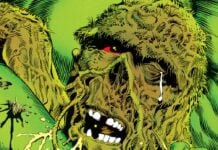

I’ve always kind of identified with the monster hero. It might even be fair to say that I just identify with the monster, whether heroic or not, since I gravitated towards horror. Swamp Thing was one of my favourites right from an early age. There was something appealing about the monstrous stranger, misunderstood, at the edges of society, but with a heart of gold. I felt a kind of kinship. I’m sure that many young kids reading comics, who might be a little eccentric, a little outside the norm, might feel the same.
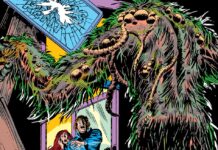
The Alec Holland mind simulacrum mud-encrusted muck monster wasn’t the first of his kind, though. He wasn’t even the first Swamp Thing, with Alex Olsen coming before him in the original House of Secrets appearance, but it was later that I learned of the predecessors and analogues. Like Man Thing. Or the first of their kind, The Heap.
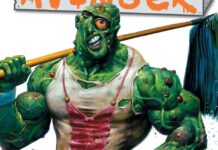
Outside of reproductions in comics histories and on websites, I actually haven’t read any of the original Heap stories from the Golden Age “SkyWolf” stories by creators Harry Stein and Mort Leav. I am sure I read at least a couple issues of Airboy when Eclipse had the license, but it was something I read in retrospect when IDW published their archive editions about a decade ago. It was really in the late ’90s, when Todd McFarlane had purchased some of the Eclipse assets, that I came to know his version of the character.
“There is a storm gathering. A third force which lies between Heaven and Hell. It cares nothing of the war we wage.”
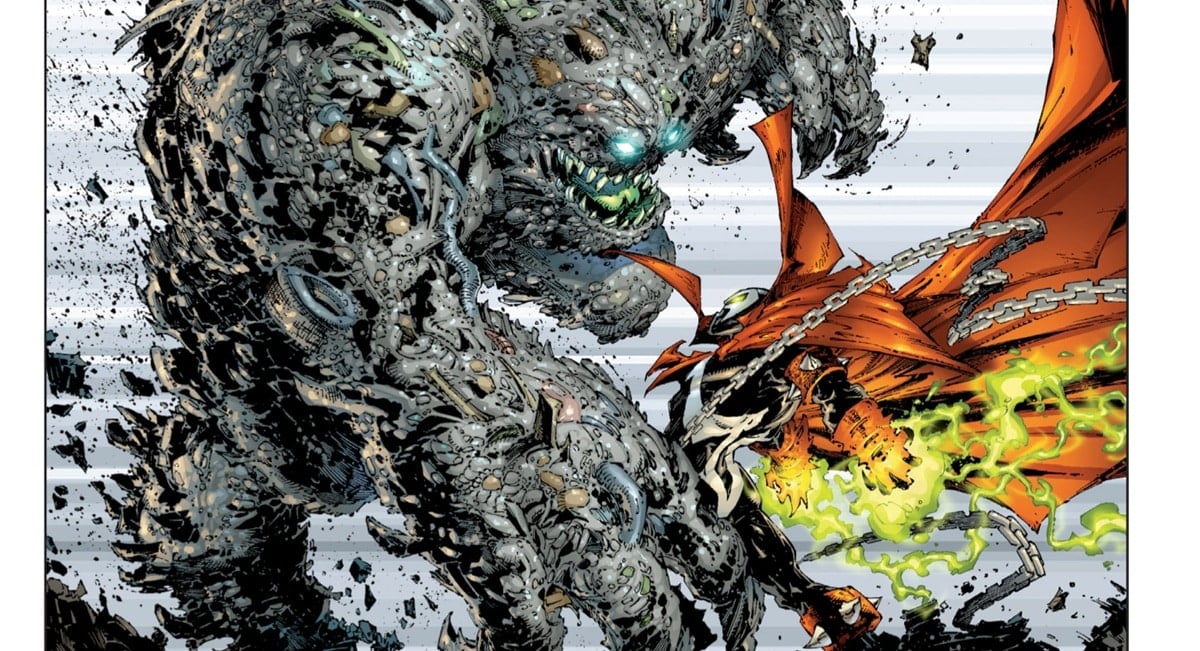
Spawn #72-75 by Todd McFarlane, Brian Holguin, Greg Capullo, Danny Miki, Chance Wolf, Brain Haberlin, Dan Kemp, Tyson Wengler, and Tom Orzechowski introduces McFarlane’s version of the Heap as well as a new third faction in the war for Earth, outside the forces of Heaven and Hell, in the Greenworld. And sends Spawn off in a new direction.
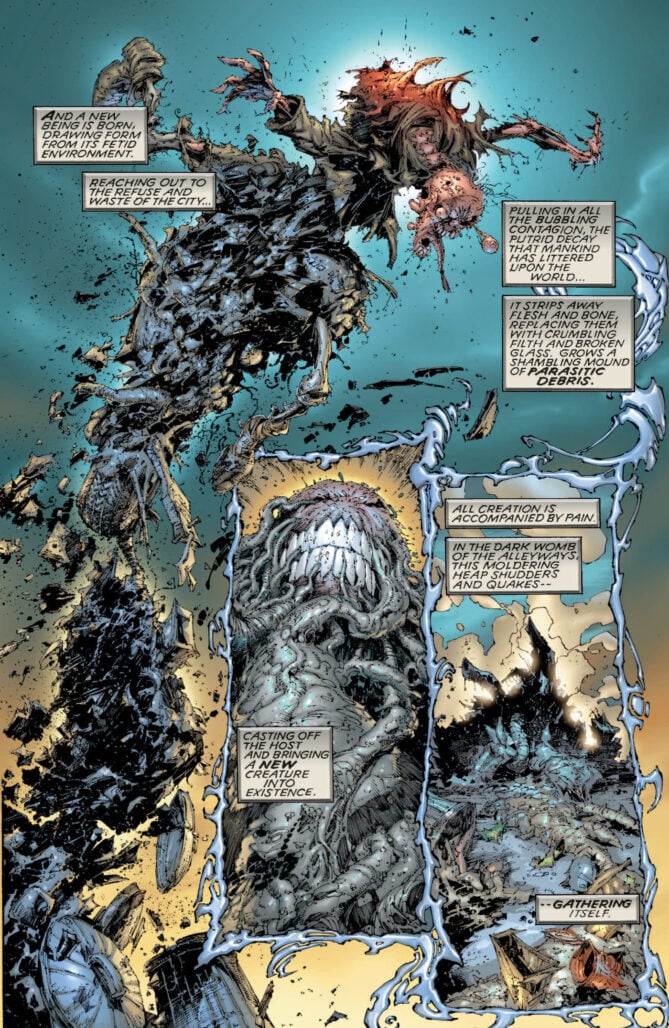
This version of the Heap is Eddie Beckett. An ordinary street bum who found a paper bag filled with Spawn’s necroplasm, then bonded to it and garbage from the alleyways, turned into the monstrous Heap. And alternately a being sent by the Greenworld to confront Spawn and send him off to meet this new third power. Full of ideas that you’ll find familiar in these situations. What’s interesting is that it fits within a number of themes that McFarlane and Holguin are playing with in the narrative. Of numerous factions at war. And that not everything is necessarily as it seems. Like that the vampires that we meet are aligned with Heaven. Or that while the Heap itself is a seemingly unthinking force of nature, Beckett himself is still used as a tool (of exposition for the writers) to somewhat eloquently introduce Spawn to the transition from Earth to the Greenworld. Which is then later explained further by the Keeper, sending Spawn off on his next direction change for the foreseeable future at that point.
I’ve seen people say that Greg Capullo levelled up when he took on Batman with Scott Snyder. I can see why people would put that forth, with an adventurous, shifting layout, even turning the book around in one issue, but I think it comes down to whether or not you like clean lines. Jonathan Glapion’s inks, I would argue, are part of what makes that look. On Spawn, I’d say the adventurous layouts and impressive character designs were always there, there’s just a busier, frenetic style more in line with McFarlane’s own style (which also makes sense given that he’s one of the primary inkers here) along with Danny Miki and Chance Wolf, both maintaining that style. It fits with the dirty, chaotic atmosphere of the story and helps make the Heap look like a…well, living pile of refuse, debris, and detritus that he is.
The colours from Brian Haberlin, Dan Kemp, and Tyson Wengler nicely navigating both the darkness and grime of Spawn’s alleyways and the brighter, more colourful environs of the Greenworld. With the creative team rounded out with Tom Orzechowski’s letters. I know that many advise for lettering to be understated, generally as simple as possible, but Orzechowski is one who I think can exemplify the other path. His enhancements for unique word balloons, little touches to narration boxes, colour effects in the speech, add so much character to the book. He’s a letterer that always makes fancy lettering look good.
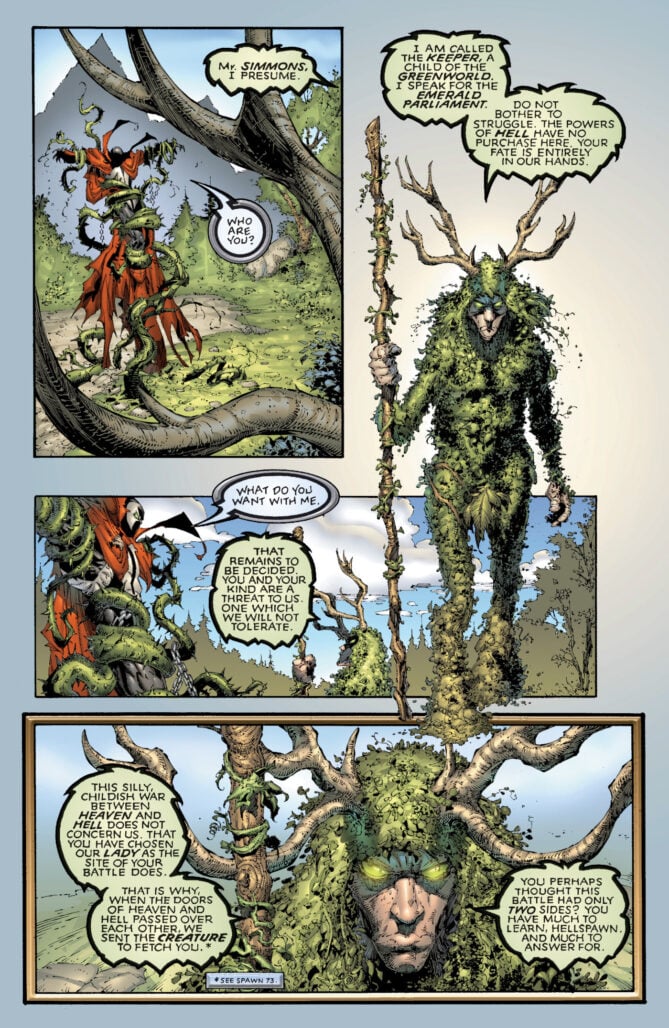
“It is within you to stave off this battle.”
Spawn‘s storytelling goes in cycles. Every five years or so it seems like various storytelling elements come back around. Not to retell the same story, but to riff on familiar themes, motifs, and characters. There’s progression, don’t get me wrong, but it always feels like things circle back around. The Greenworld, Heap, and the Keeper (best I not mention what that became for spoilers) came back around again not too long ago when there was a new bit of fighting for the throne of Hell.
McFarlane’s Heap is basically a force of nature, literally, but it’s interesting to see his fairly simple origins and the first introduction of the Greenworld in Spawn #72-75 from McFarlane, Holguin, Capullo, Miki, Wolf, Haberlin, Kemp, Wengler, and Orzechowski. It does come at the tail end of an arc involving skirmishes among the homeless of New York and feeds in to the next movement of the war between Heaven and Hell, but the good thing about Spawn is that it always manages to get you up to speed pretty quick.
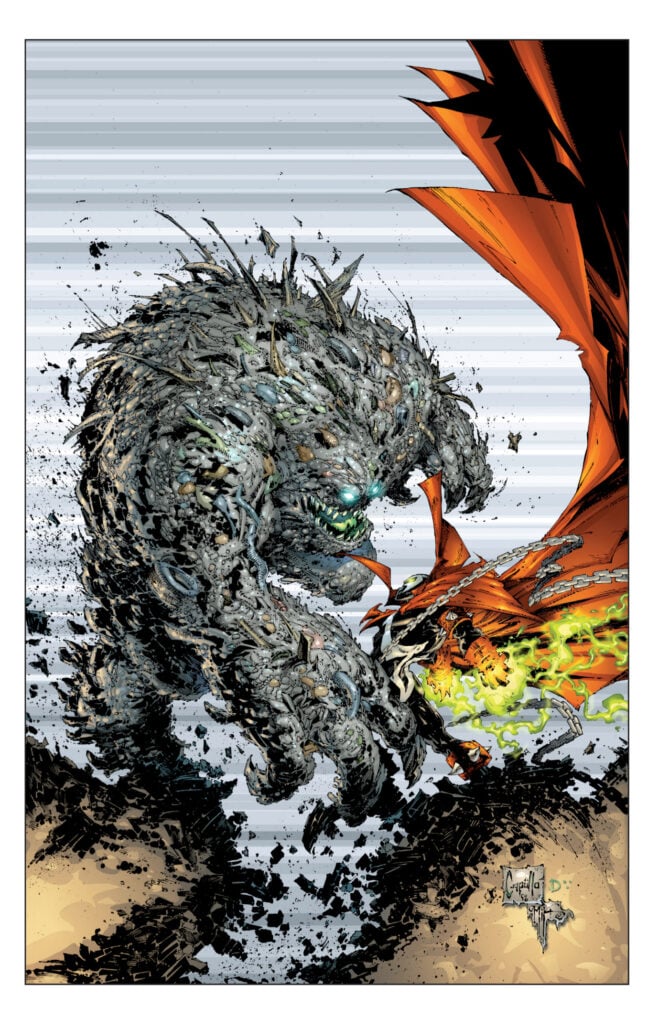
Classic Comic Compendium: SPAWN #72 – 75
Spawn #72-75
Writers: Todd McFarlane & Brian Holguin
Penciller: Greg Capullo
Inkers: Danny Miki, Todd McFarlane & Chance Wolf
Colourists: Brian Haberlin, Dan Kemp & Tyson Wengler
Letterer: Tom Orzechowski
Publisher: Image Comics
Release Date: May 6 – August 5 1998
Available collected in Spawn Compendium – Volume 2 and Spawn Origins Collection – Volumes 12 & 13
Read past entries in the Classic Comic Compendium!