
by Troy-Jeffrey Allen
To close out Black Futures Month, The Beat has allowed me to highlight ten moments in Black comics that sparked controversy – either within the community, across the industry, or around the world.
For various reasons, these ten titles broke the rules, sparked debate, and raised eyebrows. In some cases, they were outright banned or altered because of it. Regardless, they collectively represent the breadth of artistry that is “Black comics.”
(Special thanks to Rico Jones and Imani Lateef for inspiring this article.)
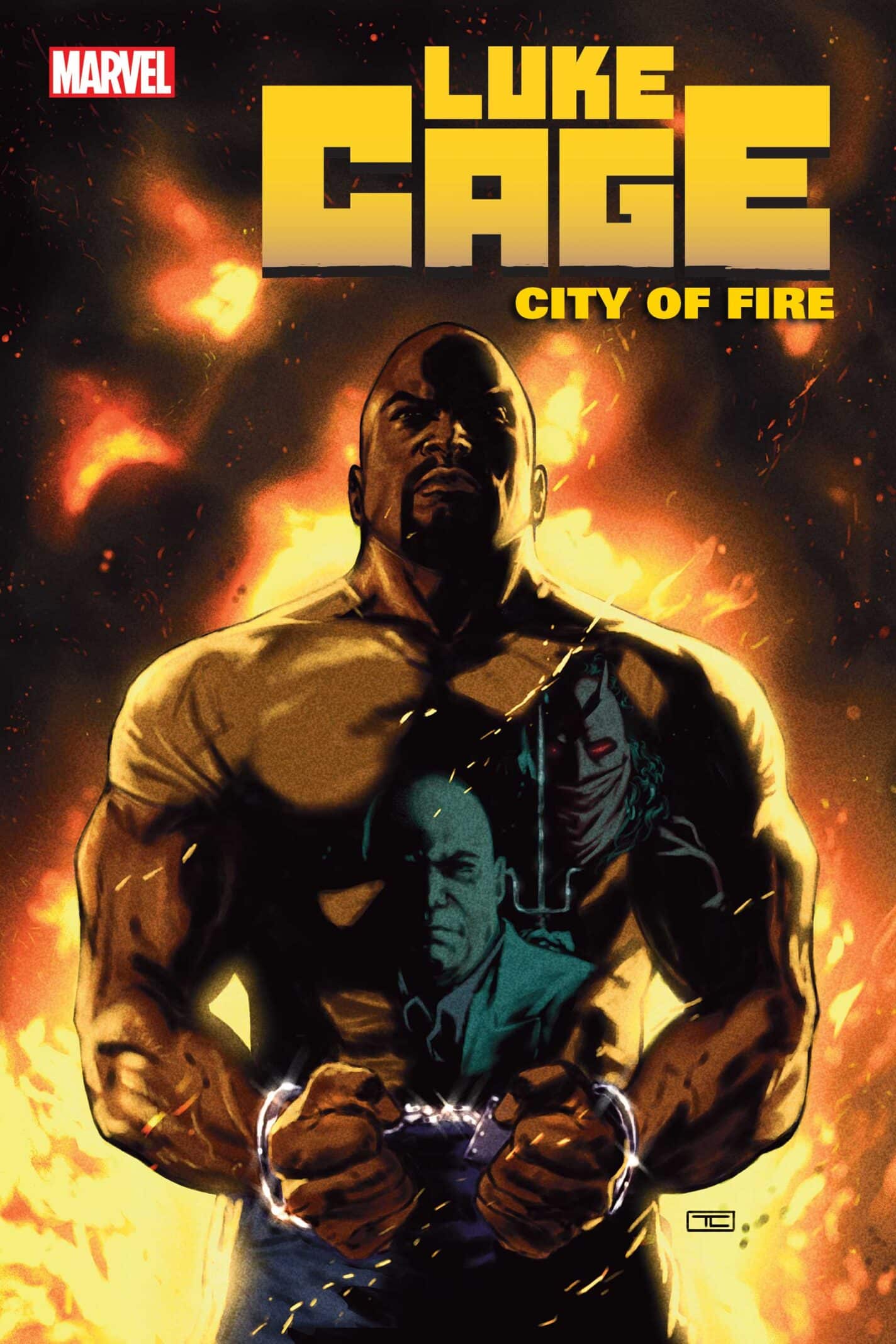
10 – Ho Che Anderson’s Luke Cage
Too Hot for Marvel
In 2021, writer Ho Che Anderson, along with artists Farid Karami, Ray-Anthony Height, and Sean Damian Hill, were scheduled to release Luke Cage: City of Fire. This 3-issue mini-series had an intriguingly volatile premise in which Luke Cage – hero for hire – is made to protect the police officer who murdered an innocent, young Black kid.
But then Marvel cancelled the project while in production. Issue 1 was complete but never made it to print. Marvel informed writer Anderson that the reason was that the book would be “damaging” for him. “We don’t want you to be attacked by right-wing nuts”, he told CBR in 2023, recounting an unnamed Marvel staffer’s explanation. “I was like, ‘Fellas, I can handle myself. Let them come at me. I have no fear about that. You don’t have to do this.” Anderson’s own words invite skepticism towards Marvel, especially when you factor in that months earlier, the death of George Floyd had engulfed the cultural conversation, forcing a dialogue on police violence. “I think there were probably some other issues with their higher-ups who just said, ‘No, this is going to affect our bottom line. We don’t want the story out there.”
9 – Project Wildfire
Who Says There Are Problems You Can’t Punch?
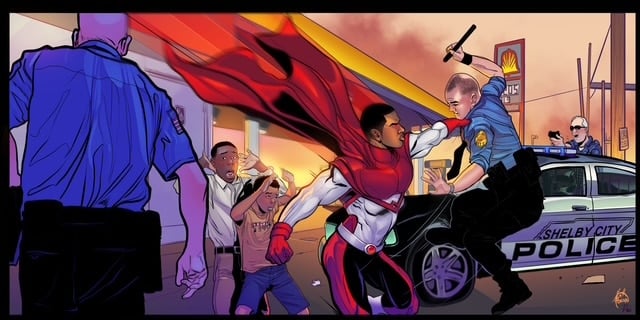
In the annual graphic novel anthology titled 4 Pages 16 Bars, artist Quinn McGowan wanted to reevaluate the notion that there are some problems supermen just can’t punch. In the short story featuring McGowan’s kaiju-bashing superhero Wildfire, the hero is stopped dead in his tracks by a letter from a little girl named Monica. She explains in her letter that her stepfather was murdered by police during a traffic stop. She asks Wildfire to shift his focus from giant monsters to “the bad police [sic] and fly them into jail.” With a tear rolling down his cheek, Wildfire rockets from his “Monsterwatch” HQ and into action.
While Internet logic assumes that “superheroes are cops” or “superheroes shouldn’t be political,” the reality is that many of the earliest superheroes were created out of very real disdain for corruption and authoritarianism. (Superman used to go after slumlords, Wonder Woman openly challenged “man’s world”, and every major character took on the Axis of Evil at some point). Somewhere along the way, this notion began to creep in that some problems were too big to punch. Especially things like racism and police brutality. McGowan’s Wildfire story reminds the reader that fighting real world oppressive forces is baked into the genre’s DNA.
8 – Static #25
Static Shocks DC Editorial
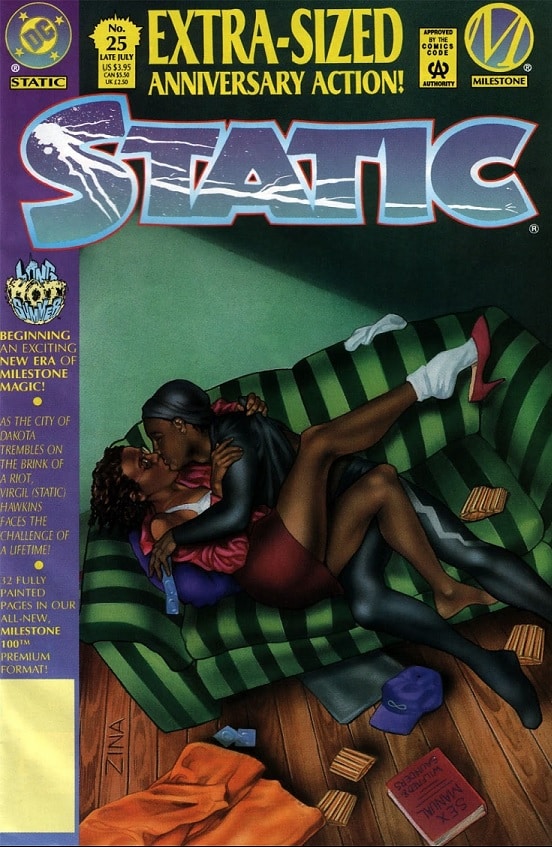
Milestone’s Static series is as much a coming-of-age story as it is a superhero tale, which means high school romance certainly plays a sizable part in every iteration of the character. In the original 1990s run, Static #25 intersects quite a few plot points, but it’s the cover that caused the most…static (sorry).
The cover by Zina Saunders featured Virgil Hawkins and love interest, Daisy, canoodling on the couch. In Virgil’s hand…a pack of condoms. DC altered Saunders’ cover, cropping out a large portion of the painted image to eliminate the “jimmie hats.” This was never mentioned to Milestone, of course. So when editor Dwayne McDuffie noticed the new cover in an advanced solicitation, he took it straight to DC. Their response was “DC Comics has a policy of not showing sex on the covers.” McDuffie pushed back, acknowledging the hypocrisy in an editorial: “If I had commissioned a cover where Daisy was wearing a thong and kicking one leg high in the air so everybody could get a really good look at her crotch…there would be no problem.”
When one thinks of comics in the 1990s, it’s understandable that you’d inevitably think of the sexual overtones of many Marvel, DC, and Image covers. However, in the mid-90s, safe sex was where DC apparently drew the line. It begs the question, why? Especially in an era when safe sex was regularly being promoted in music videos, TV shows, and movies. Was the mere implication of Black sexuality too much?
7 – Bungleton Green
Jim Crow for Whites
Beginning publication in 1920, Bungleton Green is a genre-jumping strip that can, arguably, claim to feature the FIRST Black superhero in comics. But it didn’t start that way. The comic strip’s road to action-adventure has quite a few twists and turns. Previously, the title character was a street urchin, a judge, a tycoon, and a father. Things changed aggressively, however, when artist Jay Jackson took over the comic strip.
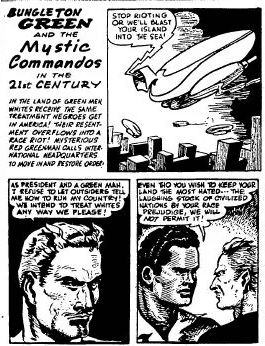
Born in Ohio, Jay Jackson moved to Chicago to become a commercial artist. It was here, in 1934, that Jackson would take the reins of the humor comic titled Bungleton Green. Jackson began to shift the title character more into genre-bending territory with each strip. Under Jay’s pencil, the diminutive Bungleton transitioned more and more into a pulp hero who fought Nazi spy rings, trounced slavemasters in the past, and ended up jettisoned into a future where white Americans are openly discriminated against. It’s the latter’s Black Mirror twist that turns the strip into something truly provocative.
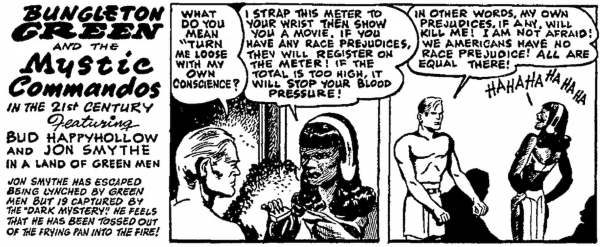
Jackson’s disinterest in the original concept and tone of the comic is very clear here. He’s kicking the brakes off and going entirely in a satirical direction. Green vanishes from the tale entirely. In his place is a cast of characters trying to escape a potential race riot where white people and green people duke it out in the streets. Meanwhile, as green-on-white violence unfolds, Black folk largely opt to mind their own business!
While there isn’t much documentation on the audience reaction to this 1944 arc, it’s hard to imagine the “Green Men” story being told now.
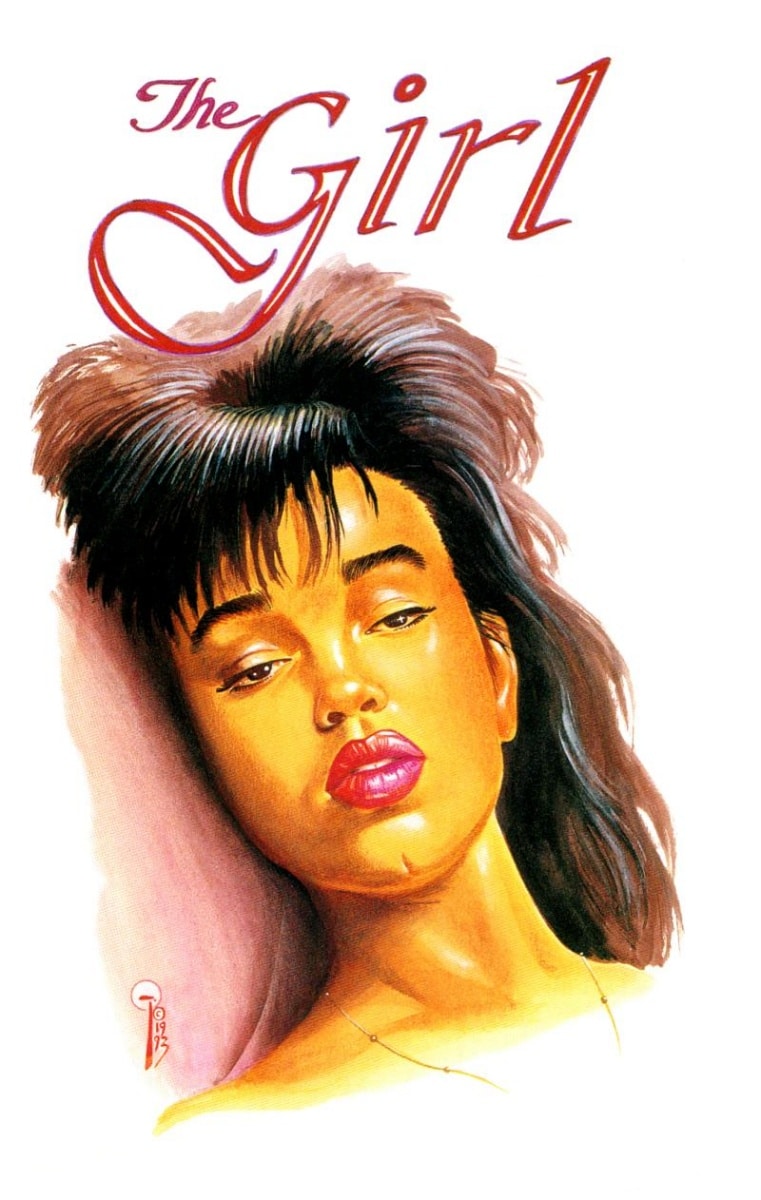
6 – Kevin J. Taylor’s The Girl
The X-Rated Superstar Artist
Originally from Harlem, artist Kevin J. Taylor has been described as a painfully shy multi-hypenate who did stints in theater set design, filmmaking, and standup comedy before finding success in comics with Model By Day. But it was the erotic comic book series The Girl that made him an international talent…and possibly stifled his career.
The Girl stars the simply named “Girl,” an exotic dancer in 1990s NYC with a hobby that involves dark magic. After a marathon of trysts, Girl summons Malachii, Lucifer’s subject. Malachii appears before her and offers her immortality in exchange for her body and soul. They seal the deal with a… let’s call it a “kiss.”
With the overseas release of The Girl, Taylor broke into a European market more open to his lurid and quite sweaty depictions of demonic copulation, human-on-human copulation, and more! For over a decade, France and Spain seemed to be Taylor’s target demographic. During that time, he produced a handful of The Girl sequels, as well as Fang, Exotica, and others.
Somewhere in the latter half of the 2010s, “mature” comics went out of fashion in Europe, and with it, so did Taylor’s once-booming career. From there, Taylor vanished from comics, passing away unceremoniously in 2023 despite being one of the few and, arguably, the most popular Black erotic artists in the business.
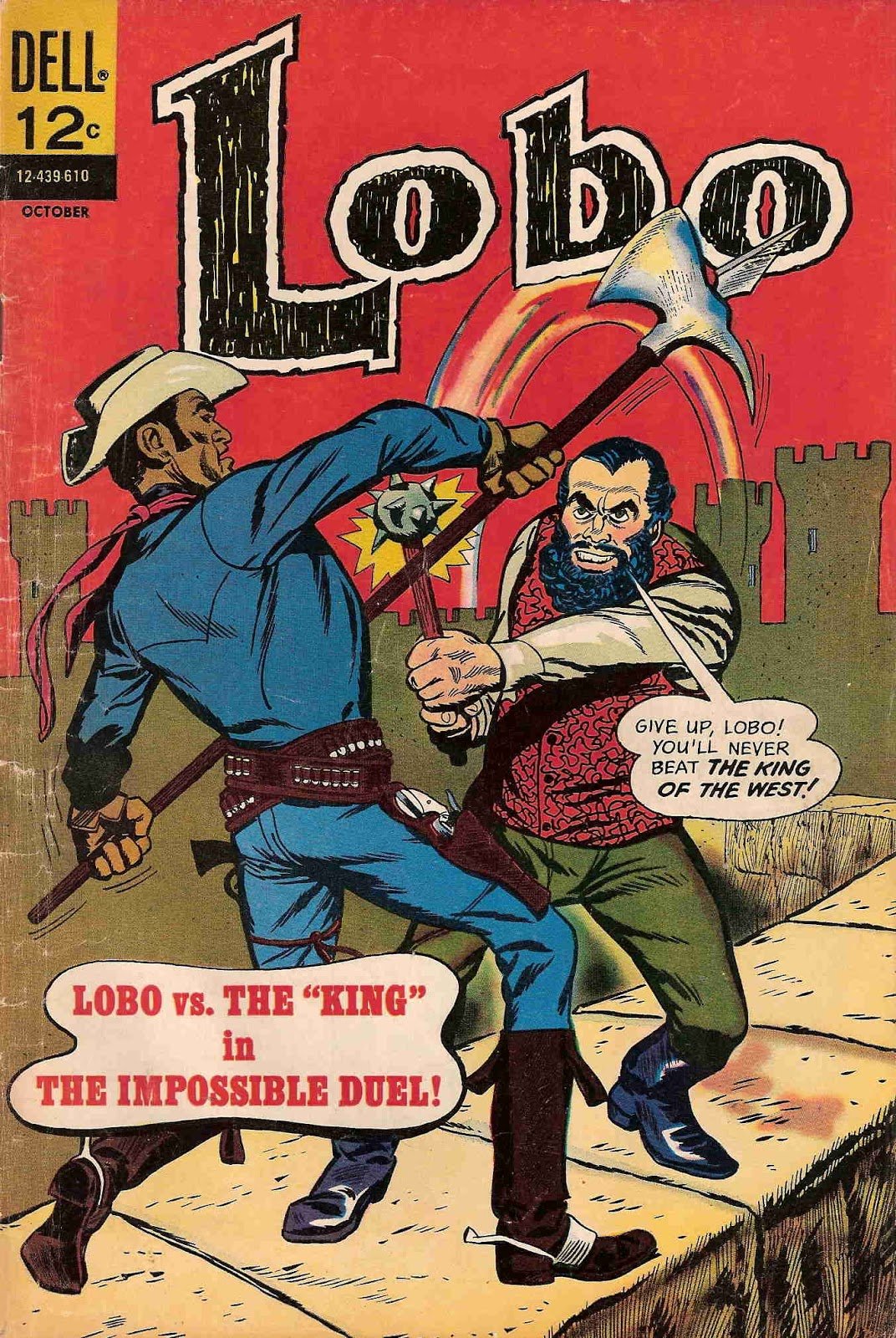
5 – Lobo
Makes History, Gets Cancelled
Before Storm, T’Challa, or Static Shock, comic books’ first Black lead was introduced, not in the superhero genre, but in the then-popular Western genre. His name was Lobo, and he starred in his own cowboy series from Dell in 1965.
Lobo ran for two issues across two years, but was cancelled when it was discovered that book and magazine vendors returned it unopened. Apparently, the cover image of a Black cowboy was too much for newstands.
“All of the sudden, they stopped the wagon. They stopped production on the issue,” co-creator Tony Tallarico told Colville’s Clubhouse in 2006. “They discovered that as they were sending out bundles of comics out to the distributors, [that] they were being returned unopened. And I couldn’t figure out why. So they sniffed around, scouted around and discovered [that many sellers] were opposed to Lobo…that was the end of the book.”
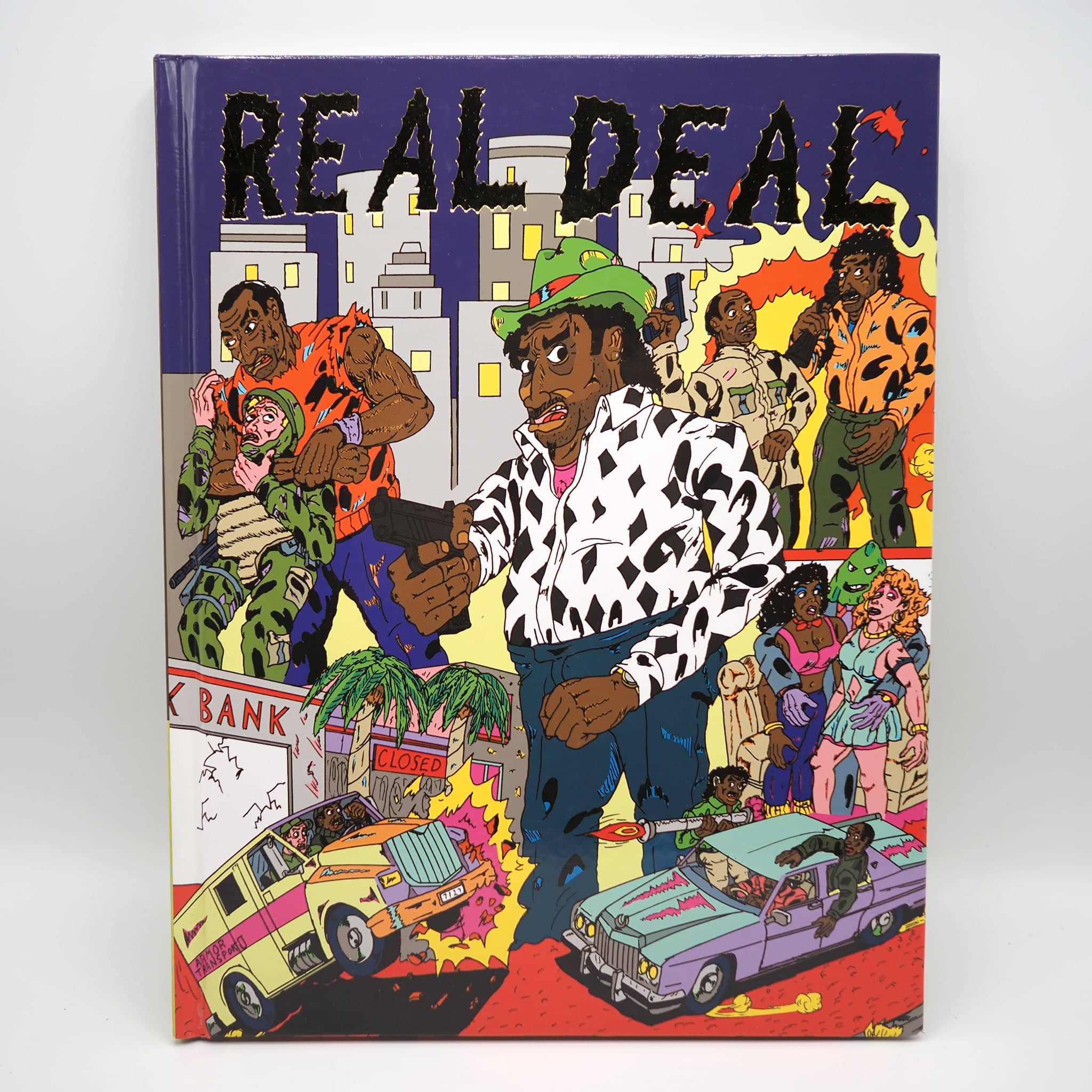
4 – Real Deal
Gleefully Violent
Real Deal is largely overlooked by mainstream comics, but it lives rent-free in the underground “comix” space. Celebrated for its spontaneous approach to storytelling, the 1989 indie title comes from Detroit’s R.G. Bone and Lawrence Hubbard, but takes place in the Los Angeles underworld.
“In a way, [Real Deal] is a sort of satire from ‘The Hood’ for adults,” Hubbard told ComicsComics in 2009. “And one thing that was different in Real Deal was that the characters are older guys whose youth was in the ’70s, and they just kind of stayed there.”
The comic eschews any notion of respectability in favor of crass humor and absurd violence. In Real Deal’s L.A., fry cooks sling hot grease at crack dealers, screwdrivers will get lodged in necks, and drive-bys come with bazookas. This is underground comix at its most unfettered. Thanks largely to Hubbard’s frantic, visceral art style, which struck a chord with its Gen-X readership. To the point that The Beastie Boys even gave the six-issue series a shoutout.
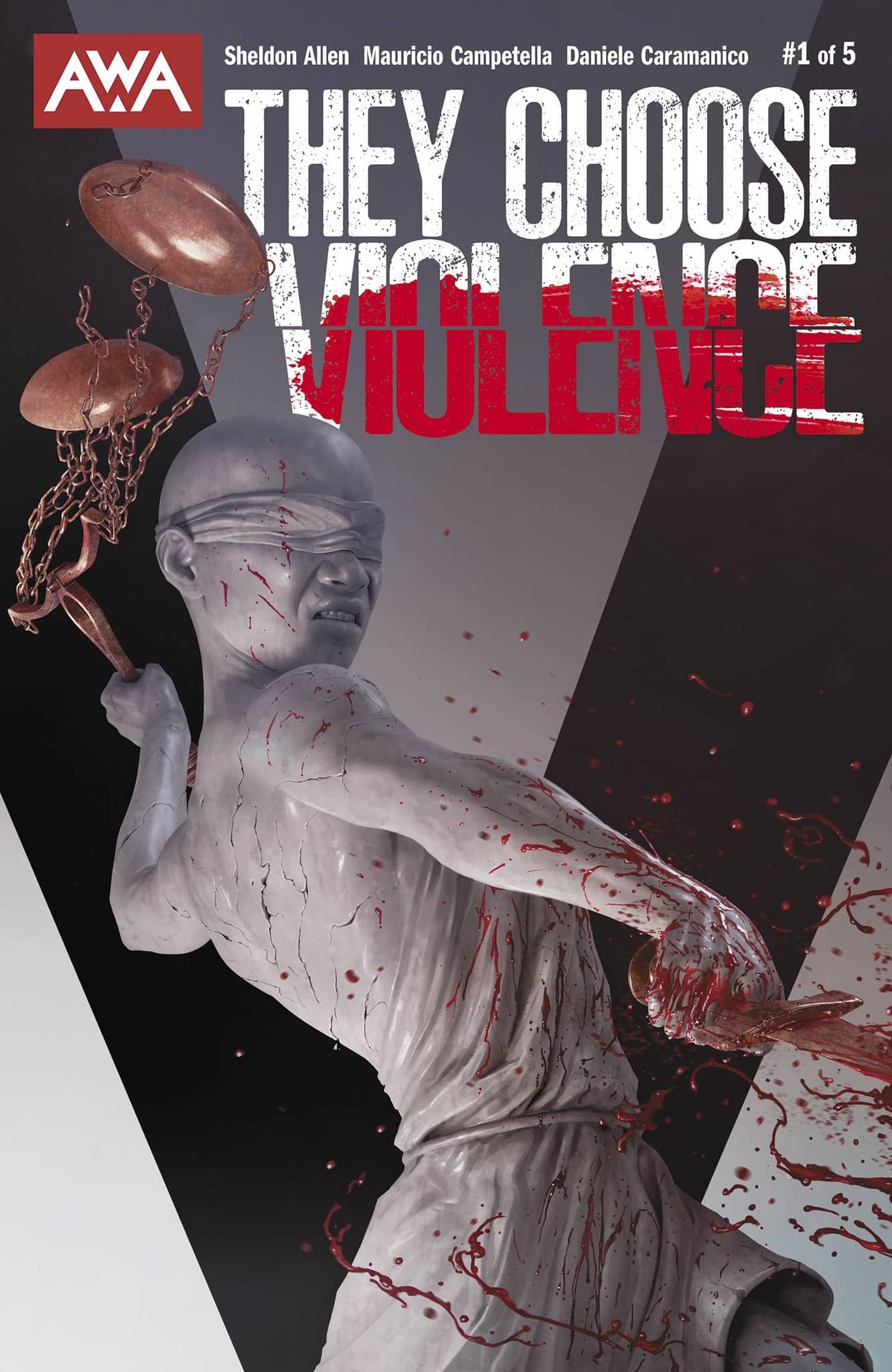
3 – They Choose Violence
Black revenge is on Full Display
A more recent entry is the NAACP Award-nominated They Choose Violence from AWA. A book so pissed-off about racial injustice that it’s almost a miracle it got made in the first place.
Written by Sheldon Allen with art by Mauricio Campetella, They Choose Violence introduces us to Laneka, Deidre, and Karen – three women fed up with the system. But this isn’t Gotham City we’re talking about. No, this is very much our reality. One in which gun nuts get away with killing unarmed little boys (Trayvon Martin), and local cops make Black women disappear (Sandra Bland).
When a state attorney lets a corrupt police officer go free, Laneka, Deidre, and Karen decide to take matters into their own hands. They train and transform themselves into lethal killing machines. But one dead cop doesn’t right the system, so they decide to go on a spree.
Upon release, They Choose Violence caused division within the Black comic-reading community. Some readers felt the comic was gluttonous and sensational. Others considered the title cathartic.
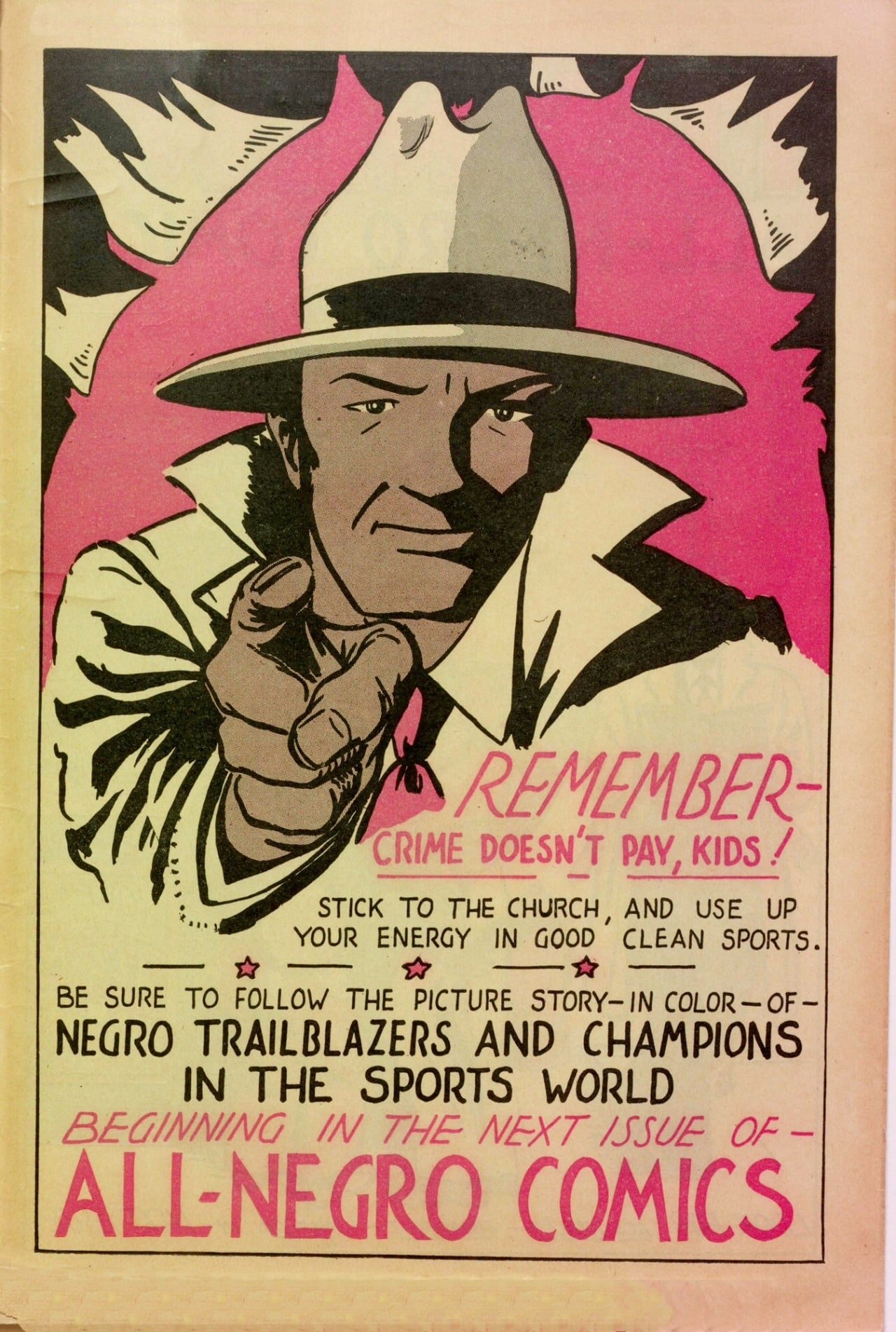
2 – All-Negro Comics #2
The Book That Never Was.
In 1947, Philadelphia journalist Orrin C. Evans historically bet on black by producing the first comic book entirely staffed by African-American creatives. The book was called All-Negro Comics, a 48-page anthology title “jam-packed with fast action, African adventure, good clean humor and fantasy.”
On the second-to-last page of All-Negro Comics #1, Ace Harlem addresses the reader with a guarantee of more to come next issue. But that never happened. All-Negro Comics #2 never saw publication despite Evans’ attempts. Some rumors place blame on competing companies stonewalling the journalist-turned-editor in an effort to produce their own Black-centered comics (like Fawcett’s Negro Romance). Other rumors imply that #2 was made, but Evans could not secure paper from the printer for spurious reasons.
The two most enduring characters from All-Negro Comics have proven to be John Terrell’s Ace Harlem and George J. Evans Jr.’s Lion Man. A pair of pulp heroes that have influenced comic creators to this day — from John Jennings to Alex Ross. Currently, there are new rumblings in academia that the two heroes continued to resurface over the years, making official appearances in very limited print runs that circulated along the United States’ East Coast and even certain Jim Crow states. Unfortunately, no one has been able to produce evidence of the further adventures of Lion Man or Ace Harlem. Until then, it remains a long-lost mystery.
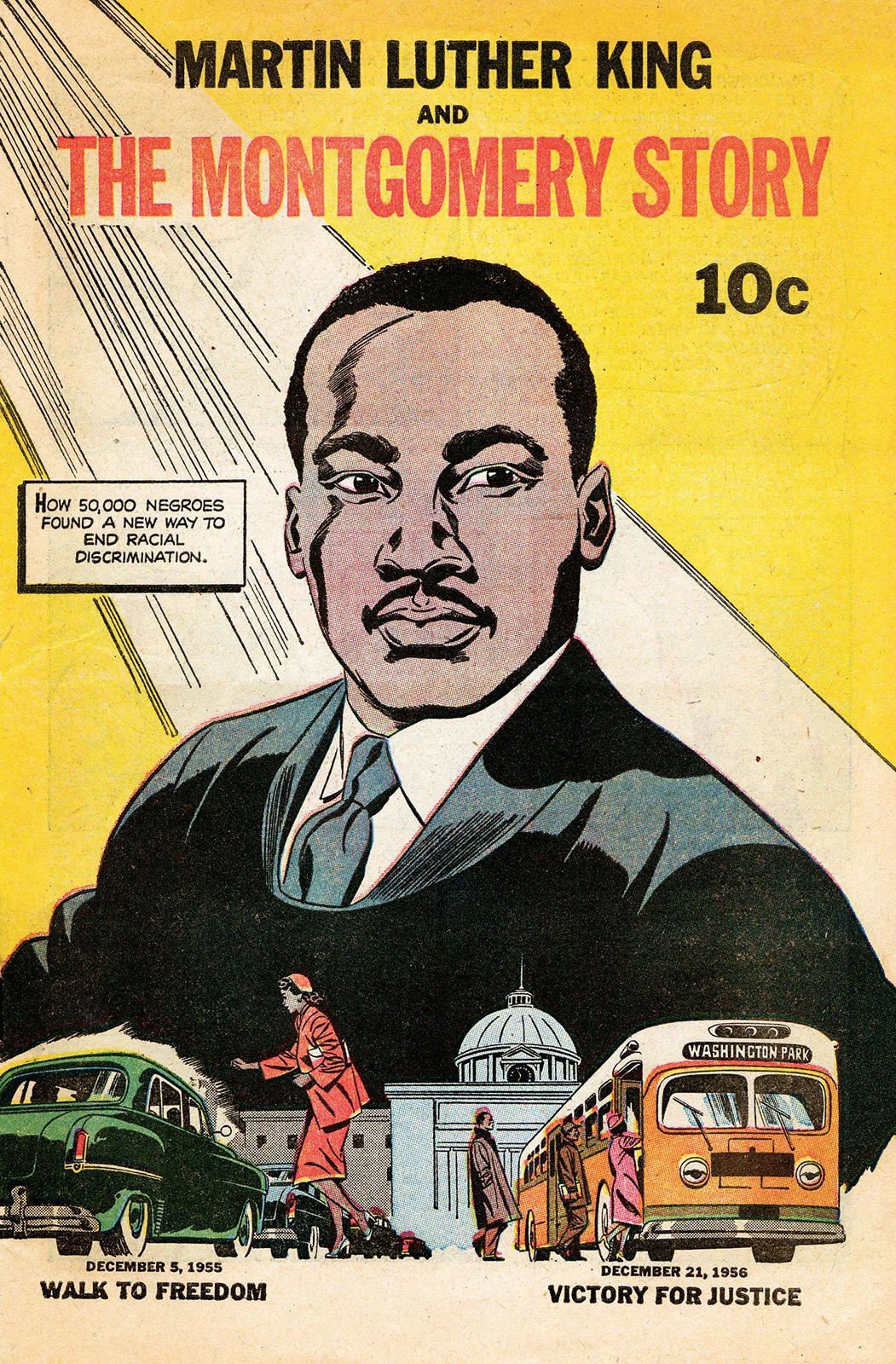
1 – Martin Luther King and the Montgomery Story
The power of the medium
Martin Luther King and the Montgomery Story has a historical and global value that goes beyond comics. Published in 1957, the comic’s purpose was to underline Dr. King’s philosophy of nonviolent resistance towards segregation laws.
Through the perspective of a character by the name of “Jones,” Martin Luther King and the Montgomery Story outlines how Reverend King led the 381-day boycott that gained the civil rights movement national attention. Jones’ journey invites the reader to challenge segregation methodically. Starting with the circumstances ignited by Rosa Parks’ refusal to give her seat up to a white commuter. Jones and other local civil rights members organize around Parks, who was jailed for what was viewed as a violation. (I should point out that nine months before Rosa Parks’ protest, a 15-year-old Montgomery high schooler named Claudette Colvin also refused to give up her seat. Colvin would become instrumental in the 1956 Supreme Court ruling that made bus segregation laws unconstitutional.)
The second story inside the 16-page comic is titled “Martin Luther King Tells How A Nation Won Its Freedom By The Montgomery Method.” Narrated by King himself, this recounting explains how Gandhi inspired him. That short is immediately followed by “How the Montgomery Method Works,” an illustrated, informational piece meant to activate civil rights circles outside the state of Alabama.
In terms of controversy, Montgomery Story was a dangerous, historical document at a time when distribution for such a work had to sidestep conventional avenues. Unlike Superman or Batman at the time, this comic couldn’t be shelved at candy shops and convenience stores. The subject matter was too volatile for a large swath of white America. Instead, Martin Luther King and the Montgomery Story were passed around in Black churches and schools by organizers who were risking their lives to spread a message of freedom.
#CreateTheCulture
Troy-Jeffrey Allen (@TJAComics) is a writer, video producer, internet personality, and host. He has written comic books and graphic novels, including MF DOOM: All Caps, Public Enemy’s Apocalypse ’91: Revolution Never Sleeps, O.D.B.: Lyrical Ruckus in the City, the Glyph Award-nominated Fight of the Century, and the upcoming Afrofutures.