
With more people reading manga and webtoons (aka vertical scroll comics) than ever before, Beat’s Bizarre Adventure gives three writers an opportunity each week to recommend some of their favorite books and series from Japan, Korea, and elsewhere. This week we have mysterious dreams, delinquent and honor student slow-burn, and, of course, Tokyo.
Fragmented Dreams
Writer/Artist: T.A.Teufel
Platform: WEBTOON CANVAS, Tapas
Does anyone remember that recent ASDF episode with the fish hat gag? “Just as long as it’s not the fish hat again. IT’S THE FISH HAT AGAIN!!” Replace the fish hat with WEBTOON CANVAS series and, ha ha, you got me!
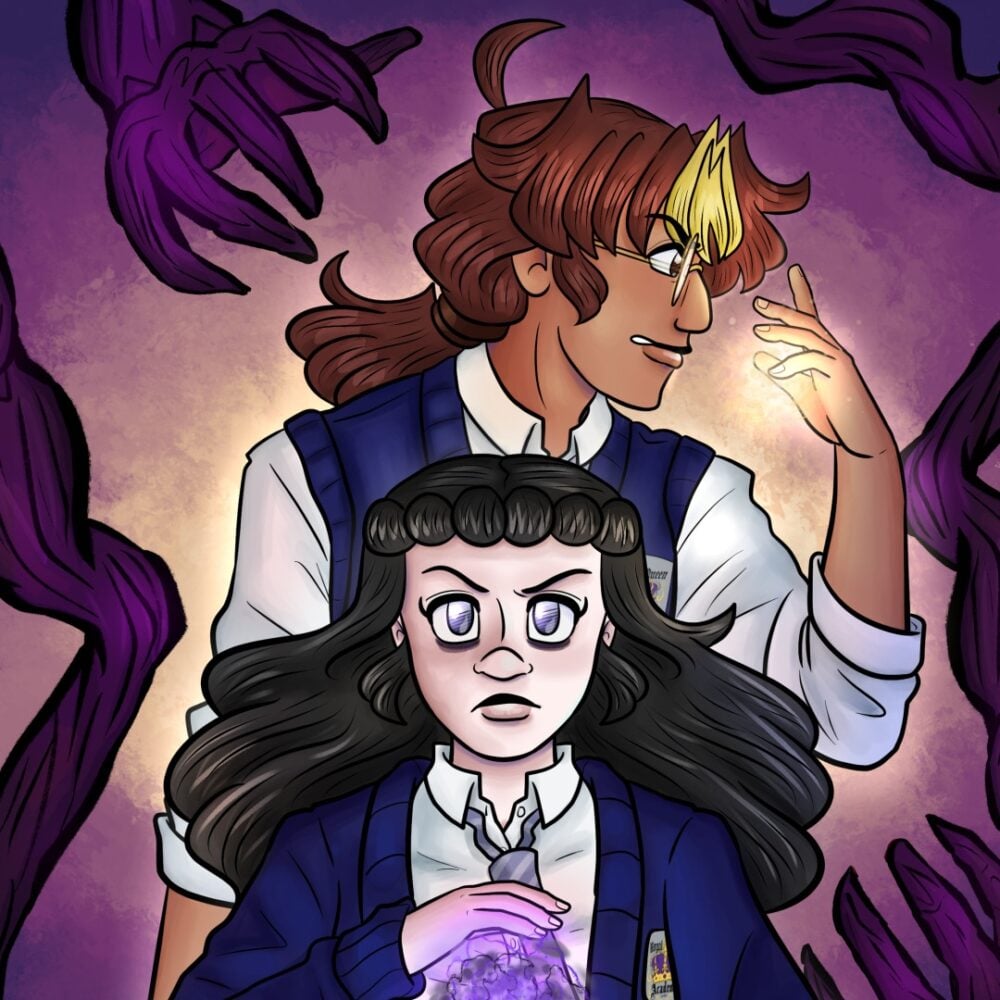
I’ve been reading this week’s series on and off for years. T.A Teufel’s Fragmented Dreams centers on Diana Massey, a 19 year old who loves to paint and has the ability to sense other people’s emotions. She lives an uneventful life until she starts having odd dreams which feel more like fragments of future events. Then a new student named Casimir Reynolds, the very same person she recognizes from her dreams, is transferred to Diana’s school and becomes a part of her class. Will these promotions come to pass like Emperor Uriel Septim VII’s dreams leading up to the Oblivion Crisis?
Cheeky Oblivion reference aside, the story of Fragmented Dreams is a slow burn at first. Teufel has to set up the main characters, supporting cast and early antagonists as well as the more fantastical elements that later cross over into Diana’s world. But the wait is worth it once the pieces start to fall and click into place, revealing just how important that set up was.
As for the art, it isn’t like your typical WEBTOON or manga-inspired style. It leans more towards Western cartoons with how each character is illustrated, particularly their facial shapes, eyes and noses. You can also see a notable difference in character coloring and shading between earlier and later episodes. The initial soft shading and uneven line art make the characters feel like 3D models moving with pencil lines as the outline and details, like in Poppihin’s The Ebony Witch animated pilot.
While the design philosophy is the same in later episodes, the thicker and weightier lines, more restrained colors that are no longer bleeding past the line art, and change in shading bring the series more in line with a Scholastic graphic novel, in a good way. It feels to me as if the artist has fully realized their vision compared to where they were when they began the story six years ago.
If a slow burn fantasy drama about two worlds colliding sounds interesting, give Fragmented Dreams a read. Feel free to check out the creator’s other works too! Now I’m back to re-watching ASDF once again. — Justin Guerrero
A Love Too Captivating
Writer/Artist: Mia Sorahana
Translation: Jacqueline Fung
Lettering: Jan Lan Ivan Concepcion
Platform: K-Manga
It’s been a long time since I’ve read a slow-burn Boys’ Love manga series. True to its name, this romance was too captivating for me to put down, with so many cliffhanger moments that left me wailing in despair that I would have to wait another week to see Misuzu and Kitahara take another small baby step in their relationship. Thank the BL gods I didn’t have to wait too long.
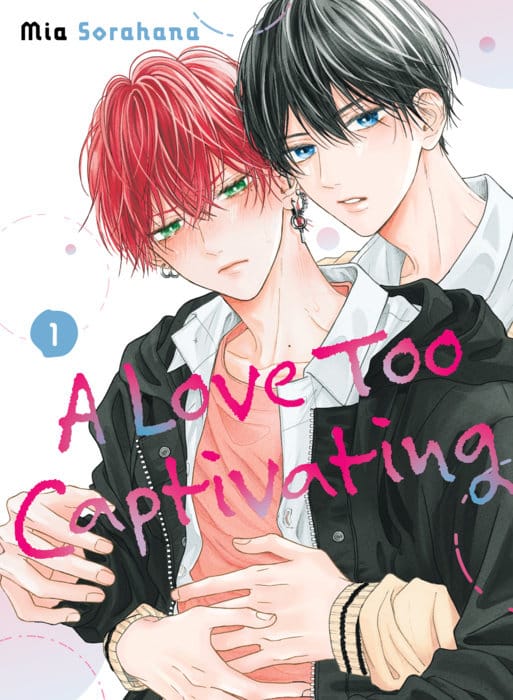
Mia Sorahana’s A Love Too Captivating spotlights a familiar but well-loved dynamic of a delinquent and honor student. Misuzu has a reputation for being a punk who constantly gets into fights. When he rescues honor student Kitahara from bullies, he inadvertently grabs his undivided attention. Despite multiple efforts to push him away, it does little to deter Kitahara who, for some reason, wants to become Misuzu’s friend even though nobody wants anything to do with Misuzu.
The thing about Misuzu is that he doesn’t want to fight. But he’s always drawn into brawls anyway, and as a result, he gets ostracized. While he keeps his distance from everyone else, beneath all his ferocity is a deep yearning to be close to people. And all Kitahara wants is to be close to Misuzu.
Even though I knew this was a BL, I had my doubts early on. I thought this would be something like Go For It, Nakamura! where the two boys would just be friends, even close friends. But that was not the case. A Love Too Captivating had great story pacing, from Misuzu pushing Kitahara away (and failing), to the two becoming friends, to them quickly realizing that their desire to be close to one another is more than just friendship. It never felt too quick (and oftentimes, it felt too slow!) and the progression of their relationship felt natural.
I also loved how gentle Misuzu and Kitahara were and how that gentleness just strengthened when they eventually got together. The two wanted to be the best version of themselves for each other. If that isn’t love, I don’t know what is. — Hilary Leung
Tokyo Love Story
Writer/Artist: Julie Blanchin Fujita
Japanese Translation: Issei Fujita
English Translation: Marie Velde
Publisher: Tuttle
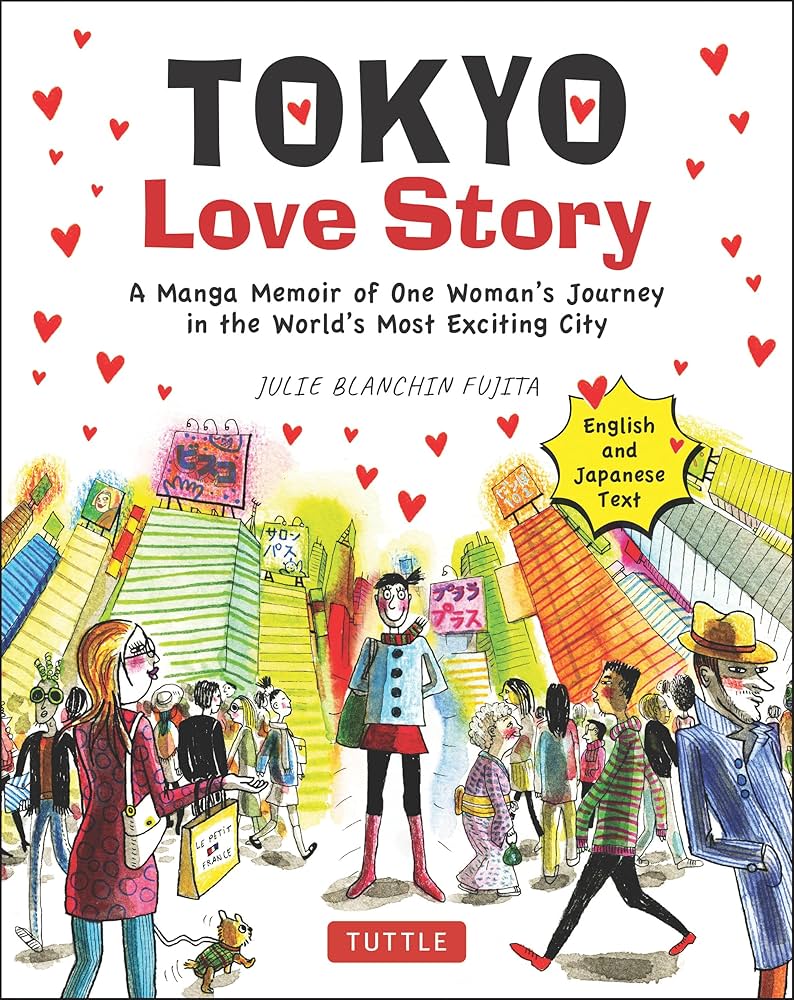
Originally published in France, Tokyo Love Story is a dual-language book where both the English and Japanese translations share space on the page. You can read it in both languages to sharpen your skills with whichever language you’re learning. Unfortunately, I’m not learning Japanese at this time, so I only read the English text.
The book follows author Julie Blanchin Fujita‘s life, briefly covering her early traveling experiences before landing in Japan and finding a place that’d shape her future. Of course it isn’t a lavish life, there are many hardships and everyday nuisances. But it’s a relatable story that’s shaped from someone finding a whole other world that captivates them so much they adopt it as their own.
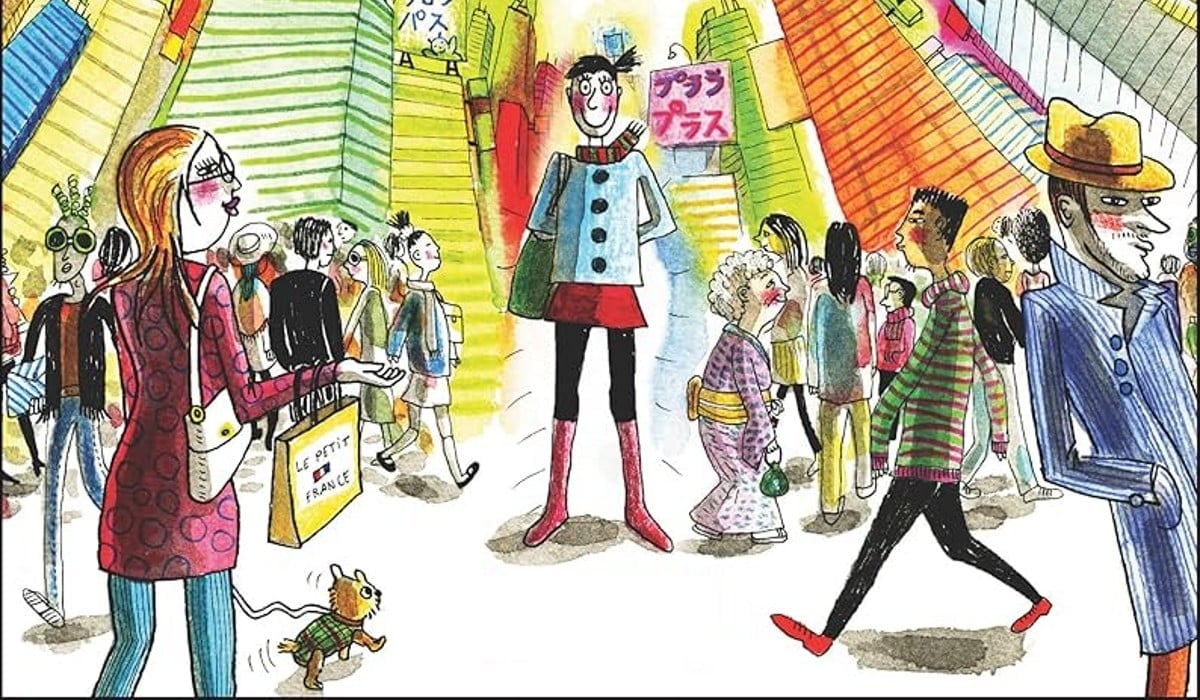
As an illustrator, painter, and graphic designer, Julie brings her work to life with incredible detail. Her book bursts with vibrant colors and precision geography. There are helpful maps and infographs, breakdowns of areas of Tokyo (including her past homes) and environmental paintings that are simply gorgeous.
At one point in the book Fujita recalls her experience in Tokyo during the 2011 Tohoku Earthquake. It was surreal for me, as I remember where I was in my own life when that happened, but as an American all I could do was watch from halfway across the world. It’s always interesting to come across personal stories from people about their experiences that I can remember living through as well; it creates a more visceral connection between me as the reader and the author, at least in my mind.
If you’re wanting a basic breakdown of Japanese life from someone experiencing it firsthand, this is a great read, as well as just a cute and fun personal journey that is worth your time. — Derrick Crow
Follow Beat’s Bizarre Adventure to get weekly manga and webtoon recommendations!