
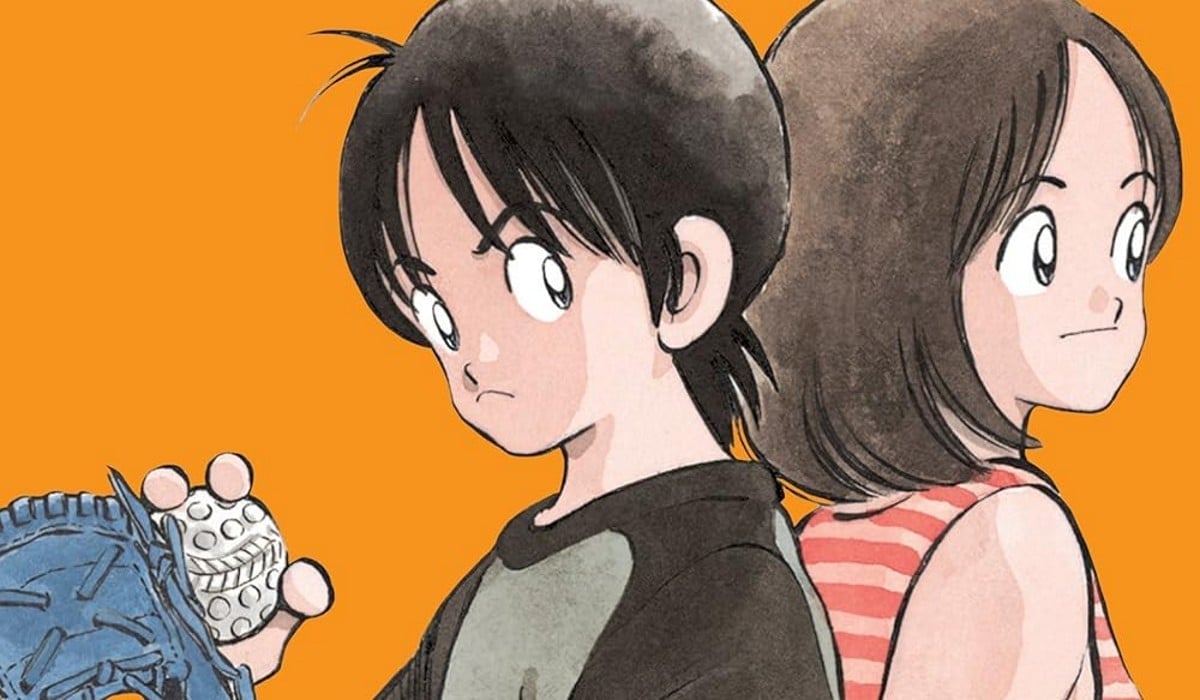

With more people reading manga and Webtoons (aka vertical scroll comics) than ever before, Beat’s Bizarre Adventure gives three writers an opportunity each week to recommend some of their favorite books and series from Japan, Korea, and elsewhere. This week we have baseball, the yakuza, and, of course, bicycle repairmen.
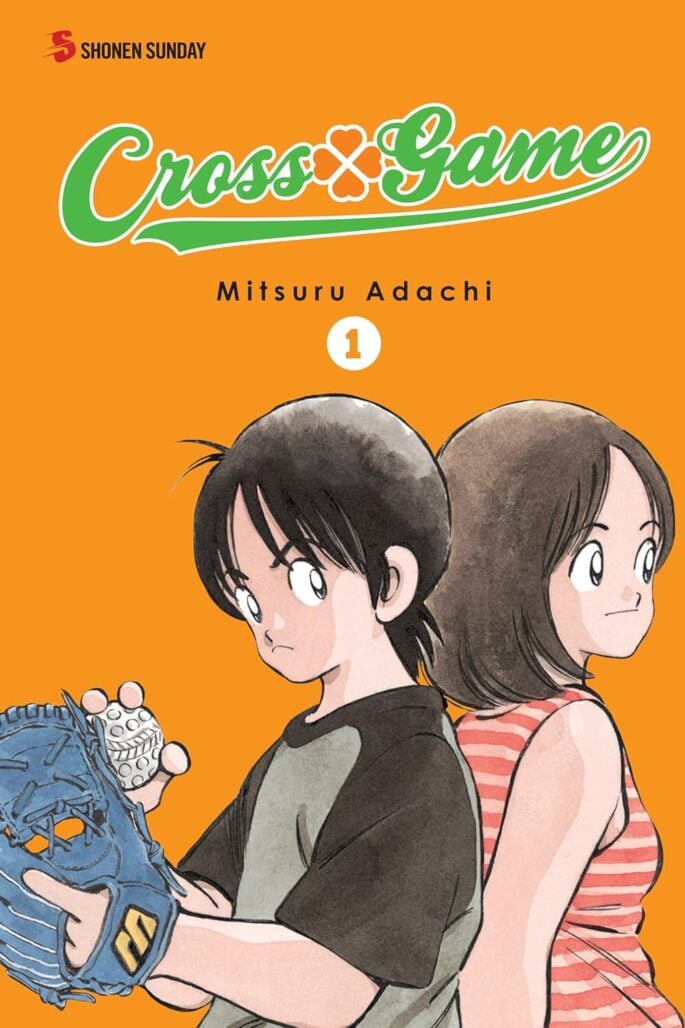
Cross Game
Writer/Artist: Mitsuru Adachi
Translator: Ralph Yamada, Lillian Olsen
Touch-up Art and Lettering: Jim Keefe, Mark McMurray
Cover Design: John Kim, Jodie Yoshioka
Interior Design: Hidemi Sahara, Yukiko Whitley
Editors: Yuki Murashige, Andy Nakatani
Publisher: VIZ
Baseball, more than maybe any other sport, lends itself well to storytelling. The length of the game allows for incredible highs and depressing lows. Ask any fan of the Boston Red Sox before their 2004 World Series win.
Though baseball might be the great American pastime, Japan has embraced the sport as its own. This of course means there’s baseball manga. Few cartoonists anywhere chronicle the game with the style and passion of Mitsuru Adachi. While he’s completed several long series on the subject, Cross Game remains the only one officially published in English. Thankfully, it’s one of his best.
What makes Cross Game so compelling is how Adachi finds drama in the people who play the game rather than the game itself. He opens the story with a tragedy that shapes the story more than the enthusiasm of the male lead typical for shonen sports stories. Lead Ko Kitamura might be a phenomenon with a desire to play in a high school championship game at Koshien Stadium, but he hides his passion. His childhood friend Aoba Tsukishima, the daughter of a family that owns a batting cage, is all explosive passion, but she can’t play in any interschool game because of her gender.
The push and pull between Ko and Aoba as rivals, along with their growing romantic tension, drives the series forwad. Koshien might be the mutual goal but it’s a long road. If they’re going to get there, they both have a lot to learn from each other. Thankfully baseball is a long game and an emotional rollercoaster. Adachi understands that better than anyone else. — D. Morris
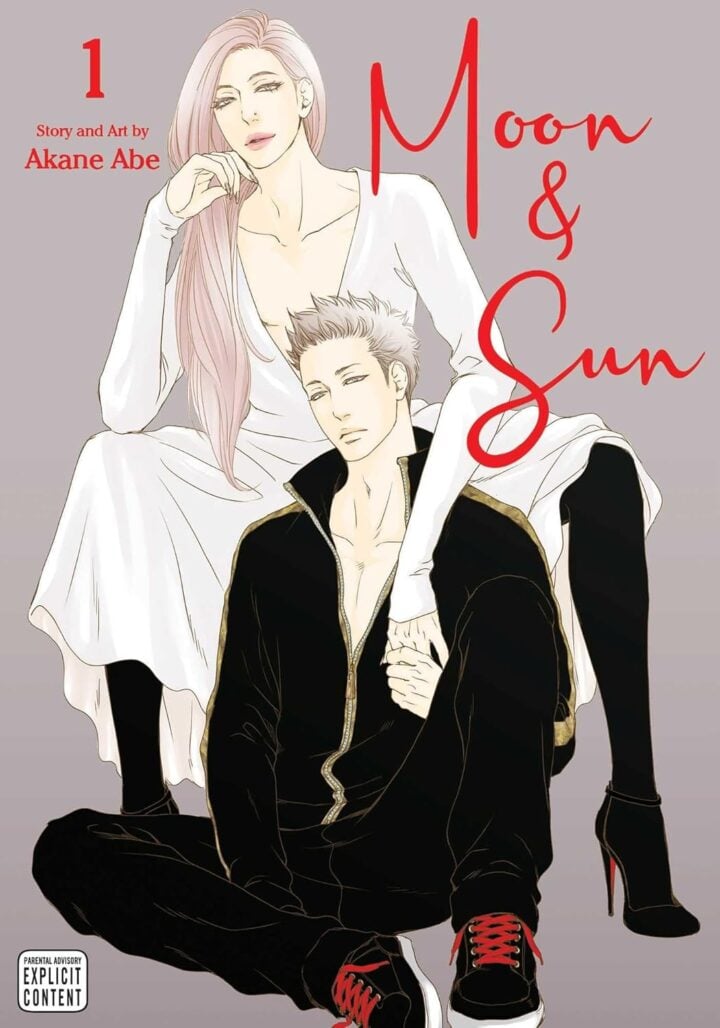
Moon & Sun
Writer/Artist: Akane Abe
Translator: Adrienne Beck
Touch-up Art and Lettering: Deborah Fisher
Cover and Graphic Design: Yukiko Whitley
Editor: Jennifer LeBlanc (Vol 1), Leon X. Shepard (Vol 2)
Publisher: SuBLime
Masahiro is what you’d call an S-tier asshole. Despite being born to a wealthy yakuza family, he drifts aimlessly, refusing any job or position his grandfather offers. One night, his friends drag him to a drag bar where Masahiro causes a scene. He’s then taught a little lesson by Tsubaki, a make-up artist who happens to be at the bar. Their education session leaves Masahiro dumbfounded, and a little horny, but he’s determined to take revenge on the beautiful Tsubaki.
Akane Abe is a prolific Boys Love manga artist with many works under their belt, though Moon & Sun is the only work that is available in English to my knowledge. Moon & Sun is also a spin-off from their previous work Hana ni Kuchizuke. The first chapter begins with the couple from that series meeting one of the leads, Tsubaki, at their place. Readers expecting a stand-alone story may be thrown off. After that chapter, though, the series finds its rhythm and focuses on Tsubaki and Masahiro.
While it is not explicitly disclosed, Tsubaki reads to me like a genderfluid or gender non-conforming person. No one can blame Masahiro for immediately falling under their spell, even though it takes him a while to admit it. Tsubaki is confident and beautiful, embodying both graceful lines and strength. Masahiro on the other hand is a rowdy hoodlum for most of the first volume. He’s seemingly unaware of any other article of clothing except tracksuits. By the next volume, though, Tsubaki’s effect on him is visible.
Moon & Sun is a beautiful story about how love can transform you into a better and more content version of yourself, even when it hits you unexpectedly and from the kind of person you’d least expect it from. Tsubaki’s love helps Masahiro find his way, and in turn, Masahiro’s support lets Tsubaki reconcile with their past. Moon & Sun may not be a grandiose fairytale, but it’s a tender, genuine, and steamy love story. — Merve Giray
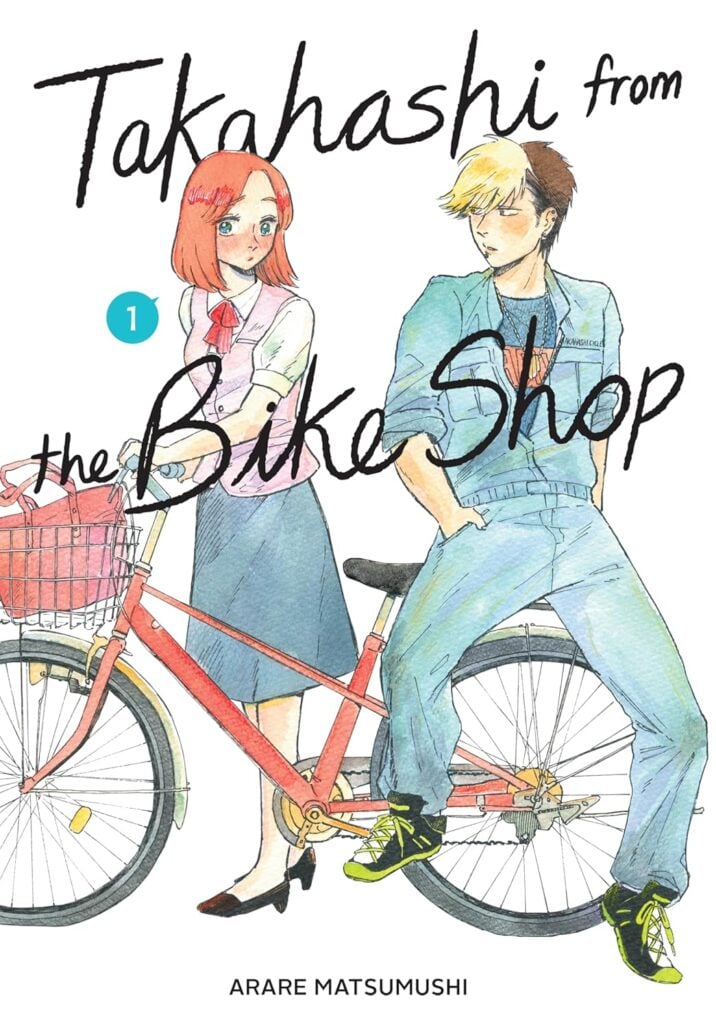
Takahashi From the Bike Shop
Writer/Artist: Arare Matsumishi
Translation: Giuseppe di Martino
Lettering: Rochelle Gancio
Publisher: Yen Press
Tomoko “Panko” Hanno is a hard-working office lady who endures her boss’s bad behavior without complaint. Ryohei Takahashi is an attractive but scary-looking bike shop employee with dyed hair and piercings. When Panko gathers her courage one day to take her broken bike to his shop, but forgets to bring cash, Ryohei asks that she take him out for dinner in exchange. You’d never expect that these two very different people would start dating soon after. But of course they will! This is a romance manga after all.
According to artist Arare Matsumishi, she started drawing Takahashi From the Bike Shop because “a hunky worker at the bike shop who did some repairs for me got me thinking, ‘damn, a handsome guy in a jumpsuit is wild!’” Takahashi isn’t just a hot guy in a jumpsuit though. He’s the kind of guy who sets you up with bananas and a DVD in his PS2 while he fixes your ride. He knows where you can find the best cheap Chinese food in town, and he’s close friends with the family that runs the restaurant, who trust him enough to leave their child with him for safekeeping. And he’s a manga and anime fan! Of course Panko (who loves Chinese food and Doraemon movies) would fall head over heels for him.
Takahashi From the Bike Shop is also part of a genre I would call “there’s no one way to be an adult” manga. Panko has to learn that while her friends at home are getting married, and her coworkers find her interests childish, she shouldn’t compare herself to other people. Instead she should find a version of adulthood that works for her. This means making peace with the last remnants of her childhood, like her mother’s Great Pyrenees; there’s an absolutely brutal “death of a pet” scene in this book that ends in such an upsetting but also real place. That scene proves that Matsumishi has more up their sleeve than sweet romance.
If I have a complaint about Takahashi From the Bike Shop so far, it’s that Takahashi has so far not been challenged in the way that Panko has. Good romance requires give and take. Still, I’ve only read three volumes, so there’s plenty of time for Takahashi to evolve. This is a delightful spin on familiar material so long as you can accept Matsumishi’s occasionally wonky art. — Adam Wescott
Follow Beat’s Bizarre Adventure to get weekly manga and webtoon recommendations!









Cross Game is probably my favorite manga of all time. I cannot recommend it highly enough.