

With more people reading manga and Webtoons (aka vertical scroll comics) than ever before, Beat’s Bizarre Adventure gives three writers an opportunity each week to recommend some of their favorite books and series from Japan, Korea, and elsewhere. This week we have Bath, courage, and, of course, samurai.
The Thieves Who Stole From Death
Writer/Artist: Elodie Dow
Platform: WEBTOON, MangaPlus, Globalcomix
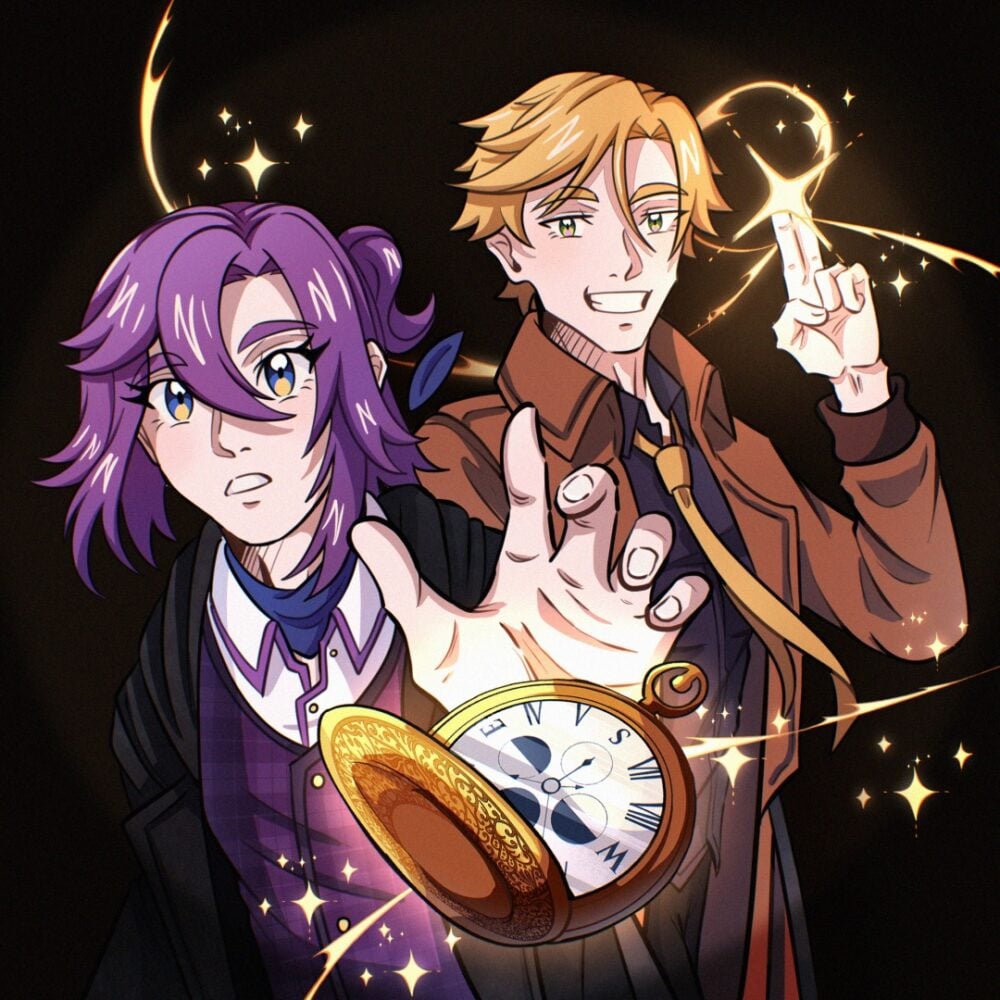
I love history! Whether that be NYC or global history, documentaries or YouTube shorts of historical facts. So when I found out about The Thieves Who Stole From Death, a historical supernatural webtoon written and illustrated by Elodie Dow, my interest was piqued. It is set in a fantastical 1893 version of Bath, a real city located within Somerset, England. Its purple-haired protagonist Larkin is a scientist who is barely scraping by with his research. His only income comes from another renowned scientist and researcher taking the credit for his discoveries. After purchasing a sought after and mysterious book, he is thrust into the world of the supernatural, setting him on the path to meet “The Golden Thief”.
The series is inspired by manga in terms of its art style, art direction, fantastical real world setting, and panel layout. Unlike other series available on WEBTOON CANVAS, it’s even designed to be read from right to left. This could be due to being published on MangaPlus Creators first. Or it could be an intentional design choice by Elodie to give the series an authentic manga feel and vibe. Other choices include the textured lineart that looks as if it were drawn with physical ink pens, thick outlines around the characters, and a reliance on greyscale tones and gradients with screentone hatching effects. You can see the love for the medium on display even if the characters and scenery have some distinct quirks.
The story takes a while to reach the main hook, only kicking off by the second chapter after 48 pages and dozens of panels. Keep that in mind if you’re reading this like any other webtoon on the platform. But if you read this like a manga, as intended, you will have a very different reading experience. I also want to take this opportunity to showcase Elodie’s dedication as an artist. Just three years since beginning publication, there have already been 450 updates. That alone shows Elodie’s pure love for this story.
As of writing, The Thieves Who Stole From Death has been published on WEBTOON Canvas, MangaPlus Creators and GlobalComix. It even has 1 volume out in print with a second on the way. There’s plenty to read online, so this will definitely not be unlike my previous recommendations which you can often read through in one sitting. Happy reading, birb nerds! — Justin Guerrero
Lion Hearts
Writer/Artist: Mita Ori
Translation: airco
Adaptation: Krista Grandy
Lettering: Ray Steeves
Cover Design: Mariel Dágá
Proofreader: Tui Head
Production Designer: Christina McKenzie
Senior Editor: Jenn Grunigen
Publisher: Seven Seas
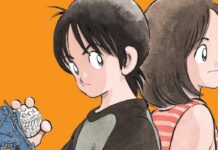
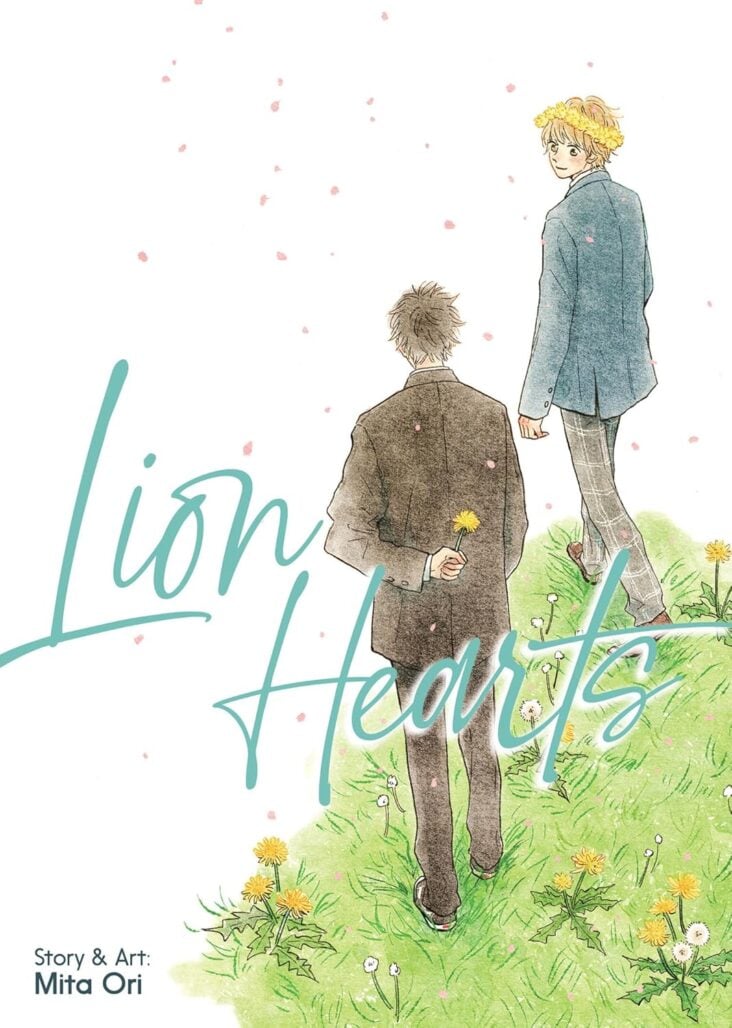
Lion Hearts is a single-volume Boys’ Love manga drawn by Mita Ori about two childhood friends. Shishimaru and Leo used to be inseparable but grew apart as they got older. Now in high school, they walk home together after class. Shishimaru can’t help thinking about the proposal he made to Leo ten years ago when he was a child–and how his teachers rejected that proposal, claiming “two boys can’t fall in love with each other.” So he locks his feelings up in a box and vows to never open the lid. But what would happen if someone else were to open it?
This book made my heart feel so full, even though there were moments where the manga ripped it out, tore it apart and stomped on the pieces for good measure. The art style and lettering perfectly fit the vibe of this sweet high school story. It reminded me of Life: Senjou no Bokura. Both protagonists are pressured to break up with their partners and pursue a “normal” life. But both then realize they’ve made a monumental mistake and chase after their partners.
Lion Hearts is a perfect title for this story. Not only do the characters’ names reference lions, but the title speaks to the courage that they need to pursue a relationship with each other. For Shishimaru, it’s to get past his fear and internalized homophobia to love Leo openly and fully. On the other hand, Leo has never shied away from his feelings for Shishimaru, but now he has to take that leap of faith and trust him again. I also loved the switch in their hair styles where Shishimaru has longer hair in the time skip, mirroring the hair style Leo had in the beginning.
Even if it’s too early to say, I think Lion Hearts will be one of my top favorite reads of 2026. — Hilary Leung
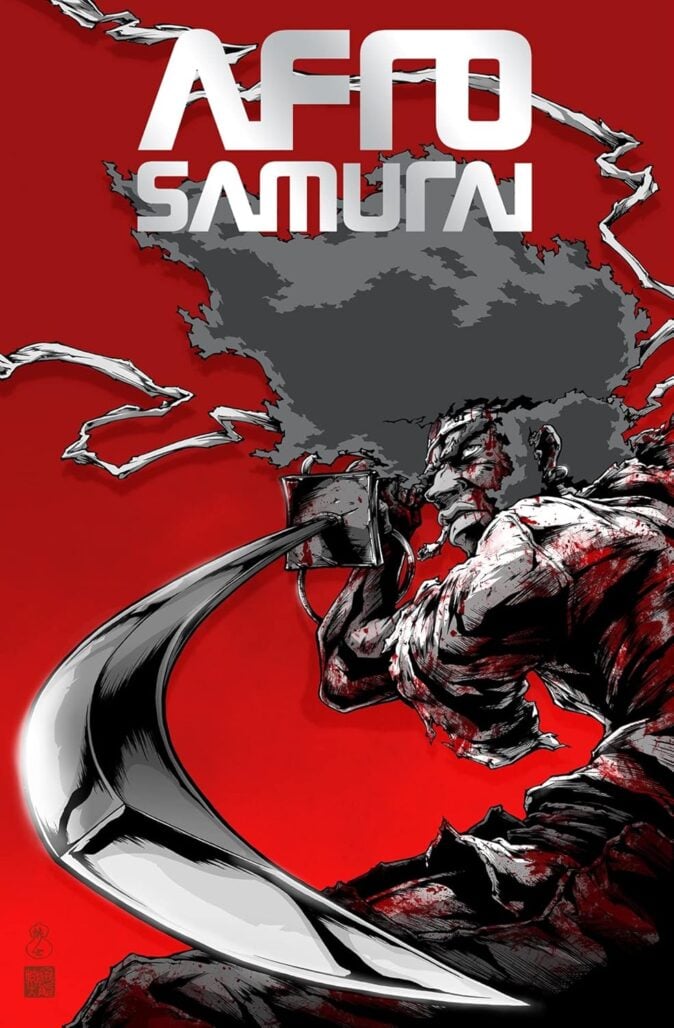
Afro Samurai
Writer/Artist: Takashi Okazaki
Translation: Greg Moore and Joshua Fialkov
Publisher: Titan Comics
Man, Afro Samurai. I remember back in 2013 when my review of the anime was shared online by Ron Perlman (who played Justice in the English dub.) That was such a highlight that made me feel good about my writing. Since then I’ve felt a special connection to this series.
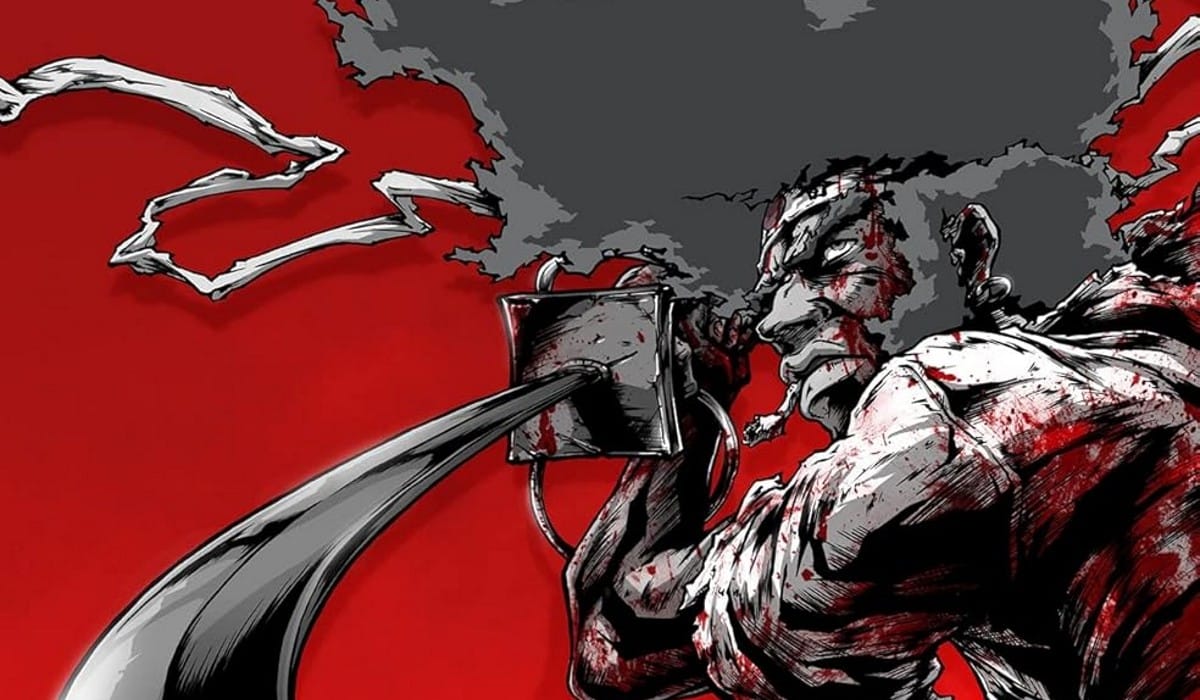
Afro Samurai follows Afro—or #2 if you prefer—as he pursues the man named Justice who killed his father to become the most powerful person on Earth. Along the way Afro meets all sorts of people trying to kill him who are driven by different ideologies. Some want the power for themselves; others are seeking their own revenge on Afro. Some just want to survive this cruel world of blood and despair
I’ve been looking forward to revisiting this story in manga form, and it did not disappoint. While battles are brutal but short, and the series is not nearly as long as I wish it were, what makes it epic nonetheless is artist Takashi Okazaki’s sense of style. Afro is a man of few words, yet his presence makes you sit up and pay attention. His opposites are quirky and larger than life, creating a dichotomy that Okazaki has a lot of fun playing with.
The story’s mysteries make you want to know how everything will play out. While there are some differences between this and the anime, I think a lot of it is the same. Either way, I think the manga is just as strong as the anime if not thematically stronger. (Unfortunately, I wasn’t able to revisit the anime before writing this piece.)
The central theme is vengeance and how its pursuit drives everyone caught in its death throes into violence themselves. Okazaki handles this theme with precision that few others can match. The ending is the most interesting part. It explores what happens when somebody frees themselves from vengeance’s restraints, ready to create a better world. Ultimately though another life must be sacrificed, emphasizing that the cycle of violence can never fully be broken.
I love this series so much. I love the grey and white color scheme with an emphasis on red any time blood is spilled. I love the involvement of spiritual beings and seemingly magical headbands that grant immense power. I love how the mountain Afro is trying to reach represents the hubris that created this terrible world, and yet also hoards the power to change it from the masses. Perhaps if somebody with a good enough heart came along, they could finally change things for the better.
Go read Afro Samurai. It’s simply that good. — Derrick Crow
Follow Beat’s Bizarre Adventure to get weekly manga and webtoon recommendations!