
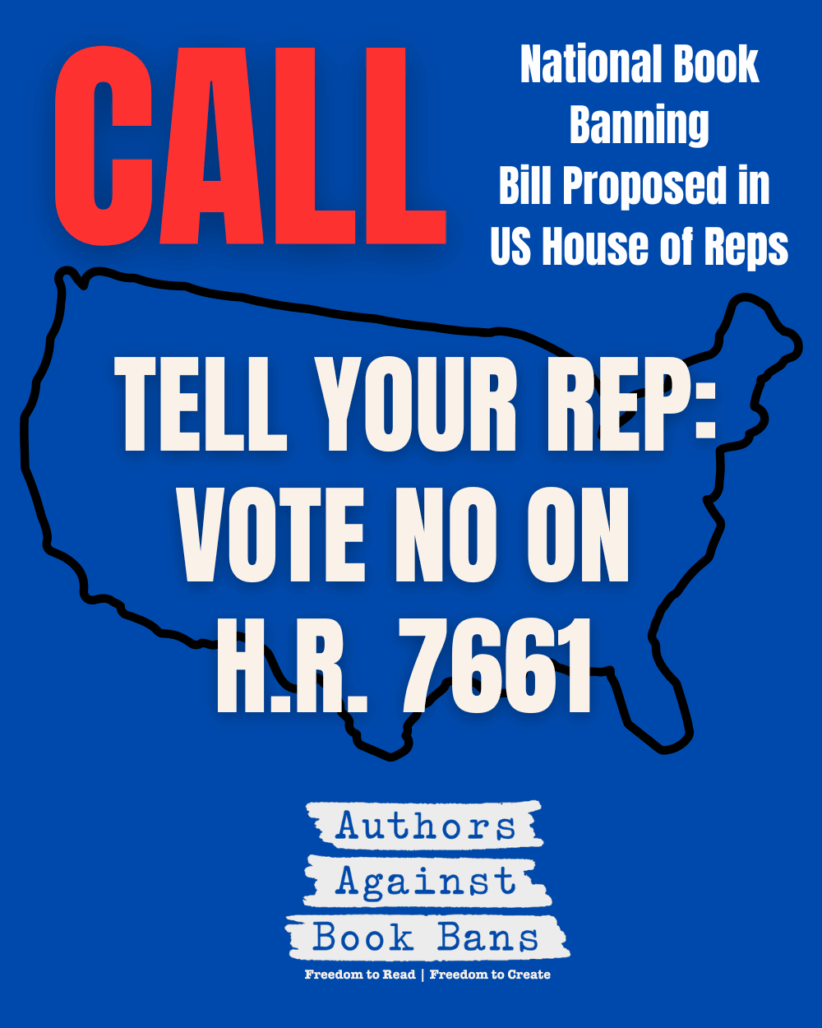
The next battle in book censorship has arrived: House Resolution 7661 (H.R. 7661).
Introduced on February 24, the deceptively named “Stop The Sexualization of Children Act” states that its sponsors want
To amend the Elementary and Secondary Education Act of 1965 to prohibit the use of funds provided under such Act to develop, implement, facilitate, host, or promote any program or activity for, or to provide or promote literature or other materials to, children under the age of 18 that includes sexually oriented material, and for other purposes.
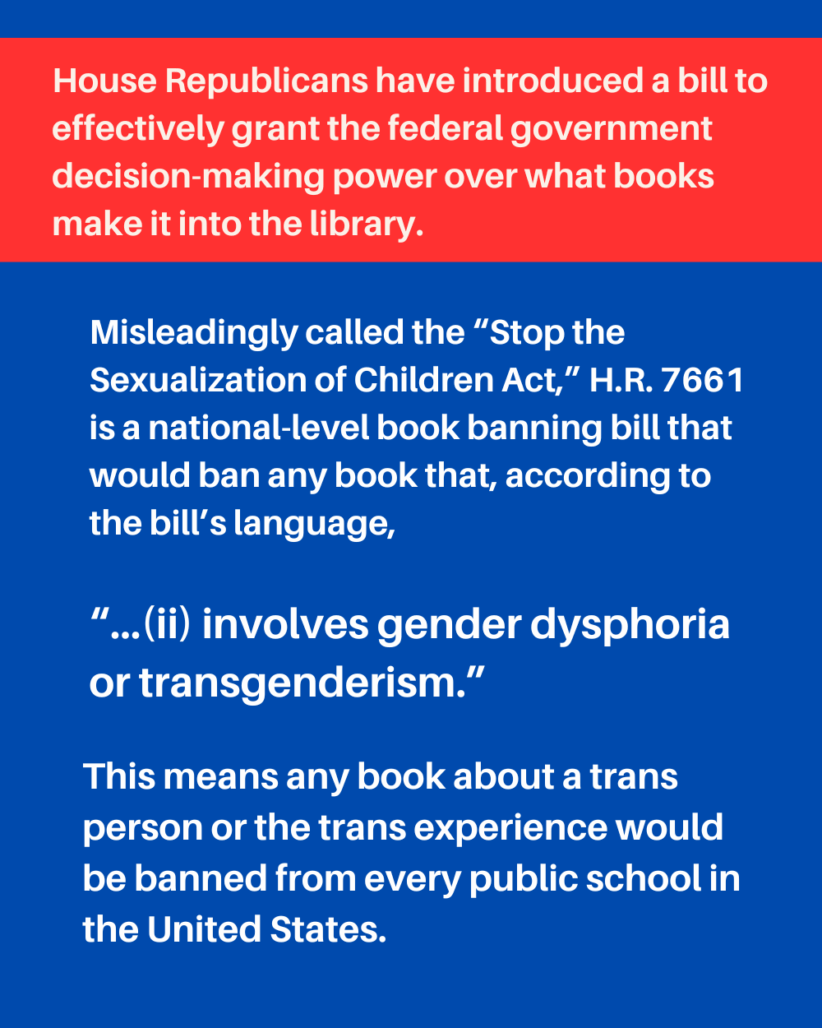
Simply put, H.R. 7661 would amend the 1965 landmark law that gives public K-12 schools federal funding so that only schools that “don’t sexualize children” would receive said funds. Essentially, this means that when school board members challenge books for alleged sexual content, the government could pull the school’s funding. For most public schools, this would be a devastating blow to already-tight budgets.
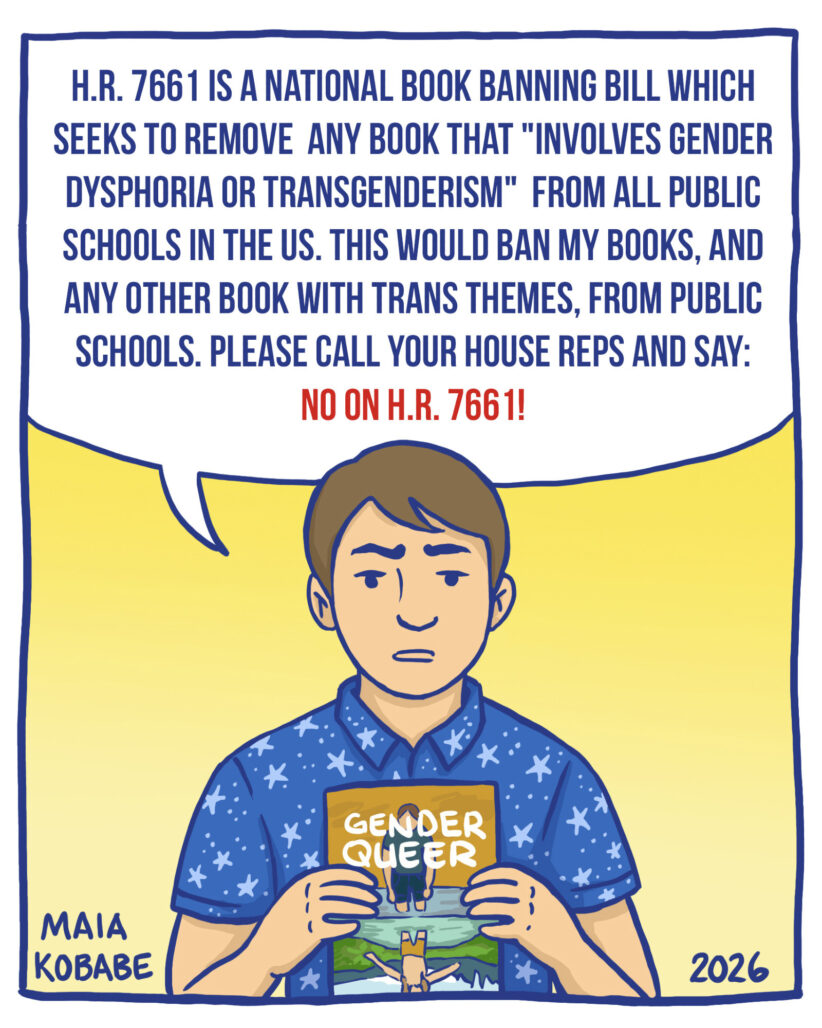
However, no librarian is letting children have access to porn. What libraries do give children access to is sex education content and LGBTQIA+ content. Under H.R. 7661, learning about trans people (called “transgenderism” in the legislation) would be banned as “sexually oriented material.”
How book bans impact comics
Book bans not only narrow the scope of what young readers can access via their school libraries, but they significantly impact current and future authors, cartoonists, editors, and more. PEN America has brought to light a number of creators who have felt self-doubt and fear over making LGBTQIA+ related work due to the increasing number of book bans nationwide.
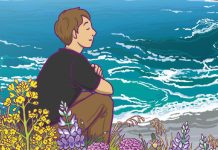
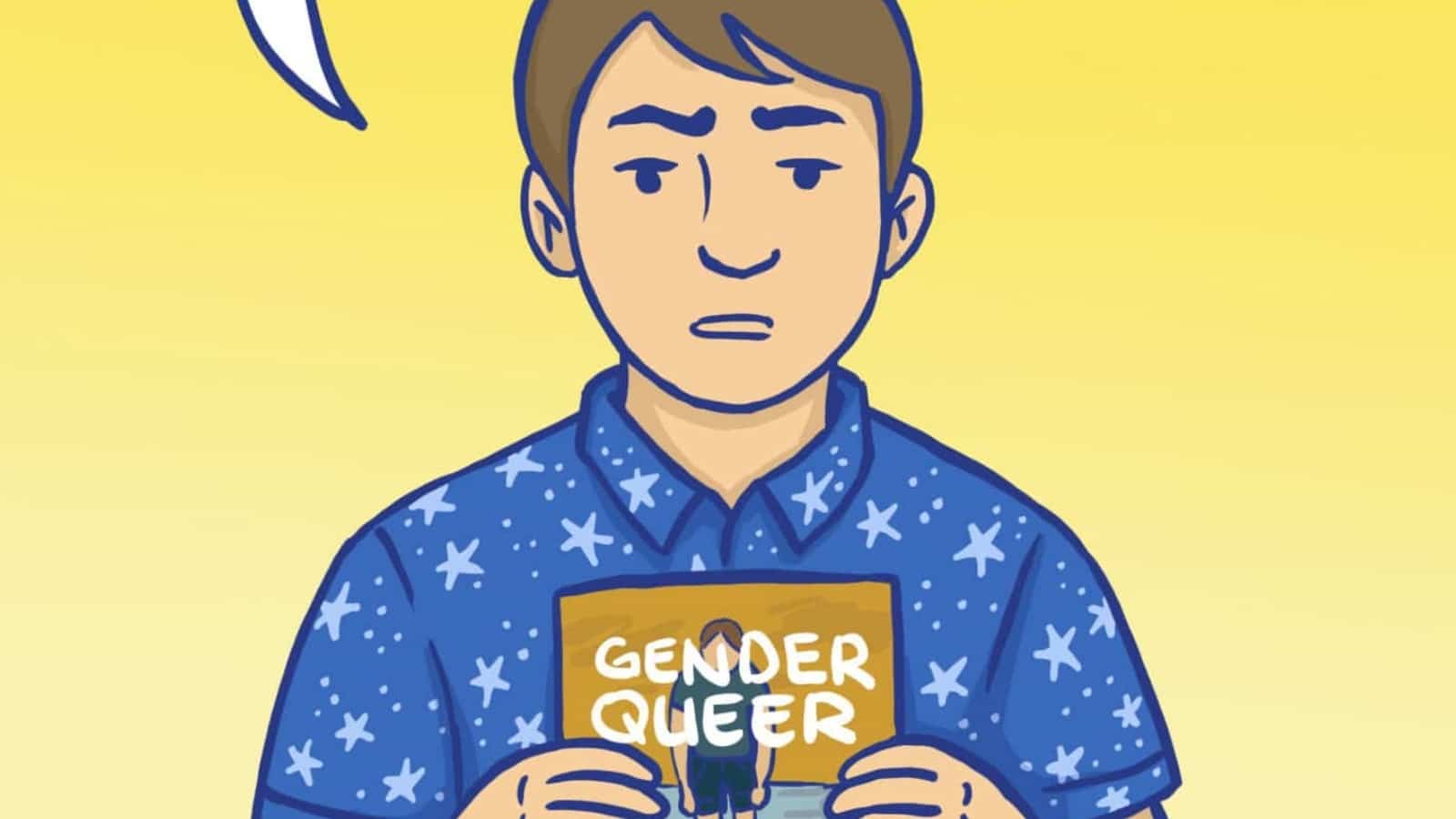
Cartoonist Maia Kobabe was made the modern face of comics censorship for eir book Gender Queer, which has been one of the most banned books in the US for years. Following the publication of H.R. 7661, Kobabe posted a graphic alerting the public of this legislation on eir various social media accounts.
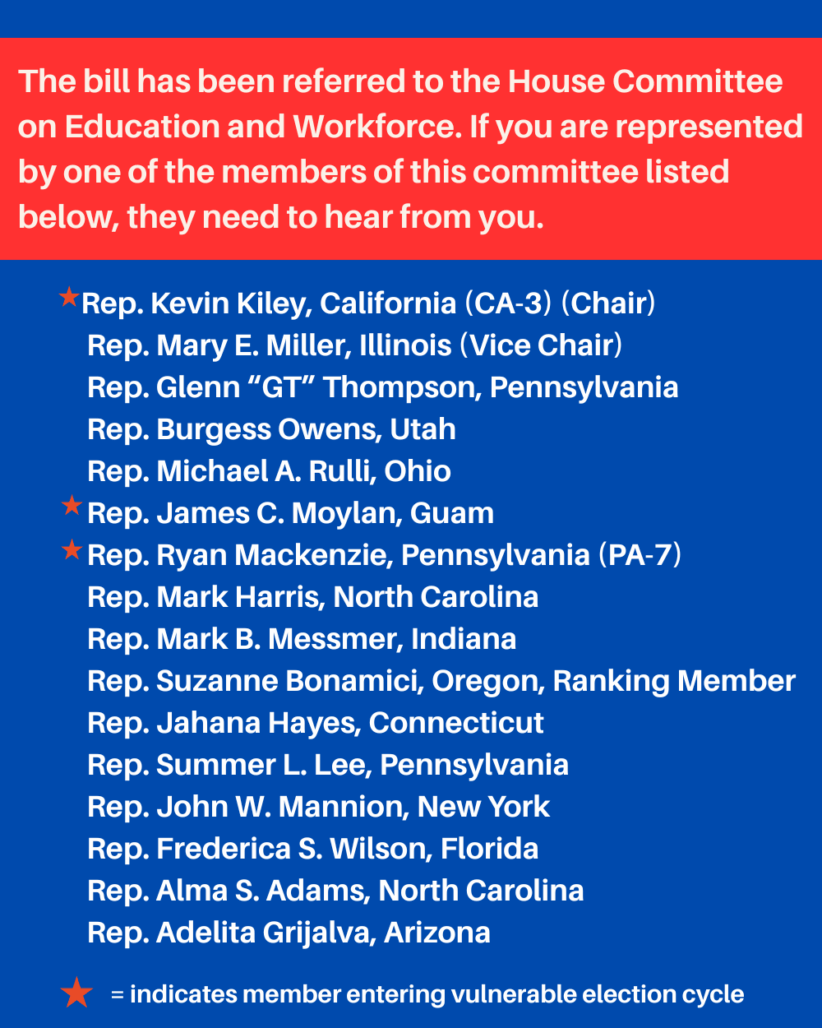
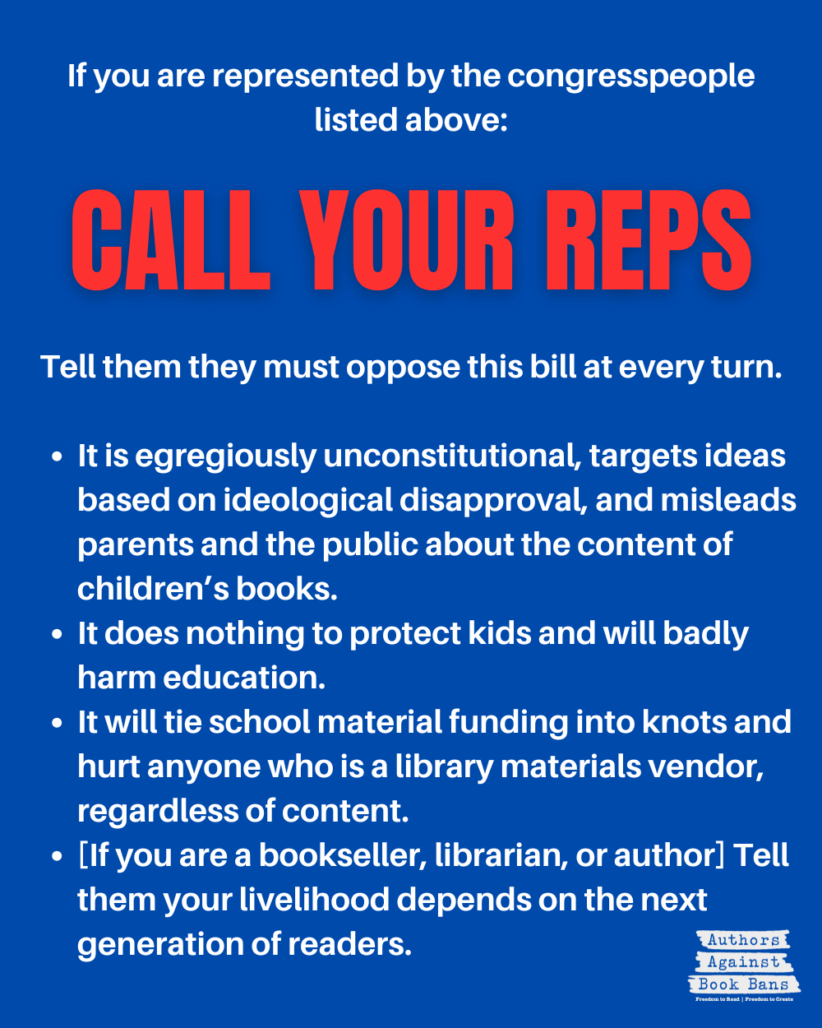
The collective action group Authors Against Book Bans, of which Kobabe is a member, also released a collection of slides (seen below) describing ways for citizens to contact their local representatives.
How to respond to H.R. 7661
I’ve written about the encroaching flood of censorship coming from multiple avenues, be it school boards, state and federal GOP legislation, or far right groups like Moms For Liberty. The name of the enemy changes, but the strategy remains the same.
Do not obey in advance
Even the threat of censorship can create a cooling effect in publishing. It’s important to not capitulate to these groups by censoring ourselves. Sure, there are media outlets that have started to rescind their endorsements for certain politicians to appeal to the far right, but we, as a collective, do not have to capitulate.
People need our stories, especially from BIPOC, LGBTQIA+, disabled, and otherwise marginalized authors. Some large publishers have already begun to quietly step away from acquiring “controversial” stories. Thus, it’s important to stay attuned to publishing trends and branch out from the big names.
Support small indie presses and projects
During these times, all publishers will be under higher amounts of scrutiny and take on more risk in publishing LGBTQIA+ and BIPOC stories. This risk will be particularly high for publishers that don’t have large legal teams (or a legal team at all). It’s important for us to show support to small and independent presses with our dollars and social media outreach.
In comics, joining the Cartoonist Cooperative, subscribing to Silver Sprocket, submitting to Fieldmouse Press, and donating to crowdfunding campaigns by independent creators can make a huge difference in the diversity and availability of published works.
Use your voice
Get familiar with your state and local representatives, and get very familiar with their office phone numbers. Write letters to your congressperson and let them know that you will support their primary challenger if they won’t represent you the way you want. Hell, you could be the one to primary them.
Call out bullshit when you see it. Do not let people gaslight you into thinking that you’re being alarmist or overly dramatic. Especially if you are a creator, this is your craft, livelihood and community at stake.
Authors, artists/illustrators, audiobook narrators, editors, and translators who have been published can join Authors Against Book Bans for resources and collective calls to action. Those involved in production or distribution of books created by others can join AABB’s sister organization, Publishing Professionals Against Book Bans.
Regarding H.R. 7661 specifically, 5 Calls will help you identify your representatives and offers a script to use when calling. You can also use the Resistbot app to fax, mail, or email your representatives.
Check out the aforementioned slides from Authors Against Book Bans on what to say about H.R. 7661 depending on your role in the publishing world. These are available for free download and distribution with alt text via AABB.
This list of suggestions is only the beginning. I’m not a lawyer, but like many reading this, I am a lifelong comics fan and comics creator.
We cannot afford as a community to rely on the powers that be to come in and save this industry. We, the workers, have to take our future in our own hands. We have to learn from each other, help each other, and speak up for one another. This is going to be a rough one, y’all.