
By Avery Kaplan and Ollie Kaplan
While this review avoids spoilers, the first six episodes of the series were watched for review. Cover image credit: Brooke Palmer/Paramount+
Although the show’s first two episodes don’t debut until January 15th, 2026, Star Trek: Starfleet Academy is already controversial in some swaths of the Trekkie community. Since the new Trek series was initially announced in March 2023, fan excitement has been marred by the actions of the Franchise’s network, Paramount Skydance. This wasn’t helped when Alex Kurtzman, Trek universe creative head honcho and Starfleet Academy executive producer, showrunner and multiple-episode director, made comments about the show that concerned some fans, including ourselves. Then, recently, a poster that depicted the youthful cast members blissfully lying together in the titular Academy’s quad was heavily criticized online for being more CW than Star Trek.
But the poster is well-suited to the series, or at least, it’s emblematic of a certain component of the show’s makeup. There is absolutely an element of this show that is torn right from the pages of the CW teenage drama playbook. But there’s more to the show as well – much more, perhaps more than you’d expect to be crammed into the already-comparatively-lengthy episodes.
Starfleet Academy’s Scale
Starfleet Academy is sweeping in its scale. First, and as announced in one of the earliest pieces of PR concerning the series, the show’s set is enormous. This gives the show a sense of place, and – should the series manage to court the teenage audience it so obviously covets – verisimilitude to help the fictional institution become somewhere young viewers can imagine they would like to enroll. Considering the fact that a major part of Star Trek lies in depicting a future in which viewers can see themselves, this is a point in its favor.
But the set is far from the only thing that’s enormous about the show. There’s also the size of the cast, which in a sense feels like the casts of two different shows: one about the cadets and one about the faculty.
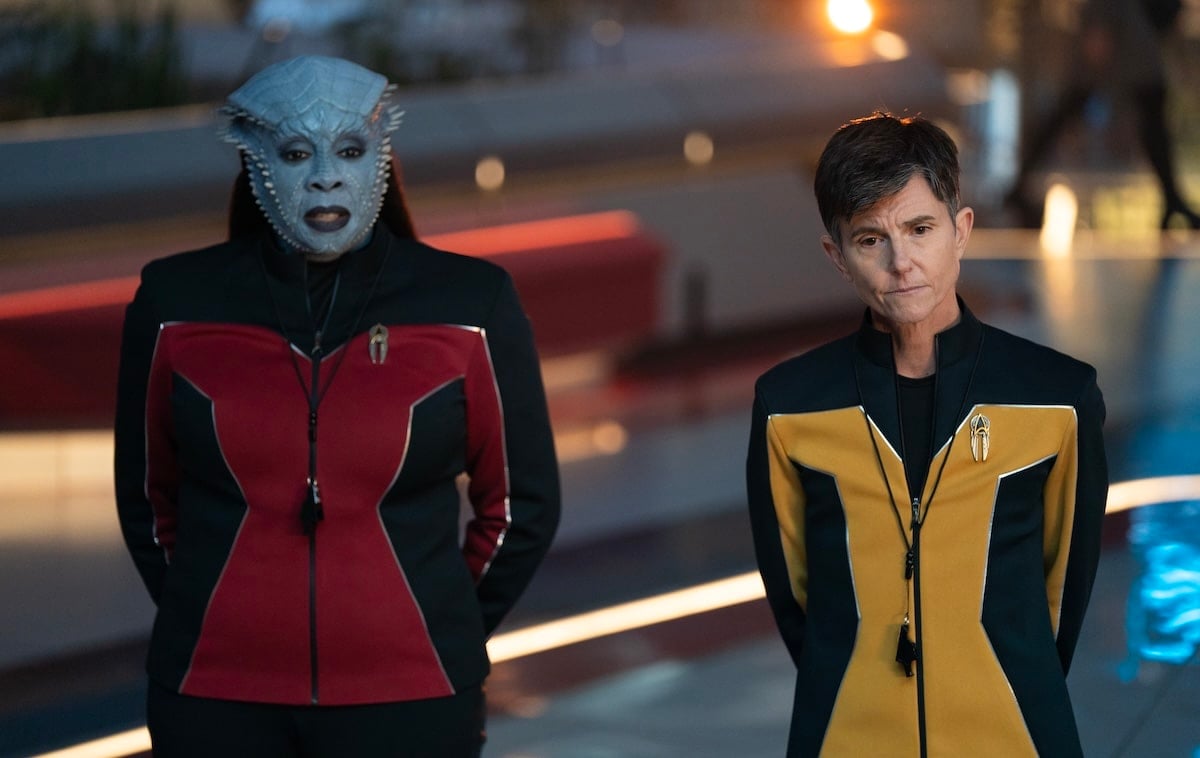
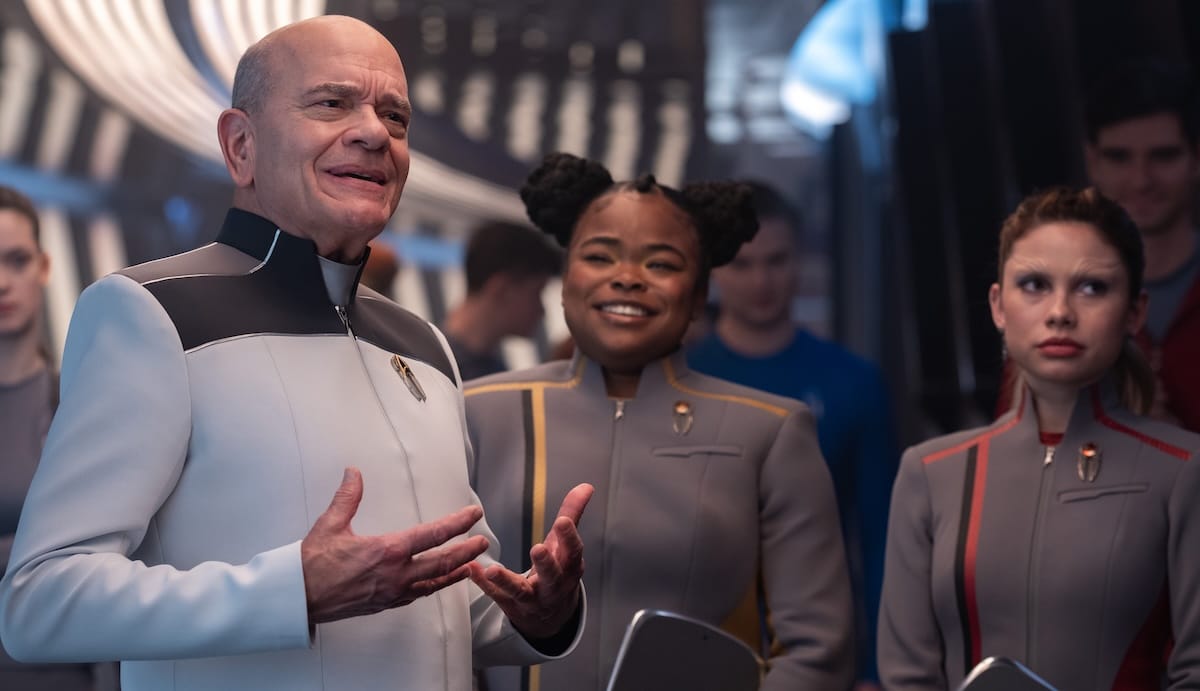
Both sets of actors are well cast. The cadets are played by fresh new faces who all bring solid performances to the material they’ve been given to work with. Meanwhile, the returning characters – The Doctor (Robert Picardo), Jett Reno (Tig Notaro) and Admiral Vance (Oded Fehr) – all bring more of what made us fall in love with them in the first place. And newcomer Lura Thok (Gina Yashere), an interesting character who is both Jem’Hadar and Klingon, will swiftly win viewers over. Plus, Stephen Colbert performs the voice for the Digital Dean of Students. While we tend to prefer feminine voices for Starfleet computers, Colbert was well-cast and is a more-than-welcome addition.
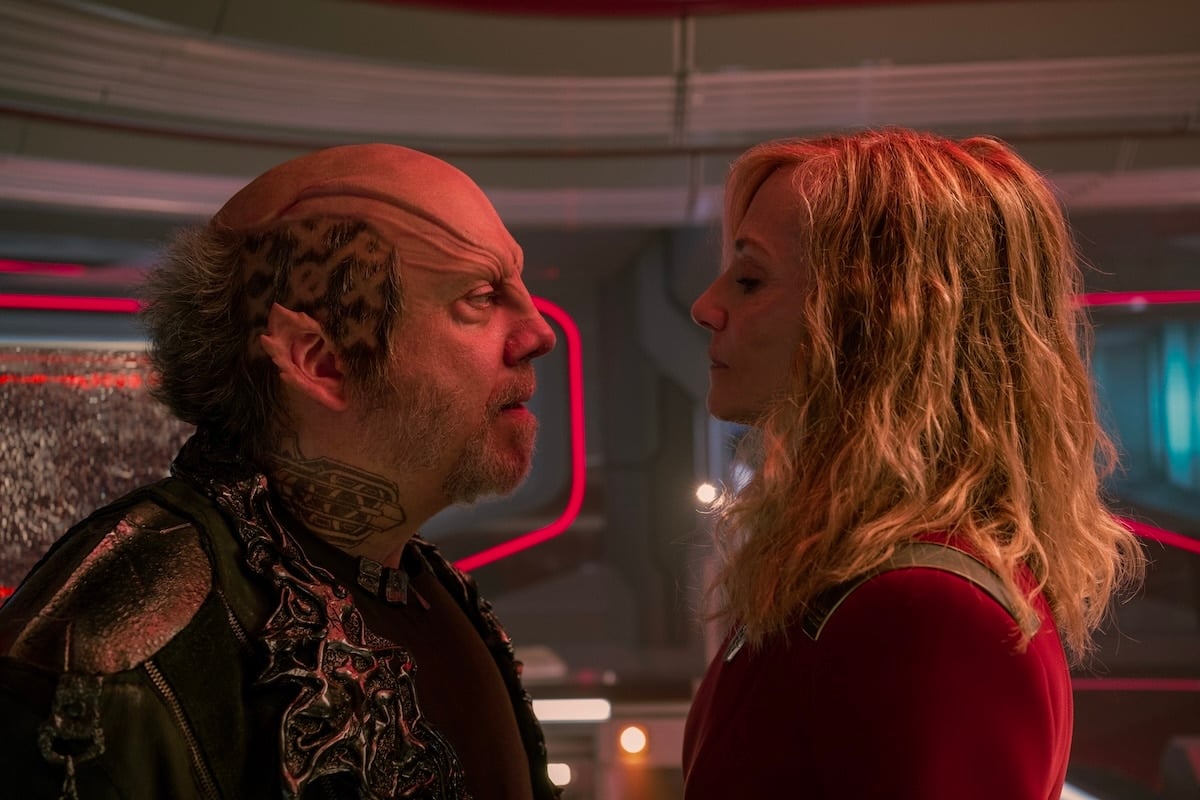
And of course, both Holly Hunter and Paul Giamatti deliver fantastic performances. Some viewers are likely to be critical of the way Hunter’s Chancellor Nahla Ake sits in chairs or styles her hair. These traits call to mind the other Lanthanite character we’ve seen on Star Trek: Strange New Worlds, Pelia (Carol Kane), who is also too old to give a shit what you think of her. However, especially when Hunter and Giamatti are sharing a scene, it is impossible to forget that the show’s inexperienced younger performers have been counterbalanced with experienced actors of the highest caliber, no matter how they might be seated.
Franchise Easter Eggs
Does all this sound like a lot already? Hoo boy – it is. There are storylines about the cadets’ matriculation, as well as the challenges they face academically and socially at the school. There’s the fact that the show’s hero ship, the U.S.S. Athena, doubles as the campus in San Francisco, but can head up to space for episodes that more closely resemble the classic Star Trek format. And then there’s the storyline involving Ake that’s highly reminiscent of those aforementioned teen dramas.
On top of all this, the show also crams in more references and Easter eggs than you can shake a lirpa at – and that’s even by the already heavily referential standard of the Secret Hideout era. Many of these are a lot of fun and will lead to Leonardo DiCaprio meme-style pointing. But in some cases, they do seem to have the effect of making the Star Trek universe feel small. Yes, it’s fun to see the names of characters you recognize on the Academy’s memorial wall, but weren’t there other historically notable Starfleet crews beyond the handful we’ve seen shows about?
The ethos of rapid-fire references is also present in the busy, busy backgrounds of the show. As the protagonists have their walk-and-talks around the Academy’s hallways, the backgrounds are filled with computer-generated characters and background details. We assume this is in part an attempt to keep young viewers’ eyeballs glued to the TV screen rather than their cell phone telephones, and hey, maybe that will work out. But in some cases, these middle-aged viewers were a bit overwhelmed by everything that was happening onscreen, and a little distracted by what was happening in the background.
An Hour in San Francisco
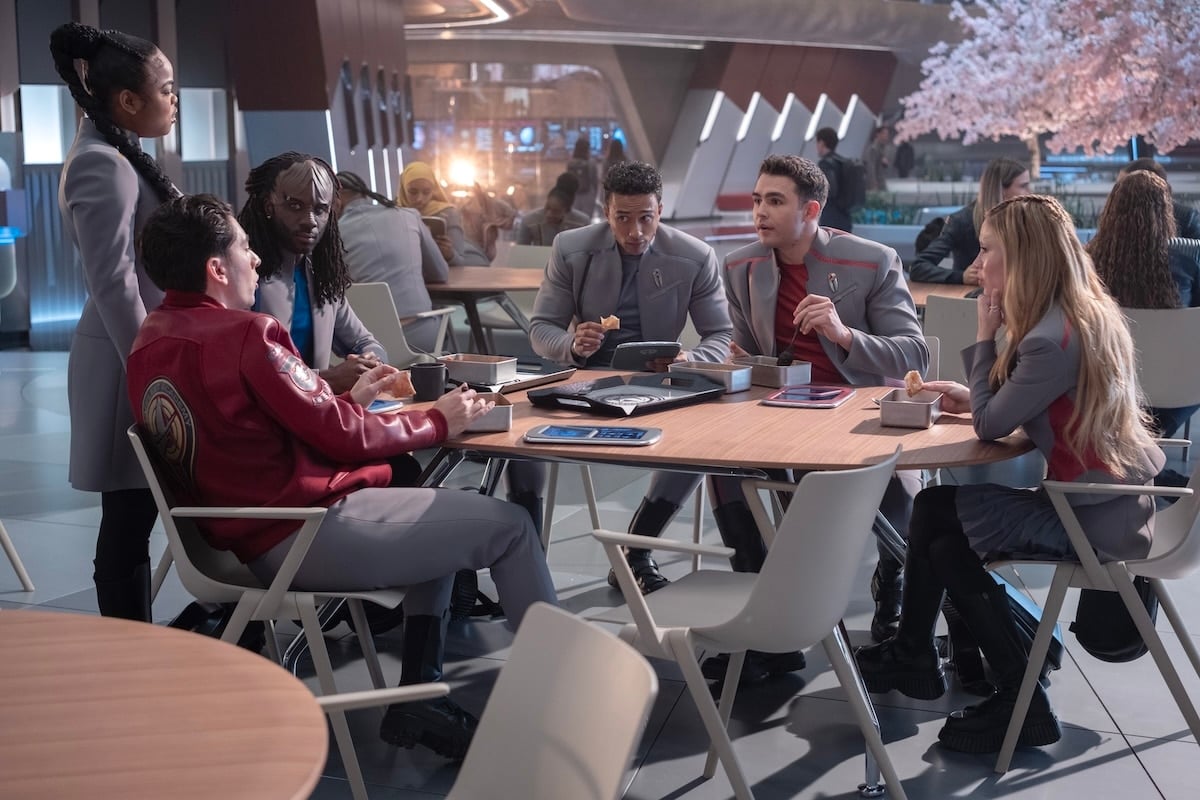
True, all of this is somewhat accommodated by longer episodes than we’re used to from this era of the Franchise. Each of the six episodes watched for review was at least 60 minutes long. But we are once again left to lament the loss of 20+ episode seasons. We know that practically, this is a pipe dream these days. But simply from the perspective of a viewer, Starfleet Academy could have used a long season to really come into its own, and to give each of its myriad characters their due.
One thing we do want to commend the series for is its inclusion of queer characters. While Strange New Worlds Season 3 felt oppressively heterosexual, it was nice to see queer characters in both generations depicted by Starfleet Academy. With a commendable diversity of queer representation in the six episodes viewed for this review, hopefully, Starfleet Academy will continue to add more queer characters to its cast rather than subtract them, as in Star Trek: Discovery Season 3. While the boundaries of the Franchise may be able to be stretched further than some thought possible, Star Trek isn’t Star Trek without IDIC.
Star Trek: Starfleet Academy Season 1 Review
We appreciate how each Secret Hideout-era Trek show has a unique tone to it—and, once again, Starfleet Academy delivers a distinctive take on the Franchise. With storylines that draw on the teen drama genre’s most common tropes, musical cues and key themes (such as navigating identity, relationships, and social pressures), it’s undeniably an attempt by the Franchise to court a younger demographic.
Overall, we’ll award Starfleet Academy a B minus.
While we give the Franchise props for the novelty of bringing fans Trek’s first teen drama series, we do have one big question. What’s the purpose of creating Starfleet Academy beyond novelty? It certainly doesn’t seem necessary to court teen audiences by making teen-targeted shows. The Franchise has always had younger fans. We’re both examples: we both started watching the 90s era shows as tweens.
But if you’re open to giving Starfleet Academy a chance on its terms, there are things to enjoy in the mix. And if you aren’t, well, remember: “Come, come, Mr. Scott. Young minds, fresh ideas. Be tolerant.”
Keep up with all of The Beat’s Star Trek coverage here.






No mention of Tilly ?
That was not unintentional. Stay tuned for our additional coverage about the show throughout the season!
Comments are closed.