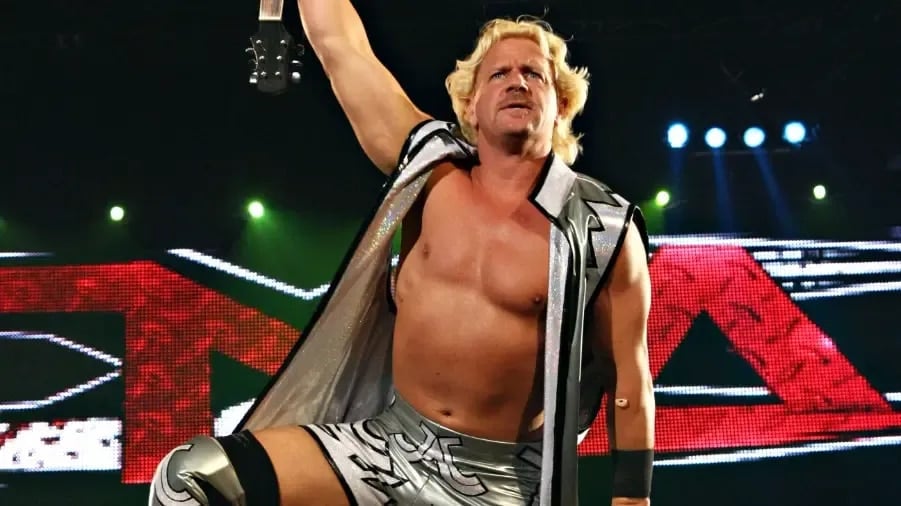

A little bit ago, we went over the infamous “Reign of Terror” of Triple H that spanned from 2002-2005 more or less. In a similar time frame, Jeff Jarrett was dominating the airwaves in a budding company called Total Nonstop Action Wrestling (or TNA for short) from 2002-2006. Both of these frames of time seem to have been forgotten or faded into history in recent years thanks to the rehabilitated images both men have gained in the last 20 years.
While the H-Man has the more famous of the reigns and has a more prominent standing in modern times, Jarrett has gained a reputation of being kind of the more fun uncle that shows up sometimes to have fun arguments. This betrays how he was perceived for years by the wrestling community as perhaps even having a bigger sense of importance than Hunter.
So now let’s break down the disappointingly dominant reign of the man famously derided as “broke a million guitars, never drew a dime.”
The Villain
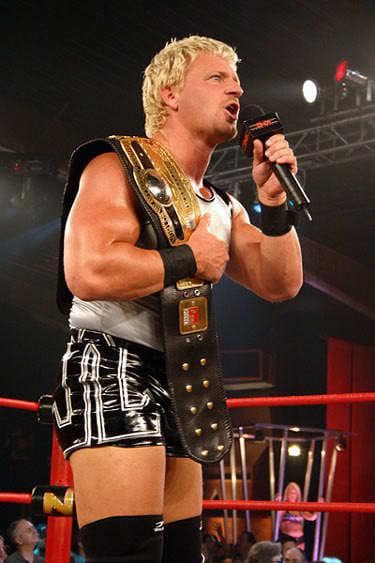
Jeff Jarrett helped create NWA: TNA with the help of his father, Jerry Jarrett, and almost right away grabbed hold of the NWA World Heavyweight Championship through the partnership formed with the National Wrestling Alliance. He more or less had to create his own wrestling promotion after an ugly falling out with the then-WWF in 1999 and holding up the company for more money to drop the Intercontinental Championship before his contract expired. Later interviews would suggest that while there were disagreements, it may have been a cordial exit complete with some stock options for Jarrett, letting him benefit from the competition when he returned to WCW.
Part of Jarrett leaving WWF had to do with bestie Vince Russo leaving the company and heading to WCW. Jarrett had hit a political ceiling creatively because he had been critical of “Stone Cold” Steve Austin and his corruption of a Bible verse to attain stardom, thus drawing Austin’s ire and making sure the two would never work together. With Jarrett being refused a program with the top guy, he headed for greener pastures.
When WCW was bought out, Jarrett was pretty SOL. All these factors, combined with the idea that Jarrett probably thought he could be a bigger star, helped set the groundwork for what was to come. With his jumping ship and close friendship with the head writer, Jarrett’s last run in WCW saw him become one of the most overexposed talents of the age where he was all over programming and didn’t quite have the star power to justify his airtime (even dubbing himself “The Chosen One.”)
This veered into the “incredibly annoying” and “predictable outcome” realms when his matches would follow an overbooked formula of: outside interference/distraction, ref bump, low blow, guitar shot, The Stroke (his finisher), Jarrett wins. To really sell just how all over the product he was, Jarrett won all four of his WCW World Championships between April and June 2000.
It should also be noted that there is a fairly legitimate reason for Jarrett being so dominant in early TNA. Jarrett was one of the only talents of the budding company that was guaranteed to be there week in, week out. Many of the talent across TNA’s early years were on paid-per-appearance sort of deals and may only have shown up once or twice. There is a graveyard of mediocre to terrible promotions that existed between the downfall of WCW/ECW and TNA’s rise and a cause for many of their quick extinctions was building on big name talent that got signed back to WWE.
Because of the timeline of TNA as a budding company with lots of former big names hanging around, Jarrett spent most of 2002 and 2003 fighting against established names while the company developed its own stars.
In addition, separate from that final WCW run and the Reign of Terror proper, he would return to programming on a more consistent basis in the late 2000s and into the 2010s. Jarrett would not only once again become part of big storylines and feuds (most notably with Kurt Angle after getting with, and then later marrying, Kurt’s ex wife), but he would at one point try to “invade” the promotion he started with a new pet project in Global Force Wrestling which was mismanaged and had all the credibility of Jarrett’s actual music career.
The Victims
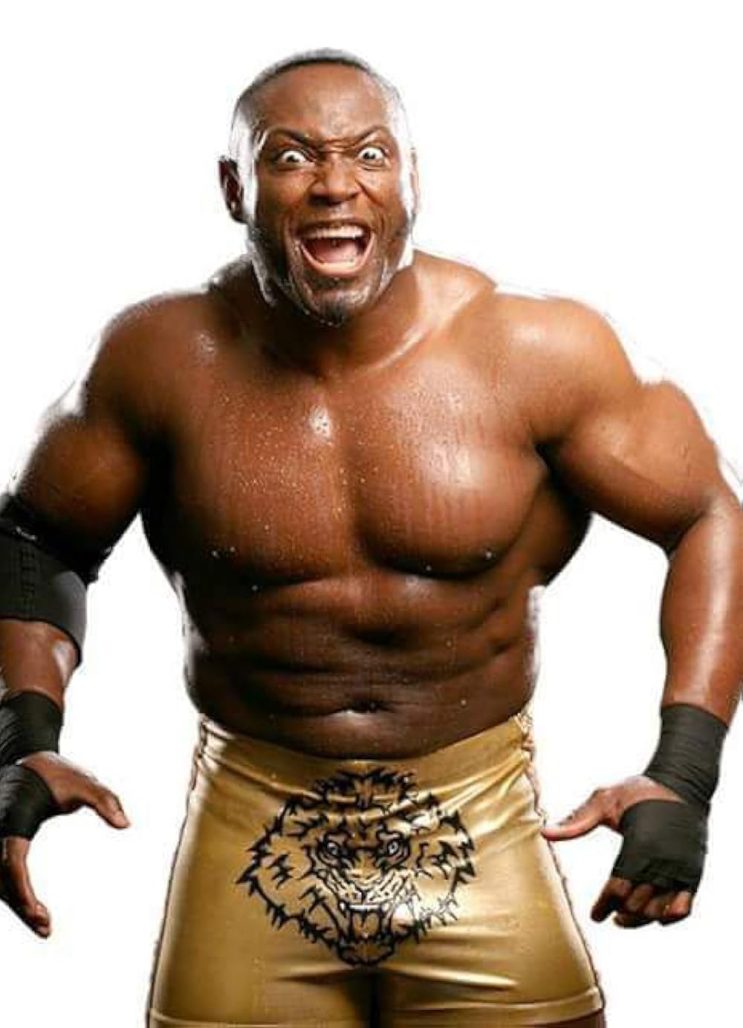
Monty Brown is frequently mentioned as one of the bigger “what ifs” in wrestling from the Ruthless Aggression era. It’s a general consensus that he could’ve been a huge star in the industry were it not for some of his booking from the time the company got a weekly television slot onwards in TNA. Prior to that, “The Alpha Male” Monty Brown had broken out as probably the best “homegrown” face in the company (AJ Styles notwithstanding; in fact, his entire run with the company and any missed opportunities with him needs its own essay), coming up short against Jarrett on a couple of occasions despite crowds begging for a change.
In late 2004, Jeff Jarrett would form a sort of power stable with fellow cross-promotional stars Kevin Nash and Scott Hall. He would do so at the expense of his latest challenger, Jeff Hardy, who isn’t on this list because Jeff wasn’t quite the most dependable performer at the time (or possibly ever, sadly).
The most over babyface in the company who wasn’t Hardy was Brown, whose bowling ball sized shoulders were only outpaced by his immense charisma. He used both with his finishing move, the Pounce, a shoulder block so destructive that the move itself and the bump that goes with it are still used to this day. Exciting on the microphone as well, the former NFL linebacker was the complete package that any budding company would hope to build around.
Brown would lose a #1 contender’s match against Hardy a month later, which would be a catalyst in the new year to him apparently turning heel. Monty would turn on “Diamond” Dallas Page and assist Jarrett in retaining his NWA world title and inexplicably form the nucleus of what would become the stable “Planet Jarrett.”
When seeking clarification, Brown mentioned getting his feelings hurt basically by the loss to Hardy so much so that he sought solace in the guidance of Jeff Jarrett – completely undermining a great deal of the badass character and aura he’d built to that point. From there, Brown would actually take the fall in a key Lethal Lockdown match (to a seasoned Sean “X-Pac” Waltman at that).
Brown would spend the rest of his time in TNA when he was healthy coming up short in continuous attempts to win the title, and in the process, losing some of his steam to other big names coming in. Both Christian Cage and Sting made their debuts for the company, which pushed Monty further and further down the card as a face and was of course blocked by Jarrett himself on the heel side. Reportedly, Jeff Jarrett was extremely hesitant to truly give the ball to Monty because he knew if he got any bigger, the WWE would scoop him up.
Which is a valid concern, but Monty should not have been punished as a performer for it. Considering how many times Jarrett would lose and quickly regain the belt, an Alpha Male run in the middle wouldn’t have hurt anything. Brown’s stagnation in the company probably helped his decision to finally jump to WWE in 2006 when his contract expired, undermining the entire reason they hesitated to put the belt on him and push him in the first place. With his iron thoroughly extinguished, Brown left WWE TV in June 2007 before retiring from wrestling entirely for family reasons by that September.
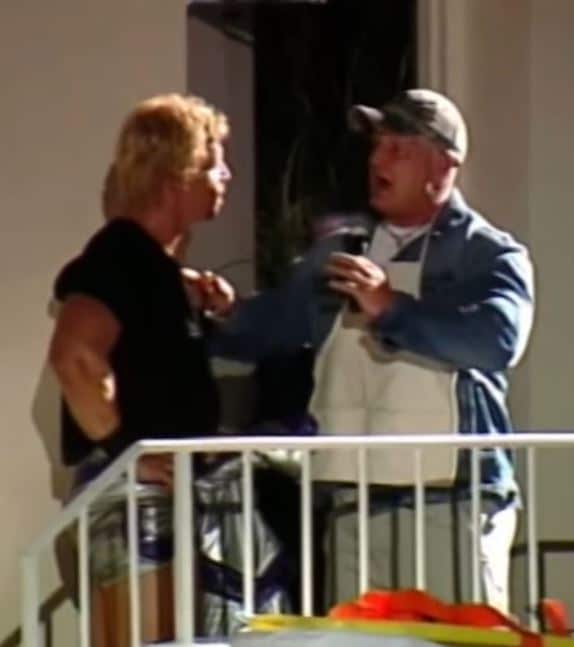
Jesus (from The Bible) is regarded by many to be the son of a deity, but in early 2005, that did not stop one of his avatars from being buried at the altar of Jeff Jarrett.
The scene was a superchurch in Chickamauga, Georgia for the first ever event of the new Vince Russo project Ring of Glory. The premise of the entire promotion was simple – retelling stories and themes from the Christian Bible through the art of professional wrestling. The fact that it was started by the man who made his name in wrestling by turning it into car crash TV is maybe the least weird thing about this.
The stranger thing might be the man who played the Jesus allegory on this night, a performer named Andrew Mincey. Mincey was training to be a wrestler and was a former member of something called Power Team, a squad of muscleman performers who did strongman acts for evangelical audiences. Apparently it was he who approached Russo and gave him the idea for the entire promotion and purpose.
During this inaugural event, Jarrett successfully defended the NWA World title against Elix Skipper, only to be approached by the Satan allegory that evening (played by Rev. James Mitchell) and have him demand Jarrett’s soul. As Jarrett tried to chickenshit his way out of the literal Devil, he’d be interrupted by the sounds of power tools in a nearby room. Thus would emerge the character played by Mincey, Joshua the Carpenter (that’s his full official name on Cagematch), who tried to talk Jarrett out of his evil ways.
This would draw the ire of the Devil guy and he’d force Joshua into a match against “The Personification of Evil,” a large wrestler wearing a horribly redecorated Kane mask and jean shorts. Joshua would legitimately blow his knee out in the match, causing Joshua to barely eke out a win over TPoE by roll-up, only to get beat up by Evil afterward. As other members of the locker room tried to help not-Jesus Jesus, they’d all get steamrolled by Evil. That is until a well-placed Jeff Jarrett guitar shot saved the day and finally dropped The Personification of Evil.
So to summarize the entire segment: Jesus is forced by Satan into a gladiator’s arena, has to face the The Dragon from the Book of Revelations, can barely muster a win over it (and ends his wrestling career in the process), has many try to come to his rescue, but the only man who can save Jesus and stop the tyranny of Satan and his Evil was a single El Kabong from Jeff Jarrett.
Ring of Glory would have one more show before going under entirely. (Shout out to Brian Zane at Wrestling With Wregret for his video on the promotion)
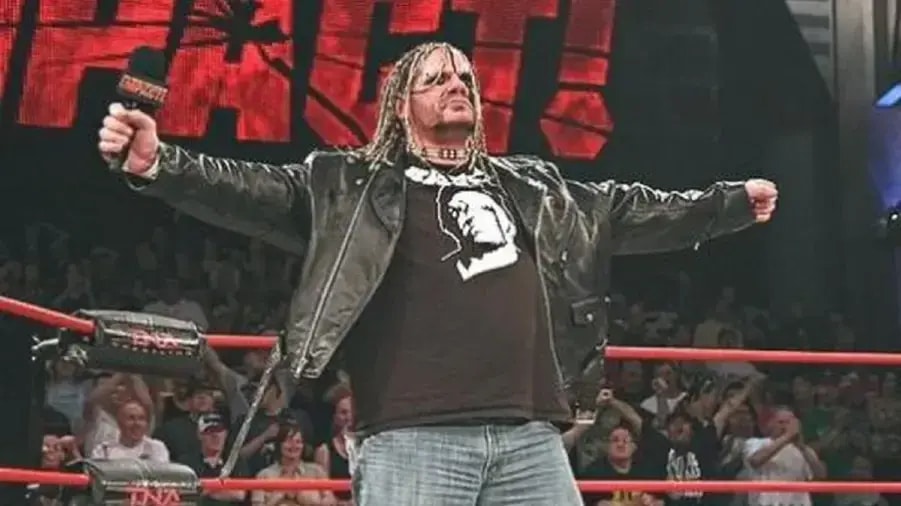
Raven was one of many wrestlers who were past their prime in the early days of TNA, but they helped solidify the company and allowed it to gain credibility. As you can see on this timeline, a vast majority of the time Triple H was spent reigning, Jarrett was in the TNA main event as well, but the men he was feuding with were names like Nash, Hall, DDP, Billy Gunn, Road Dogg, Kevin Zbyszko, and Dory Funk, among others. These men had all either had their moments in the sun or hit their ceilings and weren’t really in danger of getting “buried” or have their status drop bar some sort of crazy circumstance that they’d almost certainly never agree to.
Raven, however, did not quite fit in this category. A highly respected name who was past his best years, Raven was always regarded as one of the most underrated talents of the late 90s and the turn of the millennium. A cult leader with a sinister streak at his worst, but an incredibly relatable grunge rocker who would never give up at his best, Raven was someone many had always hoped to properly break out, but it didn’t seem like any promotion he went to could use his incredibly creative mind the best (or in ECW’s case, pay him properly). Despite this, he was a former 2x ECW World Champion, but had been chasing the NWA world title since 2003 or so.
He finally achieved his destiny at Slammiversary 2005 in the second ever King of the Mountain match. In the unique five-man ladder match, AJ Styles went in as NWA World Heavyweight Champion and Jarrett was originally involved, but was written out of the main event due to an altercation with a “fan.” He was replaced by Raven who went on to win the championship (at the expense of Monty Brown, sadly) and finally win the belt.
After a program with Abyss, Raven was pulled into Planet Jarrett’s orbit. While he did successfully fend off Jarrett for the belt a couple times, Raven would lose his championship on an unaired episode of Border City Wrestling to Jarrett. Not even getting the chance to lose his belt somewhat gracefully in front of a televised audience, and in a completely different promotion no less, Raven would never again really come close to touching the gold while Jarrett held it ever again.
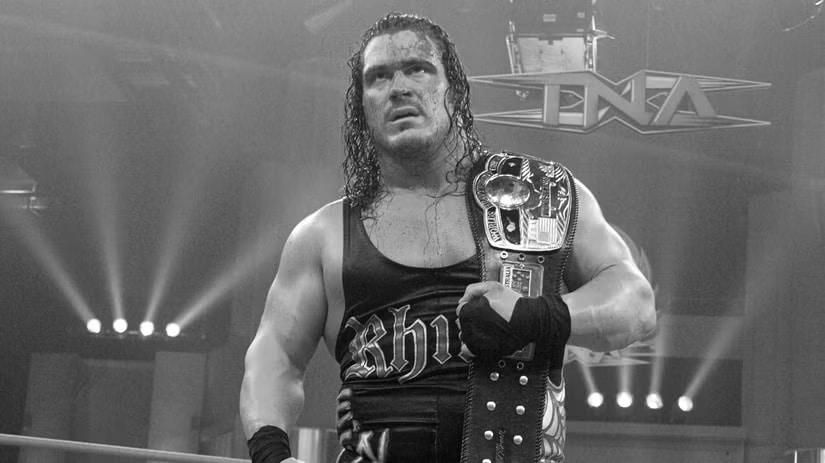
Rhino made his debut for TNA in the middle of Raven’s title reign and subsequently joined Planet Jarrett, however, how deeply his allegiance ran with Jarrett and his cohorts was always suspect. Rhino would kind of be at odds with his own faction by repeatedly winning title opportunities much to Jarrett’s chagrin.
These title matches kept getting pushed further down and down the line, only to finally accumulate at Bound for Glory 2005, which saw Rhino break away from the Planet and finally defeat Jarrett in dramatic and climactic fashion, which sort of also marked Rhino’s first world title that could be celebrated. Rhino has the distinction of being the final ECW World Champion under the ECW banner, however, the company was more or less confirmed to be dead by the time that happened – also, Rhino was a heel. This big win was a big deal for the Man Beast.
So after such a dramatic win, he’d lose it barely two weeks later right back to Jarrett on a regular TV episode, shutting down his momentum entirely.
This sort of brings us back to the same Booker T story we spoke about in Triple H’s half of this: TNA had a big face about to come in in Christian Cage and almost certainly wanted a big time heel for him to hunt down for the title. Which at this point, honestly, you could’ve used Monty Brown for instead since it would’ve also kept the gold in Planet Jarrett, but I digress.
Christian Cage himself would wind up being stifled in that very title reign, though it was a combo of weird booking, happenstance, and unfortunate events coming together. For starters, Cage debuted in November 2005 for TNA – the very same day that news broke of Eddie Guerrero’s passing, so Christian being the first major WWE talent to “cross the line” didn’t claim top headlines like they’d hoped.
Christian would eventually win the championship from Jarrett in February 2006, a huge victory in several respects that maybe would’ve signalled some kind of turning of the page to a new era and it was certainly celebrated as such in the ring. And deservedly so, as it was Christian’s first ever world title. However, there was a sense of “this is fine for now” about it considering that Sting made his incredibly hyped debut in the company not long prior.
As Christian’s title reign went on, he sort of became second fiddle not just to Sting, but to Jarrett himself. Sting would embark on a crusade for the remainder of the year to “cut the cancer” that was Jeff Jarrett out of TNA. In some ways, Jarrett was a championship belt to be sought and more valuable than the current world title; like a more malignant version of Undertaker’s Streak at Wrestlemania. Even without the title, Jarrett seemed to become the focus of programming, making the long-awaited world title reign, and by virtue Christian himself, a lower priority.
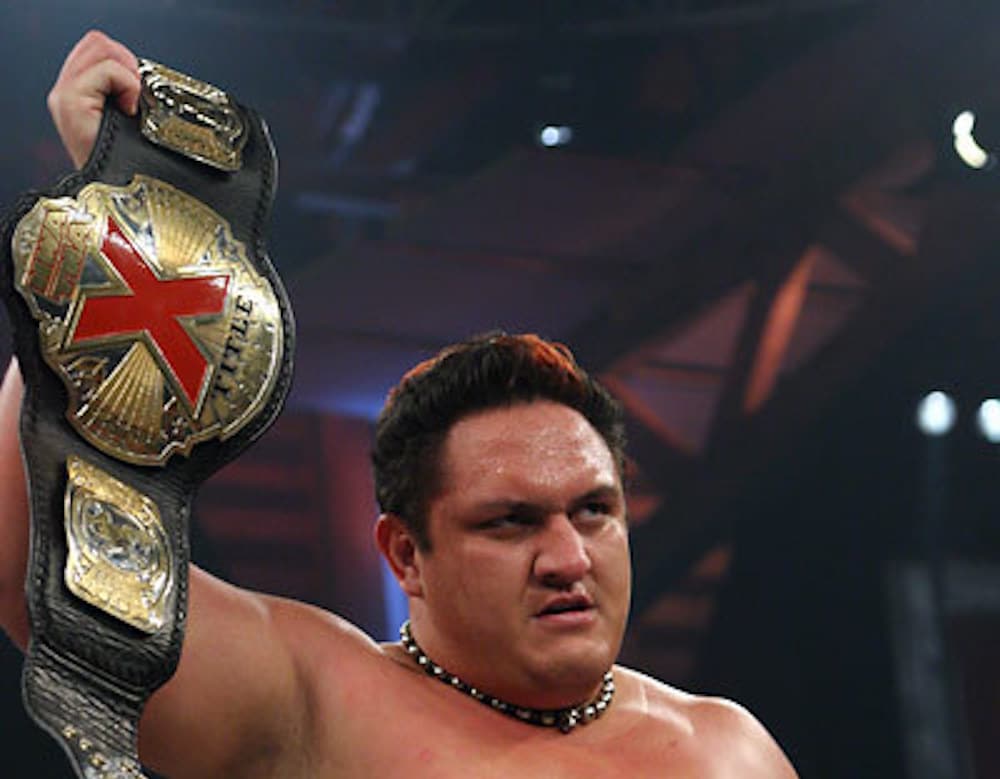
Samoa Joe was the hottest non-WWE property on the planet from 2004-2006. Coming off of a nearly two-year run as ROH World Champion and finally making mainstream-ish waves with TNA, Joe was probably the strongest booked man not named Jeff Jarrett in the company by a wide margin. He had an undefeated streak from his debut through most of 2006 and was one of the men, alongside AJ Styles and Christopher Daniels, who really set the standard of excellence for what would become the legendary X Division.
If he was booked so strongly, why is Joe here? Because Joe probably deserved the NWA World title more than anyone who wasn’t Monty Brown and wasn’t given the belt when his iron was white hot because Jarrett was still all over programming. Hell, Samoa Joe even had a main event PPV victory over Jarrett at No Surrender 2006 that September. It was a “Fan’s Revenge” Lumberjack Match that wasn’t for the NWA Championship and almost certainly used as a way to placate fans and resolve frustrations with just how much airtime Jarrett had eaten up over the years. Joe even kidnapped the physical belt for a while so the company could feel out how crowds felt about Joe holding the title.
Joe was used as an audience surrogate because he clearly had a connection with the audience, but wasn’t given the ultimate sign of faith for it. There could’ve been room for him after the grand storyline with Sting and Jarrett had been resolved. Unfortunately, it was announced at the end of that same No Surrender 2006 PPV that Kurt Angle had signed with the promotion.
Angle more or less absorbed Jarrett’s spotlight in TNA for the next several years. Jarrett would actually take time off for a substantial amount of time, ending his Reign of Terror in October 2006 after a climactic battle against Sting. Because of the ballyhoo around Angle and the company’s decision to put all their eggs in his basket, however, Joe would have to wait two whole years to win a world title in TNA, which by then had actually pulled out of the NWA and created the TNA World Heavyweight Championship.
Of course, Joe has gone on to have an incredible career across multiple promotions including WWE and AEW, but it is a wonder how much farther he could’ve gone, and earlier, had he not suffered as a byproduct of Planet Jarrett – the man, not the stable.
Honorable Mention
Chris Harris – Forming in late 2002, “Wildcat” Chris Harris and his tag team partner James Storm became one of the best tag teams on the planet as America’s Most Wanted. The two rivals-turned-friends were an integral part of the tag team division for TNA, winning the NWA Tag titles seven times. The same could be said for their manager, Gail Kim, who went on to become one of the centerpieces for the women’s division once it got off the ground.
After teasing a couple splits in 2003, Storm was incapacitated in March 2004 with a shoulder injury, which allowed Harris to really test a singles run. Refusing an invite to Vince Russo’s heel stable, Harris built enough fan support and momentum to get an NWA Championship match against Jarrett. He lost and would get another shot later that year in the King of the Mountain match that he would also lose.
To say Chris Harris was denied a chance to break into stardom is sort of pushing it, although who knows how far he could’ve gone. He certainly had a ceiling, however, but wasn’t given much of a shot to run on his own. He’s not featured as a guy who was run over in the Reign of Terror because he certainly had a cap, but also because similar to Scott Steiner, his stopping point would lead him to another promotion where he would gain memetic infamy.
Harris had a nightmare blink-and-miss-it run in WWE for several months in 2008. Performing as “Braden Walker” on the revamped ECW, Harris put on a few spectacularly underwhelming appearances on the brand before being released in August. Harris has stated numerous times that the run was an awful mess that displayed WWE’s micromanagement problems and pettiness, as they seemed to want to use Harris as an “example” of sorts to any talent that made their name in TNA at the time.
Despite having only a couple appearances on WWE’s C-brand, Harris’s showing was immortalized by wrestling internet memes, where he became another flavor of the then-current “Leave the Memories Alone” memes, referencing the video package WWE used for Ric Flair’s “retirement” at Wrestlemania that year. This paired with his awful attempt at a catchphrase (Knock knock. Who’s there? Braden Walker, and I’m gonna knock your brains out) have survived as a niche reference to this day.
Considering that his former partner would go on to be more well known with a different tag team in TNA and the relationship/story that that created, it isn’t clear if Chris Harris would have a legacy that endured outside his tag title runs without the embarrassment (of riches) that was “Braden Walker,” who might not ever have existed if he ever reached a higher pinnacle in TNA.