

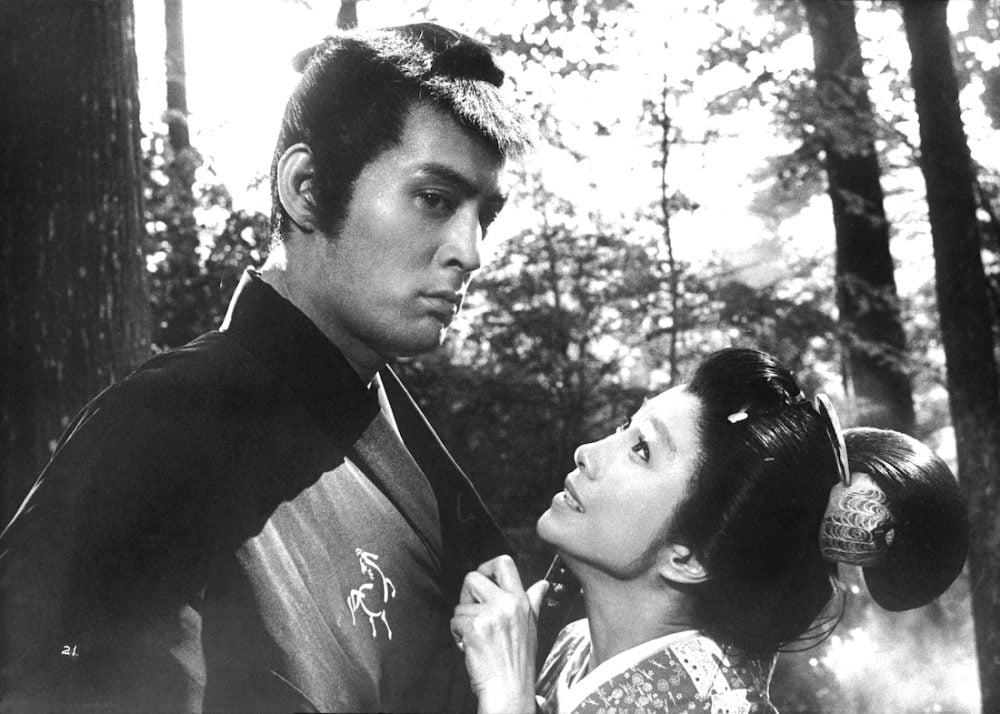
There were few presences in Japanese cinema like Tatsuya Nakadai or who had his range. Yet, he could be a blank faced, amoral killer (Sword of Doom), an idealist challenged by his morals (The Human Condition trilogy) or a man of vengeance (Harakari). Few actors challenged themselves or disappeared into his roles like he did.
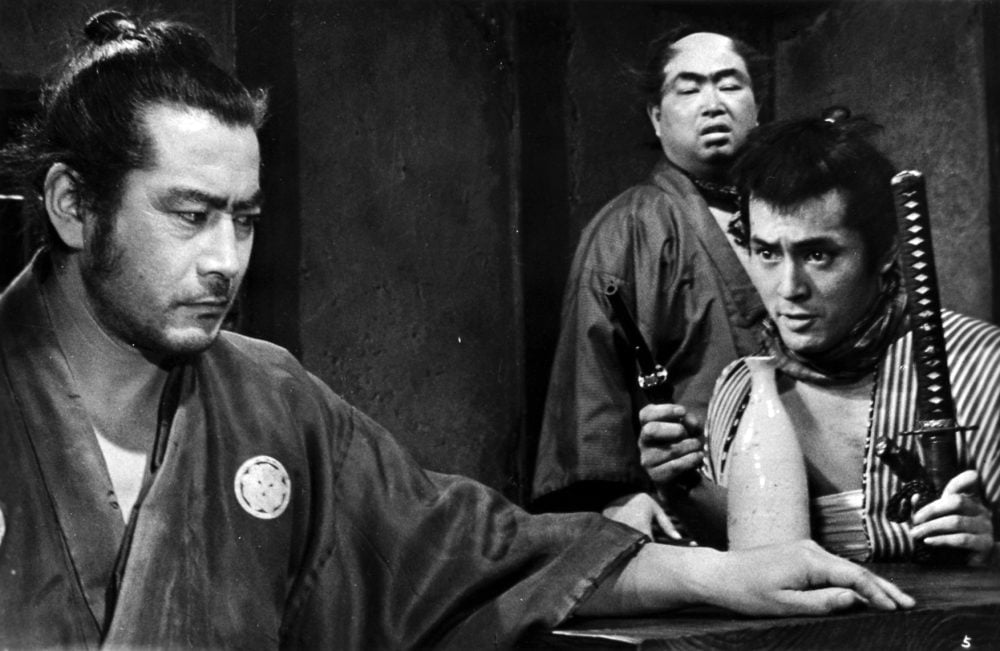
The great actor, best known to American audiences as Unosuku the samurai with a gun in Yojimbo, passed away at the age of 92 on November 8th. He died from complications due to pneumonia. With his passing, one of the last links to Akira Kurosawa, the great giant of Japanese cinema, has gone.
Nakadai’s career began when he was discovered on the streets of Tokyo by the director Masaki Kobayashi. He technically made his debut in the Kobayashi-directed The Thick Walled Room. However, due to that film’s controversial subject matter, Americans abusing Imperial army prisoners, it would not be released until 1956. By then, his official debut would be as a crowd extra in The Seven Samurai. Nakadai and Kobayashi would collaborate many times, until the director’s passing in 1996.
That was one of the hallmarks of Nakadai’s career. He collaborated with some of the giants of Japanese cinema. The sheer number of important Japanese directors he collaborated with, often multiple times, is astounding. A brief list includes Mikio Naruse (When a Woman Ascends the Stairs), Kihachi Okamoto (Sword of Doom), and Hideshi Teshigahara (The Face of Another). He even voiced a character in the final film of animation giant Isao Takahata, The Tale of Princess Kaguya. This variety allowed Nakadai to showcase the range of his talents.
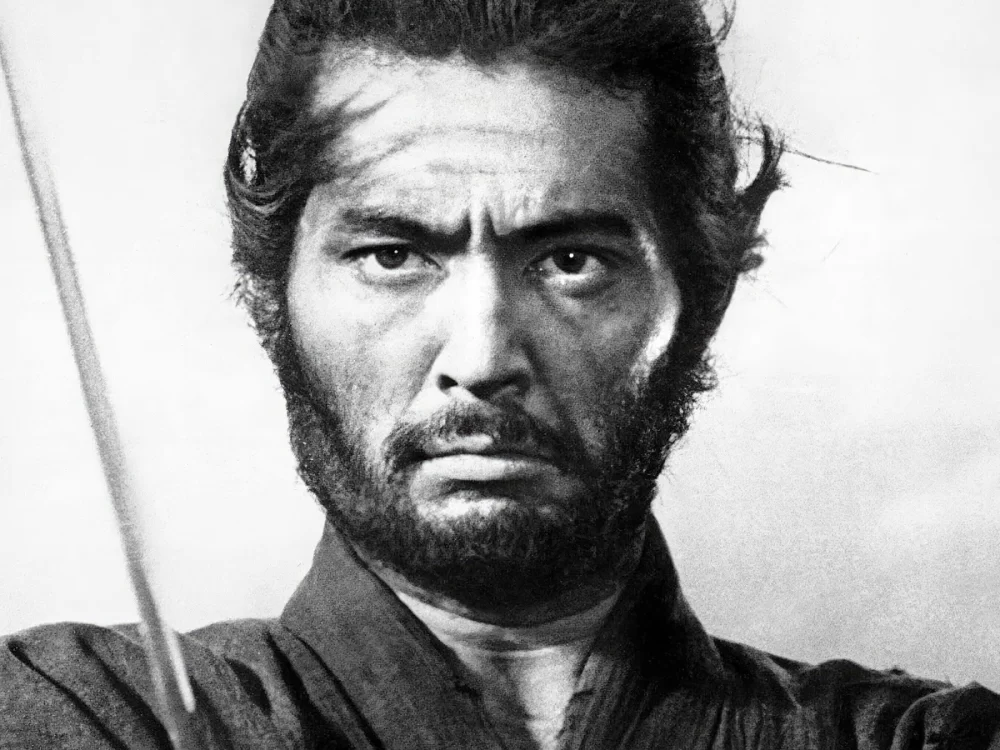
While Nakadai performed in a number of genres, he is probably best known for his work in samurai films. His work in this genre films feels particularly unique. Many of the films he made with directors Kobayashi and Okamoto featured critiques of samurai and the code of bushido. The most celebrated possibly being Harakari, which Nakadai considered his greatest. The film used the practice of ritual suicide as a scathing critique of bushido. Characters he often played put him at odds with the idealized role of a samurai or made him an outright villain.
And many of those roles had him against maybe the greatest star Japan has ever produced, Toshiro Mifune. Mifune is one of the all-time great screen presences but against Nakadai were truly special. Nakadai provided a memorable foil in Yojimbo as the cool antithesis to Mifune’s hot-blooded ronin. Their brief encounter in Sword of Doom, where he tells Nakadai “Evil mind, evil sword”, ranks as one of great scenes in the genre. The meeting of Mifune and Nakadai in any film was the cinematic equivalent of the immovable object versus the unstoppable force.
Nakadai leaves behind an incredible legacy in film history. This was an actor of immense talent that committed to every role that came his way. He challenged himself by taking a on range of roles in a number of different genres. His presence in these films was unforgettable and his contributions to Japanese cinema are undeniable.
The Criterion Channel is currently running a series with many of his films.