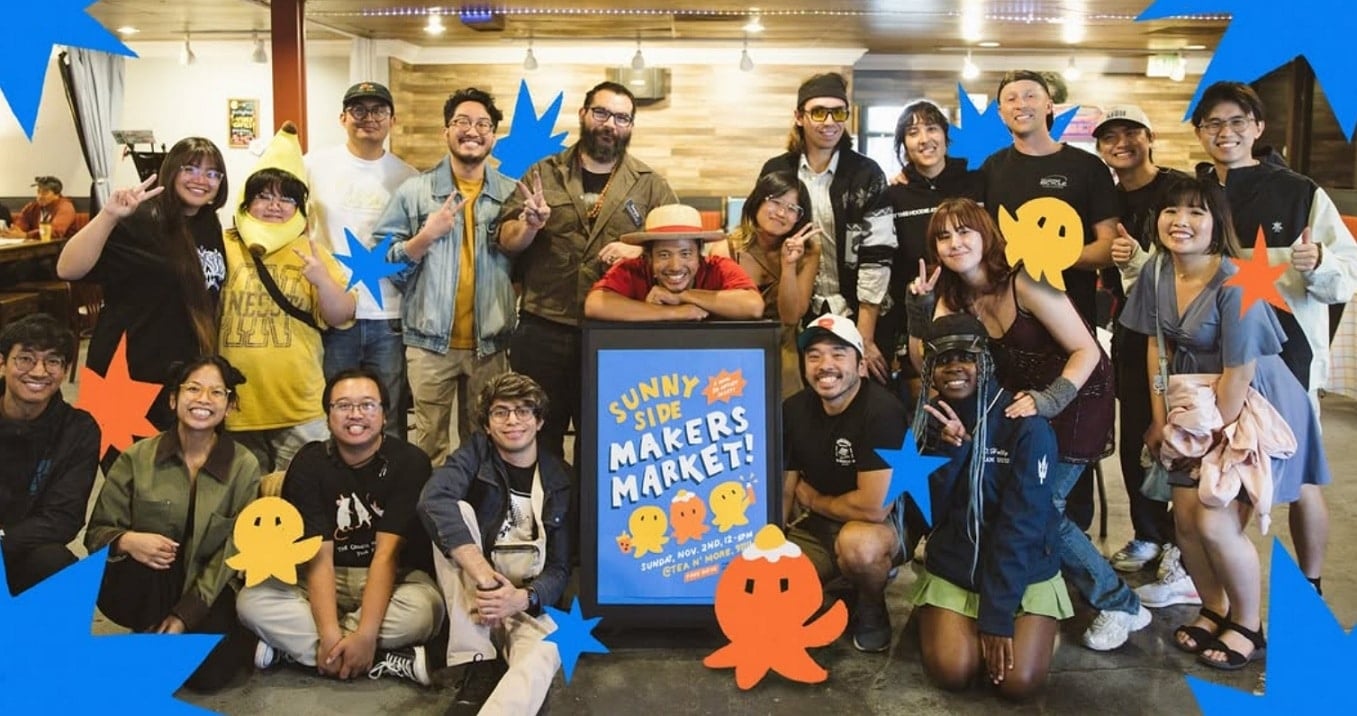

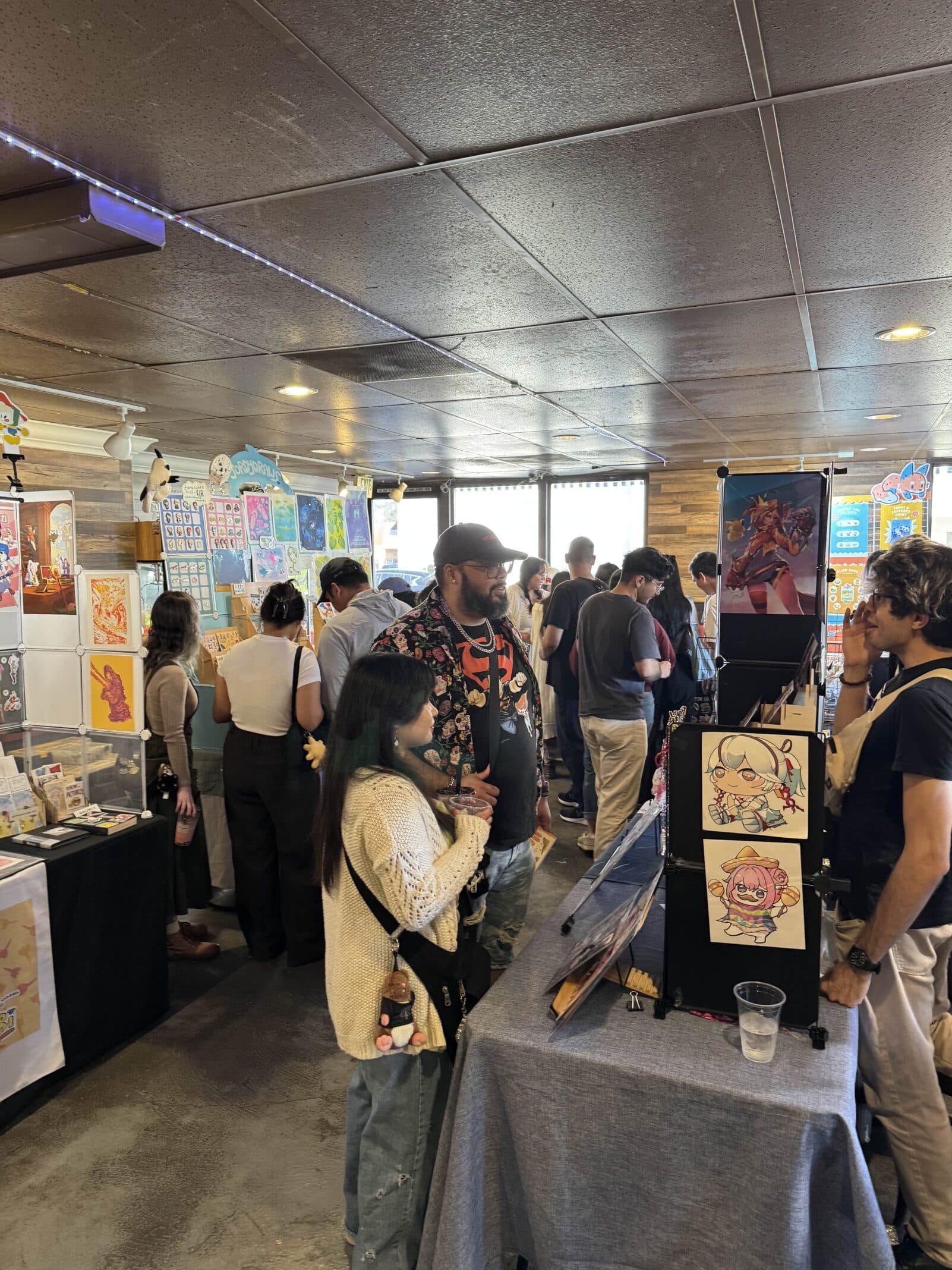
Last year, an event caught the attention of many in San Diego’s independent art community. That event was Sunny Side Makers Market, a collective of local artists who came together to create an independent art market designed to uplift both artists and the community. The market featured amazing prints, handmade goods, and even comics for attendees to explore. The Beat wanted to learn more, especially since the organizers have ambitions to grow the market. For all anyone knew, this could be the beginning of something that reaches even greater heights.
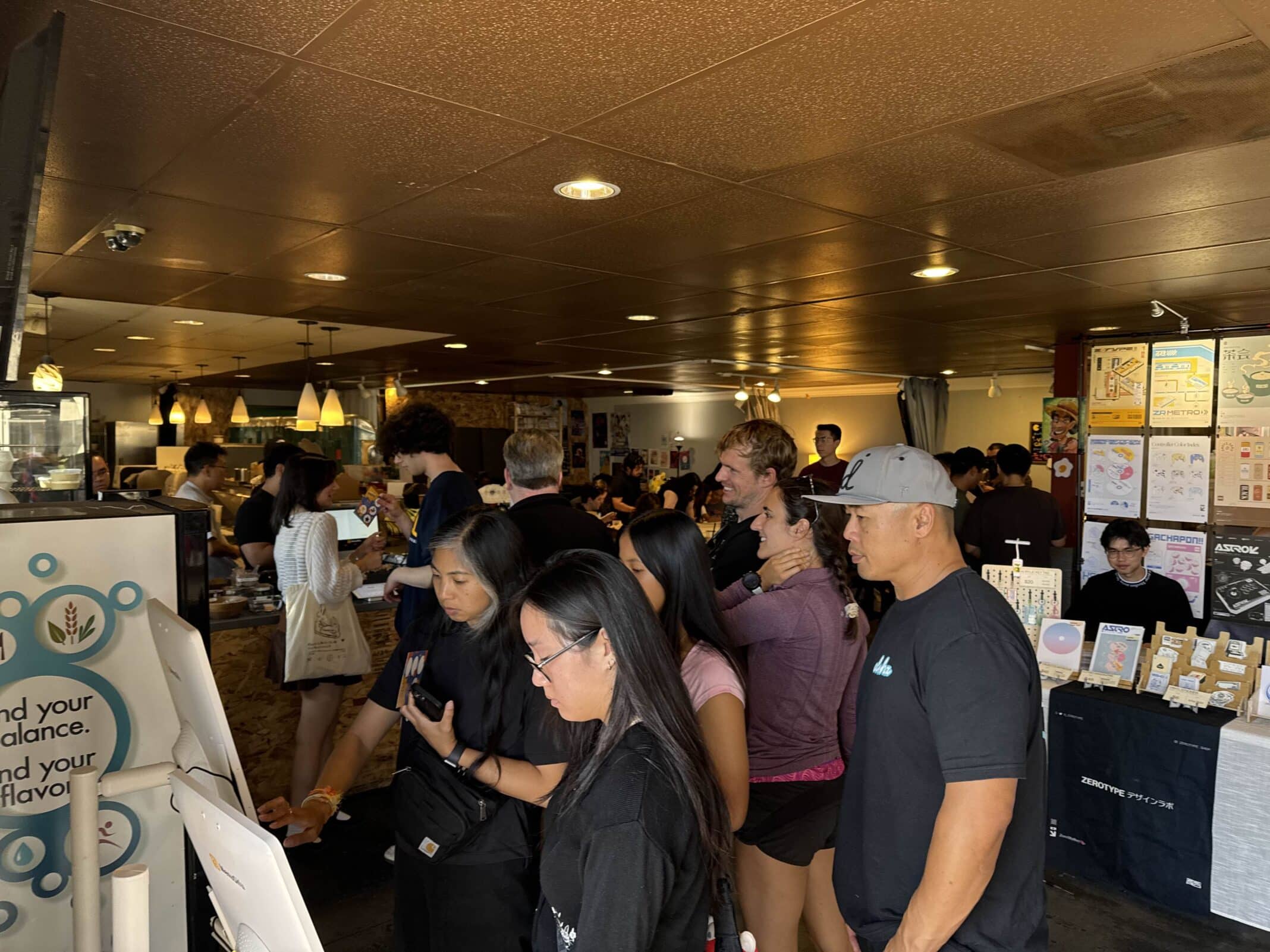
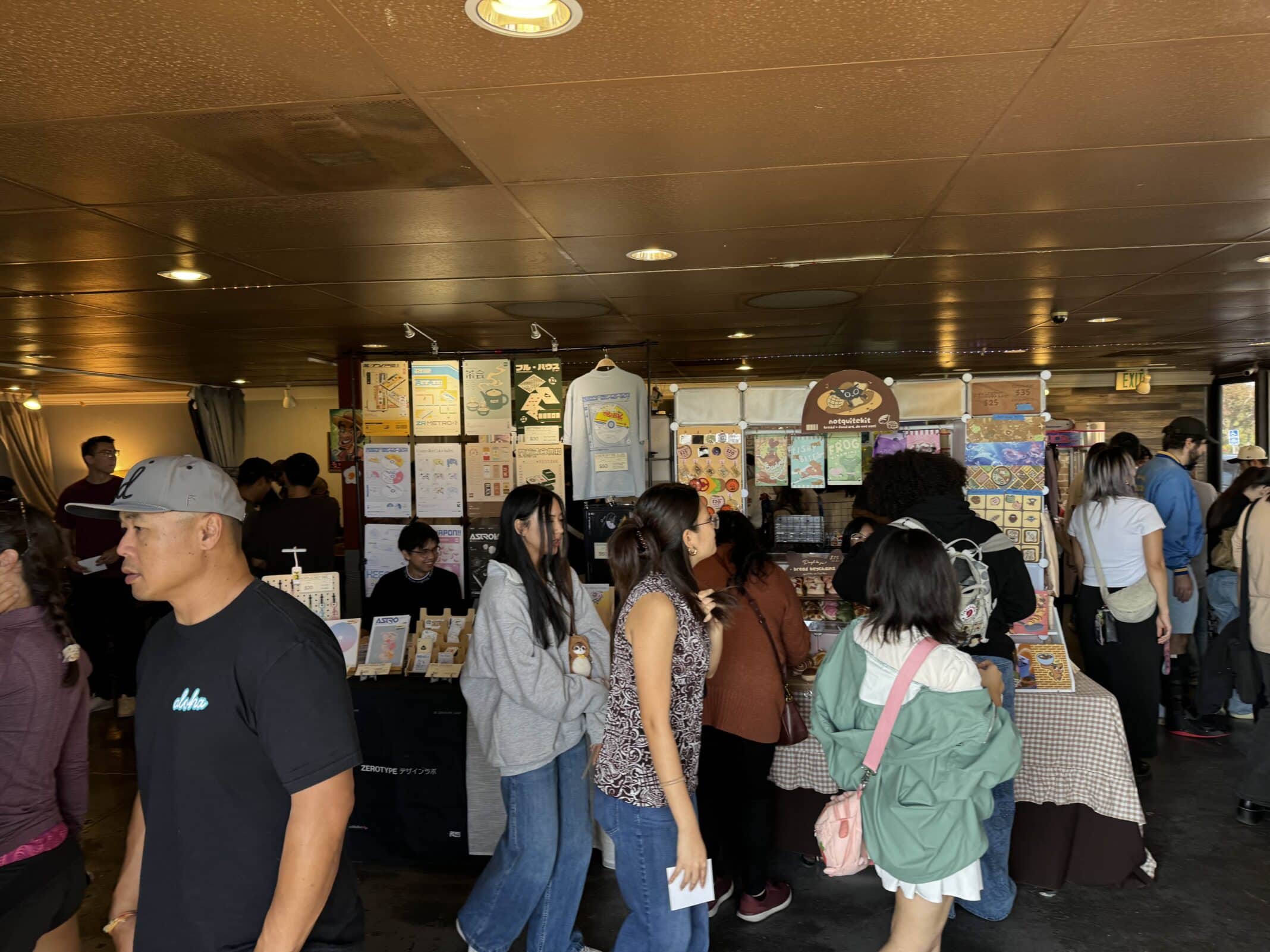
Even with a small space at Tea N More more than 60 people had arrived at the event, and more to the point, it was a revolving door of interested patrons. Only a few vendors were inside, but Sunny Side had made its point clear; there was more than a market in San Diego, and they were more than willing to give that community a place to thrive. The Beat reached out to organizers Karen Alleluia and Jules to find out more about the market and just where it wanted to go in the future!
DIEGO HIGUERA: I wanted to ask what made you feel San Diego needed more accessible and curated artist alleys for illustrators and makers like Sunny Side Makers?
KAREN ALLELUIA: I’ve had my small business full-time since 2021, so I’ve been at hundreds of local markets. I realized there was a missing piece in San Diego, and it made me sad that artists had to travel north for attention or compensation. It became more solidified when Jules and I tabled together at SJ Made in San Jose and saw the huge community there. We thought it would be fun to fill in that gap in San Diego.
JULES GONZALES: Yeah, I’ve been working with Karen for almost a year now. My personal expertise has always been in events and running events. My family’s always loved hosting, and that hospitality aspect has always been part of my upbringing as well as my career. Art has also been a big part of my personal life and my career. I love drawing. I love art, and I love everything about it—especially the community we have here in San Diego with our drawing group that meets every Wednesday. That’s built up what I define as community. Being in that space made everything come together. Realizing that we don’t really have those kinds of markets here in San Diego made me want that. And yeah, that’s kind of how I started.
ALLELUIA: Yeah, I was going to say, overall, I’ve always talked to other artists at different conventions. Anytime I would find someone from San Diego, we would always come to the same sad thought that we don’t have anything like this in San Diego. So when Jules offered the opportunity to partner up with me and work on the logistics of organizing an event, which is the part I don’t enjoy, I was definitely open to actually making this a reality.
HIGUERA: I have to agree, attending the event is much more fun than planning it. Arts shaped much of my life, including why I’m a writer. There’s nothing like having a local scene. In this case you guys are filling that gap, and it means a lot to the community. I have to add, From talking to people at the event, Sunny Side Makers is described as “made by artists, for artists.” How did your personal experiences shape the event’s core mission?
ALLELUIA: Yeah, I think that’s a huge reason why we wanted to do this in the first place. There are a lot of markets and events in San Diego, but they aren’t necessarily made by artists and for artists. If you go to events, you’re more likely to see products that are pretty much the same, it’s like seeing the same 3D-printed items everywhere. You see that at a lot of conventions as well, and that’s because organizers prioritize profit over the actual value and experience attendees have. If you want to support smaller artists, they’re more likely to be passionate about what they do, and everything they put forth is their absolute best. I feel that if an artist is doing their absolute best, someone is going to connect with that and find personal value in it, which creates a more unique experience overall. Something Jules and I are really passionate about is the curation of these artists. They don’t use AI, they’re artists actively trying to grow, and you can see that in their journey and in what they put out into the world, whether through digital content or in person at conventions and markets. When we’re curating artists and giving them a platform at our events, we’re looking at their passion, how unique their items are, and how much they care about their work. That’s really important to us.
GONZALES: And I’ll add to that. A big part of it, from our side as vendors, is that we care not only about the experience attendees have at our events, but also about the artists and vendors who come. That’s one of our pillars, “made by artists, for artists.” The “for artists” part is really important. We want to make sure they’re taken care of the entire time they’re vending at our events because they’re the backbone of everything. Without them, we wouldn’t be able to have these events. We’ve had experiences at conventions where we weren’t taken care of at all. There were events where we didn’t even see an organizer or worker to help us find the bathroom or get water. So the experience of both attendees and vendors is really important to us. We’re trying to create an environment where they feel safe, welcome, and comfortable.
ALLELUIA: And one more thing, we also want this to be a space where artists can grow. There are so many obstacles artists go through just to start tabling, but the smoother we can make that transition and the stronger we can make the community, the more likely they are to succeed as tabling artists. All of these things work together to uplift these artists and make sure they’re taken care of, not just emotionally or physically, but professionally as well. We just want to take care of them.
HIGUERA: I completely understand. Your experiences, vending, tabling, everything, are going to essentially help uplift these artists a lot more. San Diego does not have a lot of spaces like this, so to know we have something like Sunny Side Makers, even if it’s a smaller space, is everything. How did you guys approach selecting artists and vendors for the first Sunny Side Makers event, and what did you hope attendees would discover?
GONZALES: Yeah, I can speak to that. Being in the vending space, especially Karen and I, I feel like this first one was easier because we had the honor of inviting a lot of our friends to vend with us. That’s such an honor in my eyes, to be able to give someone a space and an environment where they can just do their thing. As for the venue, Tea and More, it’s a long story how we got there and chose it. Karen and I first met through a drawing group that meets every Wednesday at Tea and More. It’s grown a lot, we’ve been going for about eight or nine years now. It started as a super casual meetup that John set up.
We’d meet every Wednesday night, draw, talk, and hang out. We’ve been going for years. When we had the idea for the event, we had a couple different venues in mind, but then Tea and More came up. It just made sense story-wise to have the event at a place that’s been part of our journey for so long. Even back then, we didn’t know we’d be hosting an event, but it’s been a huge part of our lives and careers. We were lucky that the people at Tea and More were so helpful and willing to host community events with us. They do so many community events and are very open to collaborations with people in their space. Their community is big and tight-knit, so we’re really lucky to have that.
ALLELUIA: Yeah, I just wanted to reiterate how important the Tea and More sessions are. Every Wednesday night, they have been happening for a full decade. Jon (another of the Sunny siders) shows up every week, no matter what, to make sure artists feel there is a community and that we are all drawing together and pursuing our goals. Sometimes it is guided by a random exercise, like starting the first frame of a forum animation and then rotating the iPad so everyone can contribute.
The purpose of these Wednesday sessions is to remember that art is fun, which is crucial for any artist. It is easy to get caught up in making art for money or success, but the creative, curious part of your practice needs to keep going to truly grow. That was a huge part of Sunnyside. We wanted the essence of Wednesday night sessions to live on in our events. For the first event, the artists we curated, some I consider good friends, were mostly people I met in the art space at conventions or other markets. They knew it would be a small market, but they still devoted their time to come and risk possibly not making money because it was the first event. At the end of the market, it was clear that there are so many people in San Diego who feel the same way about wanting a curated Artist Alley here.
DIEGO HIGUERA: I want to shift from the Sunny Side Makers event to something else you did that I thought was fantastic. I’ve had a lot of hands-on experience with indie creations, and I have to ask about your comic anthology Home. I bought a copy and thought it was fantastic.
I back a lot of projects, pick up a lot of comics at cons, and I know one of the artists from Jelli zine was involved, which I also loved. Going off that, I have to say this anthology is really impressive. It might be small, but you packed so much into it. Twenty-two artists contributed, and it wasn’t just drawings; there were poems, photos, and a variety of creative work. I want to ask, why was the concept of home so important to creating this anthology? I feel like the answer might be obvious, but I’d love to hear your thoughts.
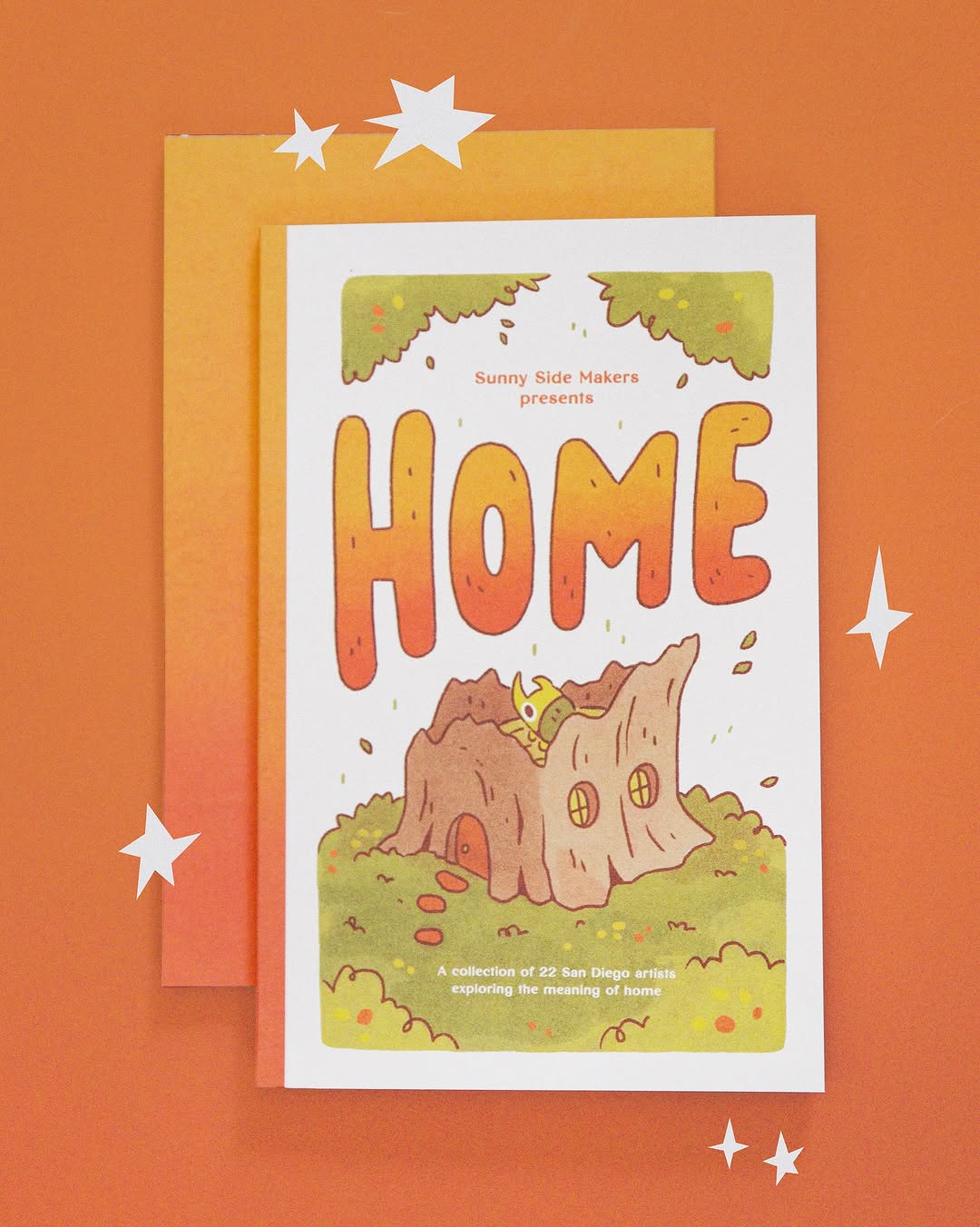
GONZALES: When we were thinking about the idea and setting things aside, like in the very beginning, what it would look like, the common goal was always, oh, we want to bring something to San Diego because it means so much to us. This is where we’re at. This is our home. There’s so much life and community here that we want to uplift. And then we were talking about the zine, and funny enough, part of the reason was practical, how could we afford it, how could we pay for it?
We were thinking about a product, and the idea of a zine just made so much sense. We felt having the artists who contributed to the zine also participate in the event was a great idea, and we really wanted that. It was just a matter of figuring out what the zine would be about. Since this first one was focused on San Diego and bringing an event home, the idea of each artist’s interpretation of home here in San Diego just felt right.
ALLELUIA: Right, yeah, it directly supported our mission for the events. There’s this idea that if you’re in San Diego, you’re not good enough for LA. To me, the zine was a way of saying no, we don’t have to move, we can show the value of where we are. It was much more emotional just in the concept itself. When we first talked about creating the zine, everyone felt the same way, which made it easy to ask San Diego artists to share why they’re here, why they’re not in LA, and why this place is special to them. So, like Jules said, it came together very naturally, and a lot of people love it, which is awesome.
HIGUERA: You touched on something really important that I wanted to bring up, the anthology offers many different interpretations of what home is. One that stood out to me and that I related to a lot was a poem by Riley Millard. They explored the vulnerability carried by those who do not have a home. When you were reviewing submissions like this, how did the pieces that leaned into emotional or difficult perspectives influence the overall direction of the book? I can imagine you received so many different submissions, and I know you had something special in mind. I can only imagine how much work went into orchestrating that.
ALLELUIA: We just accepted people who felt confident in their messaging for the prompt. Once their ideas were strong enough, we encouraged them to strengthen their visuals as well. Overall, we didn’t have to do much work in terms of refining the messaging or preventing redundancy. In that sense, we got pretty lucky. I’ve worked on other anthologies, and things often end up redundant, but the collection of these artists was, for whatever reason, as diverse as it could be.
GONZALES: It was a difficult balance. We had an idea of what the zine would look like, like a visual canon, but it was also really important to give each artist the freedom to create what they wanted. When we received the first round of submissions, we focused only on technical critiques, like minor line issues or grammar errors, without altering the content itself. Our goal was to preserve the purity of each artist’s vision as much as possible through each iteration.
HIGUERA: Wow, that really puts a lot into perspective. I was curious about how Sunny Side Makers all came together, especially because there was so much great work. Some of the poems and art really hit me, and I was just thinking, okay, that makes sense now.
ALLELUIA: I will say the layout of the book took a lot of time. I wanted to make sure the visuals flowed smoothly, which can be hard to balance. At the same time, I wanted the sentiment of the book to flow as well, so it didn’t feel choppy or disconnected.
HIGUERA: Are you considering hosting Sunny Side Makers events in different parts of San Diego to reach established artists and audiences who have not had access to traditional art markets?
GONZALES: We’re open to any part of San Diego. There’s a slight bias toward the Clairemont area since it’s right outside our door and super convenient, but it really depends on finding the right venue that fits our needs. Overall, we’re open to any area in San Diego.
I think our biggest obstacle in starting this market is really the logistics of everything. Right now, we’re focusing on what’s most accessible to us. Ideally, we’d like to reach a broader audience, but first we need to build a strong foundation, making sure our audience knows where we are and that we exist, and that we’ll continue to operate at least seasonally.
HIGUERA: Is there something important that I missed that you want to put some light on?
ALLELUIA: I think a relevant topic right now is how artists are supported in San Diego. I don’t think they’re being taken care of properly. People here care a lot about graphic designers, which is great, and vintage artists are supported, but illustrators, concept artists, and those pursuing animation aren’t really being supported. There aren’t many animation classes available here. I know Southwestern College has been trying for a long time, but from what I remember, their efforts weren’t successful.
Essentially, if you want to improve in these specific areas, it’s very difficult in San Diego. We hope we can help bridge that gap, make these artists more visible, and show that they exist. Ideally, this will snowball into something bigger, giving these artists more care and attention.
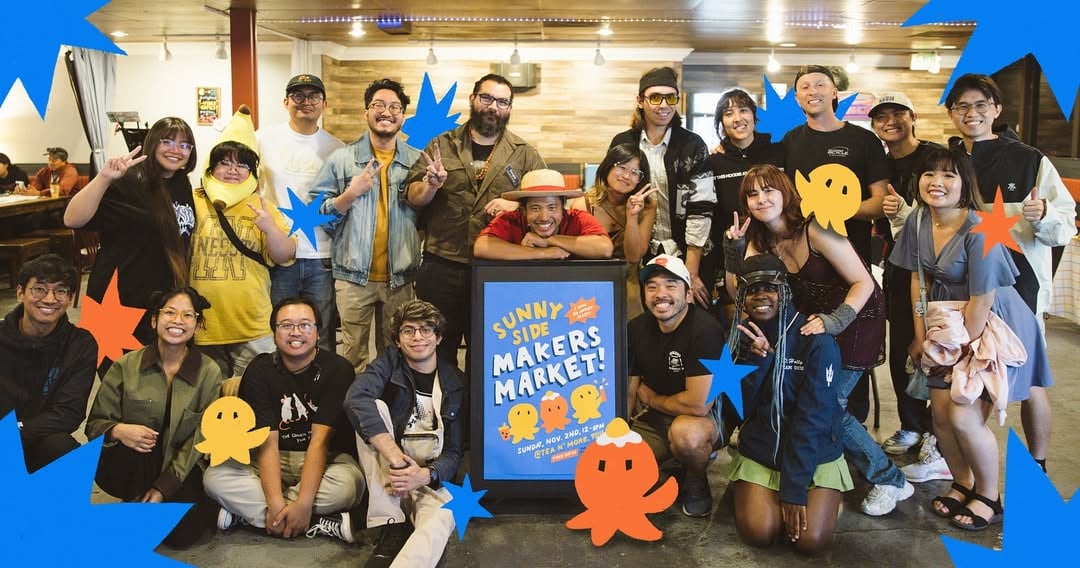
Sunny Side Makers Market is proof that when artists lift each other up, everyone prospers. What began as a small, community-driven effort has grown into something truly special, an event that fans of independent art want to see flourish. From curated markets to thoughtfully assembled projects like their anthology Home, Sunny Side demonstrates that even a tight-knit collective can stand toe to toe with major publishing houses. Their success is not just about sales or attendance, it is about creating space, fostering connection, and proving that San Diego’s indie art scene deserves to be seen.
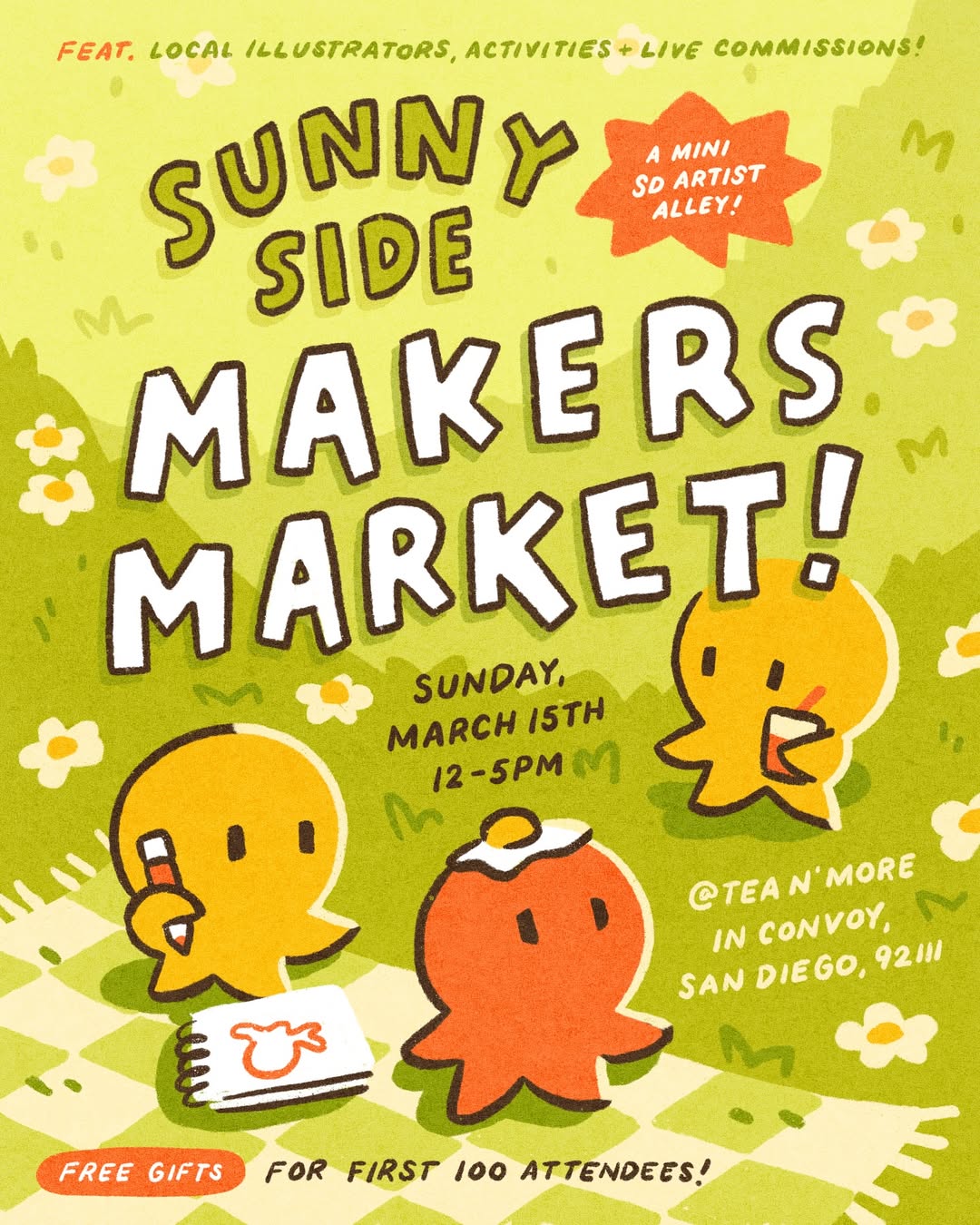
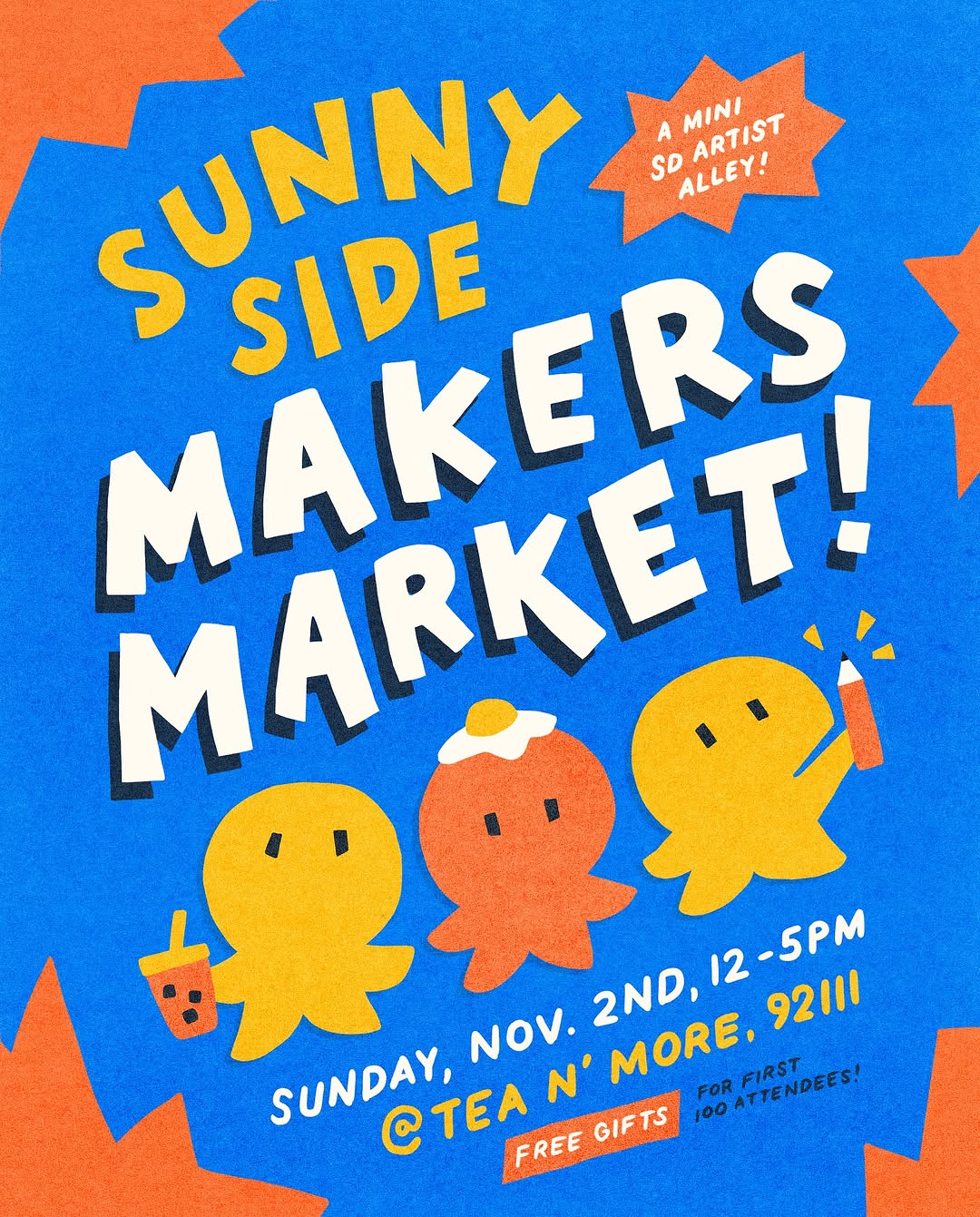
If this interests you, it’s important to note that the Sunny Side Makers are still on the move! Their next event is coming up soon, check out the promotional poster below.