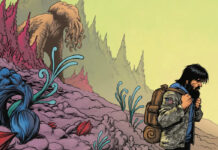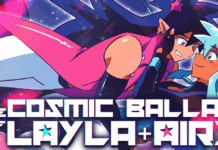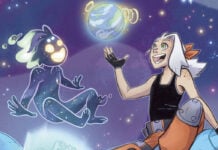

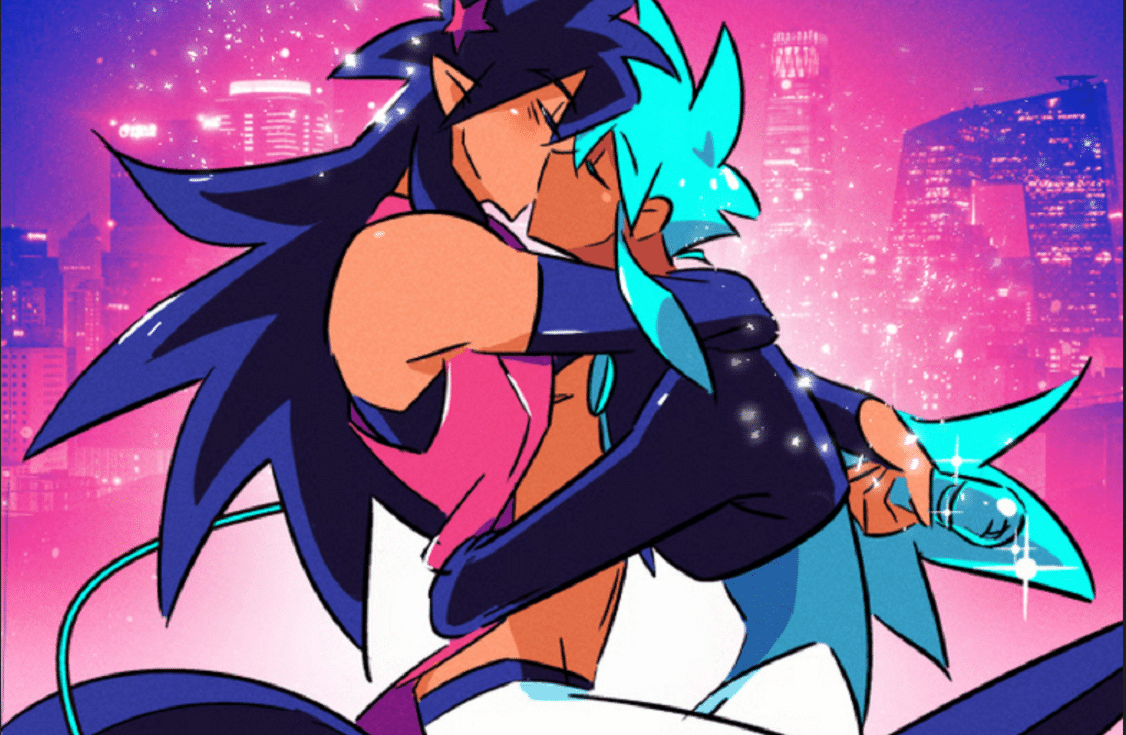

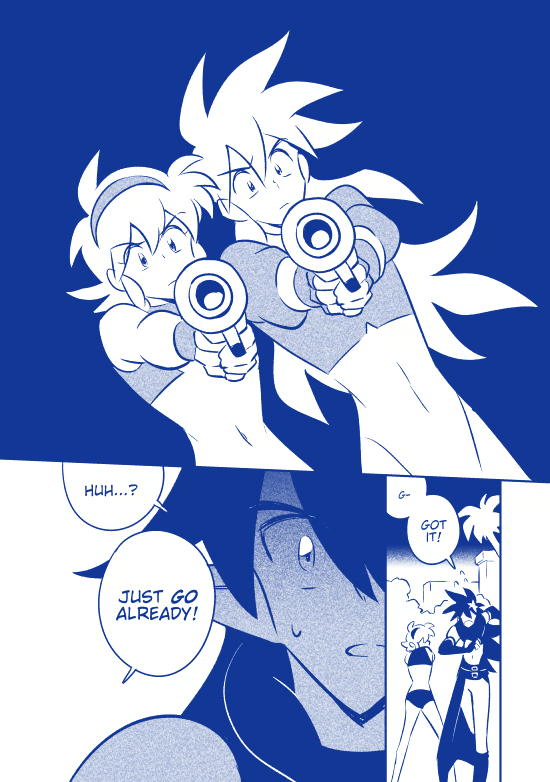
Born out of a desire to move beyond stories centered on survival and into something more personal, The Cosmic Ballad of Layla and Aries blends retro sci-fi aesthetics with a transgender boys’ love romance that explores identity, relationships, and self-actualization. Following their earlier works like The Prince in the Basement and 24/7 Magical Maid Mimi, Mira Ong Chua makes a shift with their latest project toward a more internal conflict, one rooted in perception, vulnerability, and connection.
With a growing presence in the indie comics space and multiple successful crowdfunding campaigns, Mira Ong Chua continues to build a dedicated audience through self-publishing while experimenting with both narrative and visual form.
In this interview, The Beat caught up with Chua to discuss about The Cosmic Ballad of Layla and Aries, how they figured out how to balance humor and emotional truth, and how fandom, identity, and creative independence shape their work.
DIEGO HIGUERA: You’re calling The Cosmic Ballad of Layla and Aries a transgender boys’ love sci-fi rom-com, which is such a specific mix. What made you want to bring BL into a retro space adventure setting, and how did you make it feel fully your own?
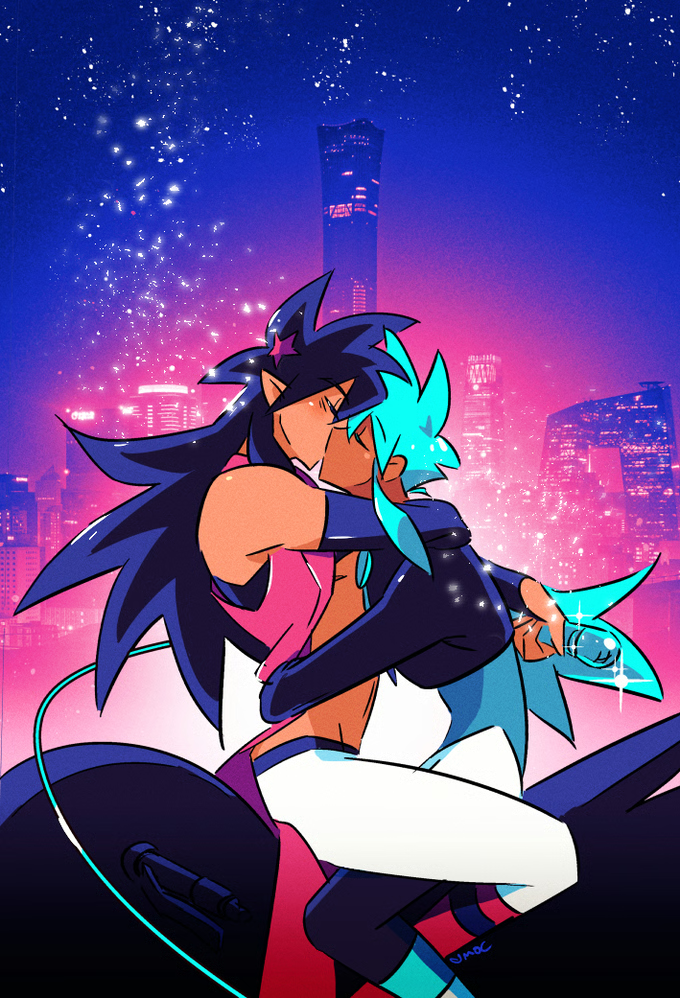
Mira Ong Chua: That and the work that I did before it, 24/7 Magical Maiden Mimi, those were both transformation stories. They were both, although they were very totally different, they were very much about the protagonists struggling against societal expectations. The endings of both of those stories brought the characters to an emotional place of, even if I’m outcast, even if I’m killed, even if I die, I have to do this. I have to embody myself.
In The Cosmic Ballad of Layla and Aries, I was kind of excited to use the setting, which is so fantastical and very idyllic and not so much of a threat, to really move beyond that theme of survival towards the kind of higher needs that we aspire to as humans, things like relationships, self-actualization, and things like that.
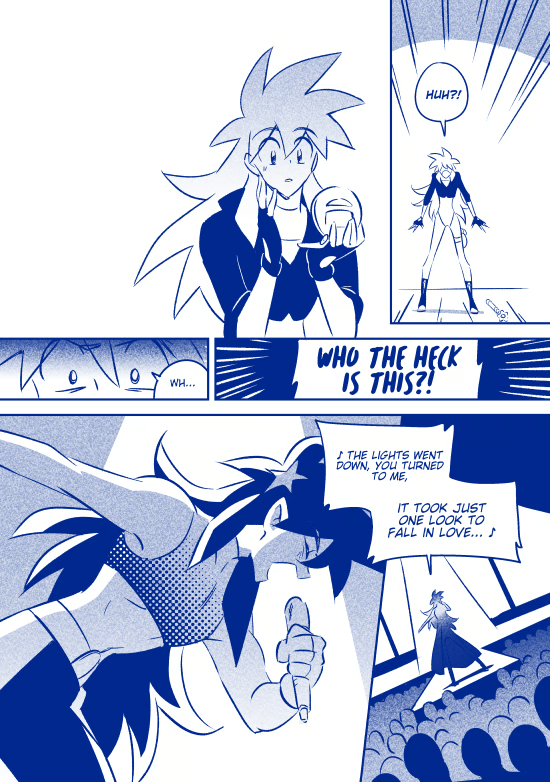
In Layla and Aries’ world, Aries, the love interest character, is a mixed trans boy pop star. He’s the most beloved person in the entire galaxy. It’s not a threatening world, really. So Layla’s conflict instead is largely internal, and it’s about his fears around being in a partnership, about disappointing his partner, about balancing his personal needs.
HIGUERA: You really touched on a lot there, that shift too, it makes the story feel a lot more human. Going off that, Layla becoming Lael adds the best kind of emotional chaos to the story, but it also hits something deeper about identity and self-perception. When you were writing that arc, how did you balance the emotional truth of that experience with the comedy and drama?
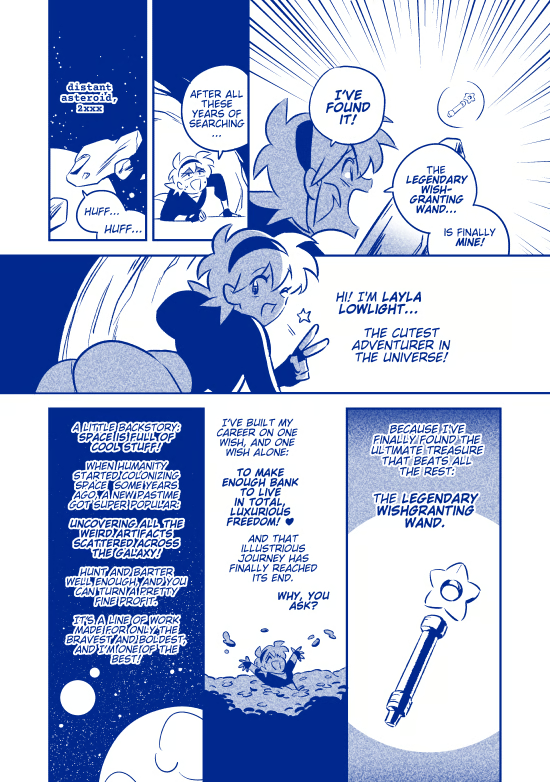
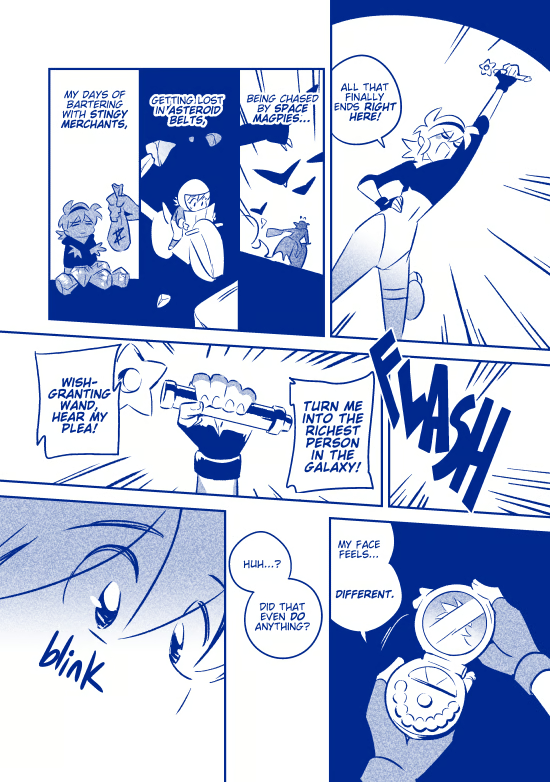
Mira Ong Chua: I feel like there’s a lot of inherent humor to changing the way you’re perceived by others. I think there’s an inherent comedy to the dissonance of how you perceive yourself and how other people perceive you. It’s something that is a huge source of humor within the story.
Because Aries thinks that Layla is someone that he isn’t for a large part of the story. That’s something that I actually had trouble figuring out how to resolve in the actual graphic novel, because in the original short that became the story that I’m doing right now, the whole sort of point and the whole running joke throughout the story was Layla not really being seen for who he was by anybody.
So the solution that I had to find in the graphic novel was how to resolve that, and to make everything that came after that equally funny.
HIGUERA: That makes a lot of sense. I remember reading through the Kickstarter page and thinking the same thing: how else do you deal with something serious if you don’t joke about it a little? It keeps everything moving.
Mira Ong Chua: Yeah, exactly.
HIGUERA: Stuck between being the galaxy’s biggest pop star and just wanting something real and intimate, what interested you about putting a queer love story inside that kind of pressure, especially with fame and fandom?
Mira Ong Chua: I’ve always been involved in fandom, and I’ve always been involved in being a creative person within fandom. From a very young age, I was posting art on the internet, and it was how I eventually got into my career.
So I feel like I actually didn’t have a lot of time where I was being creative purely privately, without being perceived by strangers and by other people. I think when you’re used to that, you don’t know anything else. But the older I got and the more I experienced the drama and the tribulations of being a creative person in public, I realized that it is actually a little bit damaging to constantly be seen and to constantly have other people’s input on your creative work.
I feel like Aries is an interesting character to explore that in, even though it’s obviously extremely exaggerated.
HIGUERA: No, that’s real. I feel like that’s something a lot of creators deal with once people start paying attention to their work. Going from that, in The Prince in the Basement, you played with mirrored identities and characters who reflect or replace each other. Do you see a connection between that and what you’re doing here?
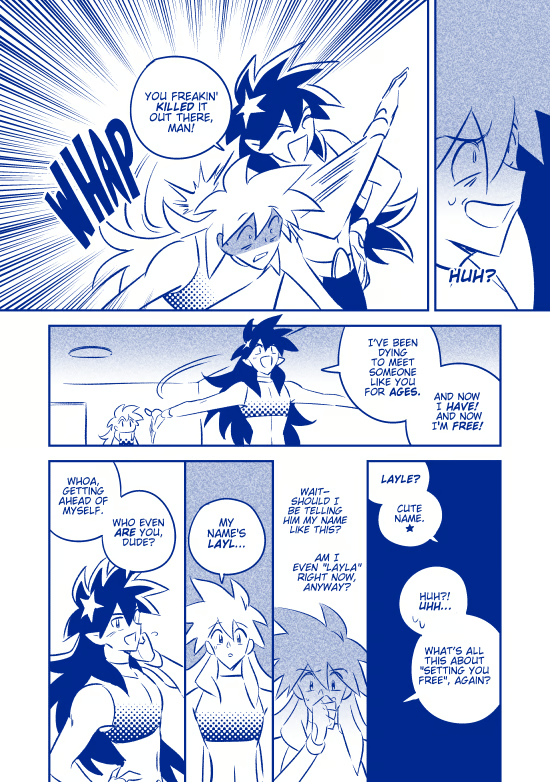
Mira Ong Chua: I do feel like Layla and Aries is a bit of an evolution on the themes that I was exploring in The Prince in the Basement, because those characters could have had many other potential endings or possibilities for their lives, but the way they ultimately ended up the way that they did was because they were sort of backed into a corner by forces that were beyond their control.
In Layla and Aries, Layla’s identity is, even though it’s triggered by silly magic, it is largely self-determined in the end. And that was something that I felt was important to portray, because I really wanted this story to feel very positive and very much about queer joy.”
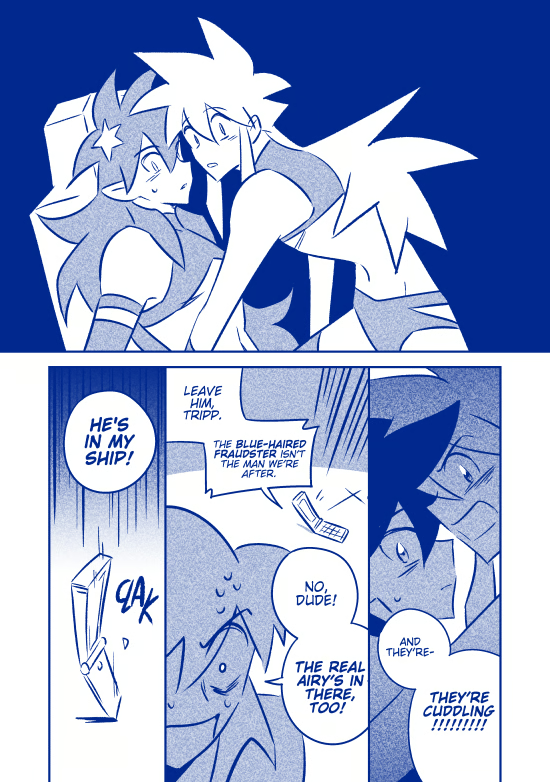
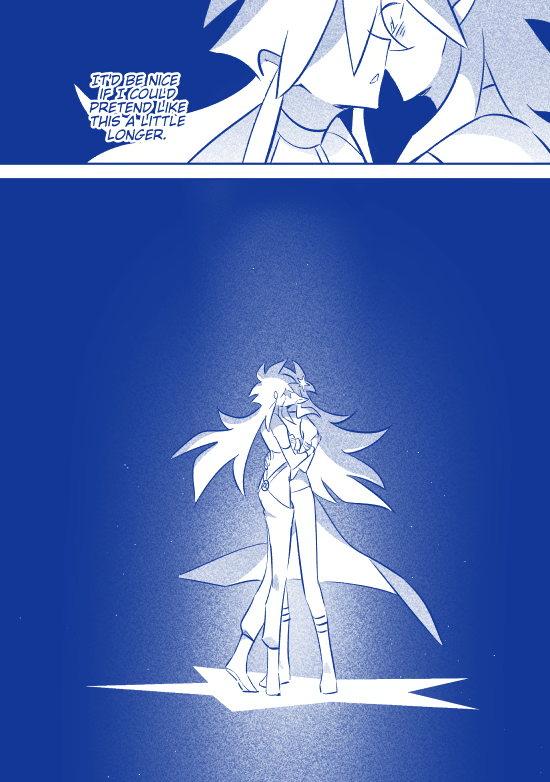
HIGUERA: It’s a big step to shift into something more self-determined. I also wanted to ask about the visual side, because I thought this was intersesting, the main story is printed in deep blue, and the bonus comic in hot pink. Can you talk about that choice?
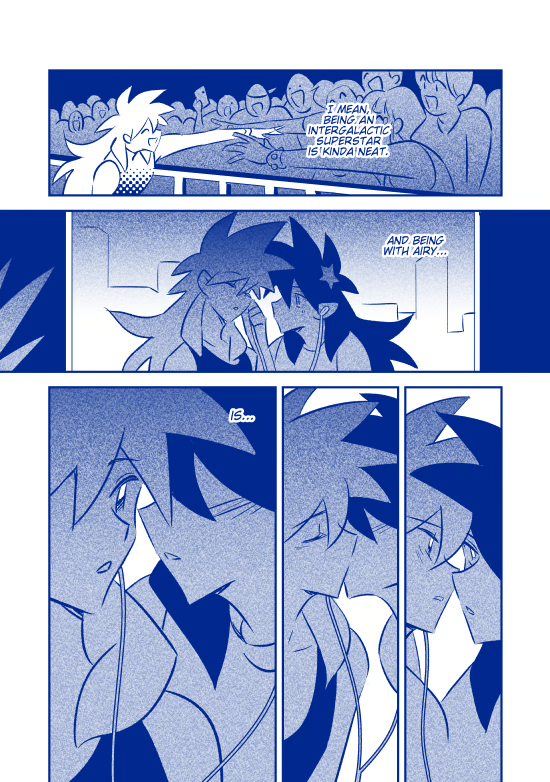
Mira Ong Chua: With every book that I do, I want to iterate on the design and try something new. For this book, I really, really wanted to play with the sort of very commercial-looking style from 80s manga and 90s manga, from those big anthology magazines that you could get where all the manga were different colors.
I really like to play in that very nostalgic space, because nostalgia feels good, but for me it’s also kind of like a bittersweet memory sometimes, because I’ve always felt like as much as I loved manga and comics and animation and stuff, I didn’t always feel like those narratives really loved me back.
I was always bracing for homophobia, transphobia, and racism in all the cartoons and comics that I was reading at that age. When I work in those aesthetics, both in drawing and printing, I feel like it’s kind of my way to reclaim that narrative a little bit and try to transform that space into something that people can look at and feel safe and included in.
HIGUERA: That’s actually a deep point to be making. It’s like you’re taking something nostalgic and reshaping it into something that feels more welcoming.
Mira Ong Chua: Yeah, exactly.
HIGUERA: You’ve built a strong readership through Kickstarter. Has having that direct relationship with your audience changed the way you approach projects like this?
Mira Ong Chua: I do want to have that direct connection with fans and with the people that I’m working with when I’m creating these books, because I worked in animation for 10 years, and something about working in animation is that once your work is turned in, you don’t really see it again until it’s on screen.
Even though there are so many people who work to bring it to life, I always felt that that was kind of a shame. But by doing self-publishing, I am talking to my printer, my layout artist, indie bookstores, and I get to talk to the fans directly.
I think it’s great, and I wouldn’t want it any other way. I don’t think it’s influenced my work at all, but it has made me feel closer to the projects that I do and more appreciative of everyone who works with me.
HIGUERA: That makes sense. It feels like you’re a lot closer to every part of the process that way. Before we wrap up, what do you hope readers take away from The Cosmic Ballad of Layla and Aries?
Mira Ong Chua: Whether people like it or not, I think what I would love people to come away feeling is that anything I can do out here, they can do too. Hopefully, even better, that there’s a space for them in comics and animation and all these industries, and that their stories deserve to be heard.
HIGUERA: Is there anything you want to add?
Mira Ong Chua: I guess the only thing I would want to mention is just my gratitude to all the friends and creative people that I work with to get these books out there, because even though I am the one writing and editing and drawing and doing all that stuff, doing these Kickstarters is hardly a one-person operation.
I have my fulfillment team, I have my layout artist, and I have a translator this time who’s been amazing to work with, who’s translating the book to Japanese. I have people who advise me on the print and everything. My partner has always been an amazing editor and my biggest cheerleader along the way.
Even though I’m self-published, I don’t want to give the impression that it’s all me, because it never really has been.
If you’re interested, make sure to check out the Kickstarter campaign before it’s too late!