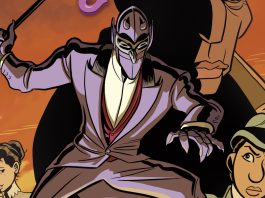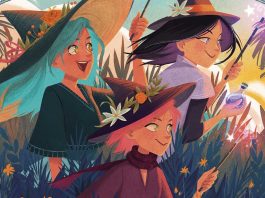

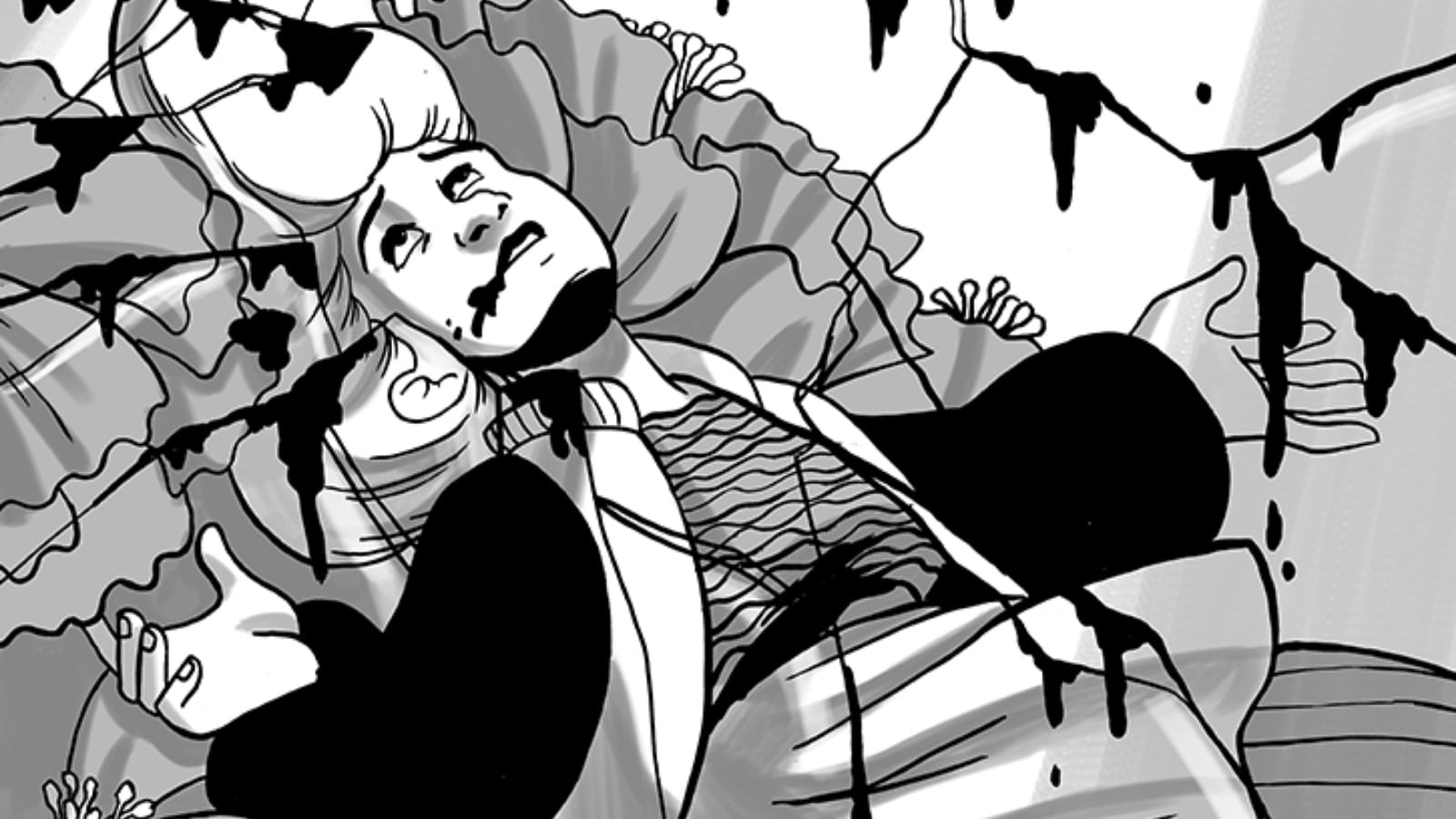
Kel McDonald’s The City Between is an ongoing, urban fantasy webcomic set in a large city where supernatural beings live openly and the world has technologically advanced beyond our present. Rather than one continuous narrative, it’s made up of interconnected, standalone stories that take place in the same shared setting and explore different characters and corners of life in the city.
I had been following the series for quite some time. Now that the print edition of the fifth book, Shards of Reflection, is on Kickstarter, it’s a great time for new readers to jump on.
To that end, I spoke with McDonald about The City Between, its inspiration, and more.
E.B. Hutchins: What is the origin story of The City Between?
Kel McDonald: A lot of The City Between development is in response to what I learned while making my first webcomic, Sorcery 101, or from consuming a lot of other supernatural fiction. I’ve always liked the supernatural and stories about werewolves, vampires, magic, etc. While I was working on Sorcery 101, I realized the reason I wasn’t as interested in the non-magical part was because it wasn’t engaging my creative muscles the same way.
This led to me setting The City Between in a futuristic world that is very specifically not ours. By building from the ground up, I could have fun with the human part, not just the supernatural.
Sorcery 101 had a lot of stuff I didn’t go into because I was following one main character. Keeping the stories smaller but switching main characters in The City Between let me explore the world in a way that felt more organic.
Meanwhile, I noted things I found interesting in a lot of supernatural fiction. A lot of it doesn’t really explore how technology and the supernatural interact. Our modern day has a camera in everyone’s phones and most people have a trackable digital footprint. Both those things would make the supernatural harder to hide if a story is set right now. That would be even harder in the future.
A lot of supernatural shows also don’t make it clear how common or rare the supernatural is, mostly because the cast zeros in on the supernatural. Any humans don’t stay normal humans for long. So The City Between takes place in a world that recently learned werewolves are real, but the average person never meets one. I wanted that to be clear.
Each story gets developed by me pulling at ideas I get while working on another. Like while working on the first story, Fame and Misfortune, I thought about the type of person who would hire a werewolf instead of a human as their bodyguard. And then in Glass Diamonds (the story currently being posted online), Rebecca specifically mentions she gets hired by people to show off that her client has the resources and funds to hire a werewolf. Her client is using that fact to hide why she really hired Rebecca.
Hutchins: Were there specific comics, zines, or creators you thought about while making The City Between?
McDonald: Well, I try not to stick to just comics when it comes to influences. But for comics specifically, I think a lot about Carla Speed McNeil’s Finder. It was a big influence in how to handle world-building/structure. It jumps around to develop different parts of the world.
I also really like how the manga Beastars by Paru Itagaki built up its world, but got even more invested in the spin-off Beast Complex. The leads of Beastars could only scratch the surface of how weird and detailed the setting is. So I really dug my teeth into Beast Complex expanding things through short stories.
Then Ryoko Kui’s Delicious in Dungeon taking its time to figure out how a fantasy ecosystem would work was really inspiring.
Hutchins: What non-comics have inspired you?
McDonald: Prose books are more where I got influence for tinkering with fairytales, legends, and myths. I’m a big fan of Seanan McGuire’s prose. I always grab books in her series October Daye, Wayward Children, and InCryptid on release day.
October Daye frequently mentions how the immortal fae struggle to keep up with the modern world while isolating themselves from mortals. Wayward Children shows how having a portal adventure would affect the kids who have them for good or ill. And the InCryptid series frequently calls into question how we treat creatures that have been labeled monsters. It even has a book about how werewolves shouldn’t go to Australia because they are invasive species. That pitch alone pretty quickly won me over.
Discworld has always been a favorite series of mine. Along with Finder, it was part of the inspiration for the structure of changing point of view to show different parts of the world in The City Between. My favorite Discworld book is Going Postal, which is about the post office in this fantasy world, and I like how it examines religion in the book Small Gods.
I also watch a lot of TV shows with vampires and werewolves in them. But those are influencing me less by what they do rather than what they don’t do.
In the UK series Being Human, a vampire villain wants to reveal werewolves are real by manufacturing a mass murder event recorded by social media. Then, he wants to reveal vampires are real by presenting themselves as protecting humanity from werewolves. But then a few episodes later, an older vampire kills him and the show never digs into that idea. Like a lot of supernatural shows, it want to focus on the supernatural-only side of things.
Hutchins: Has creating The City Between as a collection of interconnected, standalone stories impacted your workflow or management of the project’s scope?
McDonald: I like to write the whole story out before I start drawing. Then I can tweak the beginning to reinforce the themes or foreshadow stuff. But Sorcery 101 was a long-running, single story (it’s 1600ish pages), so I couldn’t do that. Also, while making Sorcery 101, I felt like I couldn’t take a break or do something else because it would interrupt the story.
Having The City Between be standalone, 80-100 page stories meant if I had to put it on the back burner, there were good places to stop without leaving the reader hanging. It also means I can work on stories as I solidify them. Both Shards of Reflection and Glass Diamonds solidified, script-wise, at the same time. I gave a quick description of both and polled my Patreon subscribers to see which they wanted to read first.
 Hutchins: How has your work as an editor influenced your approach to making comics?
McDonald: I don’t know if this is specifically from becoming an editor or just from getting more experience as a storyteller or both. But I try to be more intentional with my stories. I read some of my older work and see stuff I did accidentally and now I’m trying to lean into it.
With The City Between stories, I’m asking myself, “What is this saying? What is it commenting on? Is there a metaphor I want to reinforce here?” I try to make sure even the smaller details reinforce what that story is focused on.
Hutchins: Are there any stories, themes, or structures you want to pursue in future installments?
McDonald: One thing happening in the background of The City Between is that the werewolves are more community-focused. In every story with a werewolf lead, they are helping or getting help from another werewolf.
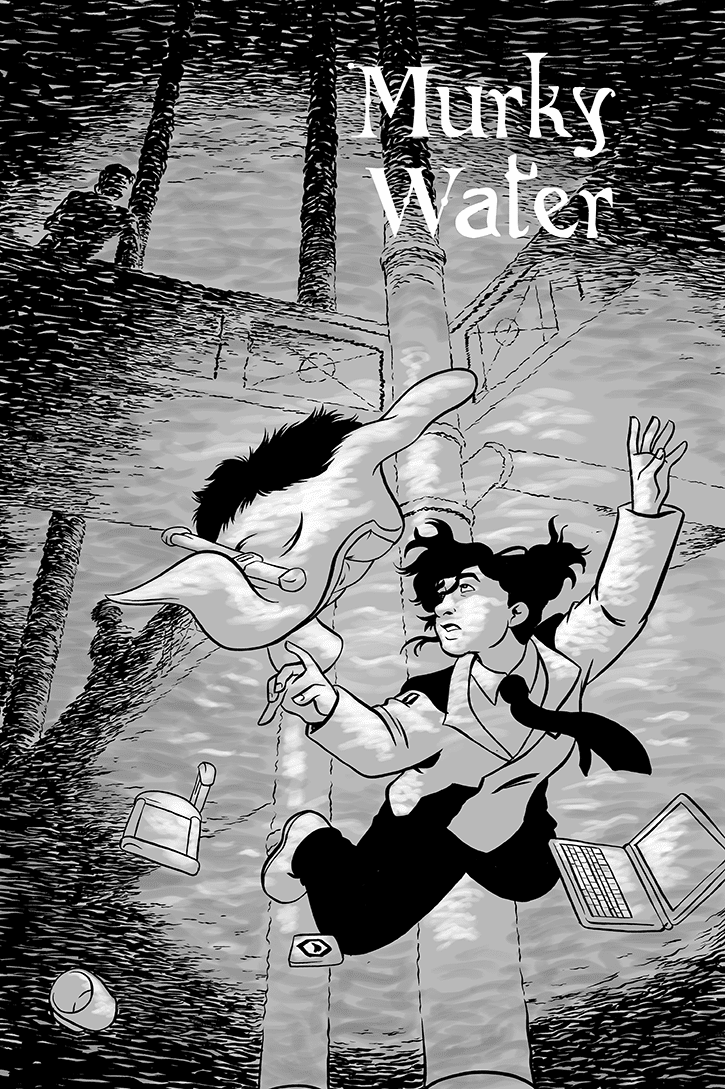
In Fame and Misfortune, Connor gives Rebecca a hard time at the mere thought she might not follow up on someone she might have bit. In The Better to Find You With, Jeff is specifically in town looking for a werewolf he thinks might be on their own. In The Dead Deception and Murky Water, Connor has a teenage werewolf he checks in on.
I always keep in my mind that the werewolves are looking out for and helping each other. Even when they clash with one another, they think they are helping.
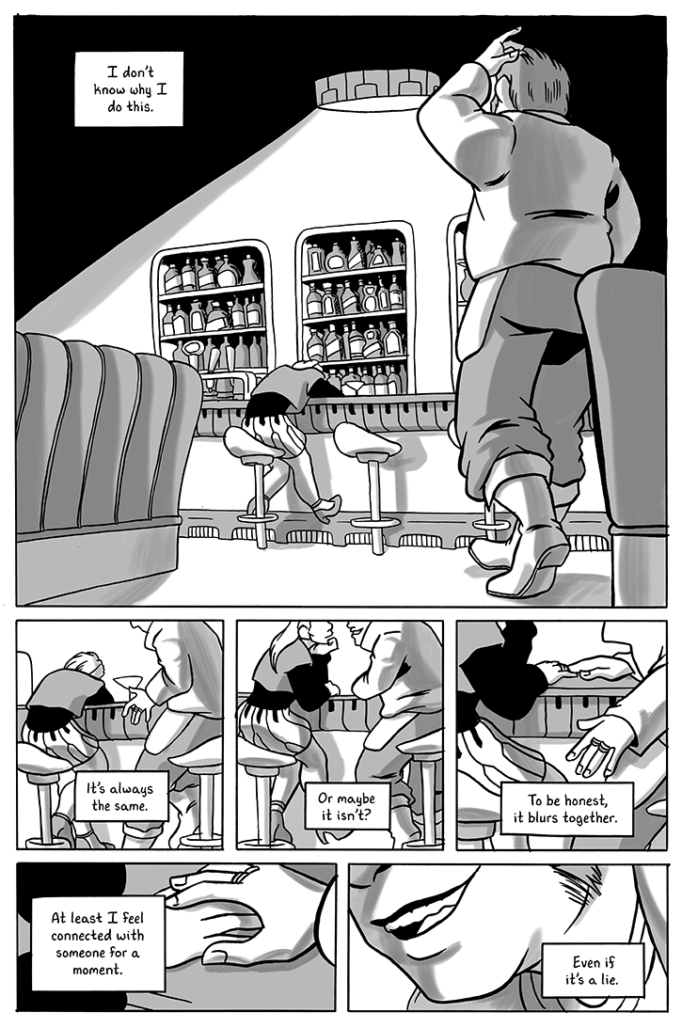
Vampires, on the other hand, are more selfish and every one for themself. Shards of Reflection is so far the only story with a vampire lead, but I intentionally had her more on her own and more adrift. While she gets a little guidance, it is sparse and comes at a price.
Every time I go back to vampires, that will be a recurring thing. Vampires aren’t inherently evil in The City Between, but their powers (like capitalism) reward them for being selfish, immoral, and abusive.
I do have the next two stories outlined (and one partly scripted), so I know those are going to dig a bit into the werewolf version of respectability politics. So far each of the main werewolves has a different position on how inhuman they will let themselves be in front of humans. Connor is more of the mind that he (and other werewolves) should come off as human as possible. Rebecca doesn’t adjust her behavior for humans at all. Jeff is somewhere in the middle.
Then I have some ideas that aren’t as solid, like what it means for werewolves that they are so rare (I intentionally kept their population small enough that they can’t be an analog for a real world minority). I have some thoughts about how the still-hidden supernatural creatures are staying hidden. Then I want to explore the limits werewolves have with technology and healthcare. But I still need a solid story to explore that.
Hutchins: Finally, are there any additional projects we should be expecting from you this year?
McDonald: Other than The City Between, most of my work is probably not gonna come out this year. I’m editing Iron Circus’s nonfiction anthology Lie Machine, but that just closed submissions and is slated for release next year.
I’m also working on a werewolf graphic novel with Meredith McClaren called Blue Moon, but that will probably be out a couple of years from now. The City Between will keep updating on Wednesdays!
The City Between: Shards of Reflection is available in print via Kickstarter until Thursday, April 9 at 11 p.m. ET. To catch up on previous The City Between stories, visit KelMcDonald.com.
This interview has been edited and condensed for length and clarity.