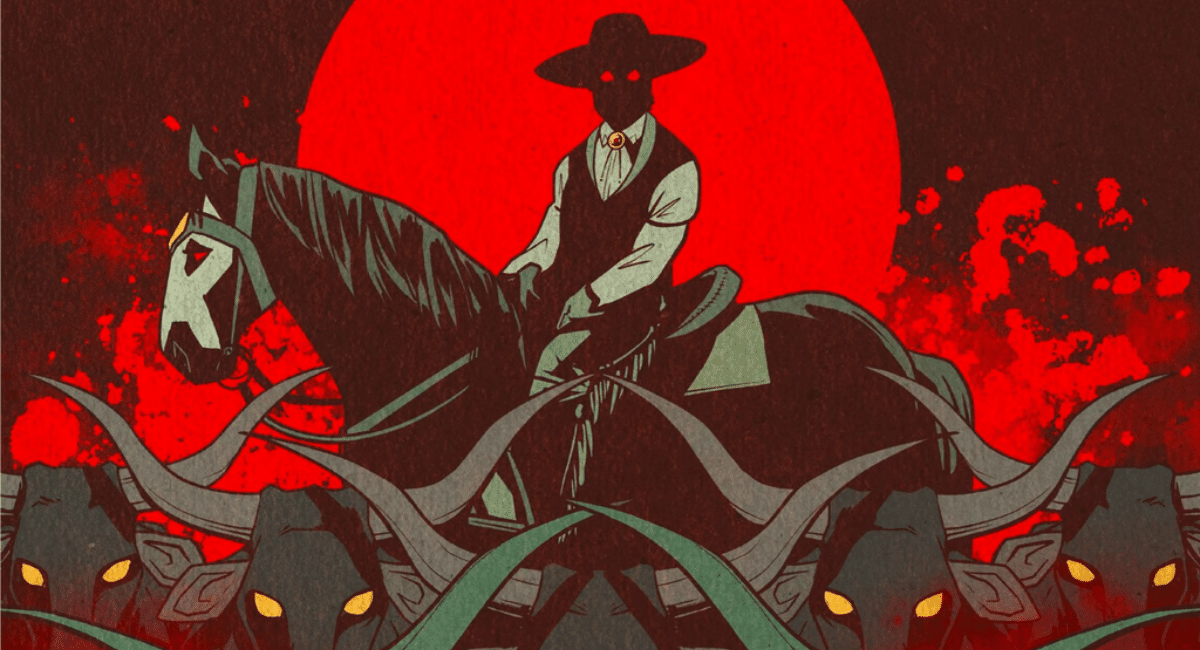

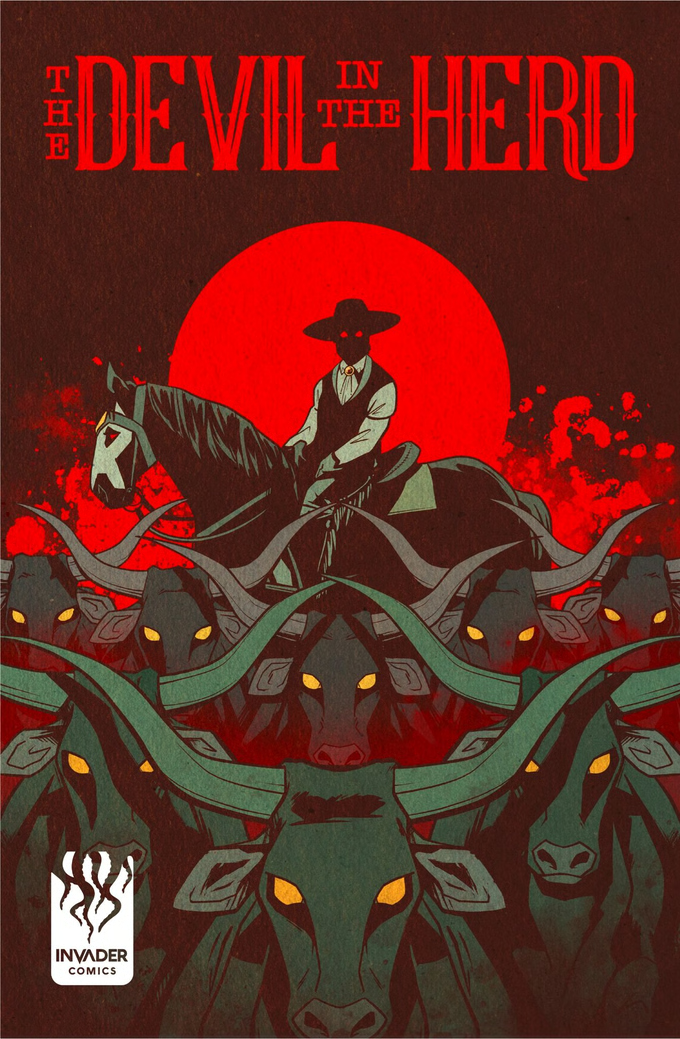
In the crowded landscape of comic book crowdfunding, it takes a strong hook to stand out. The Devil in the Herd arrives with one: a faceless man with red eyes, trailing a cattle drive through the American Southwest, following the cowboy Jedidiah from a distance.
Created by Katelyn Windels and published through Invader Comics under the guidance of EiC Michael Perkins, the 50-page supernatural horror western is currently live on Kickstarter. With the campaign having already surpassed its initial $1,888 goal, there’s a clear appetite for Windels’ stark, folklore-infused vision.
The Beat had the pleasure of interviewing this up-and-coming creator as well as hear from Perkins himself.
The interview has been edited for length and clarity.
DIEGO HIGUERA: That image of the faceless man with red eyes trailing this cattle drive is such a strong visual. Where did that idea first come from ?
KATELYN WINDELS: I’ve always liked the motif of the silhouetted cowboy that’s fairly common in southwestern art. I also really like the idea of being able to see a figure but not see them, if that makes sense? He is a silhouette. You see him standing there, but there’s almost nothing to connect to except a pair of red eyes and a predatory smile.
HIGUERA: This isn’t just a Western, and it’s not just horror either. What made you want to mash those two together, and what does supernatural add to The Devil in the Herd?
WINDELS: I think Mike said it best in saying that if you don’t have an element of horror in your Western story, you’re doing the genre a disservice. A big theme of the horror in this comic is just a sense of building dread. That’s also a major theme in westerns. The build to a climax. And the climax can be anything (often a shootout).
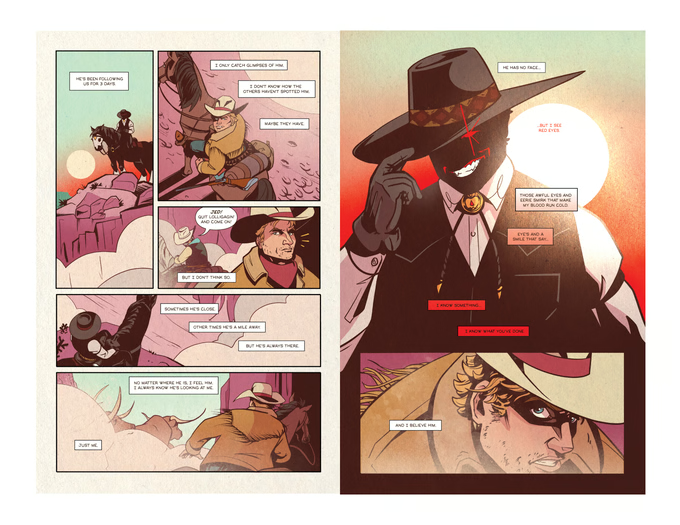
I think another big thing that adds to the story is, of course, the landscape of the southwest itself. It feels very natural to add something supernatural to a place so vast and mysterious. Looking out over the expanse of a desert or a mountainscape can make one feel very, very small. And that’s how I wanted Jed to feel this whole book.
HIGUERA: There’s something inherently mythic about the West, even before you introduce the Devil. When you sat down to build this version of the Southwest, what were you most interested in capturing: historical texture, folklore, atmosphere, or something more symbolic?
WINDELS: A little bit of everything. I want to say symbolic, but I think I’m rather blunt in some of my interpretations. [Laughs]. But that’s up to the reader to decide. I think I mainly focused on atmosphere and folklore. I love the American folklore around the actual Devil physically coming to earth to tempt or torture sinners. I think the most well-known example (or at least the coolest) is Jack Johnson meeting the Devil at the crossroads. He’s a very versatile adversary, and he just fits in so well in the Southwest.
For the atmosphere, I wanted to do justice to the beautiful landscape of the Southwest, and a way I did that was by making Jed look very small in a lot of the panels. Or at least make sure he’s not the main focus. He’s always surrounded by deep, big shadows, herds of cows, or standing against a vast expanse of sky with towering mountains in the distance. I think that drawing the scenes with this in mind, it adds to the sense of dread and sheer ‘aloneness” Jed is feeling throughout the story.
HIGUERA: Making the Devil faceless is such a striking choice. By removing his face, you’re stripping away expression and identity. What went into that design choice and what does it represent thematically?
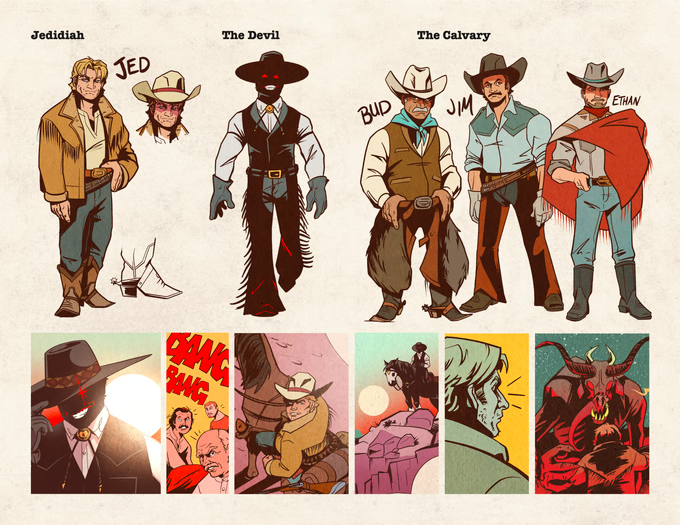
WINDELS: If you notice, his face is silhouetted, but when he turns, you can see the outline of his face, and I wanted to capture the similar facial features of Jedidiah, as if he is looking at all the guilty things he hates about himself. It’s a window into his soul.
HIGUERA: Western landscapes are already vast and isolating. How did you use panel composition and negative space to make that emptiness feel oppressive rather than just scenic?
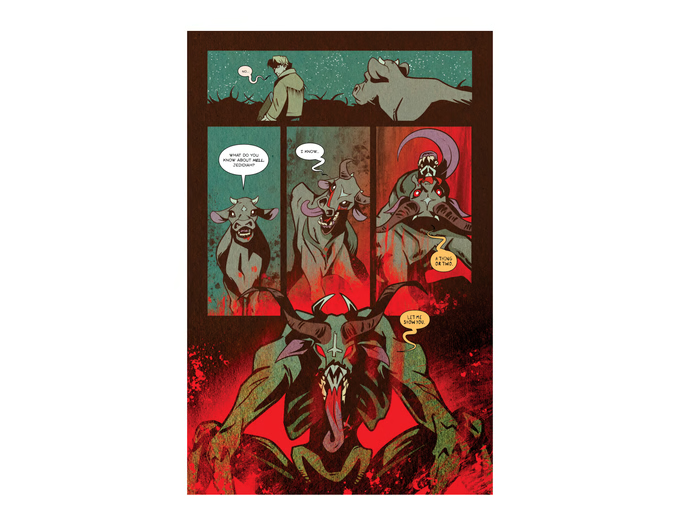
WINDELS: Honestly, if you look at the preview pages in the campaign, you can see the page where the devil transforms the cow into some demon, and that was the beginning of this story; everything else was built around that. Most of the story was played out during the night, partially because I don’t want to draw a whole lot of cows. When the devil talks to Jedidiah, it happens in the middle of a herd, hence the name. However, I got to really add on to that existential dread-filled atmosphere, and that allowed me to really show how small Jedidiah was compared to the vastness around him.
HIGUERA: I have to add how much I agree with that, the world around him seems so vast. In doing that, I have to give you kudos because you allow your scenery, the settings, to say so much more for you.
There’s a long tradition of American folklore where the Devil isn’t just evil, but transactional, almost judicial. How did you think about justice in this story? Is the Devil punishing, tempting, correcting, or exposing something?
WINDELS: Justice in this story is represented differently. Yes, the Devil is there to, in his own way, punish Jedidiah for (not to spoil too much) what he has done in the past. The Devil, however, does not actually do anything to him. He just follows him and watches from afar. Even when Jedidiah asks him what he wants, he does not want anything. He is just drawn to this sinner, well, sinners, and in his own way torments him for what he has done. The point is, he is everywhere, and it only adds to what Jedidiah is already experiencing.
HIGUERA: He’s doing this for the love of the game.
WINDELS: Yeah, exactly!
HIGUERA: Mike, Invader’s whole mission is about breaking down barriers and spotlighting creators. How did the two of you end up working together on this, and what made The Devil in the Herd the right project to push forward?
MICHAEL PERKINS: Katelyn had reached out to us and sent her project in, and in all honesty, I probably should not be saying this, but we have a whole system for checking comics that come in, and sometimes I just want to pick the comic up and read it like if I had grabbed it at a comic shop. I want to know what I’m getting into, and sometimes that just means going based on whether I enjoyed that comic. Katelyn’s comic hit all the right boxes for me, and that’s exactly what I needed.
With The Devil in the Herd, Katelyn Windels leans fully into atmosphere, myth, and psychological reckoning, crafting a Western where the most terrifying presence doesn’t need to lift a finger to exert control. By rendering the Devil as both mirror and shadow, and by shrinking Jedidiah against the vast, indifferent Southwest, Windels is able to twist a familiar genre into something worse in the best ways possible.
The Kickstarter is almost over, and if you’re interested, make sure to back it before its too late!