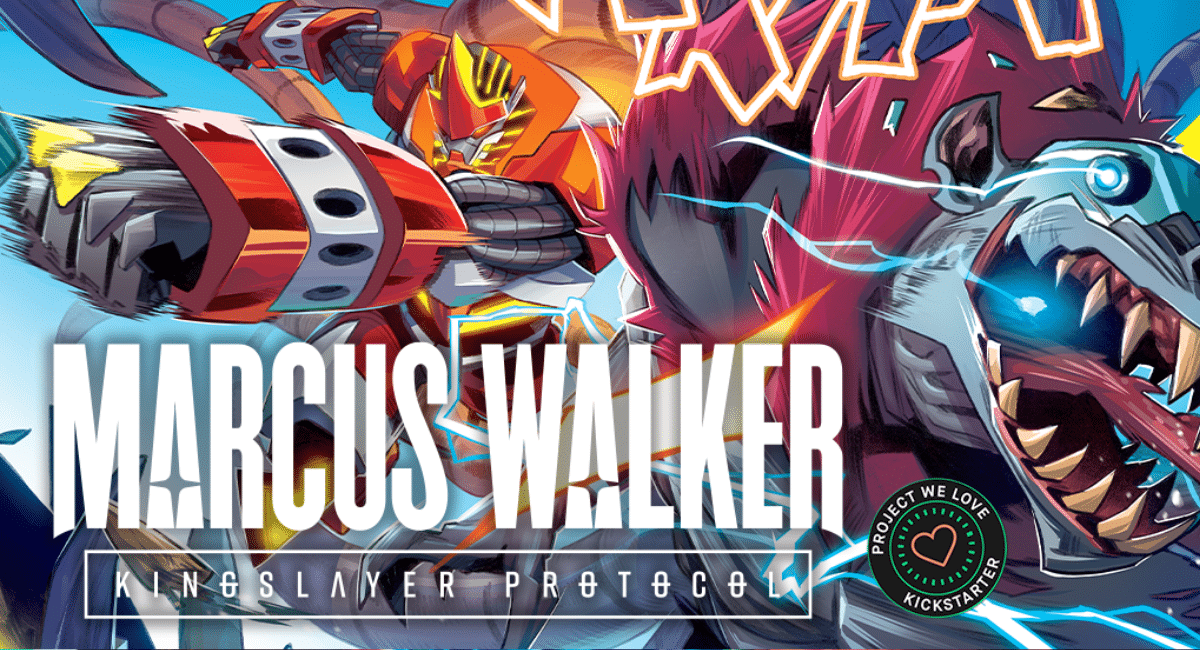

There is no shortage of mech versus kaiju stories in comics and animation. From the psychological intensity of Neon Genesis Evangelion to the sprawling political sagas of Mobile Suit Gundam, giant robots have long served as vessels for examining war, identity, and humanity itself. Marcus Walker: Kingslayer Protocol aims to shift that perspective.
Created by Chris Yates and illustrated by Simone Raggazoni, the upcoming Kickstarter-funded series centers not on the pilot of the mech, but on the person living in his shadow. Set in a vibrant reimagining of Honolulu, the book blends huge kaiju action with a deeply personal exploration of grief, masculinity, and family legacy.
The Beat spoke with Yates about the origins of the project, how his time at The Walt Disney Company informed his approach to worldbuilding, and why this story is, at its core, about confronting the void rather than running from it.
DIEGO HIGUERA: You’ve described Marcus Walker: Kingslayer Protocol as blending large-scale mech versus kaiju spectacle with an intimate story about trauma and family legacy. How did you approach balancing kinetic action with emotionally grounded character work?
CHRIS YATES: Wow, coming out the gate swinging. That’s a great question. I think the best way to answer that is you have to care about the stakes. The action may not mean anything if it doesn’t have any association with the characters or how it works with them.
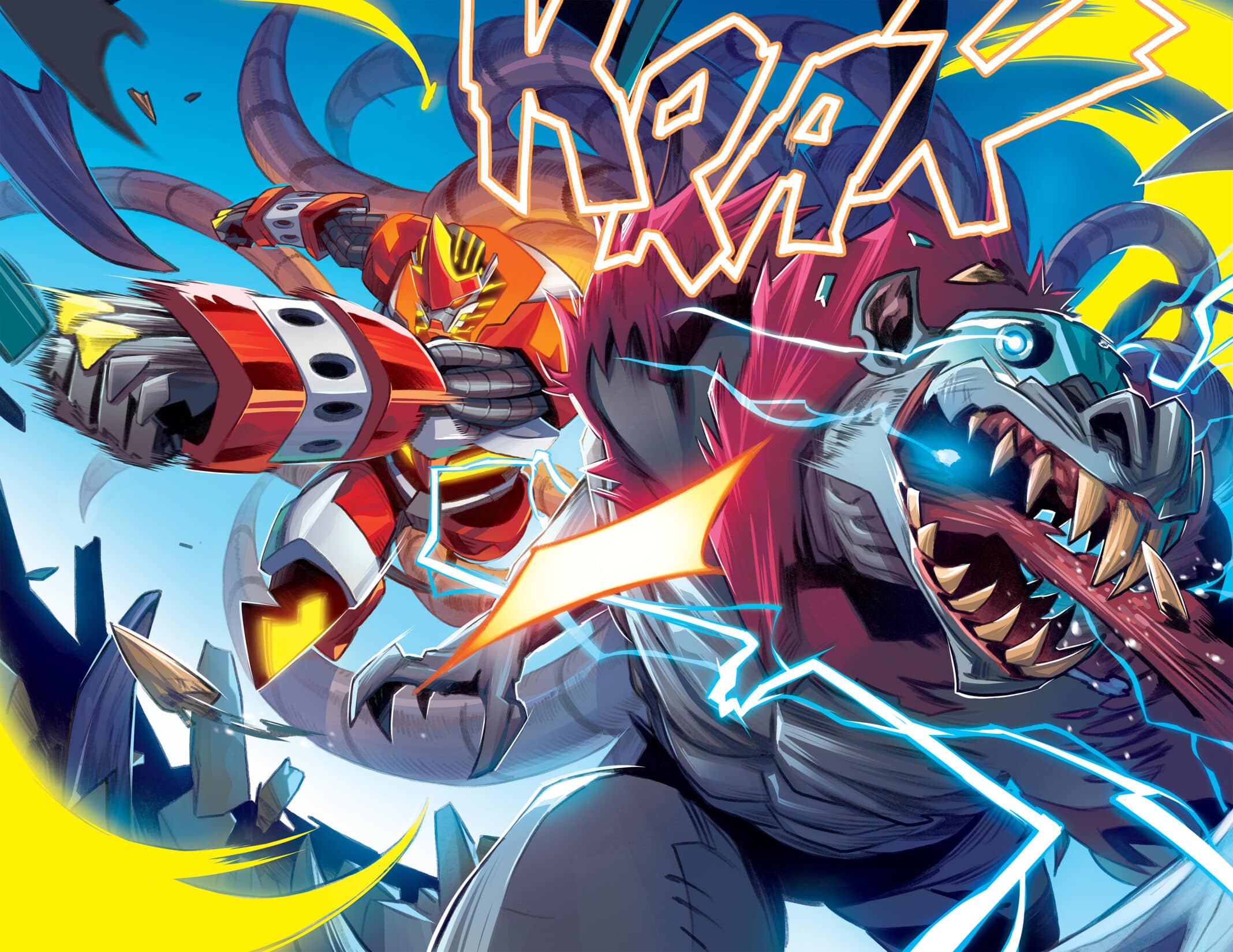
The big, bombastic nature of the upfront part of our book is kind of to hook readers in, because it is a mech-versus-kaiju book. You have to bring them in. Josh Williamson has said on numerous podcasts that you should start in mid-action to grab readers, and that sets the table for what your story is. From there, it ties into Marcus and his story with Caleb and the rest of our cast.
So to answer your question, we tried to tie everything into what it means for Marcus and Caleb and how it correlates to their actions and choices.
HIGUERA: Most mech stories focus on the pilot as the hero. You’re doing something different. What led to that choice?
YATES: There have been so many incredible mech stories. You’ve got Neon Genesis Evangelion, Gundam, and even something like The Iron Giant touches that space in its own way. But generally speaking, the hero is the pilot.
In our story, Marcus is not the pilot of the Kingslayers. His older brother is. And we realized Marcus may not even feel like the hero of his own life. So we asked ourselves, what does a story look like when the main character isn’t the pilot and doesn’t feel like the hero?
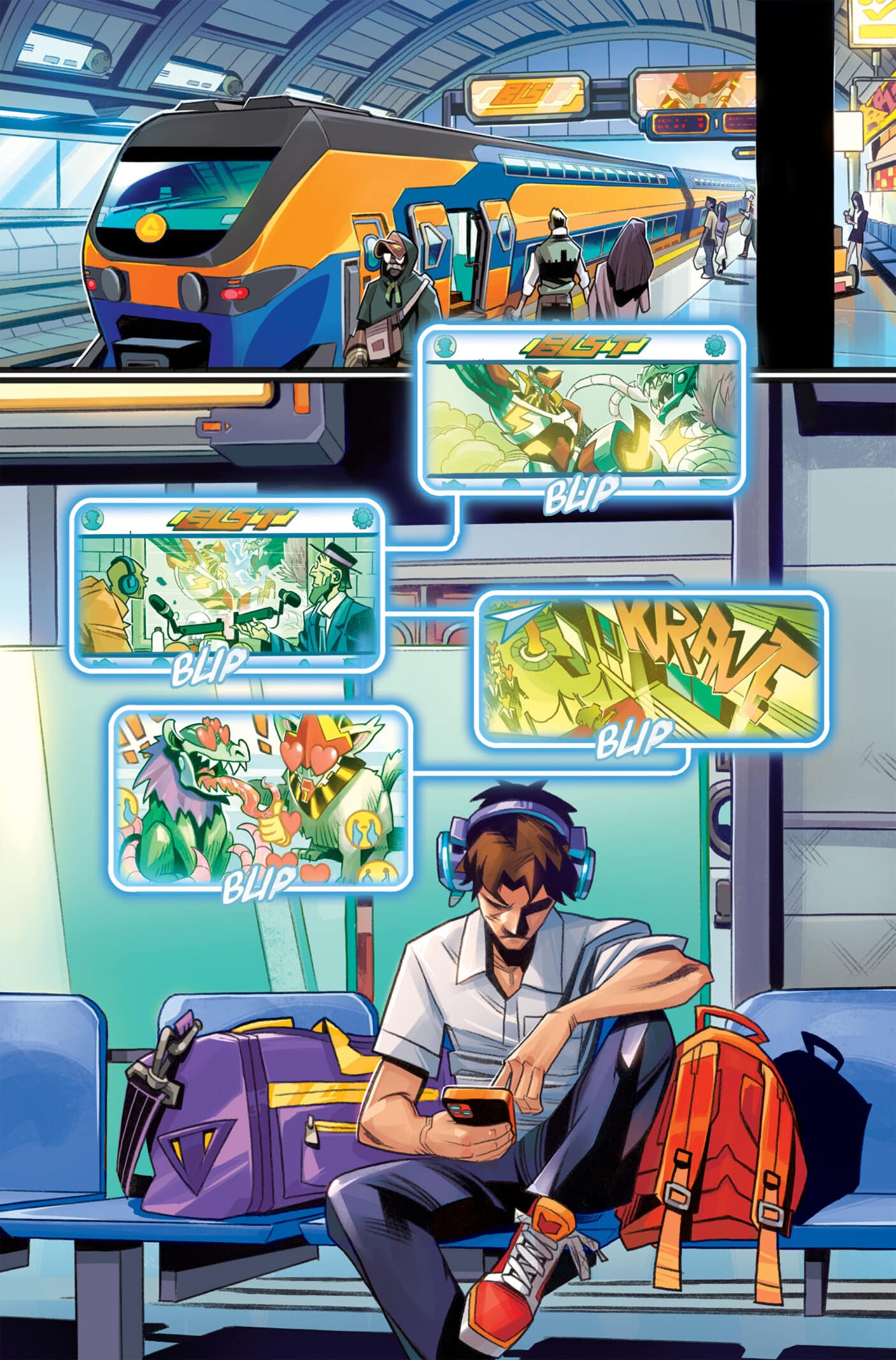
We also wanted the world to feel lived in. If giant mechs and kaiju were real, there would be raves, podcasts, and entire subcultures built around them. We wanted to show that world and explore how Marcus sees himself within it. That perspective felt like a creative swing that could make the story stand apart.
HIGUERA: You come from a Walt Disney background. What narrative or structural lessons informed how you built New Honolulu City and the Kingslayer mythology?
YATES: At Disney, I worked on the creative acquisitions team as the non-traditional IP person. I scouted comic books, video games, board games, and other geek culture properties to see if they could work as Disney shows or projects. I reviewed over 600 or 700 titles during that time.
I realized I was longing for something more Joseph Campbell-esque. Not the same old hero’s journey, but something that felt familiar and mythic in a new way. I wanted to blend the heart-on-your-sleeve storytelling of Jason Aaron with the hard lines of Sean Murphy, while pulling from Japanese animation and manga aesthetics alongside Saturday morning cartoon energy. And at the center of it all were these two brothers.
I didn’t feel comfortable writing a mech story that could culturally appropriate Japanese storytelling traditions. I’m not Japanese. My team isn’t Japanese. But we have immense respect for that culture.
That’s where Hawaii came in. Hawaii felt like a natural bridge. It’s a place where American and Asian cultures intersect organically. Setting the story in New Honolulu City allowed us to blend American comics and Japanese manga influences in a way that felt authentic and grounded.
For this first 48-page issue, we’re not diving deep into the lore. Like Jason Aaron once said while promoting Once Upon a Time at the End of the World, he wasn’t interested in overexplaining how the apocalypse happened. He cared about the love story within it. That resonated with me.
We want readers to fall in love with Marcus, Caleb, and the cast first. The mythology will expand later.
HIGUERA: You’ve been open about how personal this story is, especially regarding grief.
YATES: When Bob Iger announced the 7,000-person layoffs at Disney, and my department was included, I had to reflect. I had what many would consider a dream job, and suddenly it was gone.
I asked myself what my biggest regrets would be if I died. The first was not marrying my girlfriend, who is now my wife. The second was not making this comic.
When I started writing, I thought I was Caleb, the older brother. But as I kept writing, I realized I was Marcus. By the end, I was Marcus.
This story grapples with grief. My mom passed away about ten years ago. I went through grief counseling. I learned that you have to face what troubles you directly. You have to stare into the void without falling into it.
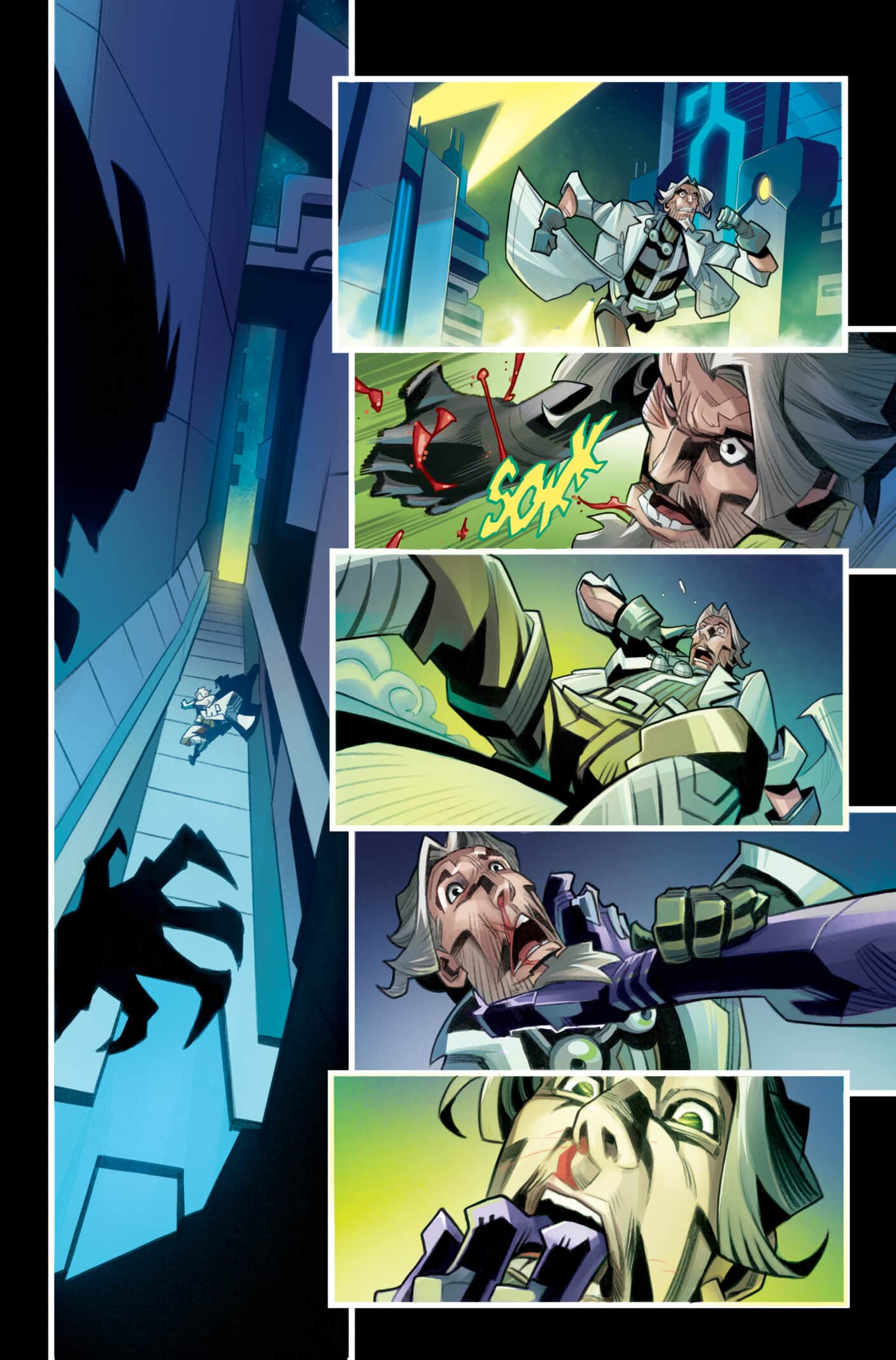
The kaiju represent that overwhelming force. It can be grief, insecurity, fear. There are panels that focus heavily on eyes because I believe the eyes are the window to the soul. How do you face death? How do you face problems? That question sits at the core of Marcus’s journey.
There are days when you don’t feel like the hero of your own life. You don’t feel like the pilot. But you still get up and do what you can with what you’ve been given. That’s the emotional spine of this book.
HIGUERA: Simone Raggazoni’s art is stunning. The black-and-white pages alone feel immersive. What made him the right collaborator?
YATES: I discovered Simone through his Power Rangers work. I didn’t know him personally. I reached out cold and pitched the idea.
He took what I wrote and elevated it beyond anything I imagined. I might describe Marcus sitting at a train station flipping through his phone, and Simone turns that into something dynamic and visually arresting.
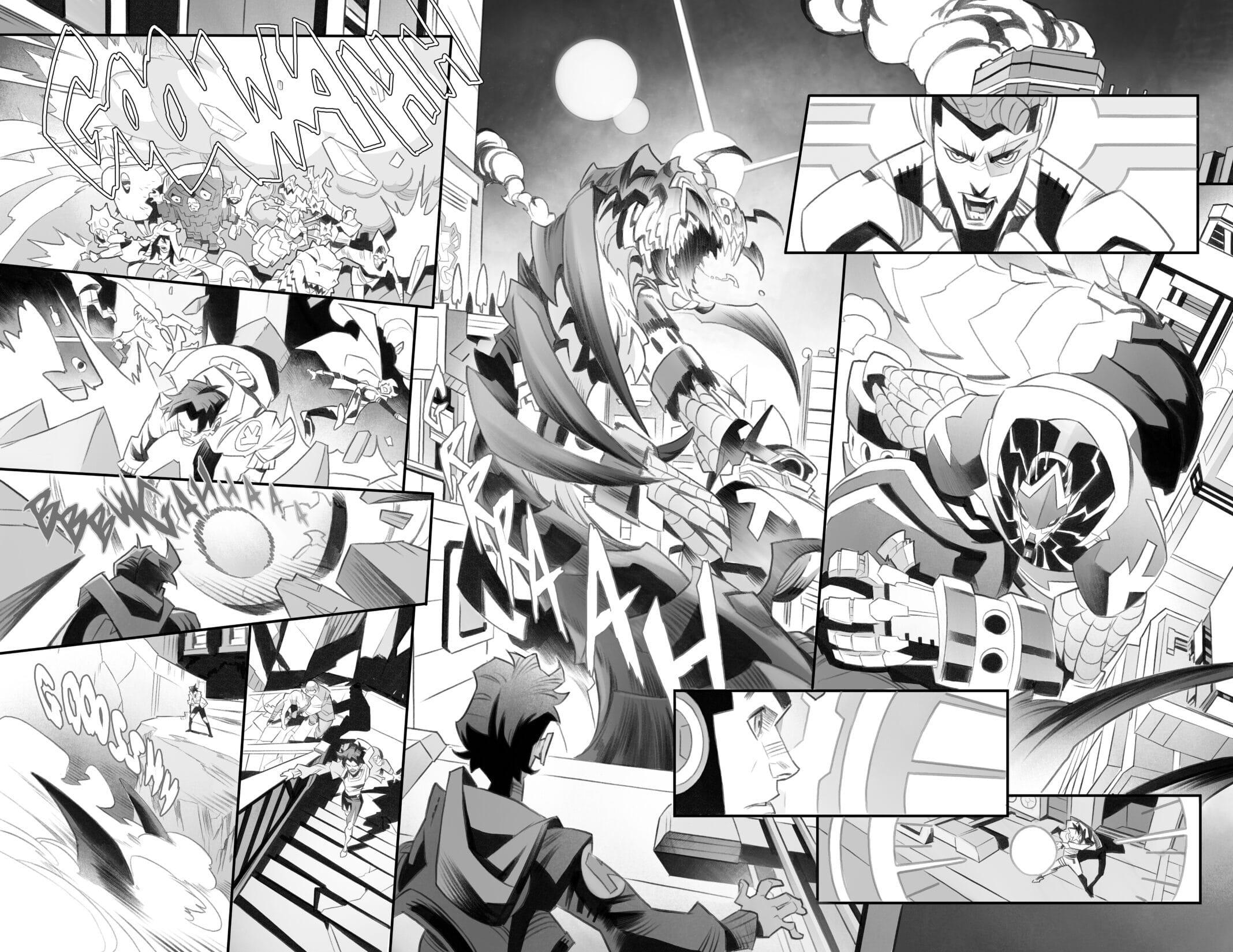
I’ve lived with the black-and-white pages for three years. If the book works in grayscale, I knew we were onto something. Antonio’s colors are incredible, but Simone’s storytelling alone carries the emotional clarity of the story.
This is a visual medium. The book sings because of Simone and Antonio and how they compose a frame.
Simone doesn’t speak English fluently, so we communicate through translation apps and his manager. But that also reinforced something important for me. I wanted the book to be readable visually. Ideally, you could follow the entire story just from the art. The dialogue enhances it, but the visual language leads you.
HIGUERA: The Kickstarter campaign emphasizes value, including a 48-page debut issue. Why was that important?
YATES: People have so many things competing for their attention. Streaming, games, other comics. I did not feel comfortable asking readers to pay a premium for a short issue.
We wanted this to feel like a substantial experience. The variant covers are by friends and collaborators I have met throughout my career. Everyone involved has a genuine investment in making something meaningful.
At the end of the day, if this book speaks to someone, I want them to know it was built with intention. This took three years. There were setbacks, publisher changes, moments of doubt. But if you look at it and feel seen, then it was worth it.
Marcus Walker: Kingslayer Protocol positions itself within a long lineage of mech storytelling, yet it is less concerned with who sits inside the machine and more focused on who stands outside it.
By reframing the hero’s journey through the lens of grief, inherited expectations, and self-doubt, Walker and his team aim to deliver a story where giant monsters become metaphors for the battles we carry internally.
The Kickstarter campaign for Marcus Walker: Kingslayer Protocol is live now! Make sure check it out!