


Born out of a personal period of hopelessness set against the backdrop of real‑world turmoil, Ben Crane’s anthology of short sci‑fi comics, Scattered Futures, reframes small, quiet moments of kindness as a powerful antidote to despair. With contributions from artists Sierra Barnes, Jenny Fleming, and Martyn Lorbiecki, Scattered Futures blends introspection and collaboration in a way that brings out the best of the emotional potential of comics storytelling. In this interview,
The Beat caught up with Crane to talk about Scattered Futures and the gentle optimism and human connection they feature in a fractured, corporate‑dominated future. During our conversation, Crane opened up about the emotional genesis of the book, his creative collaborations, and why hope matters now more than ever.
DIEGO HIGUERA: You described Scattered Futures as coming out of a period of personal hopelessness. At what point did those feelings shift into something generative, where you realized this project needed to exist?
BEN CRANE: As you know, I live in Los Angeles, and the last year, especially the last summer, was really hard in this city. I was downtown most days at protests. There’s not a person in Los Angeles who doesn’t know someone who just isn’t here anymore, who one day was just gone. Hard doesn’t even begin to describe it. That word is grossly insufficient to describe the feeling of being in this city while we were being attacked by our own government, and we still are. It’s less severe than it was over the summer, but it’s still happening. Everything that’s happening in Minneapolis and St. Paul, the fight is still very much ongoing and active.
In the midst of that, I was finishing work on a book that is the angriest thing I’ve ever written. It was a very honest and cathartic expression of my fury as a queer man married to a trans person, my fury at a society that just doesn’t want to let us be.
So I was steeped in that anger while also dealing with the ongoing horror of what was happening in my city and in my country. I had this moment where I realized it’s not going to be the big things that get us out of this. It’s going to be the small accumulation of a thousand tiny moments of kindness. If all we can see for the future is darkness, then we’ve already lost. We need hope. We need a vision of something better to give us something to work toward.
I needed that. I needed something optimistic. I needed to live in a world where we could do better than we were doing at the time. From that grew the first story that would become Scattered Futures, a collection of short stories about small, quiet moments of hope and gentle optimism.
Nihilism is surrender. It’s an inherently regressive impulse to accept the status quo. We need to build a better future together. The work is hard, but it’s valuable and critical. It’s only through doing that work that we can actually create something better than what we have.
HIGUERA: I feel like that really resonates with what I’m seeing in media and comics right now, people are craving anything that gives hope, the new Superman movie dug into that need for people, even in small doses. It’s meaningful that you turned that personal despair into something constructive for readers.
These stories center on optimism and human connection in a fractured, corporate-dominated future. How do you approach writing hope without softening the harshness of the world you’ve built?
CRANE: It’s hard. It’s something I think about a lot. There’s a danger that if you only tell stories about beautiful worlds where everyone is happy, that becomes a balm, but it can also become a numbing balm. You can swing too far in the opposite direction.
With this book, I wanted to focus on the tension between a world that is harsh and built to grind people down, and individuals who, through small acts of kindness, fight back against that world.
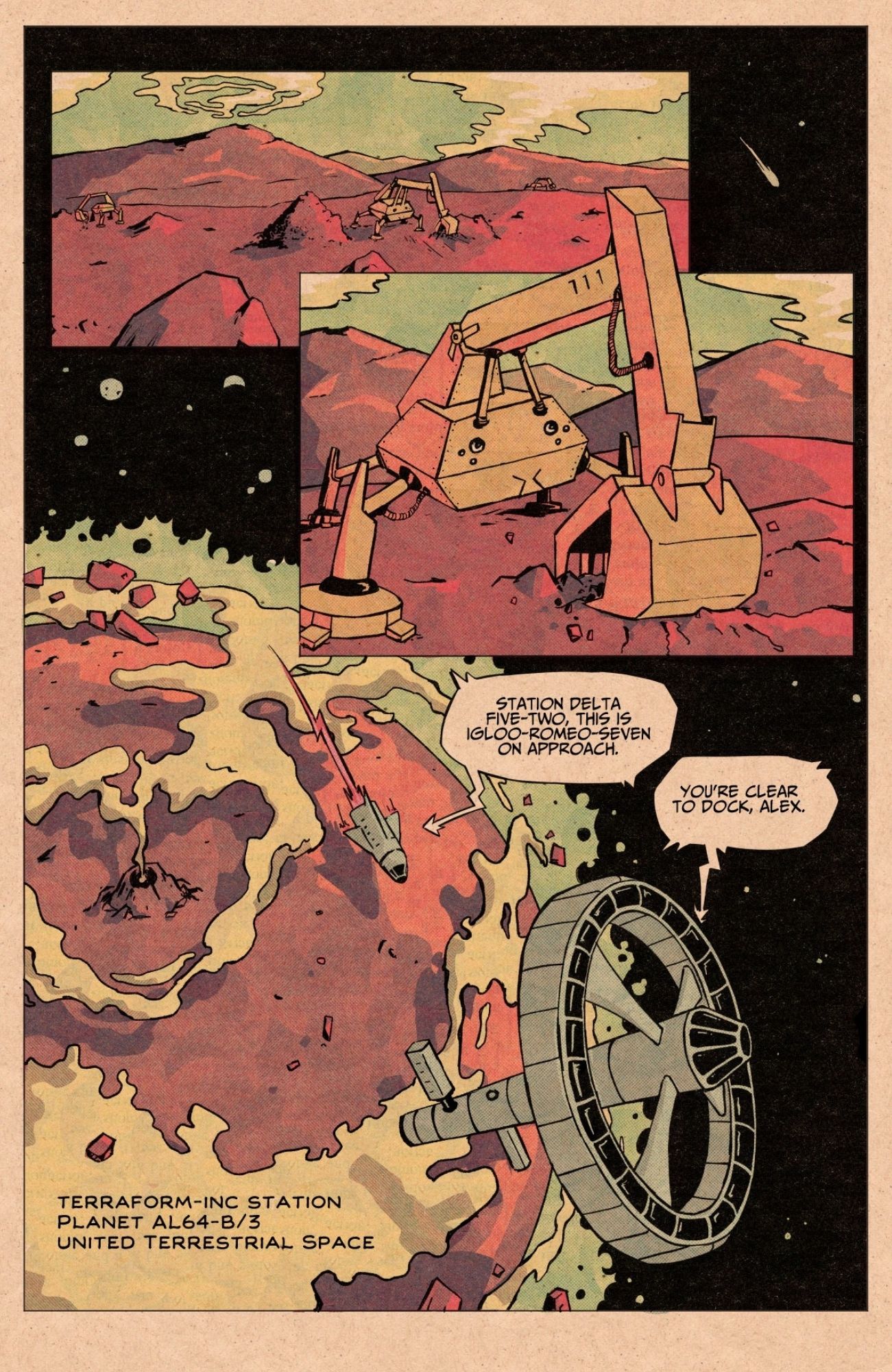
The three stories aren’t dystopian, but they are set in worlds where it’s difficult moment to moment to exist, to find purpose, to find joy. And despite that, the people in these stories do exist. They find purpose. They find joy. They find those things through connection, through uplifting each other, through small acts of empathy and grace.
That’s what I needed when I was writing these stories. I needed the reminder that small things matter and that they build over time into something greater. I hope it connects with someone who needs that reminder right now. I hope it gives them comfort, hope, and maybe the motivation to go out and perform those small acts of kindness themselves.
I also wanted to make sure it didn’t become a narcotic. I didn’t want someone to read a story about kindness and feel like that alone was the work. You still have to go do the hard things.
You mentioned the new Superman film. I thought it was beautiful. It focused on the humanity and kindness of Superman. Yes, he can fly. Yes, he’s bulletproof. But that’s not what makes him a hero. What makes him a hero is that he’s always trying to make the lives of the people around him better. You can’t come away from that movie without wanting to be better yourself.
That’s what I hope this book can be, in some small way.
HIGUERA: Absolutely. That’s a point I’ve seen reflected in other media too, people are grasping for hope right now, and your work channels that without losing sight of reality. It’s a delicate balance and you’re handling it really well.
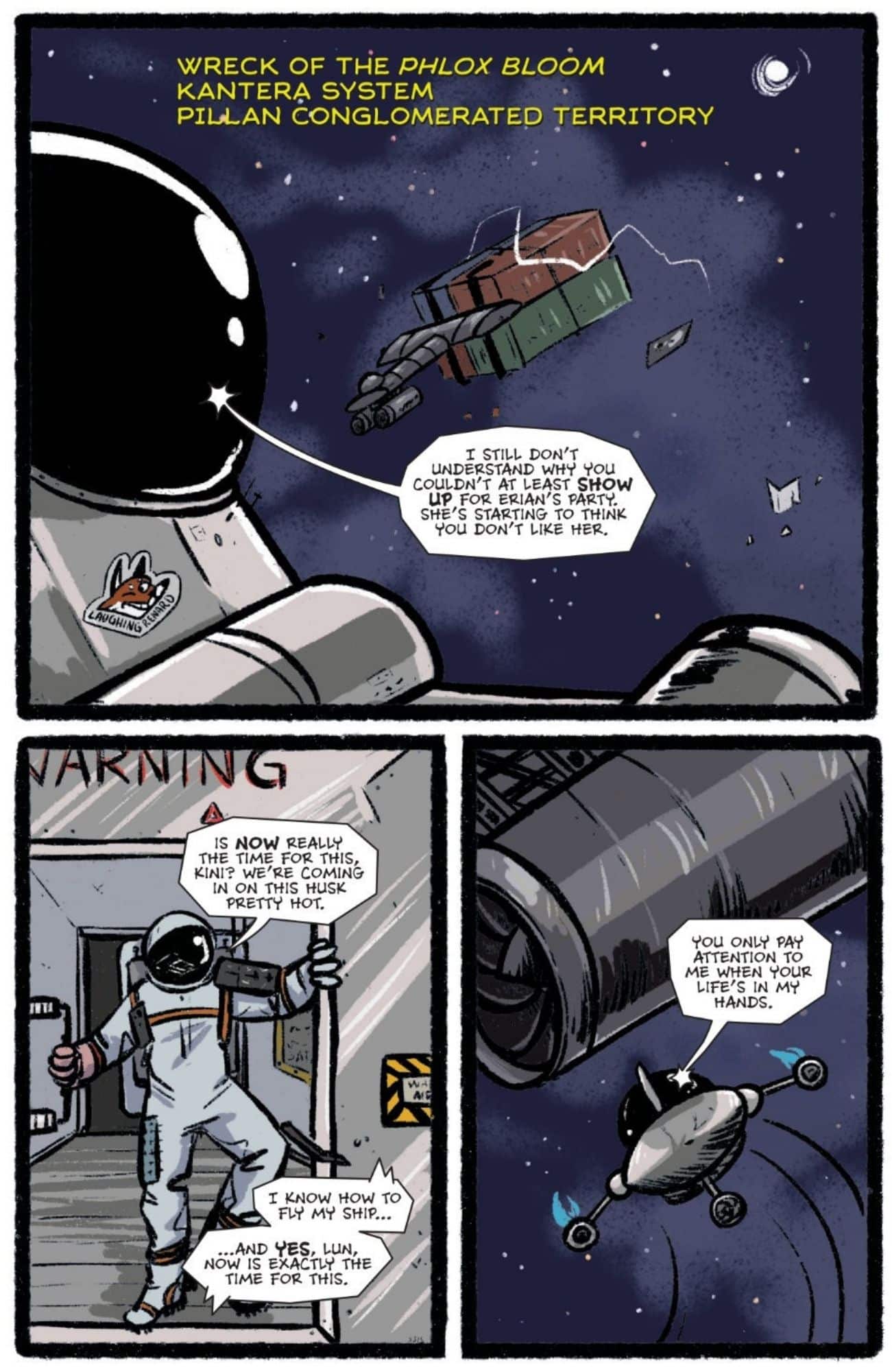
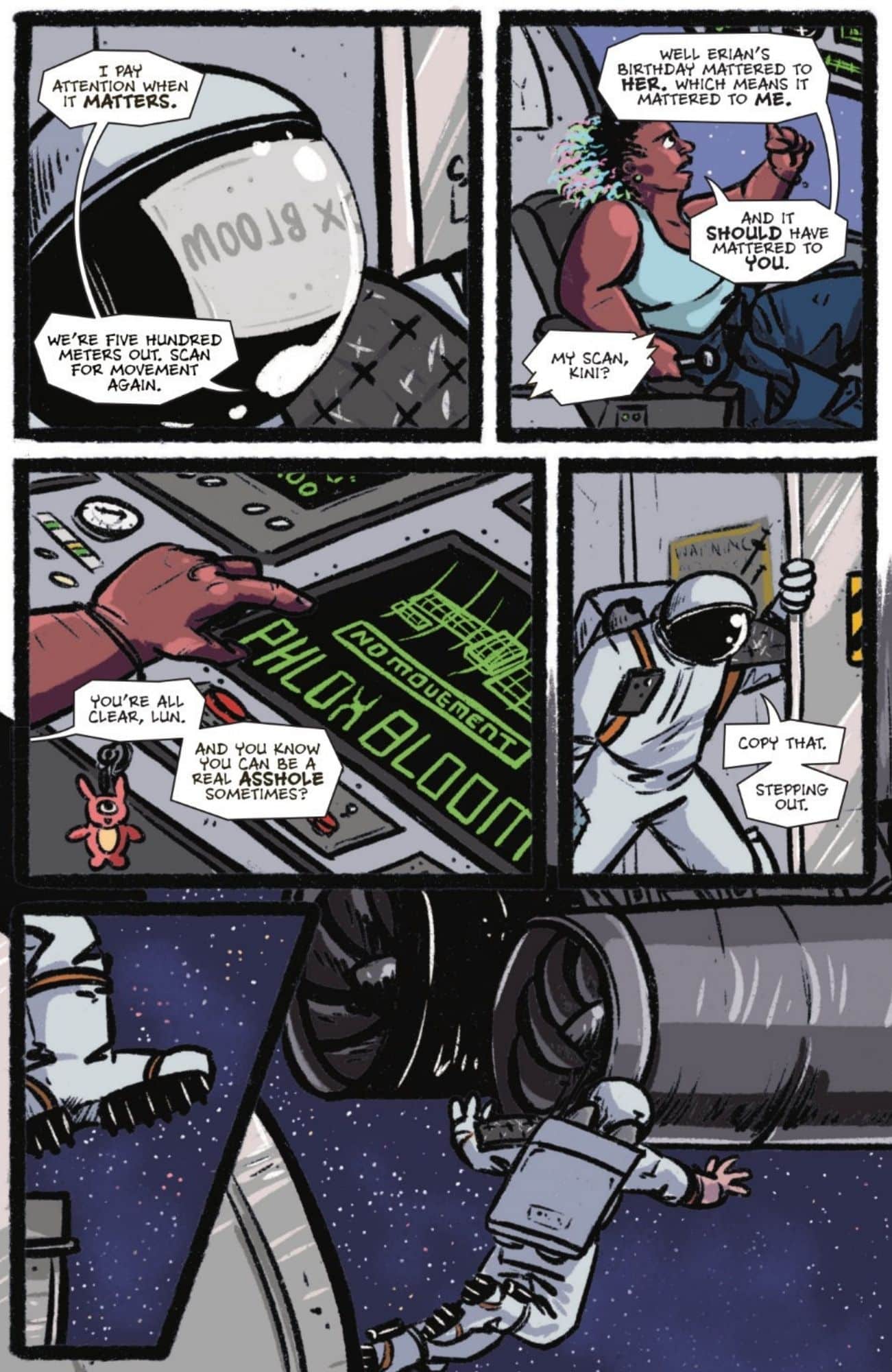
Each of your stories featured different artists. Did you write the scripts with Sierra Barnes, Jenny Fleming, and Martyn Lorbiecki in mind, or did the visual sensibility shape the tone and structure once they came aboard?
CRANE: Cycles, which is the story I’m doing with Martin, was the first one I wrote, and I wrote that very much for him. I love his work. We connected online, and I had him entirely in mind while writing.
The other two came about because once I wrote the first one, I realized this is something I want to do, I want to make this book, a collection of these stories. So I wrote the next two and then approached Sierra and Jenny about drawing them. I went back and revised what I had to suit their styles.
The whole thing has been very collaborative. I am incredibly lucky to work with them. I have been a fan of all three prior to this, and they’re just absolutely nailing it. The art is really beautiful. I can’t wait for people to see the incredible work they’ve done.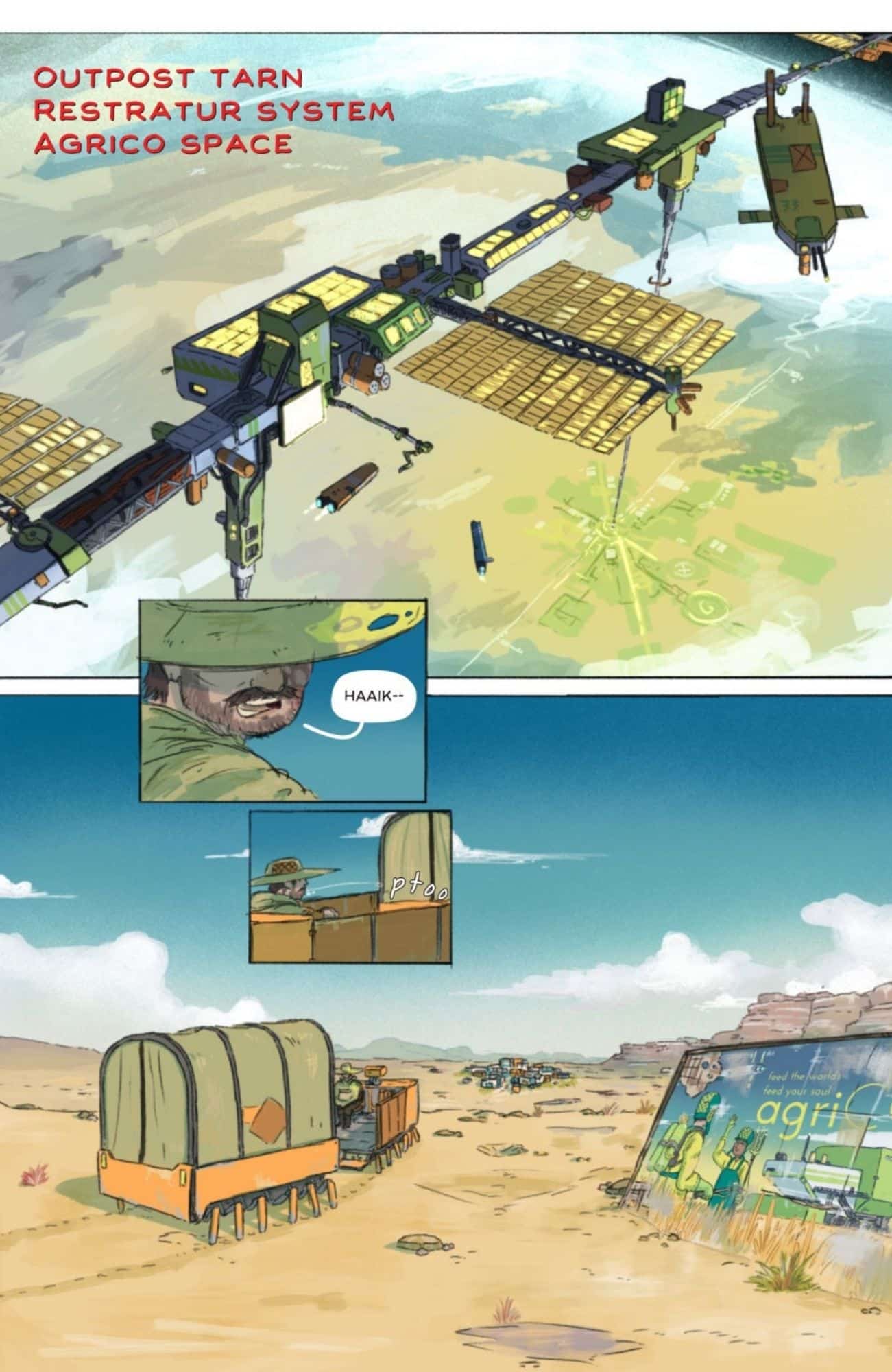
HIGUERA: The phrase “be strong enough to be gentle” is going through my mind a lot when I read your work. You frame the anthology as a gentle assertion of kindness and community. In a sci-fi landscape that often leans dystopian, what does gentleness allow you to explore that darker narratives sometimes overlook?
CRANE: Wow. I want to take a minute to think about that…
Gentleness is something I aspire to in my life, and it’s never come easily. I grew up in North Carolina in a very toxic masculinity–infused culture focused on strength, self-sufficiency, and self-reliance. The idea was that a man should quietly bear his pain, just get up and keep going. It’s hard to get away from. I’ve worked very hard to unlearn that.
Gentleness, to me, comes from a few people in my life who, at critical moments, were gentle and helped me see the world in a better way. They helped me be a better person, not through aggression or confrontation, but through quiet conversation. They expressed how they were feeling and gave me space to express how I felt. That’s such a kindness, simple sounding, but challenging to do.
I wanted to tell stories in this book about that moment: just being kind, hearing someone, and allowing them to hear you. It’s not dramatic, but it’s powerful. Through that gentleness, we can build a better world.
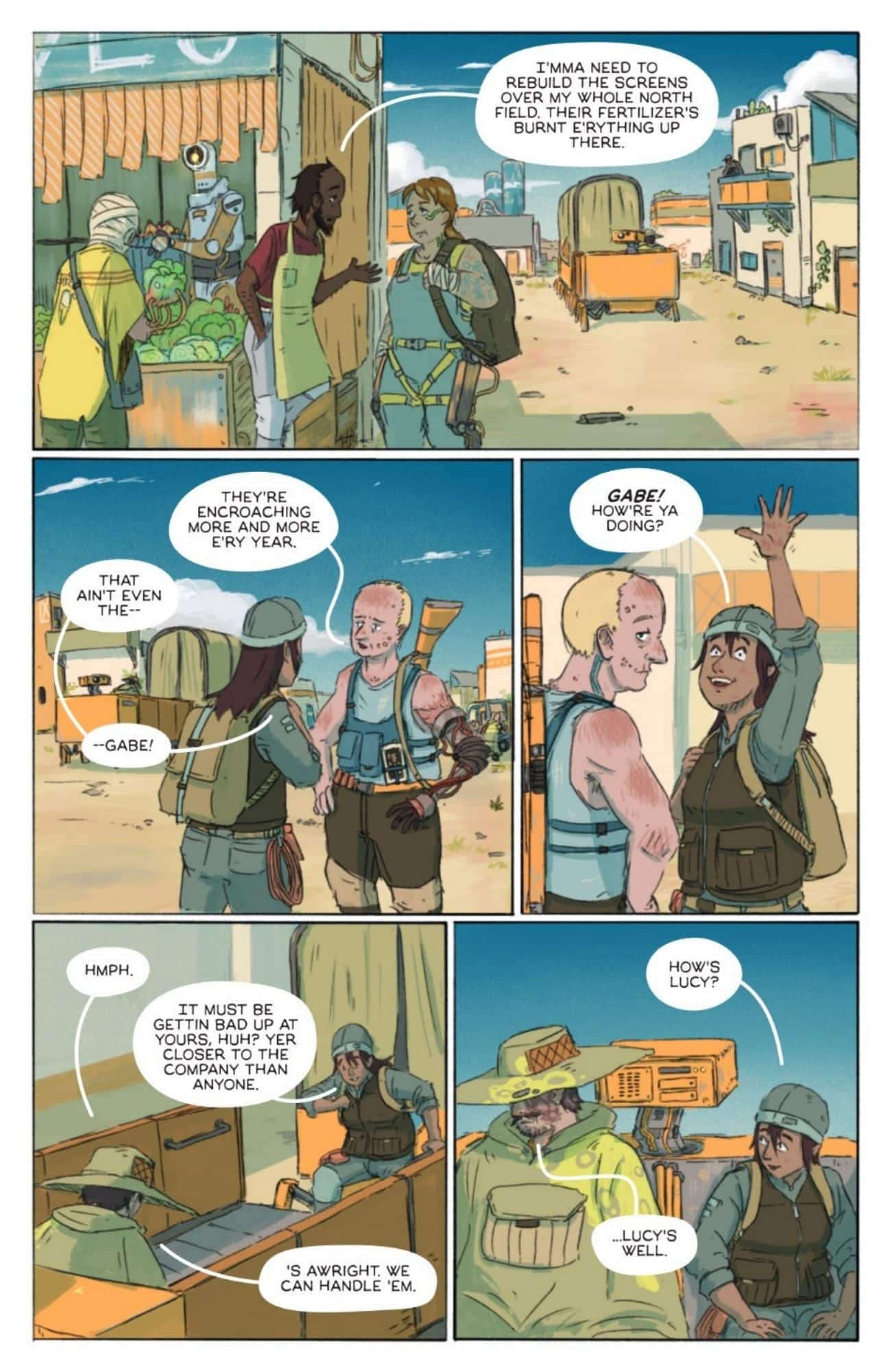
HIGUERA: I completely agree. That message is especially needed now. People often think force or aggression is necessary to achieve anything, but your stories show that quiet empathy can be just as transformative, if not more.
HIGUERA: Are there any questions you wish I would have asked you, and is there anything you want to say to your fans?
CRANE: I’m not sure what the magic words are to convince someone to read this book. That’s part of why I went to Kickstarter rather than traditional publishing. Image wouldn’t be interested in this quiet collection where nothing “exciting” happens.
What I hope is that people will check it out, give it a chance, and if it connects, that’s fantastic. And if someone is struggling, hurting right now, you’re not alone. I see you, I feel you, and I hope you can find hope and solace. Together we can move toward something better.
Ben Crane’s Scattered Futures is a deeply personal and collaborative project that channels hope, gentleness, and human connection into quiet, powerful stories. Through his work with talented artists and his reflections on the world around him, Crane is able to show how comics can be both a mirror and a band-aid, capturing the struggles of our times while offering small moments of optimism and resilience. This anthology wants to remind readers that even in fractured and challenging worlds, the smallest acts of kindness can ripple outward.
If you’re interested in exploring Scattered Futures and supporting this heartfelt project, make sure to subscribe to Ben Crane’s page before it’s too late!