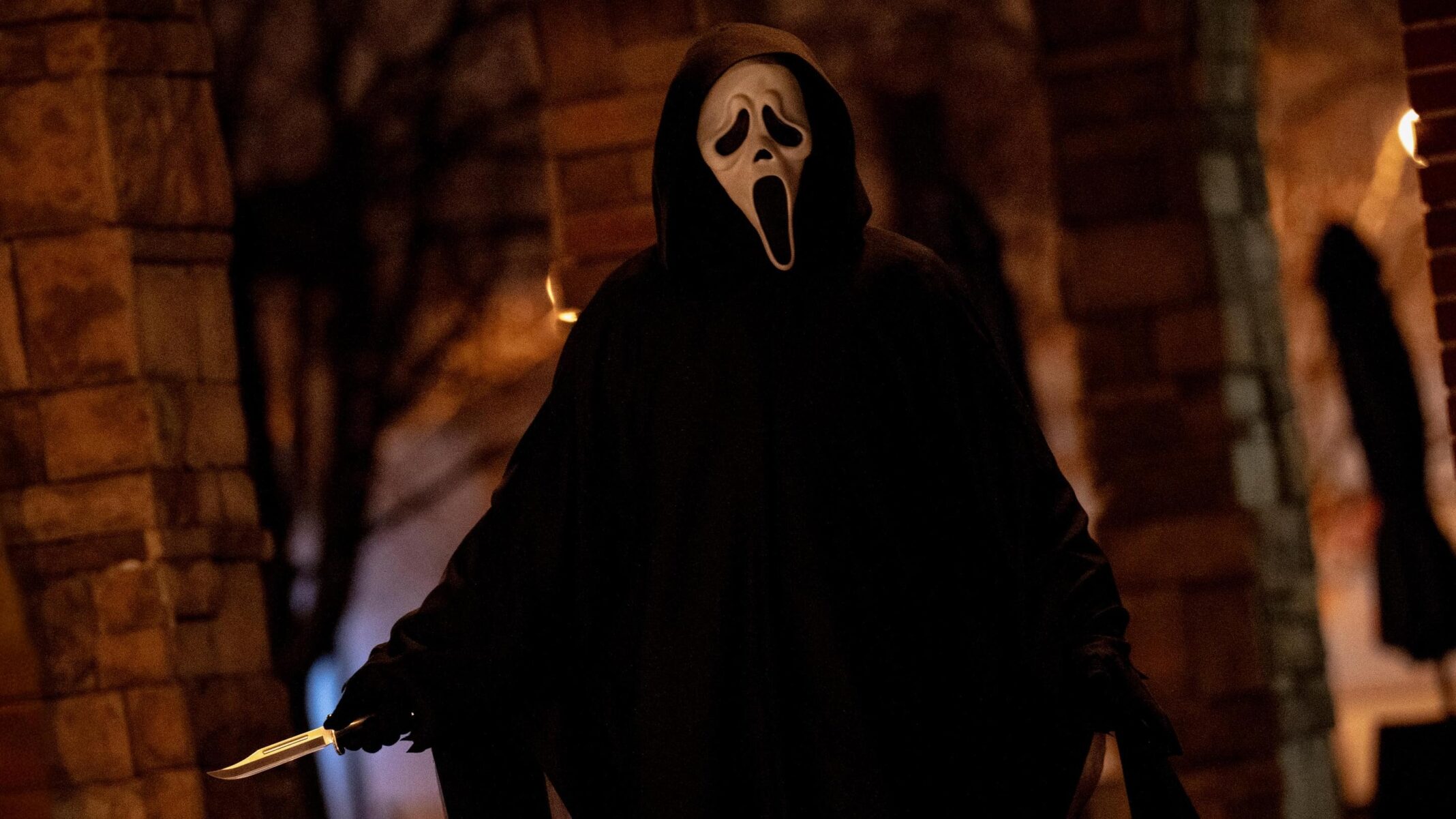

It’s been three years since Sidney Prescott has experienced anything resembling a Ghostface attack. She’s happily married to a police officer and settled down in Pine Grove, Indiana with her three children, the oldest of which she has a complex relationship with. She runs a cafe and has moved beyond the baggage generated by her publication of an autobiography a decade earlier. However, when a new Ghostface appears, Sidney will have to become the woman she once was once again. The latest film in the iconic slasher-mystery series, Scream 7 tries to figure out a way to go forward with the series, but is weighed down by all of it’s troubles along the way.
Scream 7‘s production history has both been very difficult and very public. Due to scheduling conflicts with their 2024 film Abigail, co-directors Matt Bettinelli-Olpin and Tyler Gillett were unable to reprise their positions from Scream VI. They were replaced by Christopher Landon (Happy Death Day), before pre-production was halted by the 2023 SAG-Aftra Strike. This was followed by the highly controversial news that the lead of the previous two films, Melissa Barrera, was fired from the project due to her Pro-Palestine political views. Her on-screen sister and co-star Jenna Ortega left the project shortly after, before Landon left the project less than a month later. The end result of all of this behind-the-scenes mayhem was a complete rewrite of the script, costing around half a million dollars at the least, and the appointment of original series co-creator Kevin Williamson as the film’s director, his first feature in the role since 1999’s teen comedy Teaching Mrs Tingle. Many films have complicated and messy journeys to the screen, and it wasn’t exactly a death sentence for the film itself, which could’ve potentially defied the odds. Unfortunately, it doesn’t, and the reason any of this is remotely relevant is because the film itself wears this mess on it’s sleeve, attempting to weave it into the narrative almost entirely for the worse.
 Courtesy of Paramount
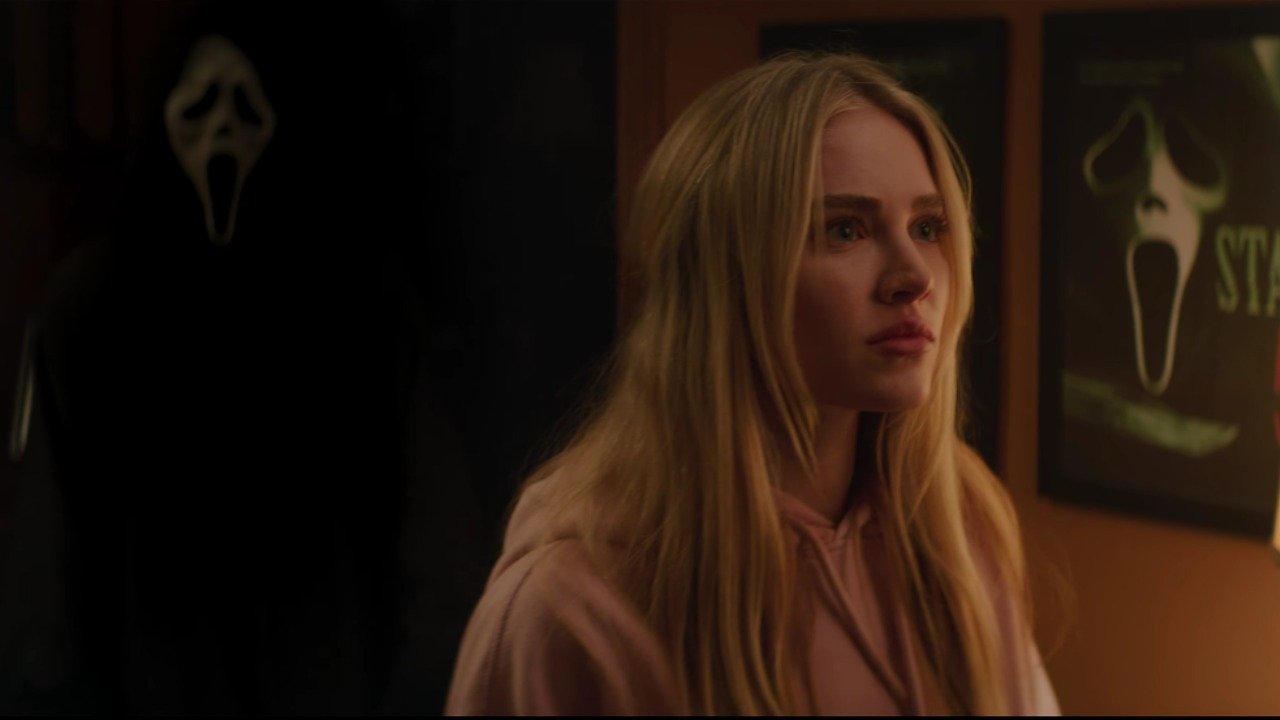
As previously mentioned, the film is set around 3 years after the events of Scream (2022), the legacy sequel that reinvigorated the franchise for a modern audience. It brings Neve Campbell back to the lead role, after taking a supporting role in the 2022 film and being absent in it’s 2023 sequel. When a mysterious Ghostface, claiming to be the long-thought deceased Stu Macher (Matthew Lillard), begins to come after both Sidney and her eldest daughter, Tatum (Isabel May), Sidney will have to shed off the woman she’s become in order to return to her status as the ultimate final girl. It’s a relatively interesting premise, seemingly built on much of the fanbase’s love of Lillard’s role in the original film, a love that has been nodded to in the prior two entries as well. It also feels current in a way, with much of the film debating whether the mysterious killer is actually Stu Macher or simply someone manipulating artificial intelligence and ‘deepfake’ technology in order to pretend so. Much of this plot however lacks tension, with large stretches of the film feeling both predictable and tired, and it never uses this time to get you attached to any of it’s characters, so it becomes clear very quickly who’s going to survive, who’s the killer, and who’s just meat for the flesh factory.
The script, co-written by Kevin Williamson and Guy Busick, based on a story by Busick and James Vanderbilt, is filled to the brim with content for the previous two films, and in general, the state of modern horror films. The dialogue is old-school, and sometimes that works in it’s favour, leading to some great moments for the older cast especially, but much of the time it makes it feel predictable, like you can guess what any character is about to say before they say it. This is especially a problem with the teenage cast, none of whom talk like modern day young people even remotely. The only characters who sound young are the returning twins Mindy and Chad, and their dialogue is filled to the brim with slights on Gen Z, the previous films, and anything else the writers desire to passive-aggressively complain about in the seventh film of a franchise almost always aimed at young people. The plotting is somehow even worse, moving from plot point to plot point with less than grace, almost stumbling along between it’s admittedly wonderfully inventive kill sequences. It’s Scream at it’s most Scooby Doo, and while there’s always been an element of that in this series, this is an example of why sometimes, you do need to take yourself a little seriously, with some sincerity, after all.
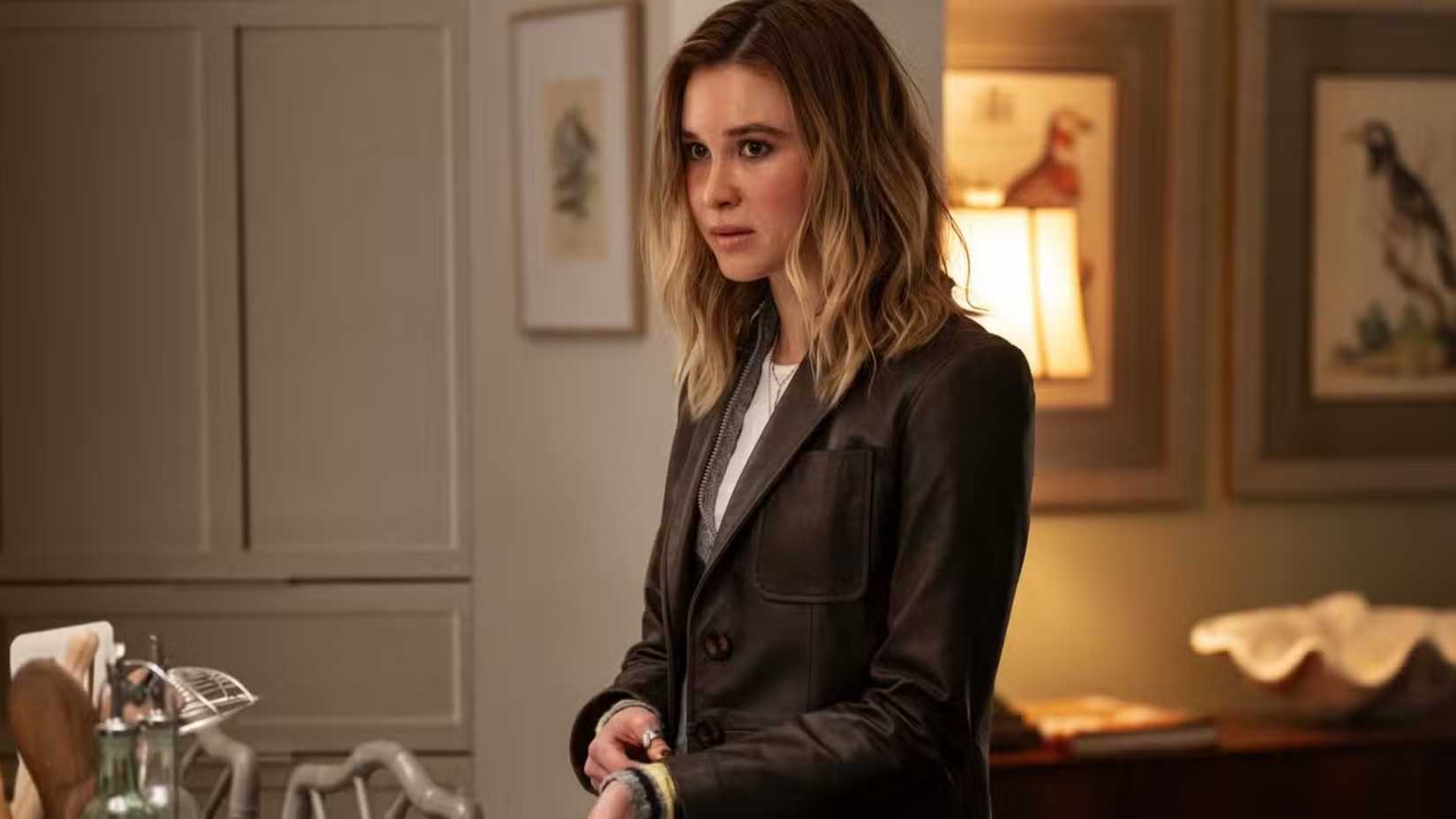
In terms of how the film functions as a sequel, it’s effectively picking up mostly from the plot threads and ideas of Scream 4, the last movie in the series Williamson had any direct involvement with up until this point. While it makes frequent nods to the events of the fifth and sixth films in the series, with two recurring characters, it chooses to never explain or elaborate on what happens to the leads of those films, the Carpenter siblings. It comes across as a bit of a course correction, which I’m sure is good news for many who didn’t click with the two previous films in the series. However, as someone who considers Scream VI to be one of the strongest entries in the entire series, it’s pretty disappointing. That story felt like a definitive end-note to the series, or at least the original element of it, and a set-up for something genuinely new and exciting. To retread it and go backwards is not only a baffling decision, but it causes the film so many problems, namely that you can’t invest in anything new it’s actually trying to do, because you’re too busy focused on all the keys jangling in front of you. There’s a bit early in the film where they show off a non-descript leather jacket of Sidney’s from one of the original films as a nostalgic callback, placing it on a new character, and it falls so flat, but it’s also emblematic of this film’s approach.
On a technical level, the film is admittedly well done. None of the later films have ever been able to match the technical impressiveness of Wes Craven‘s direction, but this is another solid attempt at doing so, especially considering that Williamson hasn’t directed a film in nearly three decades. Shot by Ramsey Nickell and edited by Jim Page, it’s visually in line with the previous two films, although the direction isn’t quite up to the same level. However, the tense moments are still intense, particularly the blood-thirsty and super inventive kill sequences, which are without a doubt the highlight of the film. These are wonderfully well-crafted and keep you on the edge of your seat, it’s just a shame that you aren’t more connected to the characters, so you don’t really mind what happens to them. The score by Marco Beltrami is good too, doing all that it needs to do, and I particularly enjoyed the Turnstile needledrop towards the end of the film.
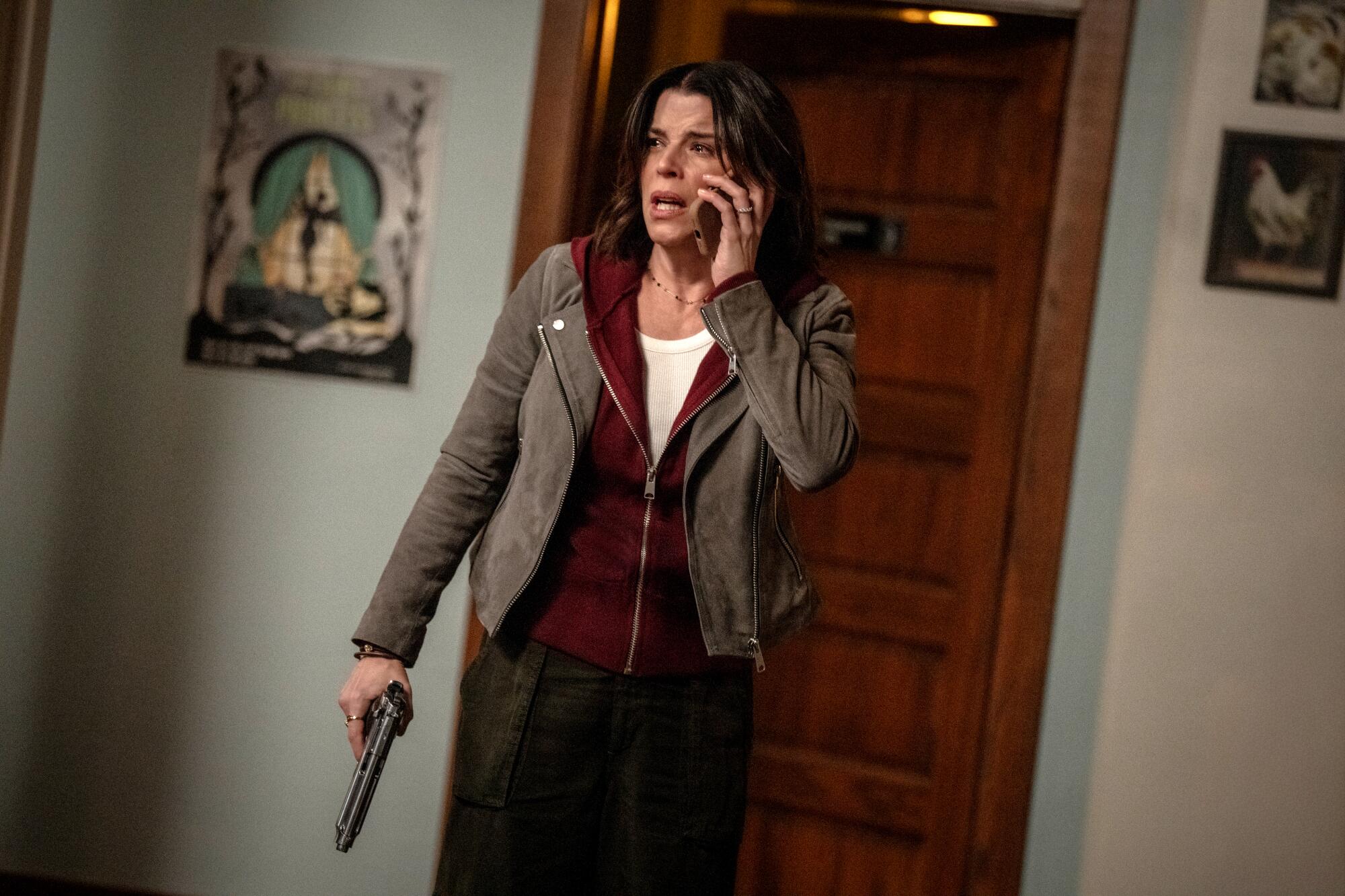
Neve Campbell is the star of the show here, and it’s a decision that does ultimately pay off, because she’s by far the best performance of the film. Almost leaps and bounds above any other actor. Campbell has always given her all to this franchise, and her presence in the previous film was admittedly missed, because almost as soon as she’s introduced here, you immediately remember why she’s the fan favorite of the series. She adopts the role of an older, tired Sidney well, one with much more love to give but much less patience for tedium, and her character is the saving grace of the film, incredibly watchable at every turn. If there’s anyone this entry is dedicated to doing right by, it’s her, and it works, because she’s given the best material as well. It’s a great performance and a further example of why she should be cast in more major roles; she’s a genuinely great actress.
Other recurring cast from previous entries include Courteney Cox as Gale Weathers, the only character to be in every Scream film to date, as well as Jasmin Savoy Brown and Mason Gooding as Mindy and Chad Meeks-Martin. Cox is unfortunately in poor form here, very much a phoned-in performance, especially when compared to her relatively strong contributions to the previous two films. Gale isn’t given much to do other than to support Sidney, and the two actresses still have plenty of chemistry on screen together, but Cox is definitely the weaker performance of the two. Brown and Gooding try their best, but the writing seems dedicated to making Chad and Mindy absolutely insufferable this time around, removing any of their likeable traits and reducing them to vapid Gen Z stereotypes. There’s only so much either of them can do about that, but they try, and both do a pretty good job all things considered.
:max_bytes(150000):strip_icc()/Scream7-103025-01-89721d0f6ae842568e246ddfabda3eb4.jpg)
There’s an absolute boatload of supporting cast members, and the bulk of them get very little to do. Isabel May plays Tatum, Sidney’s eldest daughter, and she does a good job. It’s unfortunate because she’s really trying, especially in the second half of the film, but Tatum is a pretty unsympathetic character. She fights against her mom’s strict rules and guarded past, but we, the viewer, have five films to justify why Sidney is the way she is, so it’s difficult to connect with her daughter when we know her mother’s concerns are justified. Joel McHale plays Tatum’s father and Sidney’s husband, Mark Evans, who’s a great addition to the series. He plays off of Campbell perfectly and his third element of the dynamic fleshes out their family a lot better, I just wish he had more screentime. Tatum’s friendship group, comprised of Mckenna Grace, Asa Germann, Celeste O’Connor and Sam Rechner, aren’t fleshed out well at all, with almost all of them being given one character trait at best. Out of them, by far the best is Grace, who does a great job in the very minimal amount of screentime she gets. Germann is fun too, but feels too much like a retread of Jack Champion‘s character from the previous film. Sam Rechner is unfortunately, the weakest link by far. He plays Ben, Tatum’s boyfriend, and he has very little chemistry with her, or much charisma in general.
Other performances include Michelle Randolph and Jimmy Tatro, who do a very good job in their explosive opening sequence, one of the highlights of the film. Michelle Randolph plays Jessica, Sidney’s next door neighbour, and she does a good job, but the character doesn’t have much to separate her from other characters who fulfill a similar role to her in the series. Matthew Lillard also makes a return here, playing ‘Stu Macher’ over digital phone calls with Sidney. I love him as much as any other horror fan within a certain age demographic, but unfortunately he’s not great here. It’s a bit too campy, and he never generates any sort of fear like he should be doing. It’s funny, because I thought last year’s Five Night’s at Freddy’s 2 was shockingly terrible, but he manages to be quite scary there, so it makes me wish he leaned into that serious ferocity more here.

Like every film in the series, Scream 7 has elements of metatextuality and genre commentary, weaving in themes reflective of that. This time around, the main theme seems to be the inability to move on from the past. Sidney and Gale are both permanently damaged by their best and keep the emotional walls they’ve built up even when things are seemingly safe. The villain is angry at their past and disappointed that Sidney won’t live up to the woman she used to be. There’s nostalgia bait literally everywhere in the film, and it opens with the Macher house being burnt down, despite being full of Stab-themed merchandise. It’s a solid concept, one that every film since 4 has touched on, as the series stubbornly refuses to die, to the apparent frustration of it’s creators too. The issue is that the film becomes a snake consuming its own tail, becoming just as guilty of what it’s trying to critique. It tries to be Scream: Endgame and it doesn’t work. Instead of saying anything meaningful about going forward and carving out something new, it just lambasts the young and the new, gleefully returning to the safe shelter of the old because that’s what will sell tickets. It’s disappointing, and leads to a large part of my frustration with the film. I don’t think the premise is inherently bad, nor the story itself, but it’s portrayed with so much venomous content that there’s no sincerity left. What makes the original film work in spite of all it’s satire is the sincerity at it’s core. Without any spine, the critique and irony just comes across as a film annoyed at you for watching it.
Overall, Scream 7 is easily the weakest film in the series and almost embarrassing. Despite the best efforts of a solid technical team and a great lead performance by Neve Campbell, this film sinks under it’s own messy production, with a clunky and frustrating script that lacks any creativity or genuine heart. Fans of the series may be entertained by the brilliant and unique kills, as well as the return of Sidney Prescott, but if the series is to go forward still, it has to learn from this mistake, and return to a more genuine emotional place. It’s all well and good trying to claim you’re moving the series forward, but if you’re stuck in the past, that’s never going to truly happen. If you don’t put the effort in to write compelling characters or a good story, then you’re closer to being a Stab film than a Scream one.