
 Uri Tupka and the Gods
 Uri Tupka and the Gods
Cartoonist: Mike Mignola
Colorist: Dave Stewart
Letterer: Clem Robins
Publisher: Dark Horse Comics
Publication Date: March 2026
In Mike Mignola’s earliest Hellboy comics, there is a charge, an almost visceral sense that the cartoonist is so in love with his own ideas, he is mostly drawing the book for himself, reception be damned. I had that same sense all throughout reading Mignola’s latest book, Uri Tupka and the Gods.
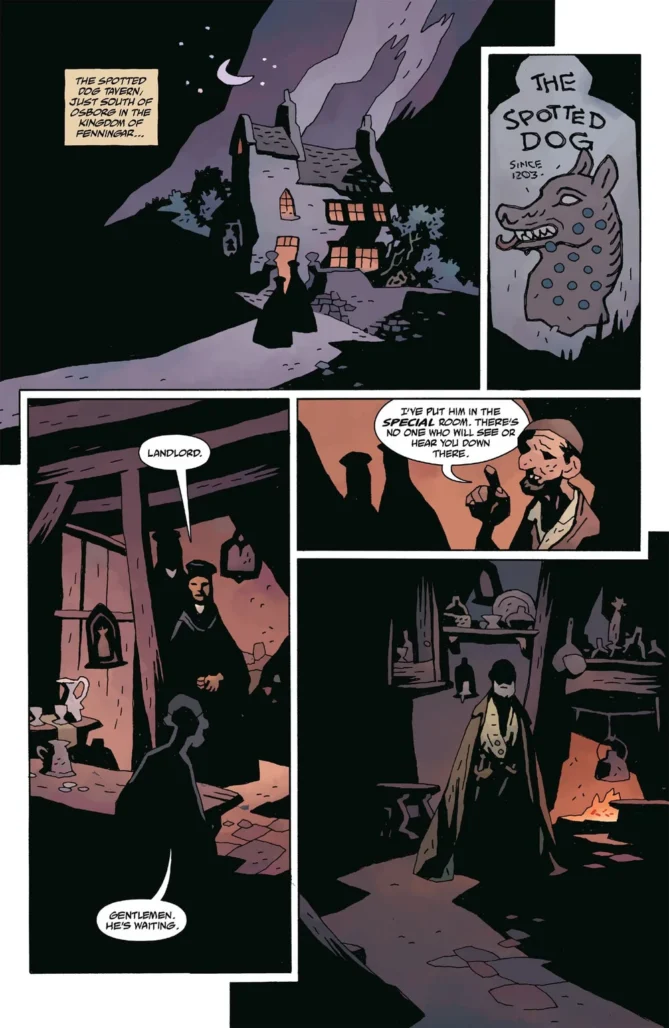
And I’ll elaborate on that in short order. First, some orienting words about this one: Uri Tupka and the Gods is the second book in a new folklore-inspired comics universe that Mignola has created, dubbed Lands Unknown. The book that launched this universe, Bowling With Corpses & Other Tales From Lands Unknown, arrived early last year. In January, to be precise, and it is perhaps telling that it has been a good while since Mignola has been so prolific.
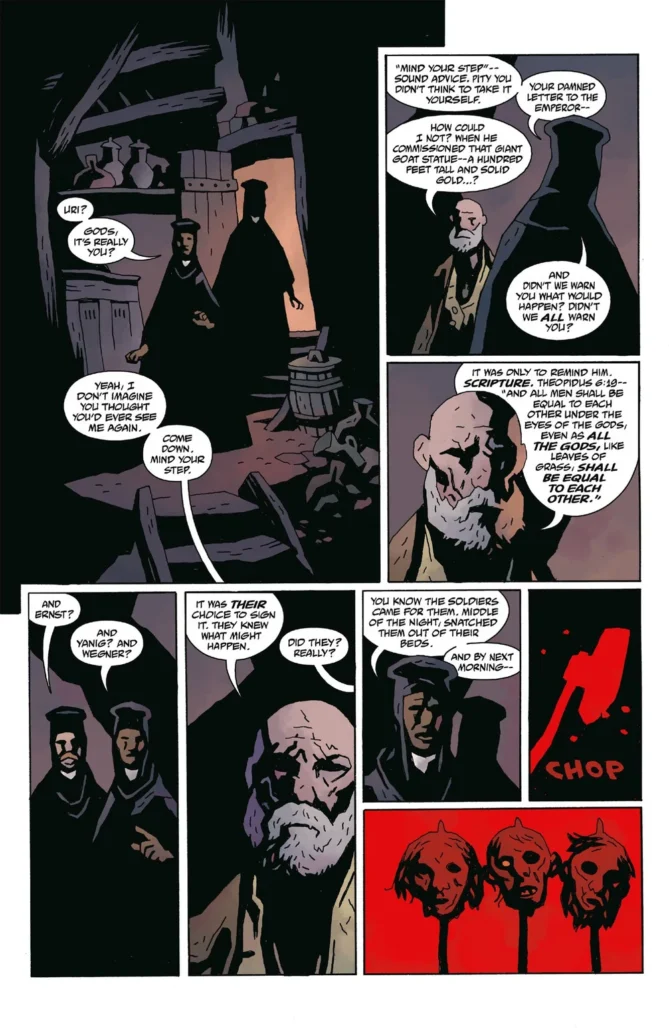
Indeed, in both books he does all of the writing and linework himself, recruiting regular Hellboy Universe collaborators to join him, with colorist Dave Stewart and letterer Clem Robins. If you are familiar with Mignola’s back catalog, you know how much both of those artists bring to the table, and how well their colors and letters respectively compliment Mignola’s singular linework. So, I won’t get too far into here, except to note that the collaboration between the three benefits so much from years of honing. So much so that I had to doublecheck the credits page to make sure they were rejoining Mignola, so seamless is the way the trio blends together.
The last thing to note here is that there are continuing plans for more Lands Unknown stories, including a new Mignola-free series, Lands Unknown: The Skinless Man by Ben Stenbeck, and the second half of an Uri Tupka duology, Uri Tupka and the Devils.
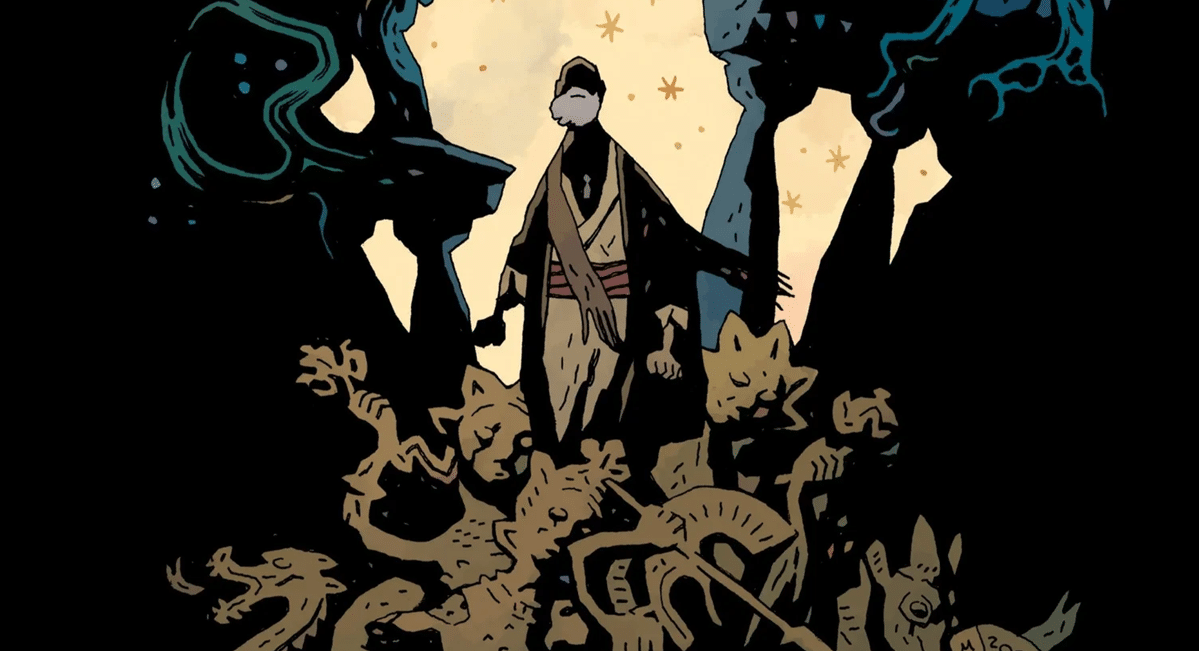
Now, as it regards this new book, Uri Tupka and the Gods, it just might be up there with Mignola’s best-ever work. Again, as I said at the start, there is a charge to these comics that maybe haven’t felt — or at least not in this pure of a condition — since the first Hellboy comics. The world-building and expository mythos even have an excitement to them, a sense that Mignola doesn’t care if the layers stack up on each other, this is simply how the story must be told. And it serves these stories well.
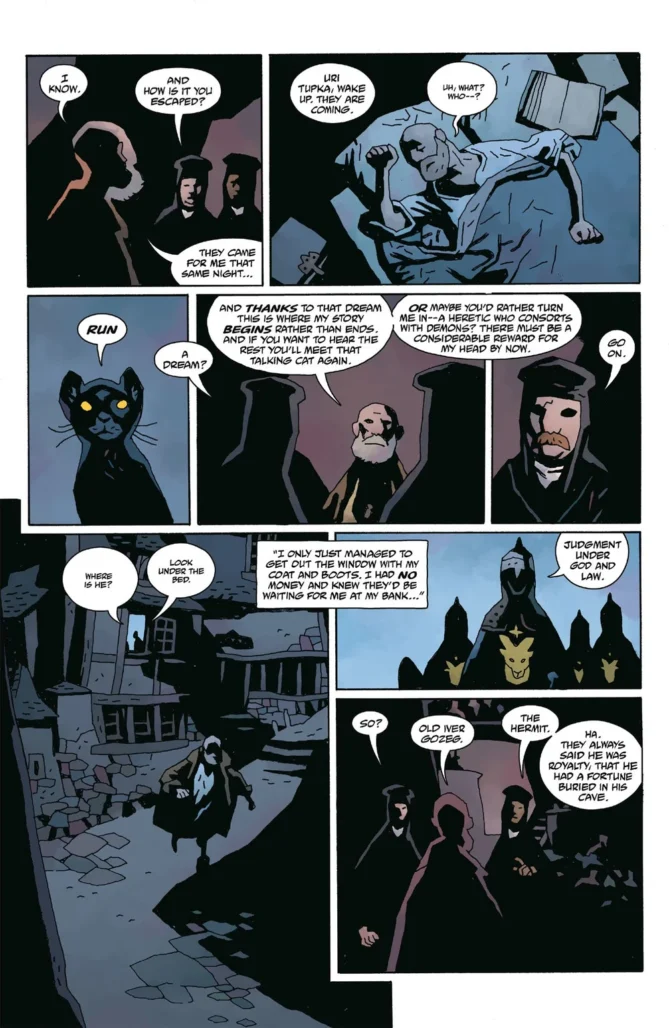
Structurally, Uri Tupka and the Gods are a series of vignettes broken down by the titular characters run-ins with dieties, exactly as the title implies. There’s also a framing device in this one, with Tupka telling the stories to people he knows some indeterminate amount of time later at an inn, safe and having survived all that befell. Or at least that’s how it seems, I suppose we won’t truly know for sure until we’ve finished his run-ins with the devils in book two.
Admittedly, there’s a density to this book right from the start that pushed me to read it three times to get a grasp on who the narrator was, who he was talking to, and why. Part of that is that the first chapter is Uri Tupka telling a story about a man who once told a story to him, so there’s about three layers of narrative as we try to orient ourselves within the book.
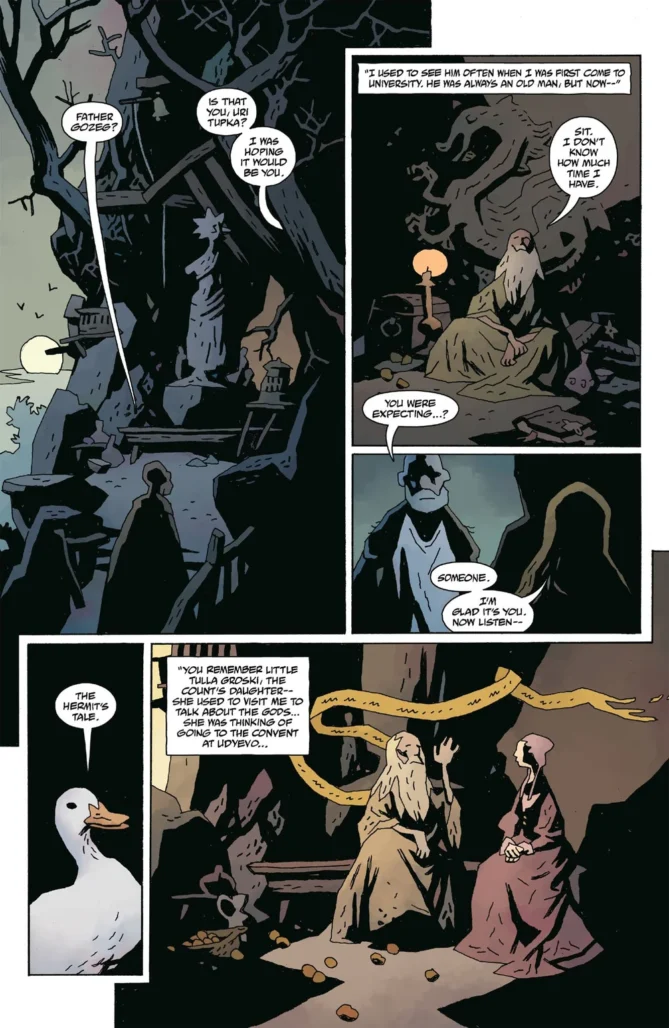
And yet it never feels off-putting or slow. It actually adds to the narrative authority, I found, in a way that sells this fantastical alternate world of old as a rich place, where theology takes a horror movie bent much of the time. That’s what first put me in the mind of the Hellboy comics, which similarly start off with some bouncing through time as they lay down their own dense-yet-vital exposition.
It all lays foundation for a more immersive reading experience, especially when a book sets out to create an entire universe, populated by the unlikely or outright impossible.
There are, of course, many creative choices made here as well that don’t feel anything like Hellboy at all, early or later day, and chief among them is Mignola seemingly drawing Uri Tupka to look exactly as he would himself in a Mike Mignola comic. Which is to say he has a big gray beard and bald head, but he also speaks like Mignola, in no-nonsense, direct, and often hilarious language. For long time readers of his work (myself among them), it’s a whole lot of fun to squint and see the cartoonist himself being thrown around be demons or whatever might be befalling him in a given chapter.
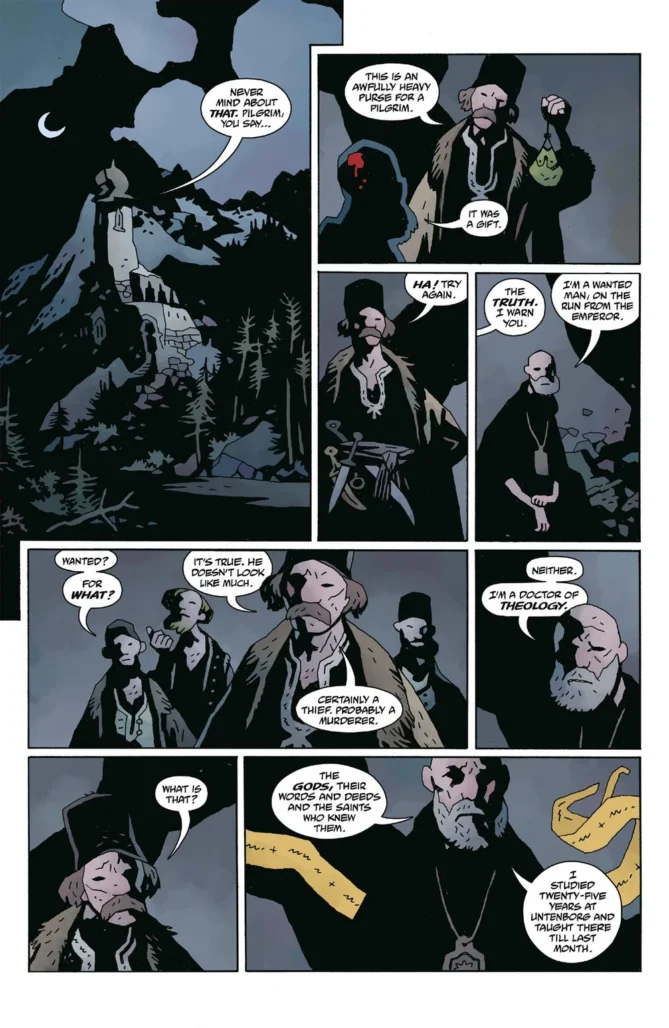
But I think where this book most elevates itself is in the depth of emotions the chapters get at. There’s a lot of heart in this book. Uri Tupka is a journeyman, who starts out posing as a poor pilgrim, before bad actors make him actually become one. And it makes for a sympathetic, relatable narrator to follow into this mythology. He has brushes with faith and love and trust and adventure, and they all feel likely to land with outsized import.
It’s almost as if thematically each chapter/god within is based around an emotion, rather than a folkloric inspiration, and the book is all the better for it. It’s a tight 104-page book that feels denser than its page county, but also reads quickly because the stories within are so compelling.
I’ll end on this note, in his afterward Mignola writes, “I’m continuing to have the most fun I’ve ever had drawing comics, and I hope it shows.” Yes, it sure does. Let’s hope the fun and spirit of these new creations doesn’t stop any time soon.
Uri Tupka and the Gods is out this month from Dark Horse
Read more great reviews from The Beat!