

 Mama Came Callin’
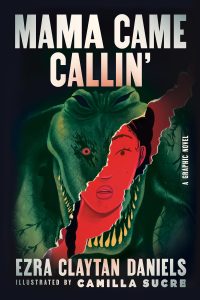 Mama Came Callin’
Writer: Ezra Claytan Daniels
Artist: Camilla Sucre
Publisher: William Morrow – Harper Collins
Publication Date: February 2026
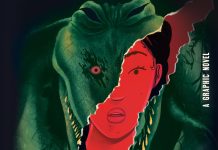
Mama Came Callin’ — the new graphic novel written by Ezra Claytan Daniels and illustrated by Camilla Sucre — is a suspenseful horror mystery drawn from two sets of history. The first is its protagonist’s family history, and the second is the history of Florida, where the story is set. And the book richly brings these two strands together with its swamp-set slasher plotline, paced so well that the 240-page comic is likely to be consumed in one sitting (that’s how I read it, anyway).
In broad strokes, the narrative engine is that the book’s main character, Kirah, was born of an interracial relationship in Central Florida. When she was young, her father (a white man from an old money family) was convicted of dressing up like an alligator and trying to kill her, ultimately going to jail for his crime. We join the characters 20 years later, when Kirah’s father gets out of prison and seeks her out.
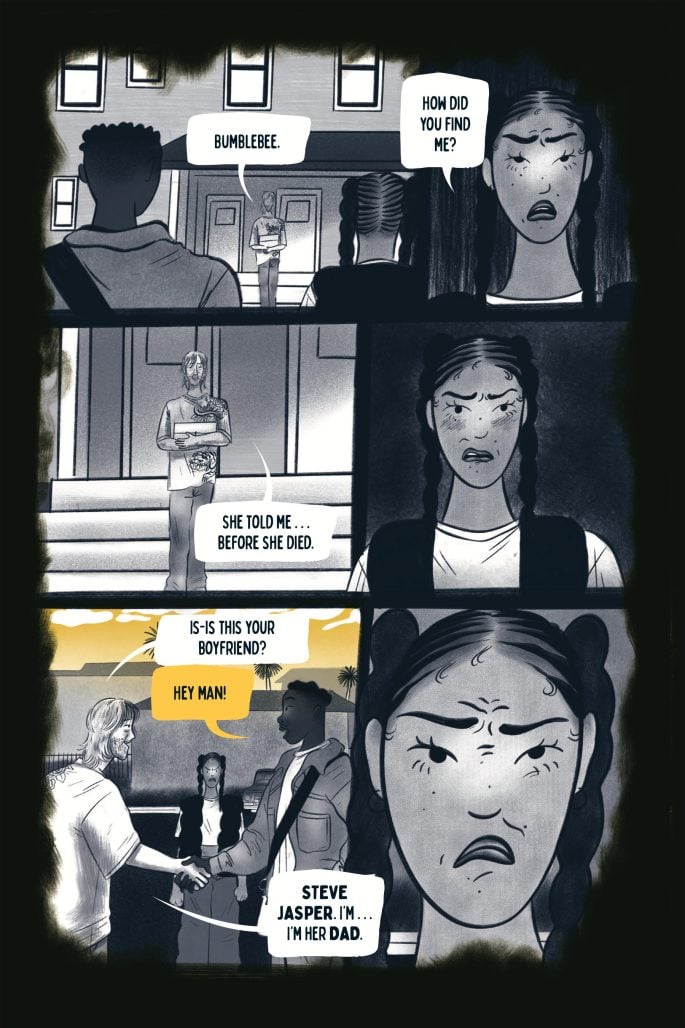
Thematically, the book is about racism, particularly families and communities that have a long legacy of it, but it’s also about the way that racism in this country is tentacled and far reaching, rarely as straightforward or simple as it might seem. It’s about how it can be carried forward by different individuals who perpetrate the same evils. Whereas it was easy for Kirah to blame her father for the violence nearly wrought against her as a child, the truth of the story ends up being far more complex.
This all makes for a rich, thoughtful premise, and its execution is equally as interesting. The slasher framework of the book is familiar. A masked killer continues to threaten our heroes throughout, as clues abound that he or she might be someone close to the protagonist, with red herrings peppered interestingly in. There are chase sequences and revelations and leads that don’t amount to much. And there’s a great resolution to who was doing what and why, wisely kept somewhat ambiguous.
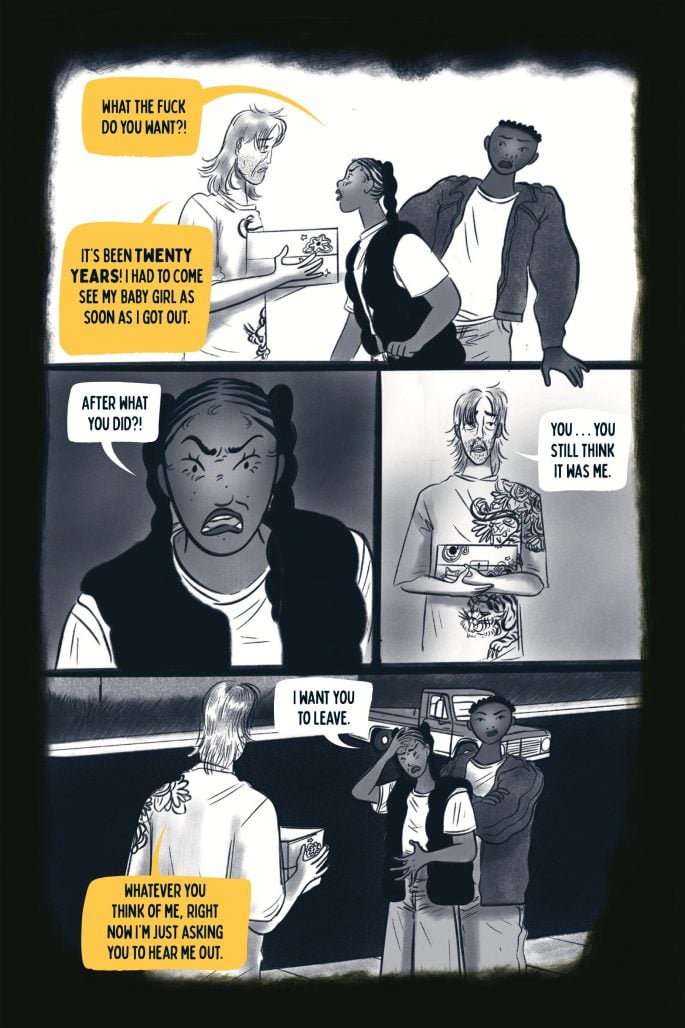
But where Mama Came Callin’ really shines is in how well it handles its small details. This is a book in which every character relationship feels like it has a written backstory that the creators are aware of, even if we as readers only see shadows of it, played out through snippets of familiar dialogue or mentions of shared histories.
The bad things that befall our characters also feel labored over (complimentary) and subtly played as part of larger metaphors. For example, a lot is made in this book about sight and perspective. And the first physical harm that befalls Kirah is a snapped archer string nearly taking our her eye. This idea of what we see (both literally and metaphorically) comes back over and over, as the book also delves into true crime profiteering.
This is all to say that I found the book to transcend slasher fiction, becoming something deeper and more powerful. This has been the case, as well, with the sci-fi genre fare Daniels has previously worked on, from his auteur graphic novel Upgrade Soul (a modern classic, for my money) to his dive into the horrors of gentrification, the Cronenberg-y Ben Passmore collaboration, BTTM FDRS. There’s just such depth to all of Daniels’ work, a sense that the creator doesn’t know any other way, and it makes all his comics appointment reading.
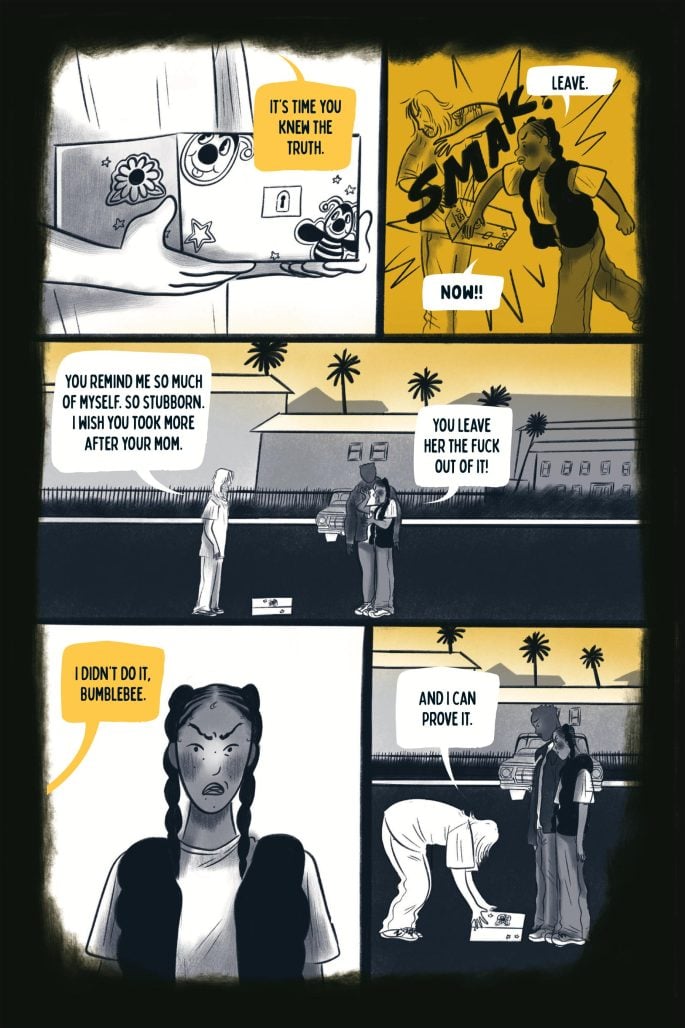
Joining Daniels on this project is debut graphic novelist Sucre, who does wonderful work, all of it in black-and-white greyscale with splashes of gold, befitting of its swampy sun-drenched setting. Sucre’s style of cartooning is spare but crystal clear with its visual storytelling, and in the course of this 240 pages, it continues to evolve, sharpening as the story continues and approaches its finale.
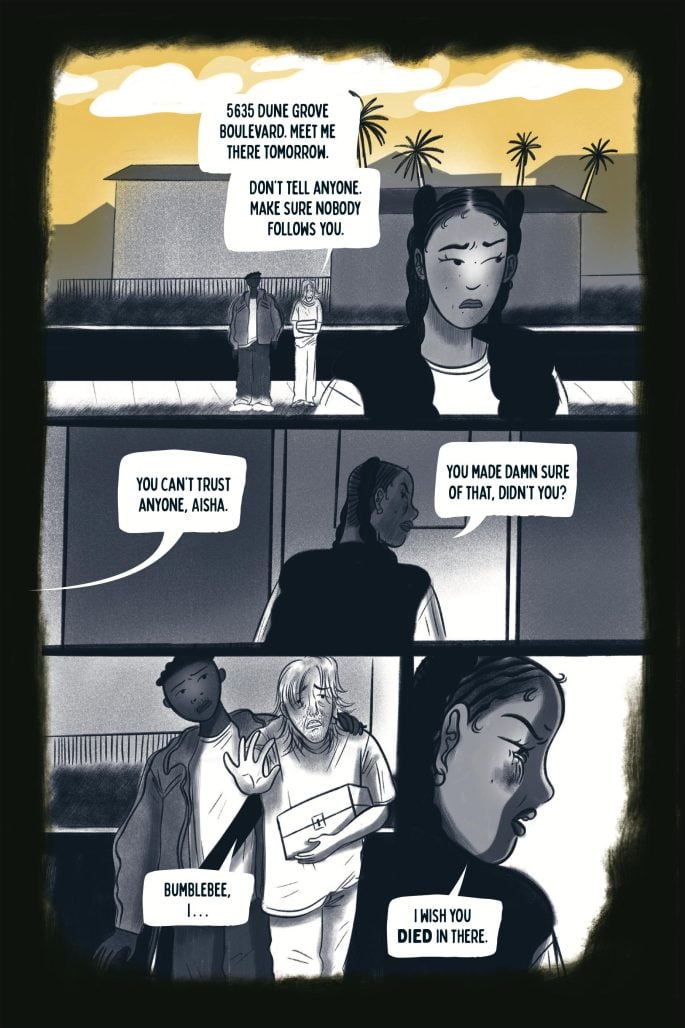
Overall, I found Mama Came Callin’ to take a number of familiar ingredients — from slasher fiction to the horrors of historical racism — and meld them into a unique and poignant, page-turner of a story, one that feels immersive and real.
Mama Came Callin’ is out this month via William Morrow
And check out the Beat’s most recent comics reviews!