
For many a film lover, and filmmaker, the VHS (Video Home System) is not simply a nostalgic item but an important tool in their becoming part of the larger film community. People tend to take for granted that these physical items were the only source for viewing films missed in theaters, foreign productions with little to no global theatrical distribution, or direct-to-video features that solely lived and thrived within video stores. As such, the VHS is not mere novelty item but a reminder of the way we consumed and discovered film at a specific moment in time, imbuing home viewings with an aesthetic and atmosphere that’s been erased by technological advancements and industry trends.
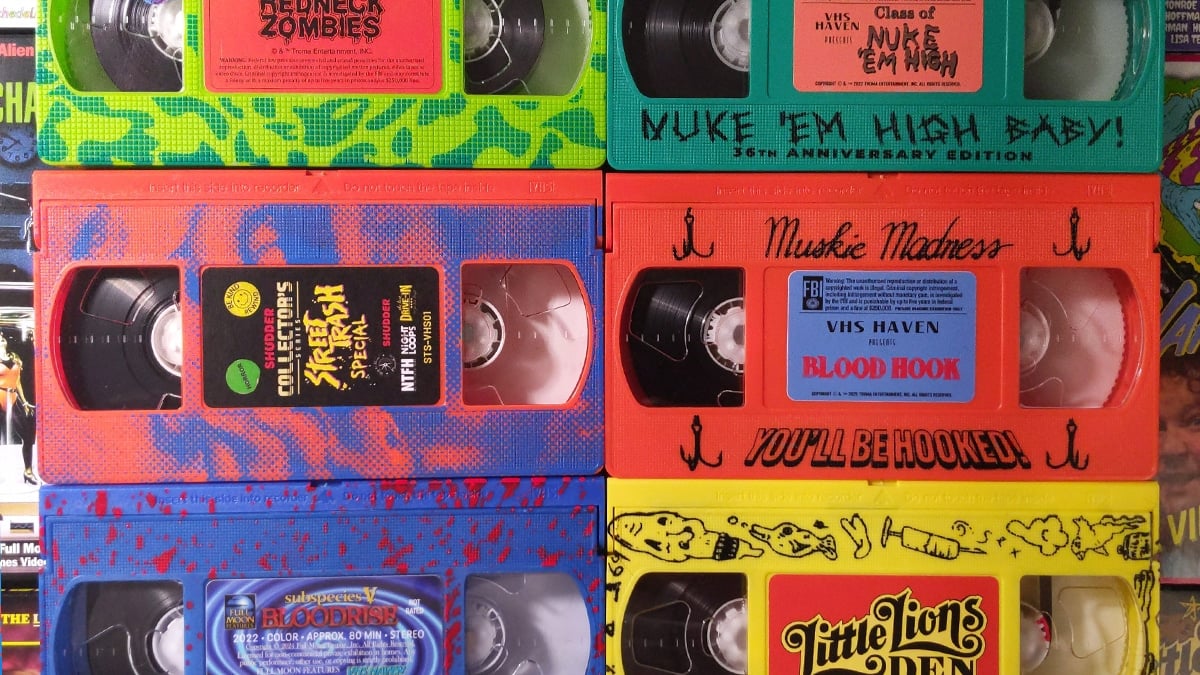
Hiram Dobbs built VHS Haven based on those unique viewings provided by the cassette tapes running analog tape through bulky players and projecting tactile images of horror and the fantastic. Based out of Georgia, VHS Haven has a clear objective: to provide people with the experience of watching film on the home video tapes of yore, especially those whose film-viewing was shaped during the heyday of VHS.
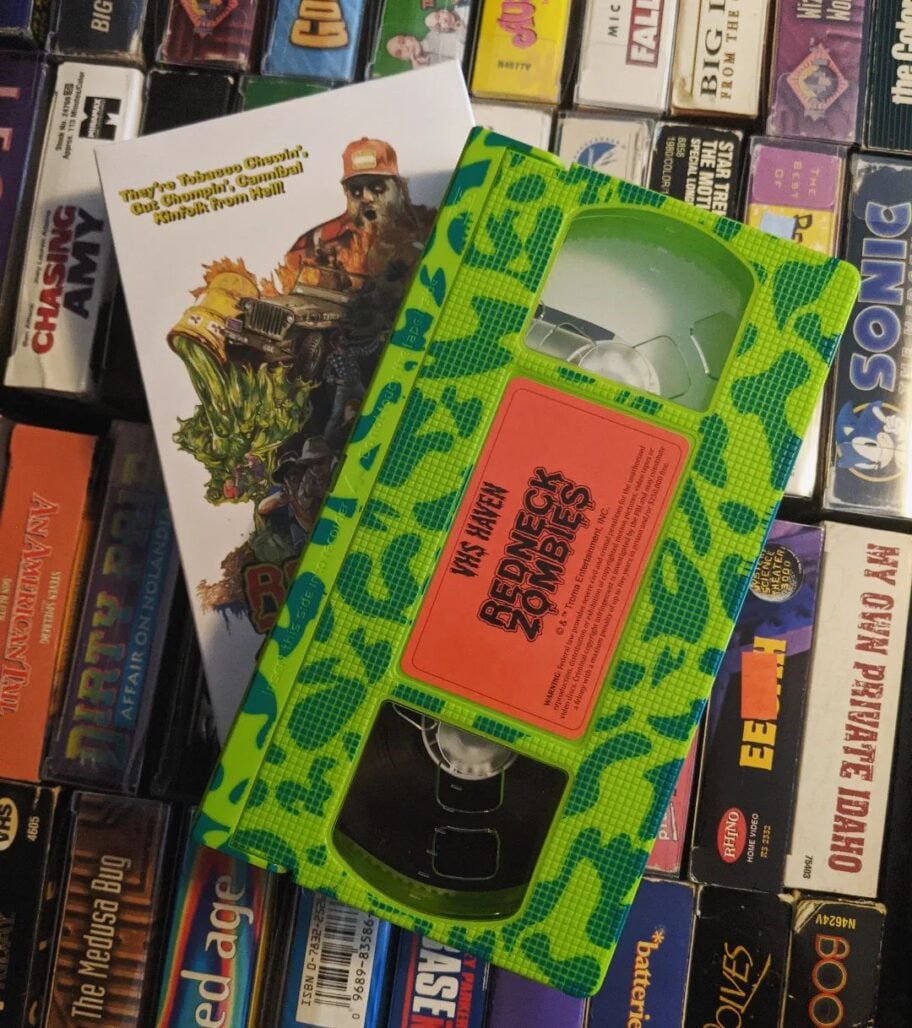
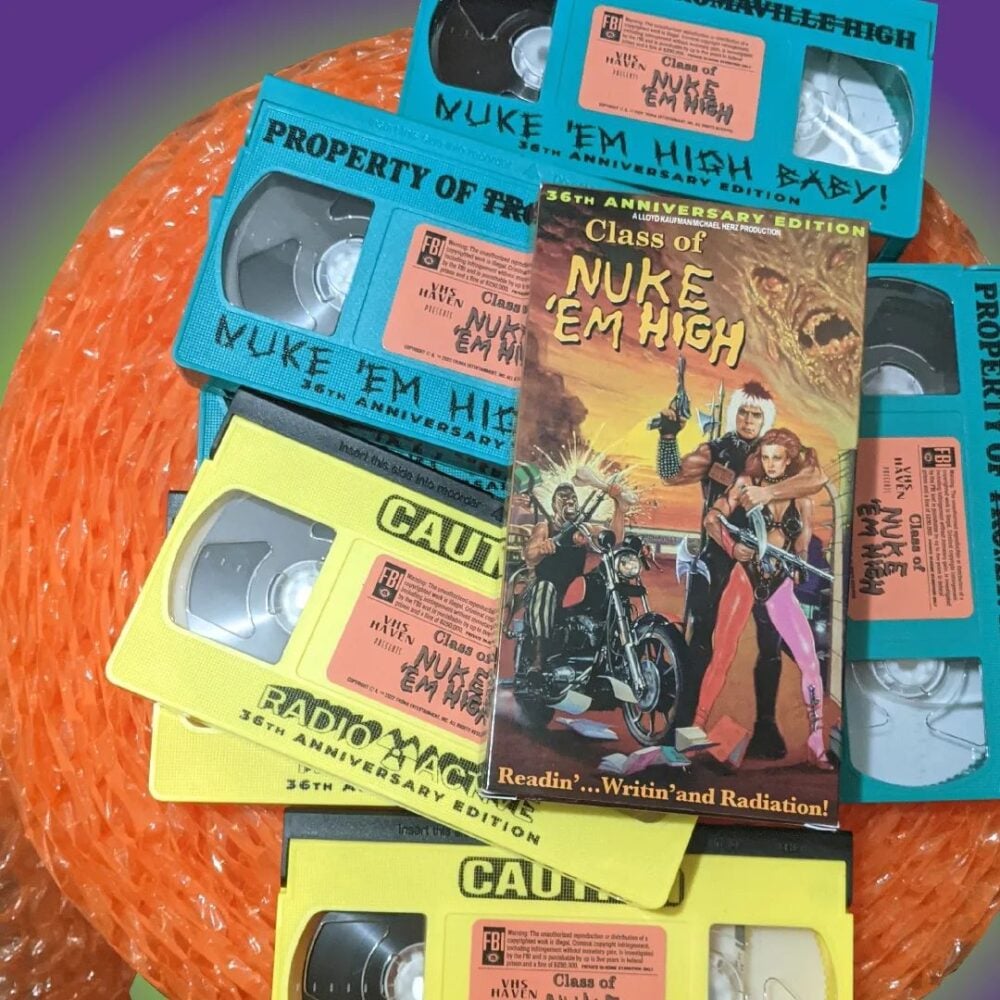
There will always be new film lovers interested in how the VHS looked and felt, but for the most part, seekers of the analog fuzz are those who know and cherish its imperfections. Dobbs is aware of this and, as major companies indulge in the nostalgia with VHS releases of their own blockbuster films, he favors the indie productions of the past (low budget extraordinaires Troma Entertainment Inc. and Full Moon Features films make up part of VHS Haven’s catalogue) and rising filmmakers looking to offer their films in a format befitting their creations.
I spoke with Hiram about the community of VHS lovers he found on his journey and how his love of horror and the weird shaped what VHS Haven is today.
GABRIEL SERRANO: How did VHS Haven start? What was the catalyst that led you to start producing and distributing VHS?
HIRAM DOBBS: I’ve always been a huge film person, and of course, VHS is just wildly important. Like most people in my generation who grew up with tapes, it’s all really close to our heart, because it’s the medium we grew up with.The biggest factor for VHS is that it’s a huge memory for everyone, and that’s a big part of what makes it special. Every tape, you know, is slightly different, and they are all kind of degrading, and that changes the look of it. I’ve been a big VHS collector, of course, and as a kid I watched all my favorite movies on tape. When I got older, I started keeping around old tapes, especially some of my favorite horror films, horror comedies and stuff like animation and anime. Over the years, I just started collecting and really building back my collection. And I just found such a huge community of people online. I had no idea. I started just looking around different places and you would never expect, like, the giant communities of people who collect tapes on the internet, on Facebook and on Instagram. And then such good people! I started buying tapes on Instagram versus eBay, and I was getting great deals and seeing stuff I just never saw before. And of course, I’m in a pretty small area on the outskirts of Atlanta, and there’s not a lot of tapes so I get some stuff at Goodwill, but of course, horror is always a rare find. So I was on the internet, you know, collecting. I guess that was the start of it.
I definitely knew I wanted to be in the film business, but I decided I’d go with distribution because I thought there weren’t enough good people in distribution. I mean, everyone always says that people in distribution are scum or they steal so I thought it was a good avenue to go into, to try to be fair and to uplift independent film and movies I like. Independent film has always been really important to me. I just thought it was so much better than some of the mainstream stuff, and over the years I started enjoying it a lot more, all the independent stuff. That’s why I thought VHS was so special, because you can distribute a small film very affordably and get it to fans. It’s just a great way to do it. It’s quick, and it’s beautiful in its own way. So that’s what really drove it and really started the whole thing. And that’s another thing, I try to really make a good product. And I’m huge on making something that looks as good as possible on tape with high quality artwork, high quality prints. We really care about Hi-Fi audio and good duplication and all that. It’s important to me as a collector, when I was watching other modern tapes, so that’s what I try to put out there.
SERRANO: Looking at what you have to offer on the website, it’s all mainly horror. Could you talk to me about what it is about horror that makes it such a natural fit for VHS?
DOBBS: So there’s a couple of huge things. A huge aspect of it, I think, is the fact that horror, on VHS tape, I think it adds to it. It definitely adds to the experience. Of course, I like other movies, and we even make comedies and different VHS releases but there’s definitely something really special about watching scary movies and getting that analog look. But I think the biggest part is that the horror community is very much about independence and the horror community appreciates what people call B-movies, or low budget movies. There’s such a love for it that you don’t really see in other genres as much. People know that the VHS is all about the readily availableness of it. That’s why it went out as a format. It was just so readily available. It was shared and loved, rented, resold, and recorded, re-recorded, and that’s what’s kind of special about it. It’s about sharing stuff with people you love. That’s what our company is all about, it’s about finding really cool stuff, old and new, and sharing it with people.
SERRANO: Do you think you’ll expand to more genres, or do you think you’ll stick to that niche?
DOBBS: Yeah, I’m open to everything, and I do love avant garde and obscure stuff, animation and music. We really started on horror comedy, and I always try to do some horror comedies that I like, that’s a big deal to me. The whole genre of horror comedy, I think, is underrepresented. There’s a lot of other cool stuff that’s not necessarily horror, that is on VHS, that’s important. One cool thing we have coming up, we’ve been working with the Church of the SubGenius and that’s something we haven’t really announced yet, but I worked with Ivan Stang recently, in like, the past year, to get a special edition of the SubGenius movie and to re-release it on VHS and that’s been really cool.
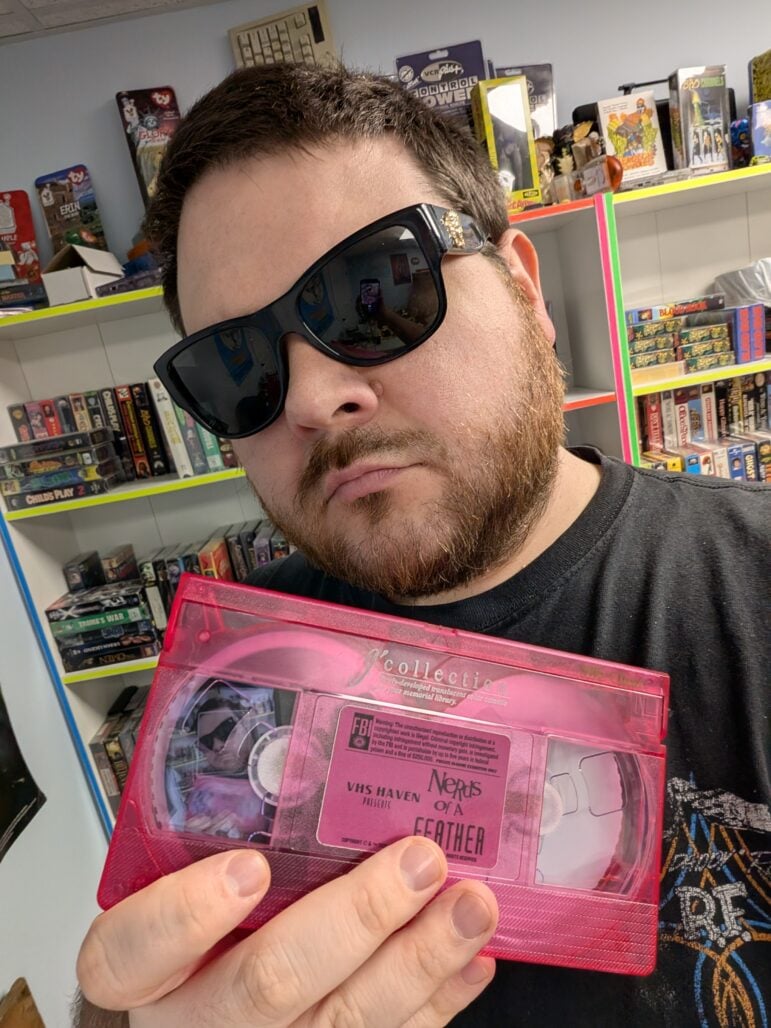
It’s not a horror movie or anything, but it’s something that he originally put out on tape, and it’s a really rare tape, and it’s awesome. This edition that he did the first tape as is, I think, the best version that’s out there, and there’s not even a good copy on the internet. And so we got the master from Ivan Stang, from his garage that he used to make the original tapes. And we have some other stuff from Troma. We have Nerds of a Feather that’s about to come out. It’s just a comedy, but it’s a goofy comedy. It’s one of those things where it kind of was only distributed on tape, and Troma just has a master that’s recorded on tape. So that’s why it lends itself to it. It’s going to be fun to watch on tape versus on Blu-ray. We’ll give it just a little bit extra, but it’s also bringing back to life a lot of those movies shot on tape specifically. That’s the life they had, and that’s a delight. I mean, it’s great to see everything in as super high resolution as possible, but, it’s for the people that do collect. And if you have a CRT and you have a VCR, you can buy something off the internet, have it shipped to your house, pop it in – it’s a cool experience. So that’s what we’re trying to provide. There’s Blu-ray and all that, but we’re not trying to compete with that. We’re something else.
SERRANO: Speaking of Troma, I know you’ve also worked with Full Moon Features. Can you talk to me more about how you came across that, how you managed to get in touch with them and start putting out some of their catalog?
DOBBS: Full Moon is a great company. They’re pretty easy to get in touch with. This whole thing started with me doing research, of course, into where I wanted to go, the places I wanted to pursue, and Troma and Full Moon were just really important to me. Some of my favorite early tapes that I discovered at the rental store kind of thing and companies that, of course, I really admired. Charles Band and Lloyd Kaufman, they did, like so much amazing stuff. And Charles Band, his name is on so much amazing stuff going back and he is, like the godfather of video distribution. So that’s something that I really wanted to do and, you know, it wasn’t that hard. I just reached out to them. Eventually, they did get back and we negotiated a license deal, and they were very easy to deal with. They were good people. The last thing we did was Subspecies V, and that was really cool. It’s like a really wide movie, so it’s more full on the tape. And we had custom artwork done by Jinda in Thailand. He’s a legendary movie poster artist, and he did a really cool job with it. That’s one of my proudest releases from Full Moon. Because Charles Band he’s just such a legend. And they’re good people over there. They support independent people and that’s what it’s all about, trying to support each other.
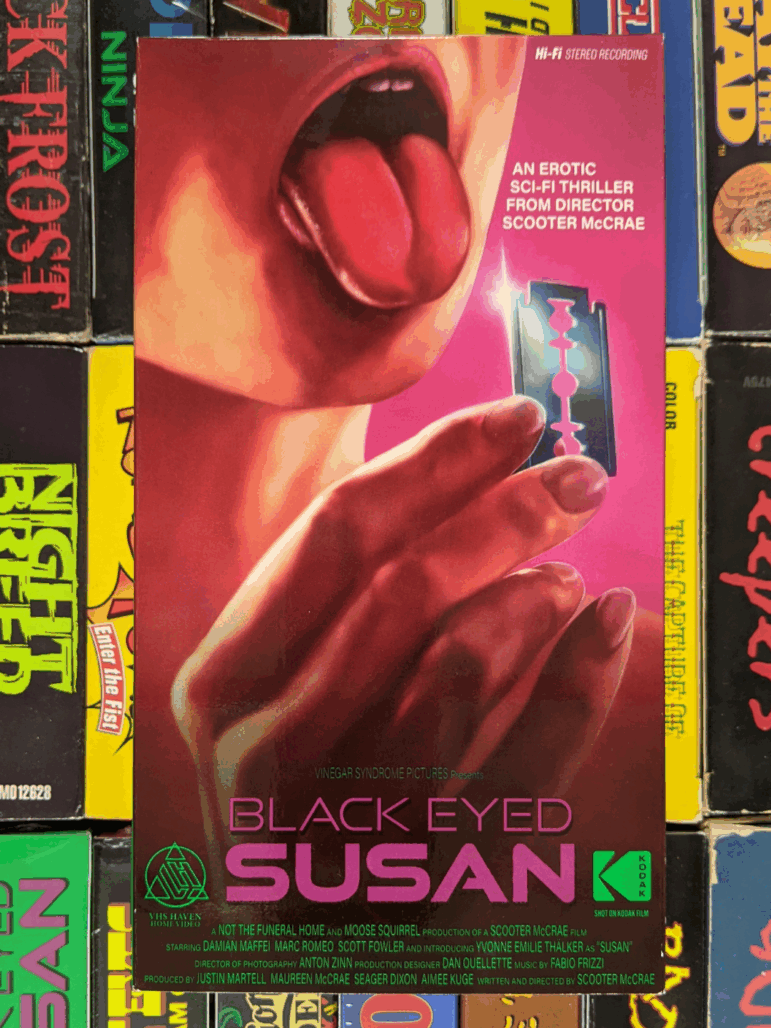
We recently did get our stuff into Vinegar Syndrome’s online store, which has been awesome. I mean, I’m so proud of that. That’s one of the best distribution companies in the game. And Justin Martell helped me get our latest releases I did with him and his company, Not The Funeral Home. We did Black Eyed Susan, Eight Eyes and Street Trash, the remake. He was able to help me get those into Vinegar Syndrome. We have exclusive copies on our store and on Vinegar Syndrome. That’s, of course, what I want to work toward, getting more of our stuff to more retailers and getting it out there. We are independent, my goal isn’t to get into every Walmart and stuff like that. It’s more to serve the fans and make really cool stuff. So that’s what it’s about.
SERRANO: There are always going to be the naysayers talking about how VHS is not the best quality, is there anything else to the specific quality of VHS that you’re striving for with your releases?
DOBBS: I don’t think our job is to try to convert those people. A large part of why this is important, you know, is because people grew up with it. That’s going to be the largest part, of course. But I do think there’s probably young people getting into it, like, “hey, this does look cool”. And it’s probably people that are seeing it the right way, on an actual CRT and that’s so big. When you watch this stuff on a modern TV, you’re not getting the experience at all. I mean, of course, if that’s all you have, go for it. It’s still a way to watch it, but it’s much better on the CRT and the whole experience to actually have the equipment. I mean, that’s what it’s about. That’s why we’re making tapes, because people have the equipment. Of course, some people just like them as collector’s items too, and that’s okay.
And that’s another thing. There’s a huge resale market. And our tapes do go a lot in that. But we make it for the people who really watch them, and if you want to hang on to them, that’s cool, too. I wouldn’t try to convince anyone to get into it. But you should try it, you know, you might hate it but that’s the thing I love about it, the analog aspect of it. Every tape is unique and I try to quality control a good bit of it and, you know, I can’t QC every minute. We QC every tape. We make sure we get good picture and audio and everything is all slightly different. And that’s what’s kind of special about it. If you have a copy, this is your copy, and over time, it’s going to start to have hiccups on spots you paused it, or the spots you watch the most. And that’s interesting too, you know. I want to say, if you’ve never even heard of a VHS, you should go back and watch it.
I mean, just maybe go to the Goodwill and start looking around and pick up something and check it out, just to see the promos and stuff. Sometimes that’s the best part of the old tapes, seeing the old promos and all the things that remind you of the past. That’s what we try to do on some of our tapes and releases. We try to show content that you do not see anymore, and you probably wouldn’t see it anywhere. That’s what makes VHS special, the historical aspect of it. And I do a lot of that. I do a lot of preservation and digitizing tapes. So I can’t say that it’s not important to have digitized versions of the tapes either. Because going into the future these tapes do degrade, so you want to grab a copy.
A big thing too is just holding something physical. Having something in your hand is such a big deal. When everything’s streaming now, it’s such a big difference. To actually hold an item and have it and be able to cherish it. But I wouldn’t try to convince anyone that it’s better than 4K of course, like that all has its place. But it’s a lot more fun, you know? 4k is not going to spit all the stuff out and get all twisted and destroy itself in the middle of watching it. So what fun is that, you know? That’s what makes it special, the craziness and the funness.
SERRANO: There has been some movement recently with bigger movies and blockbusters that are being put out on VHS. What do you think about those releases and what these bigger studios are doing with that product?
DOBBS: I mean, it’s cool, it’s good that they’re pumping VHS but of course I see it, I’m like, “yeah, that doesn’t look good. That looks like they cut a lot of corners”. It looks kind of crappy. I don’t like anything that’s subpar, and anything that’s half assed, and of course, anything corporate that’s what it’s going to be most likely, but it’s still good. Anyone making VHS tapes is a good thing. But of course, they should do it the right way. Hopefully they’re taking all that stuff into account.
Quality, like I said, is important to us. We started developing good vendors, finding out what’s the best way to get the best quality tape. It’s been a long, arduous process, and a lot of bad products and experiments to really figure it out. We try to specialize in finding really good stock that plays well, records well, like I said, a lot of Hi-Fi recording. A lot of companies don’t do Hi-Fi recording. So we try to do that with all our releases. And another thing is the artwork. But, of course, there’s some people doing it, and it’s cool, but, there’s a lot of companies out there just trying to hop on the bandwagon. It’s great, as long as they make good stuff.
SERRANO: In terms of collaborating with new filmmakers and new releases, it sounds like something similar to what you were mentioning about the horror community and the VHS collector community. Have you found that community as well with newer filmmakers? Have you had people reaching out to you?
DOBBS: Yeah it’s crazy. When we first started I was reaching out to everybody, trying to find stuff .Now, I mean, people are reaching out with really, really good stuff. And it’s amazing, like it just feels like an honor that someone reaches out to us. The community of independent filmmakers, they’re all the coolest people, the most talented people in the world, and it’s been awesome. The movies we’ve run into have been just totally incredible. Justin Martell coming up, like, “hey, can you put out Eight Eyes and all those?” I mean, that was really cool, and he’s been really helpful, you know, he’s one of the producers of The Last Drive-In. And we started working together to do the Joe Bob tapes, we were customizing the tapes, and we bought some from Ship to Shore PhonoCo. and I ended up talking to Justin, and the last four tapes they did, they ended up manufacturing them with us, and that was a huge honor to just to work with him. So that’s how we kind of got to know each other and we’ve been doing a lot of projects and stuff since then, and trying to work together. Really grateful for getting to meet Justin, and everything he’s done for us, because he’s pushed us a long way, and getting to know other people and companies and getting everything going for us.
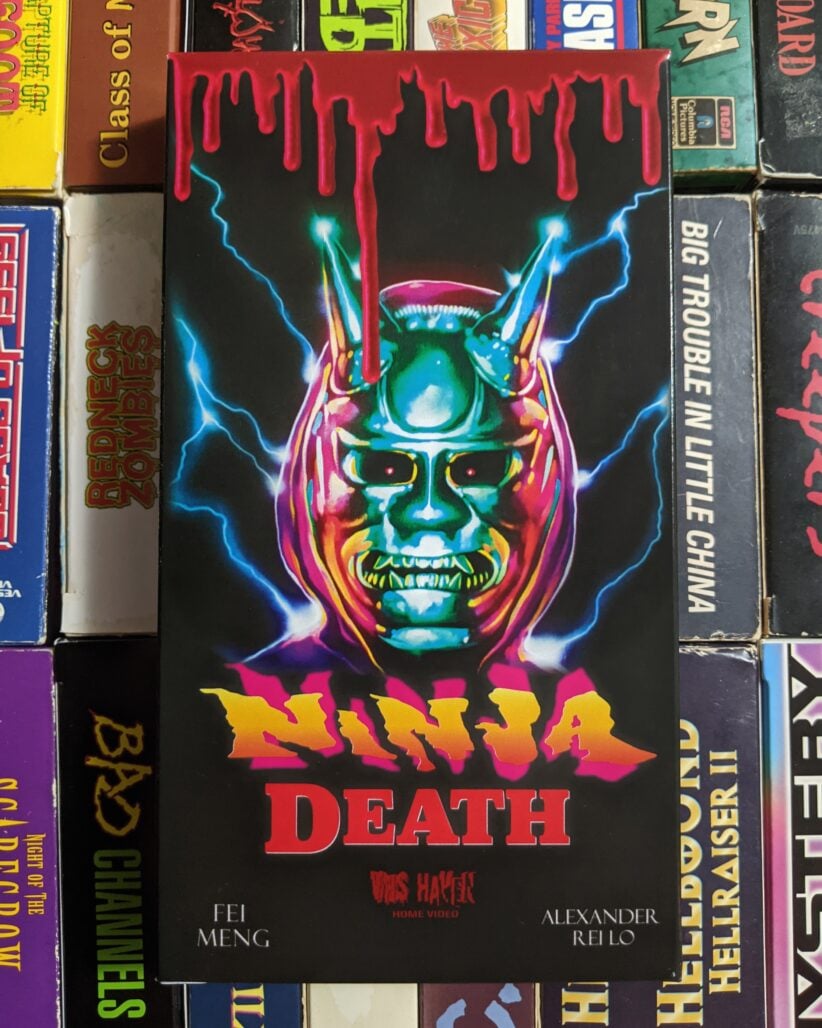
SERRANO: You did touch upon a little bit on the artwork that you did for Subspecies V. In terms of the other films’ artwork, how did you put that together? What was the thinking behind how you wanted these VHS covers to look?
DOBBS: I study older releases, older tapes, and try to find aspects that I like the most, and I try to incorporate that into the stuff we’re doing. I try to let the artist work as much as possible because I think most artists work best like that. You give them an idea, or, you know, a certain premise, but let them flow. That’s where you get some of the best stuff. It starts with stills from the movie, you know, and taking it to Photoshop and creating mock-ups and different ideas. We’ve gotten to know so many cool artists from all over the world. That’s one of the coolest parts, is getting to work with these people and getting to support them, because they’re just so talented. For The Little Lions Den, they did that artwork themselves. I think Nate [Nathan Ward] did it, and it is just beautiful. So, you know, I just try to support that. I never try to lead anyone astray. I support good artists. If the artwork that the people have is good, I try to use it. Like, Troma has some great archival artwork, and they send me great scans of it. So I want to try to use the best quality of that. I’m either using the best out there or making something new that I think is just as cool.