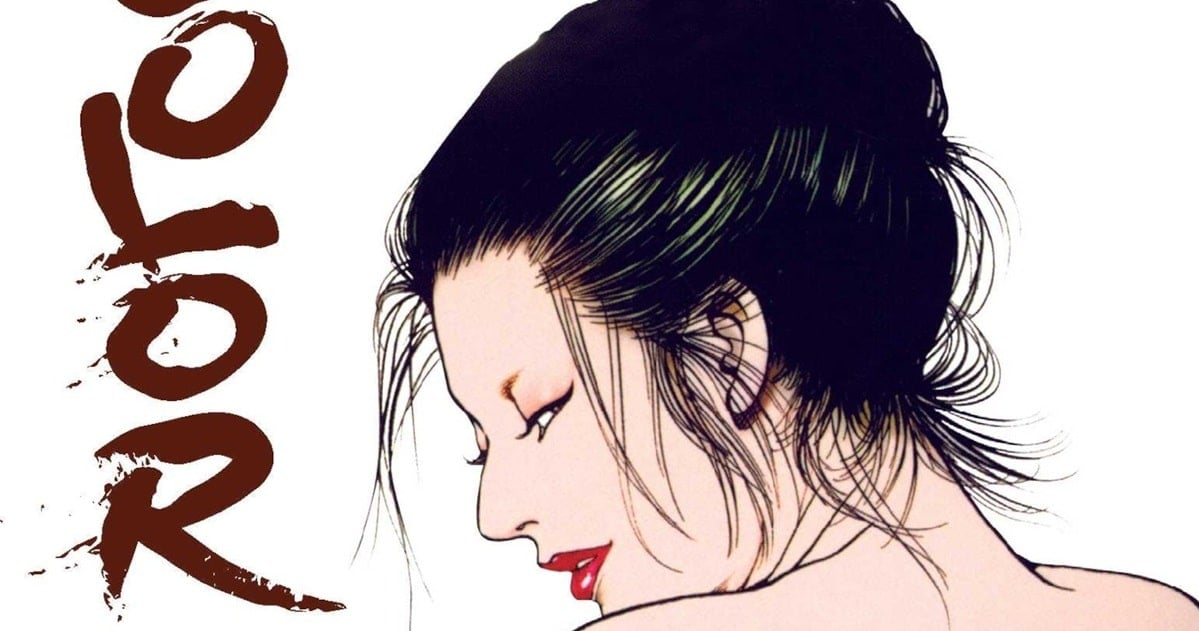

The samurai epics that Kazuo Koike did with Goseki Kojima are probably his most well known among Western audiences. Certainly Lone Wolf and Cub, and to me Path of the Assassin and Samurai Executioner. Though I understand they did several others together (Kei no Seishun, Kawate Soro, and Oda Nobunaga). I’m not sure if those latter have ever been translated and published in English. And the follow-up series of New Lone Wolf and Cub that Koike did with Hideki Mori.
It was largely through the Dark Horse editions of those books that I knew Koike’s works and a digital bundle release recently expanded my reading further. Including discovering one that follows two escaped slaves, one a black man from the American south. I also learned there’s Musashi (with Noboru Kawasaki) and Nijitte Monogatari (with Satomi Koe) to give other flavours. I wouldn’t be surprised if there are others as well as I try to fill in some of my blindspots for manga.
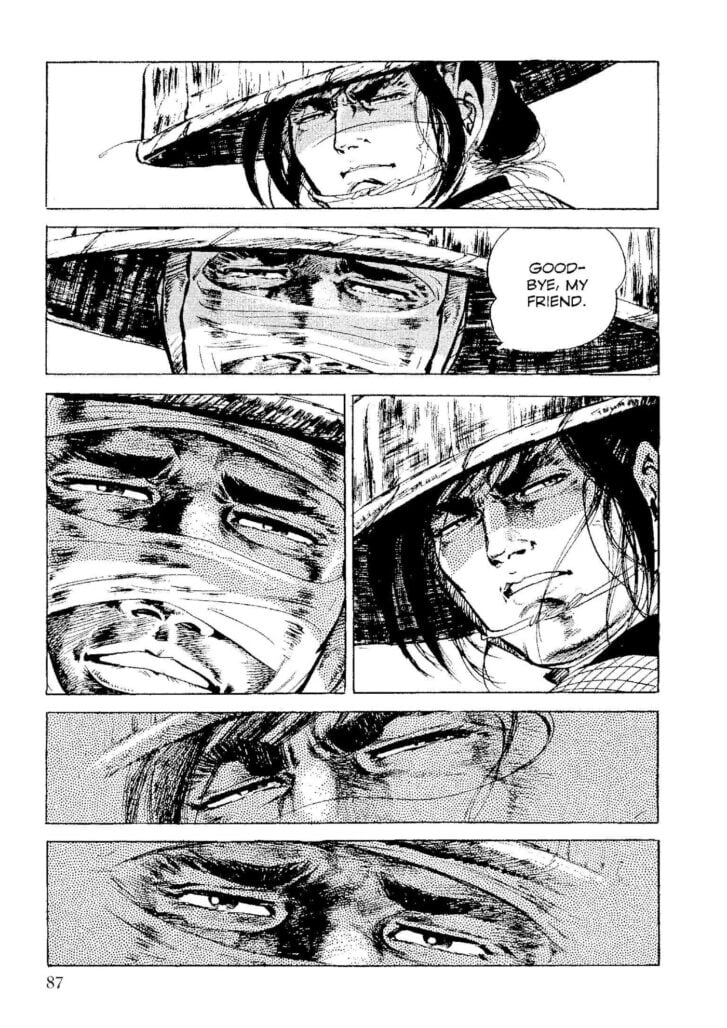
“Peasants and slaves are no different.”
Color of Rage by Kazuo Koike & Seisaku Kano, as translated by Naomi Kokubo with Jeff Carlson and letters & art touch-ups by Kathryn Renta, follows the two escaped slaves King and George after the sinking of the ship they were aboard, during the Edo period. The former an African American from the Deep South and the latter a Japanese man. The series largely deals with them trying to find their place in society again, George trying to teach King about Japanese culture, and then everything essentially going to hell as they’re framed for murder again and again.
Koike uses the character of King as an opportunity to examine the conventions of the period of Japanese society, of the relationship between slaves, peasants, and the higher aristocracy and beyond of the culture. Of the code of honour that samurai and criminals live by, and how it relates to the character’s own experience in a racist America. You can argue that Koike also falls into racist stereotypes in his depiction of King, as a kind of brute that can barely contain his sexual urges, and in a certain fashion under the Magical Negro trope. It’s a wrinkle that makes you wonder about the overall broader social commentary.
Seisaku Kano’s artwork is gorgeous. He has a relatively realistic style that adds a gravity to the stories. With an interesting approach to how they tend to flow. The bulk of his work here has some straight-forward pen and ink shading, with more clean-lined character work, but the opening sequences before chapter titles feature lush, grey-washed shading. It’s an interesting lead-in to each chapter, opening with a kind of hyper focus before arriving at the main thrust of each instalment. Kano’s action sequences also a wonderful frenzy when they come up.
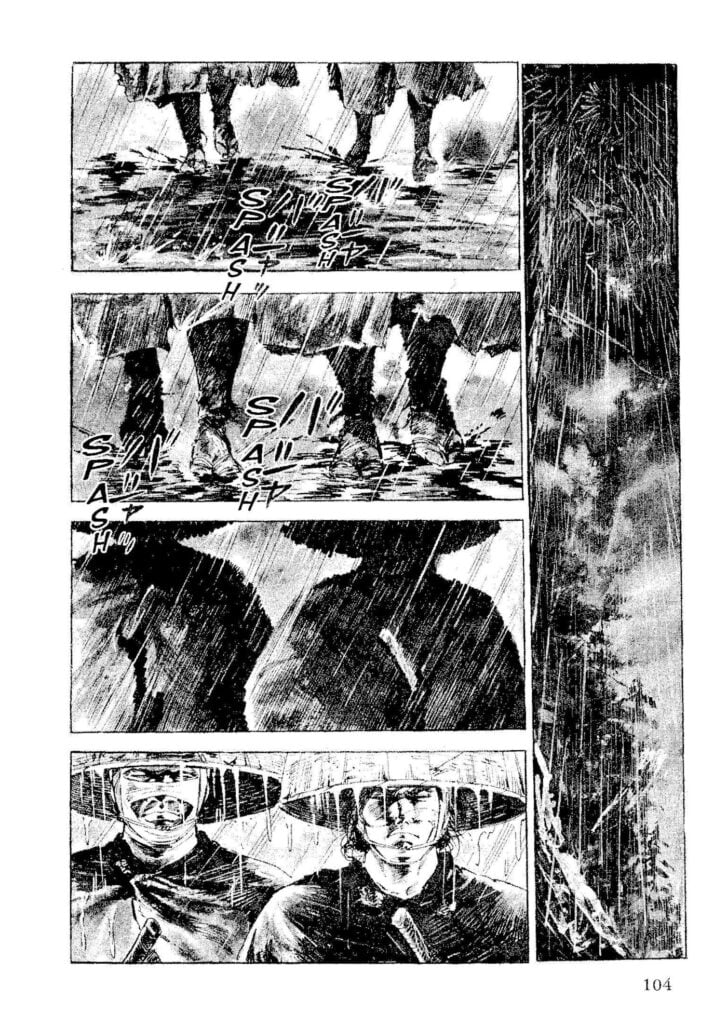
“King…I’m glad you’re my buddy. Do you mind going to hell with me?”
Color of Rage from Koike & Kano with Kokubo, Carlson, and Renta is a travelling buddy story that plays off the idea of a stranger in a strange land learning the customs, and largely finding that they fail both him, his friend, and the people native to the land. It’s an interesting social commentary that strives towards an idealized world, but often stumbles when confronted with the lived reality.
There are parts that definitely could be considered racist in their depiction of King, whether unintentional on Koike’s part or directly as such as part of the story. It’s not my place to forgive or excuse any of them, just that they add to the complexity of the tale. In some ways it feels like a mirror back of American exploitation films through the lens of a Japanese period piece. The only shame is that there wasn’t any more than these serials.
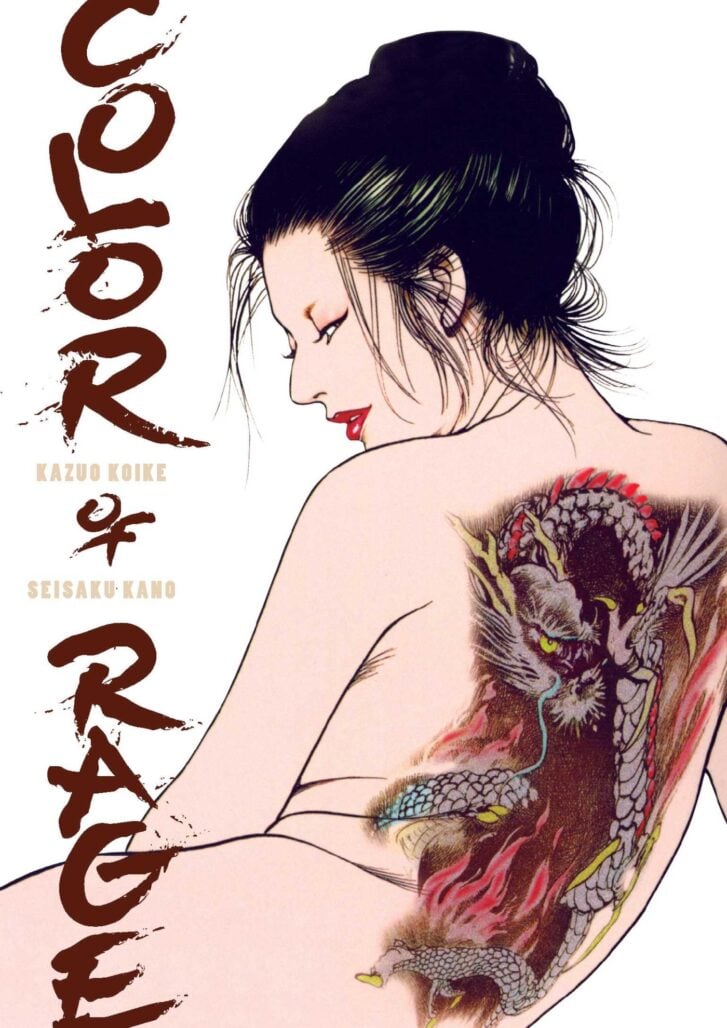
Classic Comic Compendium: COLOR OF RAGE
Color of Rage
Writer: Kazuo Koike
Artist: Seisaku Kano
Translator: Naomi Kokubo with Jeff Carlson
Letterer & Art Retouch: Kathryn Renta
Publisher: Dark Horse
Release Date: May 20, 2008
Read past entries in the Classic Comic Compendium!
Check out other recent review pieces from The Beat!