


In comics collecting circles, there is nothing more sacred than a CGC grading. Slabbed deep in plastic, CGC grades turn a comic book meant to be read into an austere collectible.
But what if the slabs themselves are faulty? Automatic Comics posted a video on their YouTube page over the weekend highlighting an issue with the new CGC (Certified Guaranty Company) slabs. A video sent to Automatic Comics shows slabs “bowing so much that they can’t sit flush with one another.”
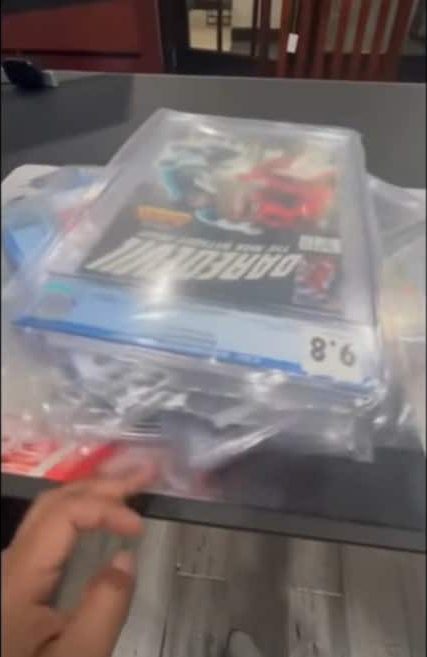
While this is a problem specific to this collector, Automatic Comics mentions in his video that a similar issue was previously reported in a Reddit post titled “CGC Slab Bow?”
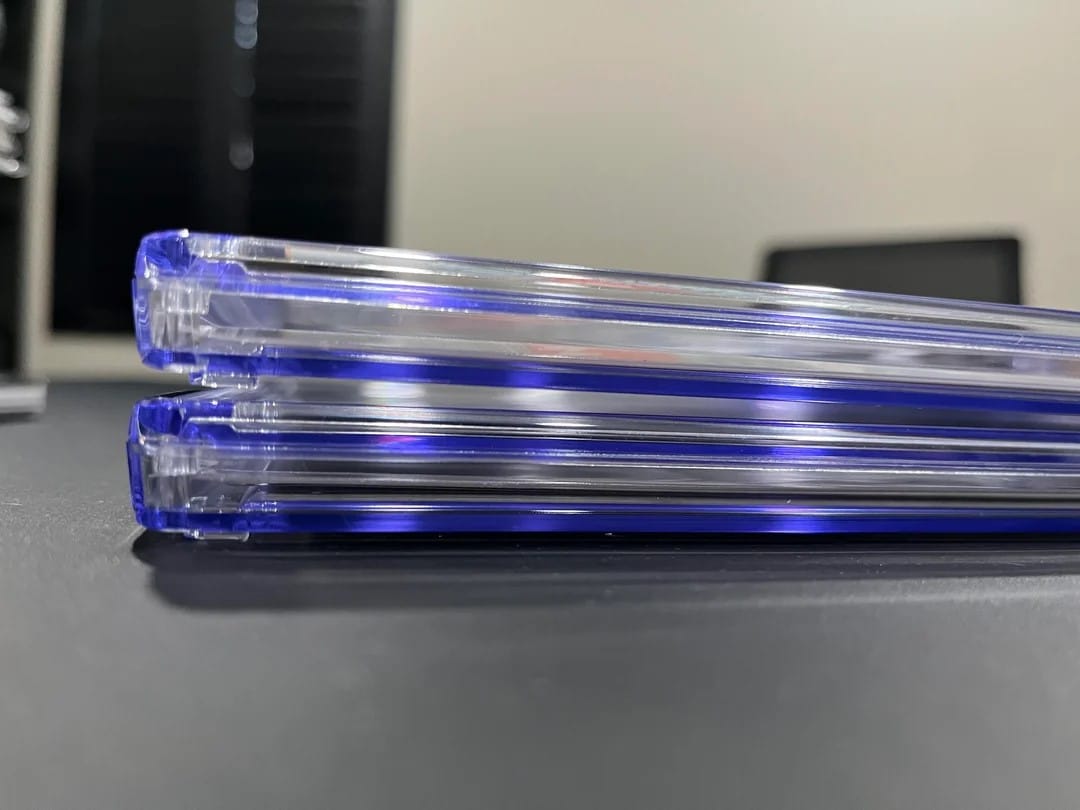
Speculation is going around as to whether this “bloating” is caused by CGC’s new cases and sealing process. In case you missed it, CGC had to put out a statement last year regarding tampering with CGC Comics holders and “re-holdering,” and that resulted in a redesign for the beloved plastic cases.
Allen Frances over at Personal Finance Advice summarized the “CGC reholder scam” in a January 1, 2024 post:
“The CGC Reholder Scam
The CGC reholder scam artist was essentially selling reholdered and graded slabs that had low-value comic books inserted into slabs marked as high-value.
Comic book slabs are reinforced plastic cases that encapsulate, protect, and visually authenticate valuable comic books. Third-party grading companies like CGC have comic book experts and authenticators who are employed to encase valuable comic books into the slab and then apply signatures, seals, and stickers that attest to the value and the grade of the comic book. Collectors can then be assured that they are getting the real deal when they pay big money for rare comics.
However, the CGC reholder scam artist created a loophole in CGC’s grading, slabbing, and reholder system which scammed buyers into paying for the appearance of high-value certified slabs that had low-value comics swapped into them. This should not have been possible since the slabs are designed to doubly encase the comic and are supposed to be hard to crack and leave visible evidence of tampering.
The scam artist used CGC’s own grading system against the company and the collectors who take the grading system for granted without question.”
This, later dubbed “Swapgate” led CGC to change their “encapsulation process,” with CGC putting out a statement in January of 2024 that read:
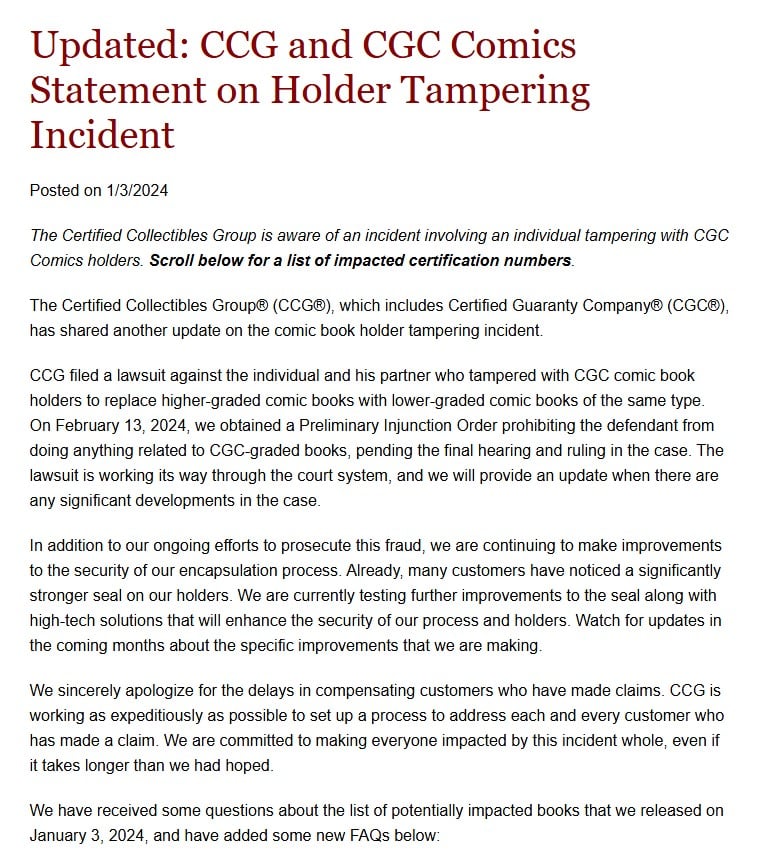
In addition to our ongoing efforts to prosecute this fraud, we are continuing to make improvements to the security of our encapsulation process. Already, many customers have noticed a significantly stronger seal on our holders. We are currently testing further improvements to the seal, along with high-tech solutions that will enhance the security of our process and holders. Watch for updates in the coming months about the specific improvements that we are making.
These new methods of sealing and putting books in slabs might be the reason for this bowing and bloating that we see in the original Automatic Comics video with him explaining:
I’m speculating in here. What happened with this is that we know we had swapgate. People were swapping out books and everybody was complaining.
“Why aren’t you improving your security. Why can people do this? Why isn’t there something that identifies when books get cracked out?”
and all of the stuff, so I’m guessing they made some change to how they’re sealing these cases because I’ve heard from some people that they appear to be fully sealing them around the edges now. So now my guess is that they are fully seeing them around the edge in a way that air can sufficiently escape, and we’ve been seeing this stuff in the summer now, so it seems that the change was made in the winter of last year, and I’ve seen it this summer.
It seems like it could be a combination of the new cases and sealing, and also the summer heat, with Automatic Comics explaining:
And so, they sealed this all up around so you can’t have adequate air escaping. And then when they’re shipped in these hot FedEx vehicles, UPS vehicles, USPS, whatever it is, when they’re shipped in those vehicles and they’re in hot areas becausethis person that I talked to said he’s in the New Mexico area, so heat is a serious issue there and they get exposed to heat, the air doesn’t have anywhere to go and it presses out the cases and maybe it softens the case just a little bit in that heat enough that it then holds that shape afterwards. So even though it cools down, it doesn’t go back to its original shape, and now you have this bowed out case.
There is no exact explanation for why the slabs are bowing in this manner, but heat is the most likely culprit. Collectors can only hope that this bowing isn’t damaging the books in the cases like when palmbeachpresser posted August 23, 2024:
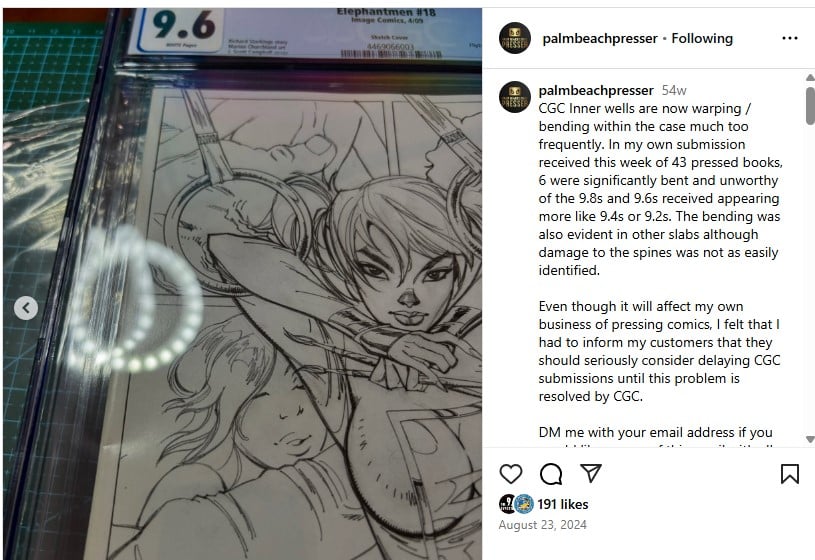
CGC Inner wells are now warping / bending within the case much too frequently. In my own submission received this week of 43 pressed books, 6 were significantly bent and unworthy of the 9.8s and 9.6s received appearing more like 9.4s or 9.2s. The bending was also evident in other slabs although damage to the spines was not as easily identified.
While all of this may seem picayune to those outside slabbing circles, it does seem the new design may have some flaws…and collectors should be reminded never leave anything precious in a hot car.
– Additional reporting by Heidi MacDonald








Play stupid games, win stupid prizes.
Well, slabbing comics is moronic to the Nth degree, especially very old ones in which the pulp already contains some degree of mold and humidity. Short of vacuum sealing, it’s bound to develop over time and bend the container, regardless of how strong it might be. People who believe this is a worthy investment are asking for it. They deserve it. ‘Nuff said.
Slabbing was first developed for coins; metal objects which by casing them are perfectly protected from scratching, but still can be viewed from all sides.
I never regarded the casing as the important factor for CGC. You can slab any comic you want to keep safe yourself with plastic casing for sale at any comic book store. The main point is the grading, which only applies if you want to sell or buy. In that case (especially of you buying or selling over the internet) having a third party grading a comic can add confidence for a buyer to finalise a sale because the buyer feels confident the grading isn’t biased. In such a case, a buyer looking for comics in the best condition available for his budget is usually willing to pay a higher price if they feel the grading is honest.
Paying for something that ‘shouldn’t be opened’ seems odd to me. You cannot enjoy the comic book to it’s fullest potential. You cannot even check if the grading is indeed fair. I’m even not certain if CGC themselves advertise their cases as being the perfect way to preserve a comic. They are not going to tell you otherwise of course, because the illusion that you buy a kind of prepackaged surefire investment is the appeal of the whole thing. Just don’t open it, because that ‘cancels the grading’.
I would say, open it up to check if it actually is what you paid for. If all seems agreeable, put it in a casing of your own, or whatever other protective systems you have set up for your comics. Once the time comes where you want to sell it again, just have it graded again. I think a current grading is always more valuable than an older one. And if the cost of that vaporizes your investment, then there isn’t any investment to speak of.
Comments are closed.