
With more people reading manga and Webtoons (aka vertical scroll comics) than ever before, Beat’s Bizarre Adventure gives three writers an opportunity each week to recommend some of their favorite books and series from Japan, Korea, and elsewhere. This week we have week-long dating, demon lords of the future, and, of course, spirits.
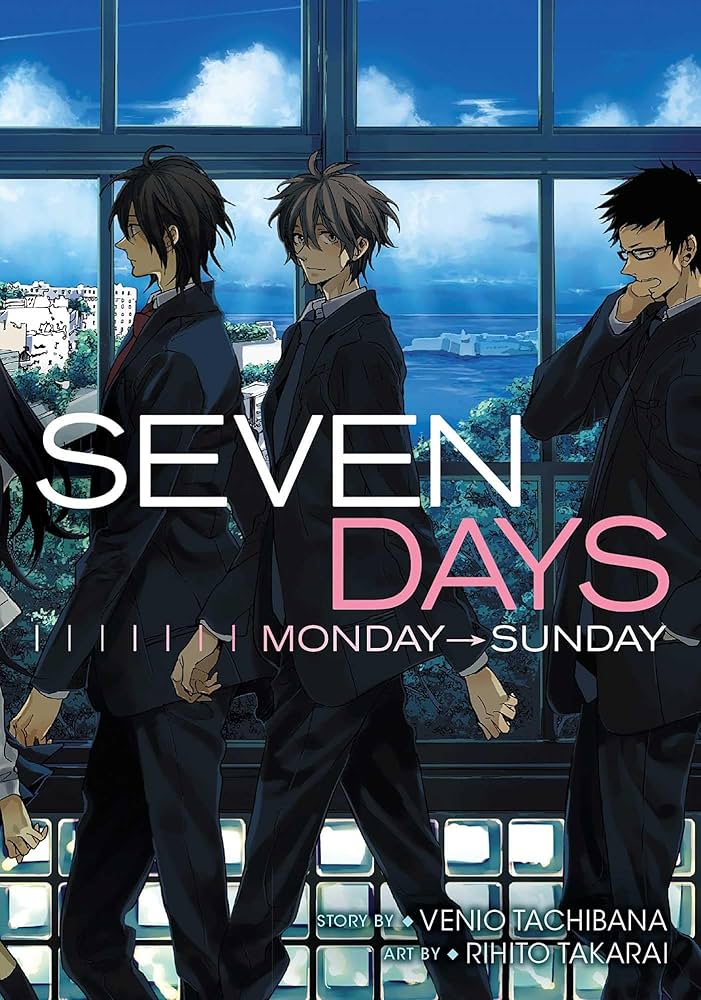
Seven Days: Monday-Sunday
Writer: Venio Tachibana
Artist: Rihito Takarai
Translation: Adrienne Beck
Touch-up Art and Lettering: Deborah Fisher
Cover and Graphic Design: Alice Lewis
Editor: Jennifer LeBlanc
Publisher: SuBLime
How long does it take for someone to fall in love? A few months for some, a few years for others. Yuzuru Shino only needed a week.
Before Rihito Takarai exploded onto the Boys’ Love scene with Ten Count, she was the artist for the two volume series Seven Days: Monday-Sunday. Its story follows Toji Seryo, a boy who will only date someone for a week before amicably breaking up with them, and Yuzuru Shino, a third-year high school student who asks him out on a whim. At first Shino did it because he was mildly curious about Seryo, who despite breaking numerous girls’ hearts has never had a bad word said about him. Before long, he is swept along by Seryo’s charm and kindness; he dreads the Sunday when he’ll inevitably hear the words: “I’m sorry, I couldn’t fall for you. Let’s break up.”
Writer Venio Tachibana gives both boys memorable and well-rounded personalities. Neither of them are perfect and oftentimes, during their short one-week relationship, they accidentally hurt each other with their carelessness. Seryo’s relationships in the past are more or less a honeymoon period, while for him and Yuzuru, the one week deadline forces them to experience relationship difficulties that usually come for couples that have been dating for a few months. I was surprised by how thoughtfully written their dynamic was.
Is it unrealistic that the two confessed and popped the “L” word after only a week? Yeah, maybe. But after the uncertainty, anxiety, and jealousy that Yuzuru experienced as his feelings for Seryo emerged, I felt a rush of gratification and admiration when he immediately asked him out after the deadline. It takes a tremendous amount of guts to confess to someone without knowing their feelings.
For those who might’ve picked up Ten Count because they loved Takarai’s art but are a little intimidated by how spicy it is, Seven Days is a wonderful BL choice with pretty art and a sweet story. — Hilary Leung
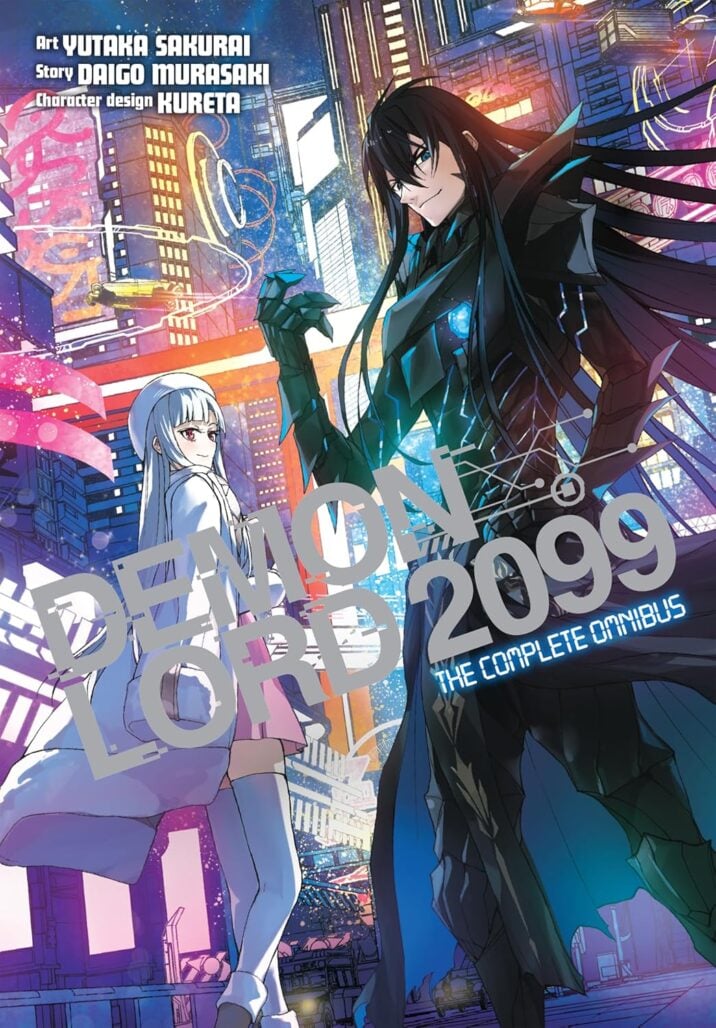
Demon Lord 2099
Writer: Daigo Murasaki
Artist: Yutaka Sakurai
Character Design: Kureta
Translator: Sergio Avila
Letterer: Amethyst Xuan
Publisher: Yen Press
Imagine fighting someone who shouldn’t stand a chance against you, who you deem far below you, only to be defeated by them. After a 500-year-long slumber, you wake up to be greeted by one of your subordinates. Now you’re ready to take over the world again and prove that you’re undefeated after all. But the world you know, and the insurmountable magical power you embody, are nowhere to be found.
It is the year 2099. Alnaeth and Earth, which were two separate dimensions, have fused due to a disaster called Fantasion. During his slumber, the demon lord Veltol’s six immortal peers scattered save for the faithful Machina. Now it’s up to Veltol to navigate this strange new world with the cards he’s been dealt!
Demon Lord 2099 is based on an ongoing light novel by Daigo Murasaki, who worked alongside Yutaka Sakurai and Kureta. While the light novel is still being released, the manga is finished, and is available from Yen Press as a complete omnibus paperback. I first discovered the series through its 2024 anime adaptation. The first episode turned out to be quite fun, and I enjoyed my stay throughout the season to the point that I was interested in reading the manga. I’d like to extend my thanks to Yen Press for sending me an advance reading copy in exchange for an honest review.
Demon Lord 2099 relies on a familiar premise—that deities are as powerful as the number of their believers. In a world where people no longer revere heroes, demon lords, and whatnot, Veltol’s power has diminished to a fraction of what it was. But what makes Veltol a great king is not just his power. He may come off a bit haughty, but he’s also resourceful, and knows when to listen to others and take action. Thanks to Machina’s help and a chance encounter, he finds a solution to his dwindling number of believers: becoming a live-streamer!
While the world-building and plot of this series isn’t particularly groundbreaking, its ensemble cast shines. Veltol’s self-assured and all-knowing attitude also makes him a surprisingly charming character to follow. Demon Lord 2099 is a great pick for an “okay” series you can finish in a few sittings. I mean it in a positive way! Sometimes you need an “okay” series that is handled competently, and that won’t go on for volume after volume. — Merve Giray
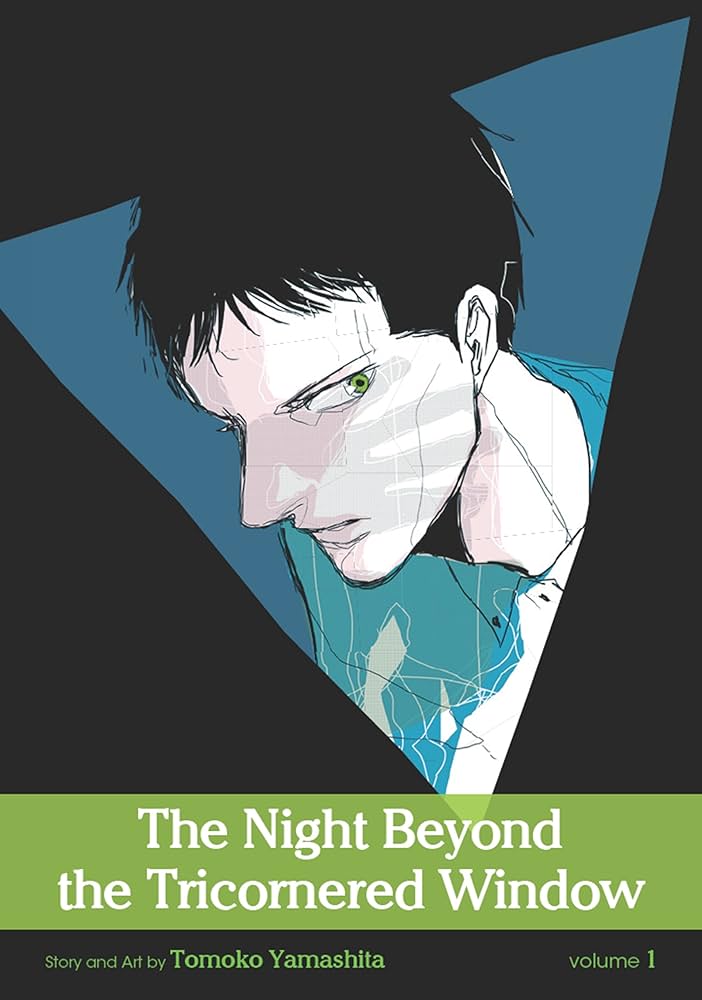
Night Beyond the Tricornered Window
Writer/Artist: Tomoko Yamashita
Translation: Jocelyne Allen
Graphic Design: Yukiko Whitley
Touch-up Art & Lettering: Vanessa Satone
Editing: Leyla Aker
Publisher: SuBLime
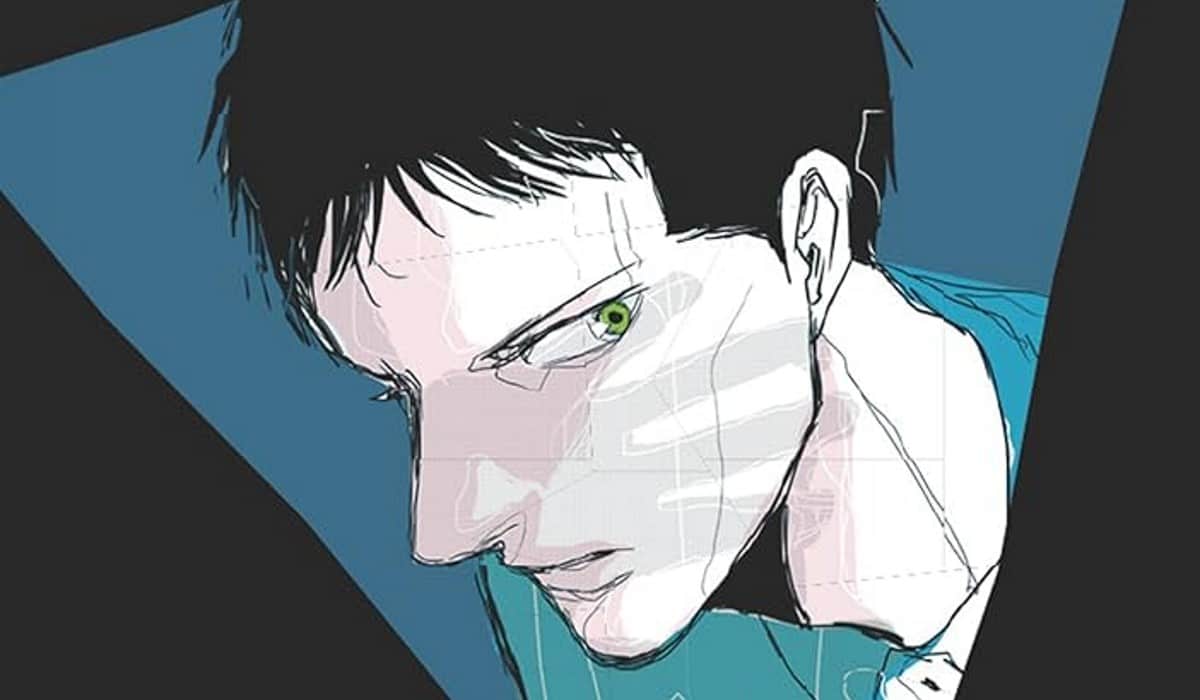
I adore Journal with Witch, the currently airing anime adapted from a great manga series by Tomoko Yamashita. Unfortunately, the manga has not yet been licensed for English language markets, so I can’t cover it for Beat’s Bizarre Adventure. But there is a fan-favorite series by Yamashita officially available in English: Night Beyond the Tricornered Window, her longest work before Journal with Witch.
The series has a simple set-up. Bookseller Kosuke Mikado can see spirits, a fact that he’s not happy about. Rihito Hiyakawa, a guy he meets during his shift, has the power to exorcise spirits. The two of them join forces to become an unstoppable ghost-busting team. But Mikado has his reservations. Could Hiyakawa be the man he’s been waiting for all his life, or could he be more dangerous than any ghost?
While I already knew that Yamashita was a strong character artist, the first few volumes of this series taught me that she can do horror just as well. She draws consistently creepy ghosts and frames them for maximum effect. A hand behind a refrigerator, an eye peeking out of a crack, or even how a character reacts to what they can see but we can’t. Yamashita also has a good sense of when to spill supernatural secrets and when to hold back. While Mikado and Hiyakawa know more about the dead and how they operate than the average person, they don’t know everything, and any one of their jobs has the potential to spill into chaos.
Night Beyond the Tricornered Window is also a Boys’ Love series, and specifically one about dubious consent. Hiyakawa loves to possess Mikado’s senses and even his body without asking permission. Sometimes Mikado likes it; at other times, he sees it as a violation. While I think that Yamashita’s aware that she’s playing with fire (and she even has other characters in the story call it out), readers should go in knowing what they’re getting into.
Still, there’s plenty to appreciate here, including elements that in retrospect planted seeds for Journal with Witch. The way that Mikado is divided from others by his supernatural abilities foreshadows Yamashita’s later explorations of sexuality and neurodivergence. So does Hiyakawa’s inner emptiness. There’s also a teenage girl, the mysterious Erika Hirua, who’s like a far more troubled (and dangerous) Asa. If Night Beyond the Tricornered Window is to be believed, Tomoko Yamashita isn’t just the good artist I knew she was. Her range is greater than I ever expected. Now that’s scary! — Adam Wescott
Follow Beat’s Bizarre Adventure to get weekly manga and webtoon recommendations!