
With more people reading manga and Webtoons (aka vertical scroll comics) than ever before, Beat’s Bizarre Adventure gives three writers an opportunity each week to recommend some of their favorite books and series from Japan, Korea, and elsewhere. This week we have a samurai action classic, a parody of a popular game, and, of course, the one place that hasn’t been corrupted by capitalism…space.
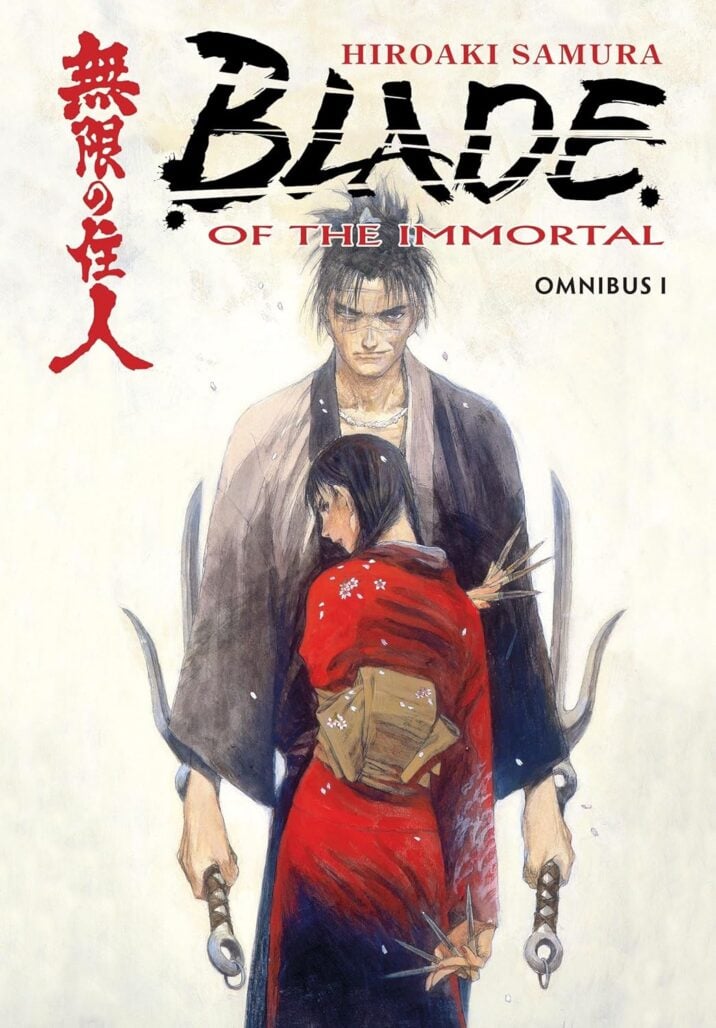
Blade of the Immortal
Writer/Artist: Hiroaki Samura
Translation: Dana Lewis and Toren Smith
Lettering and Retouch: Wayne Truman
Publisher: Dark Horse
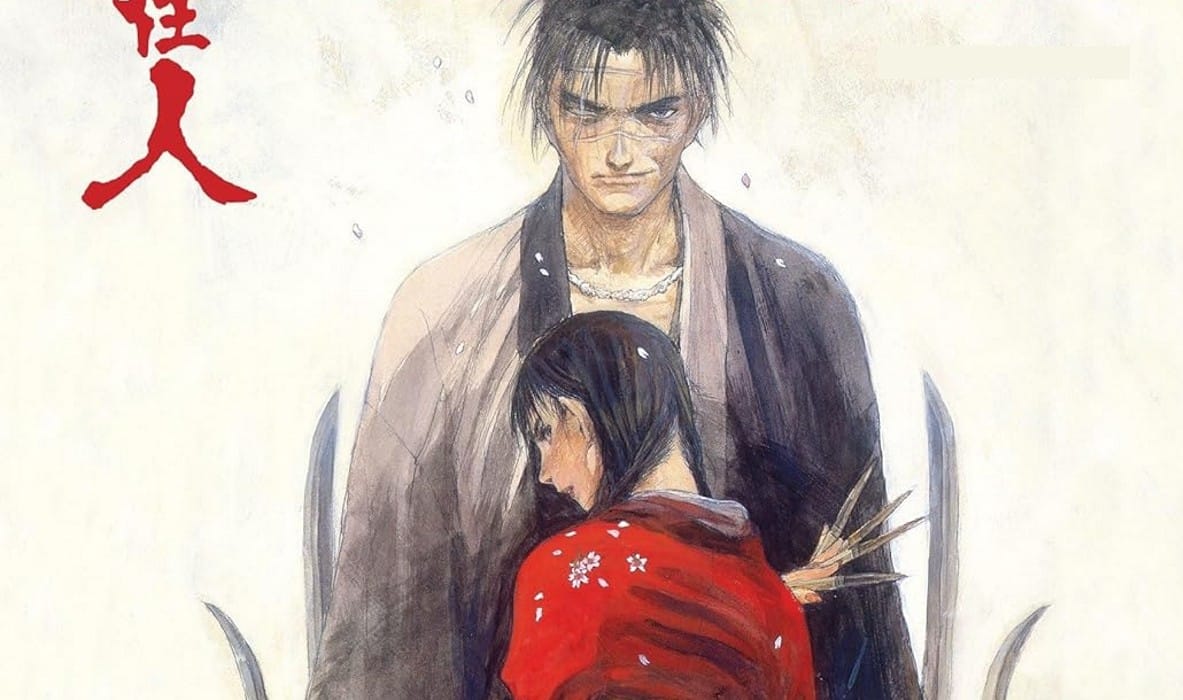
1000 evil men. That’s how many samurai Manji must kill to rid the cursed blood worms from his body. These worms heal him from almost any injury and reattach limbs after dismemberment. What honor can a samurai earn if they can seemingly survive any battle? Perhaps the better question is: what makes a man evil?
Hiroaki Samura’s Blade of the Immortal is as philosophical as it is brutally violent. With few exceptions, his characters aren’t just killers. They have an ethos they follow even if it haunts them.
The book’s leads, Manji and his young ward Rin Asano, have different feelings on violence. Manji took the blood worm curse thinking it would make him a better swordsman. Instead it did the opposite; his lack of fear made him a sloppier fighter. Rin on the other hand seeks vengeance on the leader of the Itto-ryu, Anotsu Kagehisa, who killed her parents. Yet as the series progresses she loses track of what path she’s on and who she should ally with on her quest. Imagine True Grit in feudal Japan if Wolverine and Kitty Pryde were the leads.
Even the “villain” Kagehisa isn’t a preening megalomaniac, but a man devoted to a righteous cause. He might employ killers, monsters and lunatics, but he believes it’s all worth it to unite Japan’s sword schools. in his quest to unite all Japan’s sword schools.
Samura is as good at depicting quiet moments on the road and the internal life of his characters as he is at elaborate battle sequences. Still, nobody draws a fight quite like him. Manji’s habit of being dismembered leads to some of the most grotesque action in manga history. That balance of blood and philosophy makes Blade of the Immortal one of the all time great samurai manga. — D. Morris
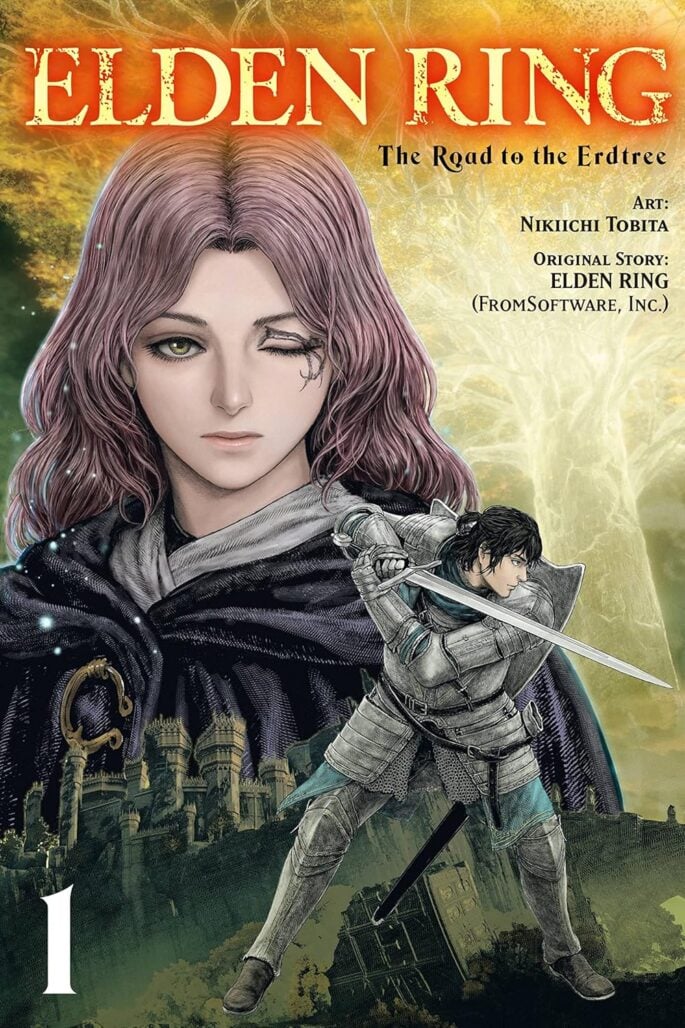
Elden Ring: The Road to the Erdtree
Writer/Artist: Nikichi Tobita
Original Story: EldenRing by From Software, INC.
Translation: John Neal
Letterer: Greg Deng
Publisher: Yen Press
Elden Ring: The Road to the Erdtree is an unexpected yet fascinating reinterpretation of one of gaming’s most atmospheric and ominous universes. Spanning seven volumes, with volumes eight and nine slated for release in March and July 2026, this manga transforms the dense mythology and relentless brutality of the original game into something delightfully absurd.
The story follows Aseo the Tarnished, a protagonist who is, by design, hilariously unequipped for the heroic journey laid before him. Lacking virtually every trait associated with legendary champions — strength, speed, intelligence, charisma, skill, intuition, and even basic common sense — Aseo begins his quest in Limgrave in a state that perfectly captures the manga’s irreverent tone: naked, vulnerable, and utterly bewildered.
His only guidance comes from Melina, a mysterious woman who directs him toward the Erdtree and the promise of becoming the next Elden Lord. From there, the narrative becomes a chaotic procession of encounters with figures that fans will instantly recognize, including Patches, Blaidd the Half-Wolf, Margit the Harbinger of Death and the enigmatic Sorceress Ranni. Stormveil Castle looms as his first major destination, though survival itself often feels uncertain.
What makes the manga compelling is its willingness to parody not only the source material but epic fantasy itself. Nikichi’s decision to lean fully into comedy feels refreshingly self-aware. The humor thrives on exaggeration and absurdity, evoking the spirit of legendary parody works (such as one my favorites, the king of parody: Gintama) where even the grandest themes are fair game for ridicule. The contrast between the series’ majestic, highly detailed artwork and its comedic tone is especially striking.
The series’ greatest strength lies in this tonal duality. The jokes land because they unfold within a convincingly epic setting, creating a playful tension between expectation and reality. While purists seeking a faithful, lore-heavy adaptation might find the levity jarring, the manga’s charm resides precisely in its audacity. It embraces chaos, eccentricity, and occasional discomfort, crafting a bizarre yet entertaining spectacle. Among video game-based comics, it stands out as a uniquely memorable work.
Elden Ring: The Road to the Erdtree is a rare gem that brilliantly balances epic aesthetics with fearless comedy. I wholeheartedly recommend it to both fans of the game and newcomers alike — it’s a wildly entertaining, visually stunning, and refreshingly self-aware take on fantasy that shouldn’t be missed. — Ilgın Side Soysal
Grand Finale
Writer/Artist: Unreal
Platform: WEBTOON
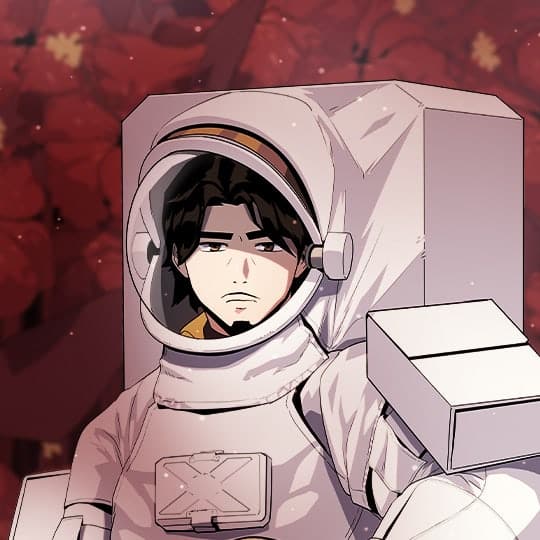
“It’s a story you’ve heard before. Humanity fails to overcome Global Warming. So to survive, they decide to abandon Earth…”
Grand Finale is a series created by Unreal (not the engine) set in a doomed future. In a desperate move to save humanity, a ship flies to Planet Kepler-3265B, also known as Arcadia. But its crew is wiped out in an attack, leaving the protagonist Major Yeongsu Dong as the only survivor. He finds Arcadia teeming with hostile wildlife I can only describe as the Tyranids from Warhammer. Along the way, Yeongsu meets the Arcadians, blue-skinned aliens just like the T’au from Warhammer 40,000. That’s right, this is an unofficial Warhammer 40,000 prequel webtoon! Just kidding.
Warhammer comparisons aside, the armors and weapons of the Arcadians (which even Yeongsu can wield) have unique sci-fi designs. The armor gives Dune stillsuit meets 90’s cyberpunk; the weapons come in many forms including laser rifles like railguns and tri-spears that shoot projectiles. You can tell the designs have been thoroughly planned out in advance, with the most complex being 3D models that were either converted to line art or drawn over to save time.
What stands out to me most about Grand Finale is the shot composition for the panels. You can tell Unreal blocks out the characters within space as if they were composing film stills. It’s very cinematic and unlike other webtoons. Makes me wonder if Unreal came from a film/TV background like myself, or if they watch a lot of films.
I wanted to write about this series because it’s an ambitious but gripping story in a genre that’s rare in WEBTOON’s Original catalogue. But also because I can’t recall if I saw any marketing for Grand Finale this year. Which is a shame, since I think it would appeal to anybody looking for space opera or post-apocalyptic stories. As of writing, the series has 21 episodes published with more on the way, and it’s free to read on the platform. Give it a shot; I know I have something new to read and look forward to this year. — Justin Guerrero
Follow Beat’s Bizarre Adventure to get weekly manga and webtoon recommendations!




“Corrupted by Capitalism?” Sheesh
Don’t dismiss the words of Colonel Anatoly Cherdenko!
Comments are closed.