
With more people reading manga and Webtoons (aka vertical scroll comics) than ever before, Beat’s Bizarre Adventure gives three writers an opportunity each week to recommend some of their favorite books and series from Japan, Korea, and elsewhere. This week we have open relationships, parenting woes, and, of course, high schoolers.

I Don’t Know How to Love
Writer/Artist: Yu Machio
Translation: Jan Cash
Lettering: Amethyst Xuan
Publisher: Yen Press
Aimi is the talk of the campus, and not only because of his looks. He accepts anyone who asks him out so long as they accept his one condition: no exclusivity. He needs to be free to do what he wants, when he wants, with whomever he wants. His partner is welcome to do the same. Despite this agreement, though, all his relationships quickly fall apart. During one of these breakups, Aimi’s underclassman Kaede seizes the chance to claim this campus hottie for himself. Aimi is sure things will unfold as they always do, not knowing he’s in for an unpredictable ride.
Yu Machio‘s I Don’t Know How to Love is their second work to be translated, following We’re On Our Own From Here. It’s surprisingly difficult to review. On one hand, there are interesting aspects to Aimi and Kaede’s characters, as well as their dynamic together. On the other hand, I guessed the ending from the introduction. Machio’s approach gave me hope that this story would diverge from other Boys’ Love series with similar premises. It didn’t. Which is fine, you can’t judge a work by what it’s not after all!
The slight difference in characterization still makes I Don’t Know How to Love a worthy read. Aimi’s limited facial expressions and failure to make sense of social cues, Kaede’s animated and warm personality, and the couple they make together is quite entertaining and sweet. Since Aimi has exclusively been with women until Kaede, the female characters are also more prominent than in your typical BL.
If you’re looking for a short, sweet, familiar BL set in a university, where two characters dive into a relationship first and figure out the rest as they go, I Don’t Know How to Love could be a good choice! — Merve Giray

A Smart and Courageous Child
Writer/Artist: Miki Yamamoto
Translation: Katie Kimura
Lettering: Vibrraant Publishing Studio
Publisher: Tokyopop
This is my first Miki Yamamoto work and immediately I want to take in more of her art. Unfortunately very little of her work has thus far been translated into English. Thankfully, Tokyopop published A Smart and Courageous Child and we’re all the better for it.
The story follows a young married couple about to experience their first child together, Sara and Kouta Takano. We see their giddy preparation for the oncoming baby, their aspirations for their child and their fears regarding whether they will be good parents. Sara becomes obsessed with children who succeed at young ages and wants that for her kid. But when Pakistani activist Malala Yousafzai is shot in the face, Sara falls into a depressive spiral as she sees danger everywhere for her child. Unable to cope with the idea of bringing their baby into a dangerous, complex world, her relationship with Kouta comes under strain.
A Smart and Courageous Child explores the hardships expecting parents go through when confronted by the nuances of growing up in a world where danger may lurk around every corner. Letting fear define your existence creates a prison that is difficult to escape. Other angles include the hormonal and chemical imbalances that come with being pregnant as well as not knowing how to communicate with your spouse when new situations arrive you aren’t prepared for.
As someone who isn’t a parent, I’m sure there are angles I missed. But what’s so sharp about this book is Yamamoto’s frankness in dealing with real life atrocities inflicted upon people, and how witnessing those atrocities shapes us. At the same time, small accidents can happen as well that feel just as important at the time. In all that pain, happiness and love still exists; you should embrace those feelings with those around you so you can remain afloat in this world.
I found myself overwhelmed with emotion as I read the final pages. A Smart and Courageous Child is the kind of book that inspires me to become a better writer who might one day convey the human experience as well as Yamamoto can. I hope we see more of her work in English. Heck, she has a picture book without dialogue. Print that over here as is!
I should also touch on Yamamoto’s art here. It’s a breezy, almost cartoon-y style that creates a conflicting dichotomy with the volume’s complex story. Yet it also lets the subject matter be swallowed more easily. I suspected that she used colored pencils and was happy to be proven correct by her essay in the back of the book. It was the right choice to use such soft tones for this story.
Read A Smart and Courageous Child. I promise it’s incredible. — Derrick Crow
Seto Utsumi
Writer/Artist: Kadzuya Konomoto
Translator: Sarah Burch/Momosuke Inc.
Publisher: Akita Publishing Co., Ltd.
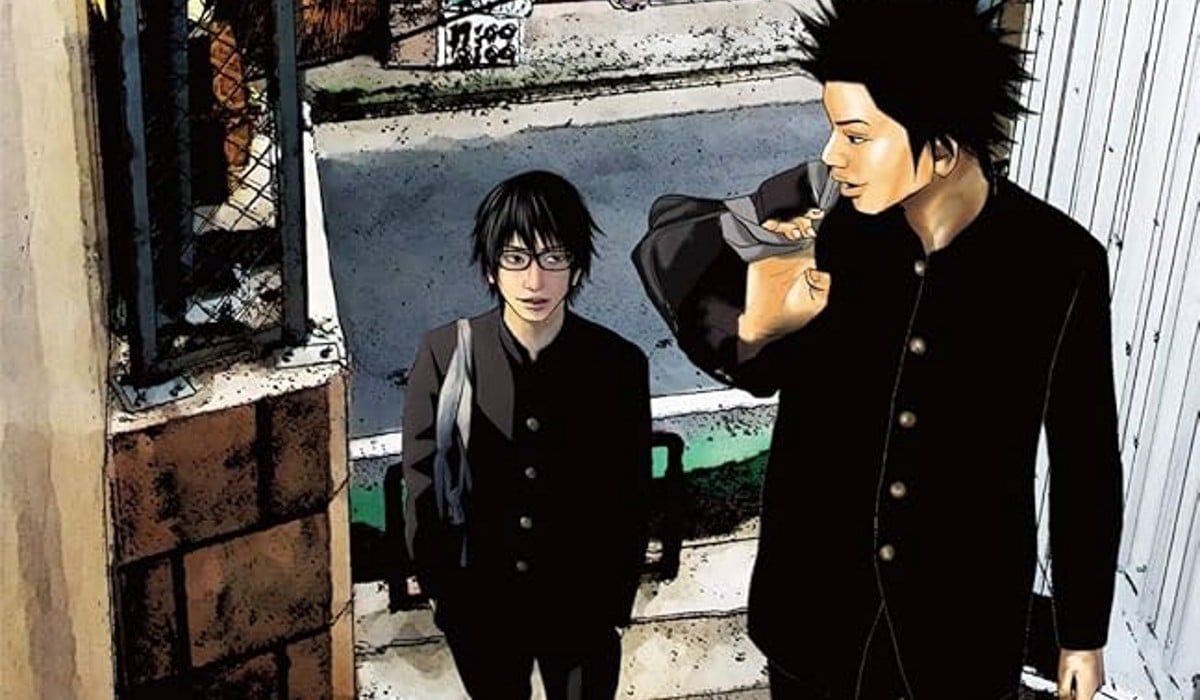
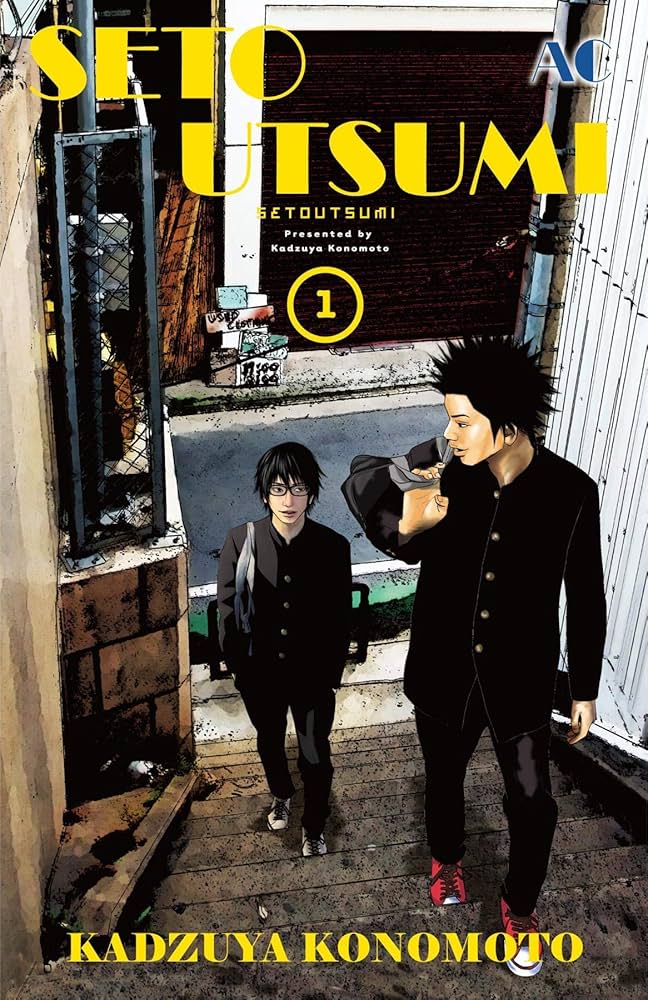
Seto is a high school slacker and former soccer player who goes with his gut. Utsumi is a studious youth who judges the world from a distance. The two of them have almost nothing in common. Yet every day, they sit by the river together and chat about anything that comes to mind.
What do they talk about? Well, the kinds of things that you never see people discuss in manga. The length of french fries; how to get spiders out of your house; teaching somebody how to tie a tie. Sometimes they take a break to play card games or badminton. Other characters wander on and off the page, like Seto’s crush Ichigo (who likes Utsumi) or the mysterious delinquent Naruyama. But the focus is always squarely on Seto and Utsumi’s never-ending conversations.
Seto Utsumi is written and drawn by Kadzuya Konomoto, who went on to write the script for the anime series ODDTAXI. That series also has dexterous dialogue, but also a much wider variety of locations and characters. Seto Utsumi by comparison really is limited to one location, with any variance introduced through flashbacks. It’s a formal writing exercise depicted via serviceable (if uninspired) art.
Despite these limitations, you can already see many of ODDTAXI‘s strengths in Seto Utsumi. Seto and Utsumi are both cliches, but their voices are immediately distinct. Konomoto threads ongoing plotlines (like Seto’s parents’s divorce, or Utsumi’s relationship with Ichigo) through seemingly inconsequential conversations. He also has excellent comic timing. If Konomoto shows more awareness of live action devices than comic devices, he at least often finds a way to make those work on the page anyway.
From the two volumes I’ve read, Seto Utsumi takes plenty of risks despite looking nondescript on the surface. The rest has already been translated so I’m excited to see how it ends! To be frank, I’m surprised that it’s available in English officially, because it’s the kind of risky series that doesn’t fit modern publishing conventions in the United States of what manga is “supposed” to be. I’m glad that somebody took a chance. — Adam Wescott
Follow Beat’s Bizarre Adventure to get weekly manga and webtoon recommendations!