
With more people reading manga and Webtoons (aka vertical scroll comics) than ever before, Beat’s Bizarre Adventure gives three writers an opportunity each week to recommend some of their favorite books and series from Japan, Korea, and elsewhere. This week we have hired killers, Iceland, and, of course, 266613336 wings.
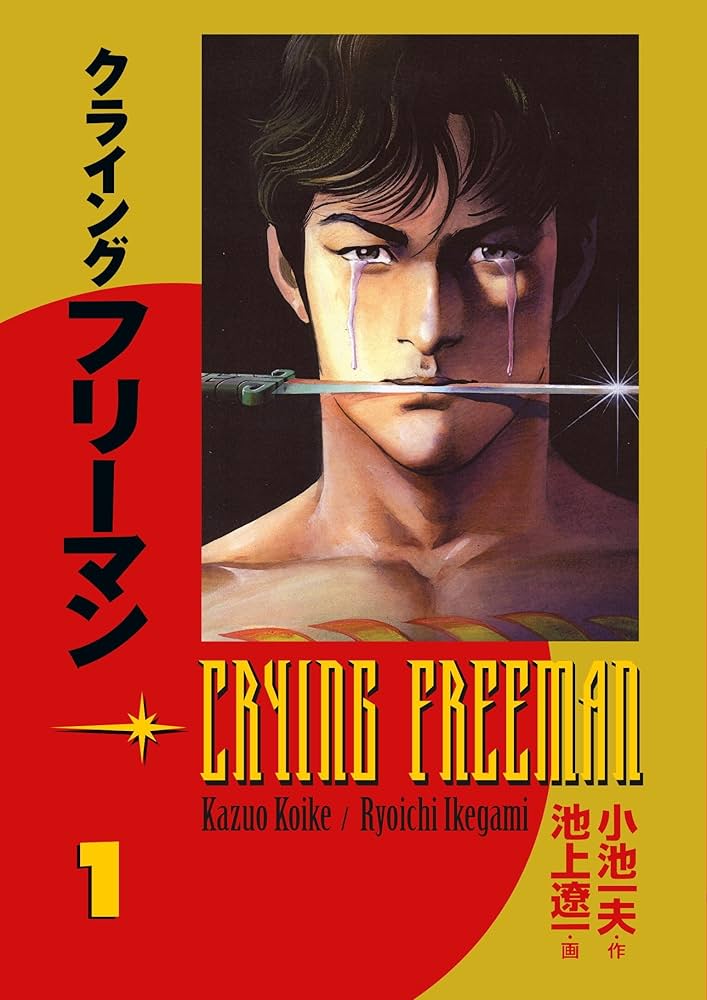
Crying Freeman
Writer: Kazuo Koike
Artist: Ryoichi Ikegami
Translation: Kumar Sivasubramanian
Lettering and Retouch: Kathryn Renta
Publisher: Dark Horse
As a young woman celebrates her 29th birthday alone, she writes in her journal that she fears may not live to be thirty. She witnessed a killing earlier and saw the face of the assassin. A talented artist, she paints him in perfect detail; a young man pointing a gun directly at the reader as with tears streaming down his face.
So begins the epic crime manga Crying Freeman by Kazuo Koike and Ryoichi Ikegami. It’s a series that has more in common with the surreal films of noir director Seijun Suzuki than samurai filmmaker Akira Kurosawa. Chinese mafia assassin Yo Hinomura, Codename Freeman, is a hitman trained against his will. He cries every time he is made to kill for the 108 Dragons criminal gang.
Fans of other Koike manga like Lone Wolf and Cub and Lady Snowblood are in for a shock. Hinomura is not a stoic in the vein of Lone Wolf protagonist Ogami Itto. As an overly sensitive and incredibly beautiful man, he’s practically a parody of that archetype. Anytime you think you know the direction of the story, Koike pulls the rug out from under you.
The real star of the book is artist Ryoichi Ikegami, who brings every weird, heightened idea Koike conceives to life in exquisite detail. He draws each figure and background with thick brushstrokes and hatching reminiscent of the slash and burn style of Lone Wolf and Cub artist Goseki Kojima. This balances the absurdism that seeps into Crying Freeman over time.
Ikegami’s expressive, design oriented page layouts are also comparable with the work of Kazuo Kamimura on previous Beat Bizarre Adventure favorite Lady Snowblood. There is such a sense of movement in the action scenes; Ikegami breaks up grids so that panels dance across the page. His rhythm and command of flow cement him as a comics master.
It all comes together in one of the most unique crime comics ever made. It’s violent and funny in unexpected ways. Koike’s skewed look into the world of organized crime is brought to beautiful life by Ikegami. There is really nothing like Crying Freeman. — D. Morris
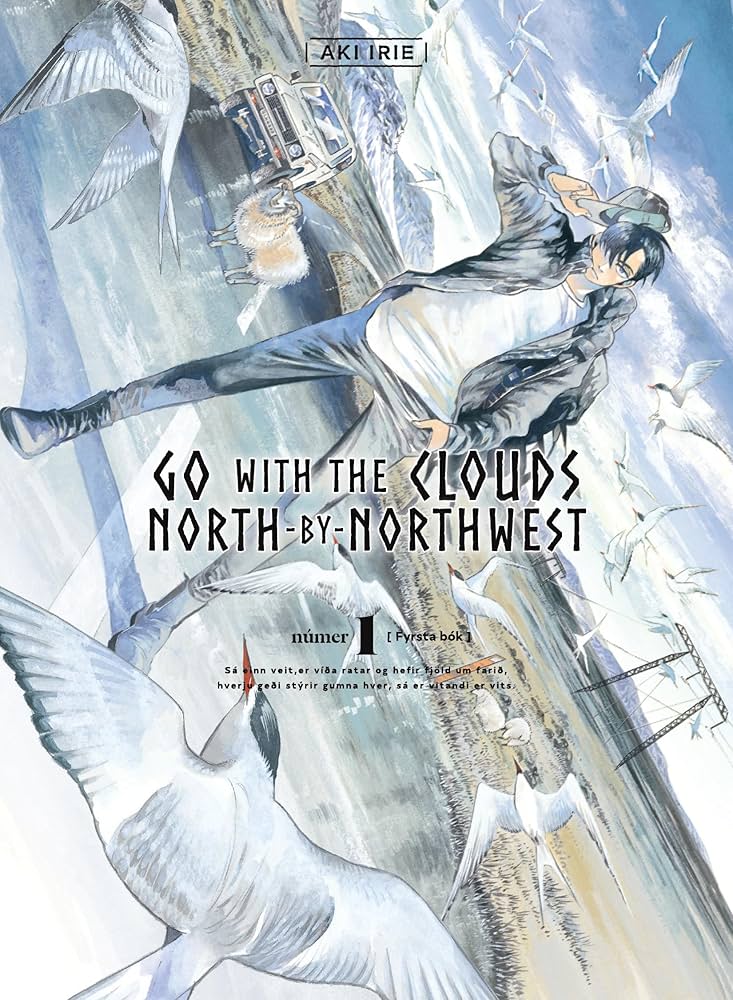
Go With the Clouds, North-by-Northwest
Writer/Artist: Aki Irie
Translation: David Musto
Production: Grace Lu, Tomoe Tsutsumi
Publisher: Vertical
Aki Irie is one of the best comics artists working in manga, and Go With the Clouds, North-by-Northwest shows off all the traits of her work. Absurdly beautiful characters that are dynamic and personable even when they are standing still? Check. Complicated family drama? Check! Evil boys? Also check. To this volatile mixture, Go With the Clouds adds an all-new ingredient: Iceland.
The protagonist Kei Miyama is a Japanese teenager living in Iceland. With the help of a mysterious power that lets him communicate with machines, he does odd jobs to pay the bills. In his spare time he drives around in his beat-up car seeing the sights. Go With the Clouds has the heart and soul of a travel manga. Irie’s signature double page spread is of Kei standing in vast, wild country, surrounded by moss and crags.
Irie herself traveled to Iceland before starting work on Go With the Clouds. (She also learned how to drive a manual transmission vehicle, and got a license to prove it.) You can see that experience reflected in the exuberant way she draws food, cars and cold weather clothing. In the second volume, when Kei’s good friend Kiyoshi visits, the series shifts entirely into travel manga territory, with Kei and his cool grandfather dispatching pages upon pages of narration about Iceland’s cities, hot springs and geysers.
Is it too much? Well, an infomercial is not quite what I expected after Irie’s previous series, the ebullient fantasy Ran and the Grey World. Still, Go With the Clouds paints an appealing portrait of Iceland that makes me want to visit one day. I also appreciate that Irie addresses important topics like the effects of tourism on the country (the locals have mixed feelings) as well as the state of LGBTQ rights there (better than Japan!)
The third volume switches back into a mystery register, with Kei’s charming, monstrous younger brother Michitaka at the heart of it all. I’m curious to see how Irie integrates this material with the extended travel manga section earlier. Regardless, she draws magical realism, sex and familial bonds as well as anyone else in the manga world. I’d call her the natural heir to CLAMP, except that Irie is just as interested in drawing nature as she is the supernatural. If Go With the Clouds is a little indulgent, a little all-over-the-place, I think she wouldn’t have it any other way. — Adam Wescott
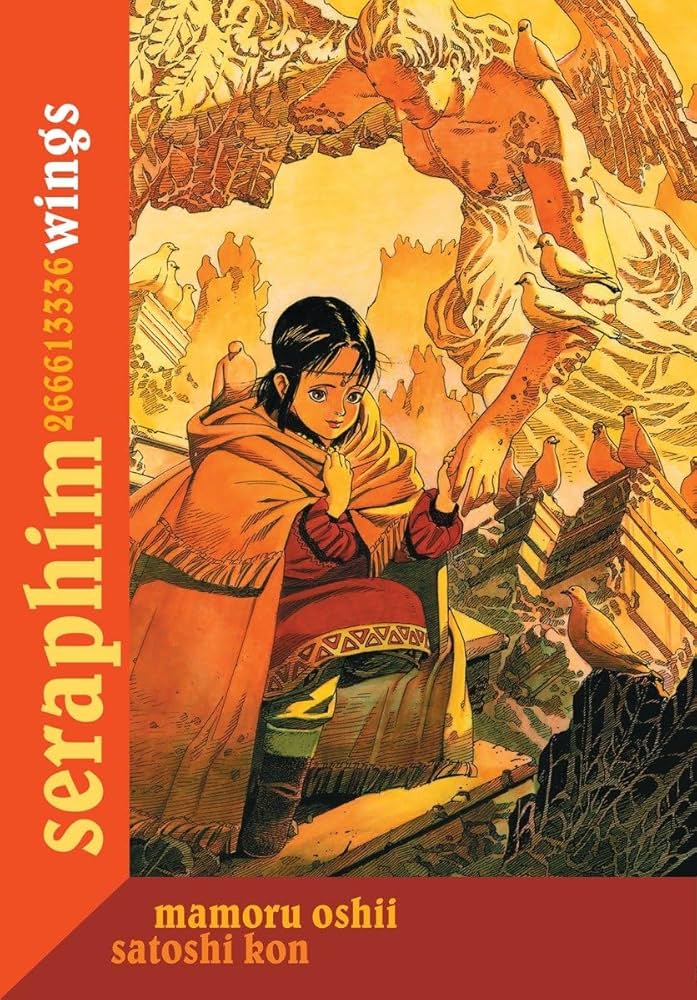
Seraphim: 266613336 Wings
Writer/Artist: Mamoru Oshii and Satoshi Kon
Art: Satoshi Kon
Translator: Zack Davisson
Lettering & Retouching: IHL
Editor: Carl Gustav Horn
Publisher: Dark Horse
Anybody reading this page should know the names of Mamoru Oshii and Satoshi Kon. If you don’t, you might recognize some of their best loved works such as the 1995 film Ghost in the Shell (an influence on The Matrix) as well as the 2003 film Tokyo Godfathers (a Christmas staple).
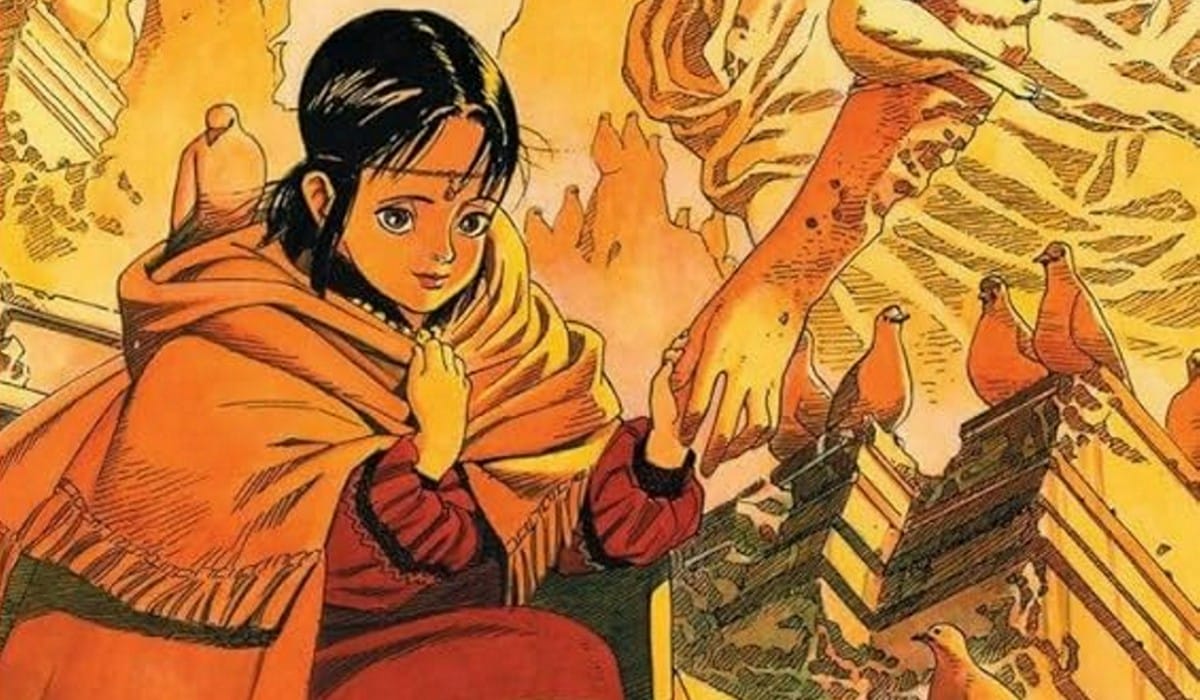
What you might not know is that in the early 90s, Oshii and Kon teamed up to create the manga Seraphim: 266613336 Wings. Set within an undefined future history in which a mysterious disease has ravaged the Earth, causing great political and social upheaval, it takes place in a China that has been sliced up into many different factions. Combining Oshii’s love of angelic and biblical imagery with Kon’s signature realism, Seraphim grips you with its sophisticated storytelling and art.
The plot is relatively simple, at least from the outset. Two men and a dog, known collectively as the Magi (Melchior, Balthazar, and Caspar) are tasked with shepherding a mysterious girl known as Sera into the inland deserts of China. There they hope to find a cure for the titular Seraphim disease that’s ravaged the world. A cure, it’s supposed, that resides within Sera.
Seraphim weaves real Chinese political events and figures into its narrative. Something that puts Oshii’s works above others is that he’s an informed storyteller who likes to pull backgrounds for his future worlds from real history. It shows an educated awareness that, for me, acts as an invitation into his stories.
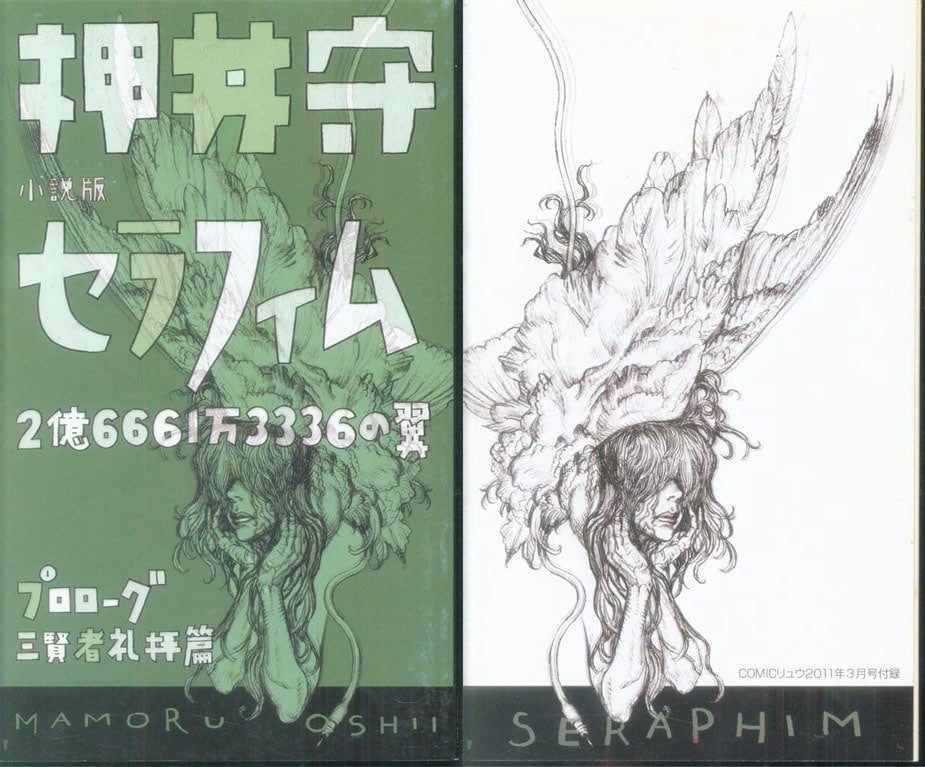
My biggest frustration with Seraphim is that it remains unfinished. The series went on hiatus after a year of publication in Animage magazine and only returned briefly after Kon’s death in 2010. Not long afterwards, Oshii wrote a prose prologue to the series featuring a single illustration by Katsuya Terada (The Monkey King, Blood: The Last Vampire.) To my knowledge it has not been properly translated anywhere. The best I could find is the above image from a print version once sold on a Mandarake auction page.
If you would like more information behind the making of Seraphim, there’s a great and lengthy essay in the back of Dark Horse’s English edition written by Carl Gustav Horn. It goes over the cultural and industrial history that the series was born into. Having lived through another recent pandemic and then some, this essay reads differently to me now in 2026 than it did on its 2015 publication.
While it is unfortunate that we will never get to see the full story, at least Seraphim ends on a hopeful note. Although the damage to civilization cannot be undone, perhaps still there is a chance that the future remains bright. That’s a feeling we could all use these days.
After reading particularly good manga, I think to myself, damn, do I love comics. Seraphim: 266613336 Wings gave me that feeling. It is compelling, imaginative and bold. — Derrick Crow
Follow Beat’s Bizarre Adventure to get weekly manga and webtoon recommendations!