

With more people reading manga and Webtoons (aka vertical scroll comics) than ever before, Beat’s Bizarre Adventure gives three writers an opportunity each week to recommend some of their favorite books and series from Japan, Korea, and elsewhere. This week we have heroic schoolgirls, animals in the big city, and, of course, a man-eating apartment.
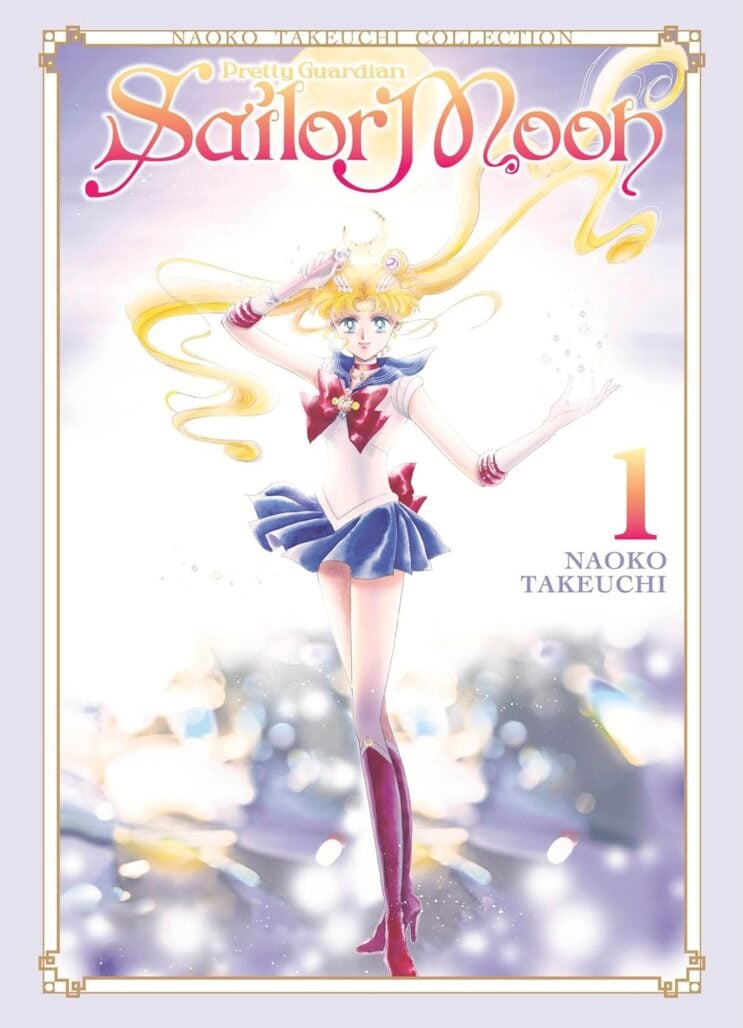
Sailor Moon
Writer/Artist: Naoko Takeuchi
Translator/: William Flanagan
Letterer: Jennifee Skarupa
Publisher: Kodansha
Quick, what’s the most influential superhero series of the last 35 years? X-Men? Ms. Marvel? The heroes of the early Image books? The correct answer isn’t an American comic. It’s Sailor Moon, the landmark manga series by Naoko Takeuchi. Sailor Moon was a heroine for Gen X and Millennials just as Spider-Man was for baby boomers. Takeuchi merged tokusatsu, fashion, magical girls, and a little bit of folklore, while grounding the story in modern emotional truths.
Like nerdy Peter Parker, Usagi Tsukino was a flawed heroine who audiences could relate to. She wasn’t the smartest student, was an underachiever, and dreamt constantly about relationships with boys. But just like in fairy tales, she was revealed as something more and bestowed with magical powers. Takeuchi put this classic story through a tokusatsu filter by having Usagi fight weird monsters and megalomaniacal villains.
Even more influential were Usagi’s friends, young women with their own distinct personalities. Young women who squabbled with each other, made jokes about Usagi’s slovenly personality, but ultimately loved each other. Takeuchi’s delicate line art, influenced as much by her love of fashion as shojo traditions, captured something new. The girls dressed distinctly as civilians. They also looked glamorous in their sailor fuku, and their villains looked just as stylish. As the series progressed, the character’s personal lives took a back seat as the series became more sci-fi and fantasy and the conflicts became massive in scope.
As influential as the early chapters (and the massively popular anime adaptation) of Sailor Moon were in Japan, it was equally influential in North America. The series would inspire a generation of creators to make their own magical girls stateside such as She-Ra: Princesses of Power and Steven Universe. There were magical girls before Sailor Moon but none that felt like real people in this way. After Sailor Moon, magical girls were klutzy school girls who became embroiled in massive struggles with their friends on top of school and personal life worries. The series might not be the strictest definition of a superhero book but it’s hard to deny its genre changing influence. — D. Morris

Speak No Evil
Writer/Artist: Nairda
Platform: Official Website
Let’s take a break this week from our usual library of webtoons and leap into the webcomic space beyond. Speak no Evil is a web manga created and illustrated by Nairda and set in “Newellark City,” a fictionalized New York City inhabited by anthropomorphic animals. The story follows Renny. a 22-year old white rabbit without a mouth. After being fired from his current job, his koala best friend Taylor Simons hooks him up to work at a coffee shop. Unbeknownst to them, the shop’s owners have ties to the Devossie family, which is currently at war with the Monelles within the criminal underground. Even worse, there is a killer on the loose who has been murdering members of both crime families.
Not only is Speak no Evil’s art done entirely by one person, but it’s just fantastic, too! Despite the characters being anthropomorphic animals, they stand apart from each other with their unique designs. It’s nothing like Beastars or Zootopia. The detailed backgrounds and character art makes the series look just like a legitimate manga I would have read as a teen on some shady website back in the early 00’s. The art also gives me some Jujutsu Kaisen vibes, especially the action. (Renny gives me Gojo vibes for some reason.) Despite the story having a slow start as it introduces readers to the characters and the world, once it kicks into gear, we see Nairda’s art truly shine.
If you want something new to read that isn’t a webtoon like my usual recommendations, give Speak no Evil a read. Nairda gives it his all to illustrate an action-packed crime-filled world of anthropomorphic animals with a purely manga aesthetic that feels like it can so easily have been published by Shonen Jump. — Justin Guerrero

Maison and the Man-Eating Apartment
Writer: Kuu Tanaka
Artist: Akima
Translation: Aiki Yaginuma
Lettering: Pedro Cunha
Editing: Medibang Inc.
Platform: MANGA Plus
I’ll admit that I’m not particularly fond of landlords these days. Maison, though, is like no landlord you’ve ever met. Spawned from a machine at the heart of an apartment complex frozen in the last second before planetary immolation, she was raised from birth to take care of the residents and their needs. Whether that be coordinating recycling (with a man the size of a truck) or searching for a missing cat (trapped within infinite decimal floors.) But what’s this about her predecessor, who learned too much and disappeared? Or her friend Bertie, who was spirited away one day by the terrifying Apartment Man? Could even crueler secrets be hiding within the corridors of this mysterious complex?
Maison and the Man-Eating Apartment is a classic science fiction “big object” story packaged as a Shonen Jump+ comic. The protagonist Maison has the youthful spirit of your typical shonen protagonist, sure. But rather than fight a never-ending string of opponents, she must instead solve the metaphysical mysteries governing her birthplace. Each chapter introduces wild new ideas (a living pair of arms that makes delicious fried rice) while complicating old ones (the cat can fly?!) Meanwhile, the Apartment Man lurks in the shadows–an agent of death that wouldn’t be out of place in Dan Simmons’s 1989 novel Hyperion.
The book’s mixture of frightening imagery and puzzle-solving should appeal to folks of The Promised Neverland. But Maison has a distinct flavor. Its apartment complex is dangerous but not necessarily malevolent; the Apartment Man, for instance, delivers Maison a birthday cake shortly after abducting her friend. Rather than escaping from prison, then, the series is more about learning the rules of an obscure system, and finding a compromise that will make everyone happy.
Akima’s art does a good job keeping up with the demands of the setting, switching between winding corridors, unexpected greenery and monstrous flourishes as needed. The Apartment Men in particular are a memorable creation, like a creepy-cute spin on the God Warriors from Nausicaa of the Valley of the Wind. What I’m most surprised by though is Kuu Tanaka’s unashamedly SF writing. Tanaka previously wrote and drew the similarly high-concept webcomic The Vertical World in 2019. I’m excited to see whether they can take what they learned in that comic to the next level with Akima’s contributions. — Adam Wescott
Follow Beat’s Bizarre Adventure to get weekly manga and webtoon recommendations!