
With more people reading manga and Webtoons (aka vertical scroll comics) than ever before in 2026, Beat’s Bizarre Adventure gives three writers an opportunity each week to recommend some of their favorite books and series from Japan, Korea, and elsewhere. This week we have high school romance, social commentary, and, of course, beautiful simplicity.
Horimiya
Writer: Hero
Artist: Daisuke Hagiwara
Translation: Taylor Engel
Lettering: Alexis Eckerman
Publisher: Yen Press
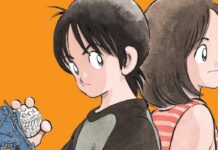
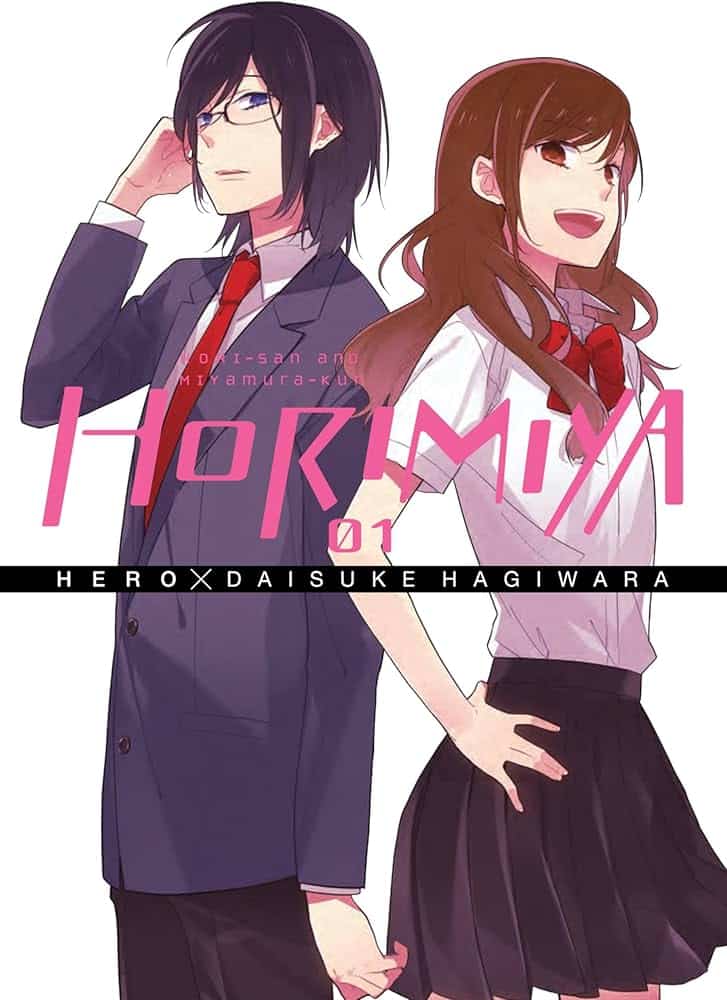
Horimiya, written by Hero and illustrated by Daisuke Hagiwara, is a slice-of-life romance webcomic that was then adapted into a manga. The story is set in high school and follows two teens who could not be more different from each other. Kyouko Hori is extroverted, popular, and beloved by all. Izumi Miyamura is gloomy and with his long hair and glasses, he looks like an otaku. Outside of school, though, Hori’s life revolves around taking care of her family, while Miyamura looks like a completely different person with piercings and tattoos. When the two accidentally discover each other’s secrets, they swear each other to secrecy, but in the process they grow closer to each other.
If you’re looking for a cute romcom manga to read, Horimiya is a fantastic choice. It’s quite funny thanks to gags like Hori’s occasional violent outbursts (PSA: violence is not funny) or when she desperately works together with Miyamura to hide his tattoos at school (tattoos and piercings are a big no-no). The main story has good pacing as well as some really sweet moments where the two of them realize their romantic feelings for each other. The manga also does a great job with developing Hori and Miyamura’s individual character journeys. I was pleasantly surprised by how Hero and Hagiwara handled Miyamura’s backstory, especially given the genre and the kind of tropes romcoms usually have. By the time I finished reading about his past, all I wanted to do was to give him a big hug.
Later volumes, where Horimiya introduces Hori and Miyamura’s other friends and expands on their stories, aren’t quite as compelling. But overall it is still an endearing tale that will make you smile and laugh. Also, I still jokingly say “Eggs! Sorry, it’s egg time!” whenever I have to go on an egg run (much to my family’s confusion). — Hilary Leung
War of the Adults
Writer: Kappy
Artist: Masaaki Tsuzuki
Platform: MANGA Plus
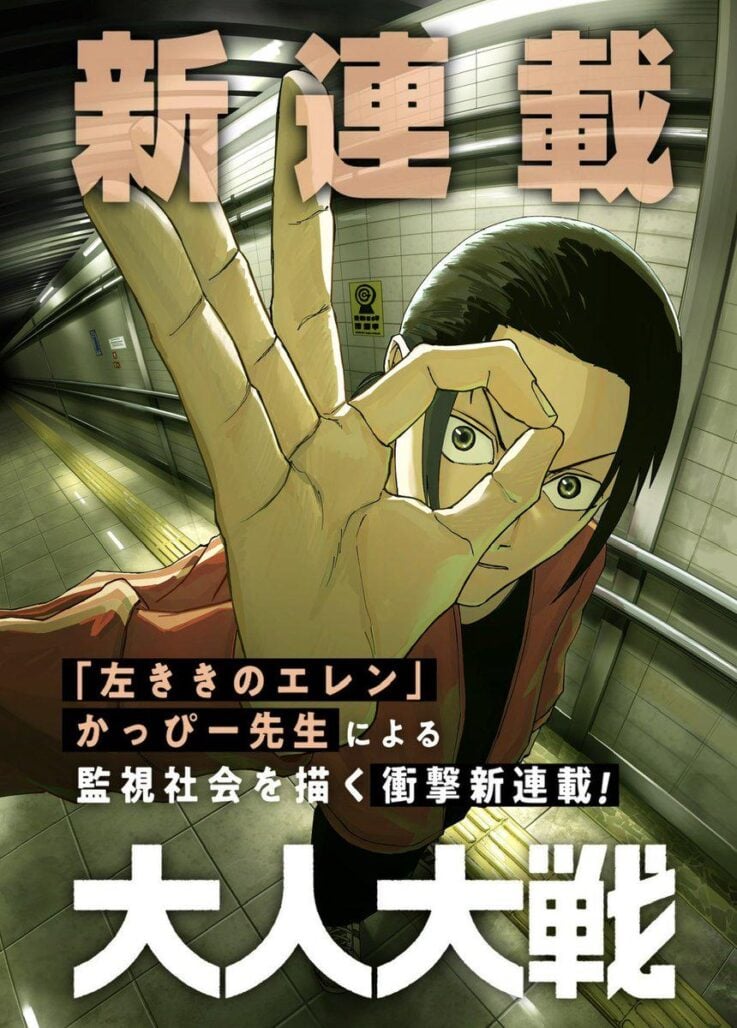
War of the Adults opens with a striking dedication—“Dedicated to all of this nation’s boys and girls”—that immediately frames the story as both cautionary tale and social critique. Written by Kappy and illustrated by Masaaki Tsuzuki, the manga began serialization on Shōnen Jump+ in April 2025 and comes from the creator of Hidarikiki no Eren. It asks a deceptively simple question: what truly makes a “proper adult,” and who gets to decide?
The story follows Yutaro Urashima, a young man inspired by his late father to live by a strict personal code he calls the “Articles of Adulthood.” But these ideals clash violently with the reality of the world he wakes up to. Imagine falling asleep in 2010 and awakening in 2025—not just a technological leap, but a social one, where surveillance and judgment are constant. That sense of displacement is deeply unsettling, especially in a society where the fear of always being watched is not paranoia, but fact.
In this world, citizens are connected through a nationwide social media platform called GARDEN, where reputations function as social credit scores. This system isn’t even tightly controlled by the government; instead, ordinary civilians assign value to one another. What begins as a policy meant to benefit everyone quickly mutates into an abusive, rigid class hierarchy, revealing how easily power can be misused when accountability is absent.
The manga makes this clear through an early incident. Yutaro punches a streamer named Guppy after witnessing him harass a female restaurant staff member. Yutaro accepts arrest calmly, stating that violence is wrong but that he does not regret protecting someone. In a sharp twist, he is released—not because of justice, but because a single media article re-frames him from “Savage Cafe Staff” to “Hero Who Saved a Damsel in Distress.” The moment perfectly exposes how fragile and manipulable public perception is.
Three chapters in, War of the Adults already delivers strong social commentary, touching on authoritarian systems, media manipulation, and individual moral decay. Its tone evokes Black Mirror, blending discomfort with fascination. Visually, the art leans a little bit toward a comic-book realism, with grounded human proportions that enhance the story’s weight. While it’s too early to judge its long-term depth, its premise, execution, and unsettling relevance make it a dystopian manga well worth reading. — Ilgın Side Soysal
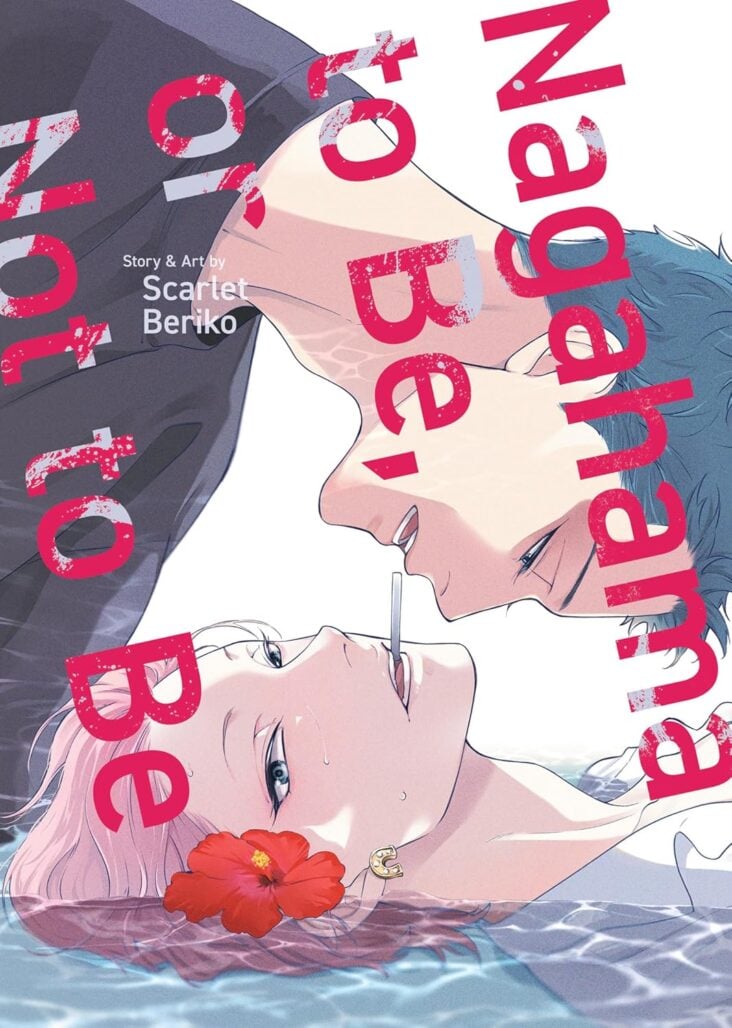
Nagahama to Be, or Not to Be
Writer/Artist: Scarlet Beriko
Translation: Amber Tamosaitis
Lettering: J. Piechowiak
Cover Design: H. Qi
Proofreader: Leighanna De Rouen
Production Designer: George Panella
Senior Editor: Shannon Fay
Publisher: Seven Seas Entertainment
Nagisa and Issa—two teenage boys. One feels lost in life, as if he’s drifting amidst the sea. The other has never been so sure of himself. Both are in their last year of high school, where they are about to take that crucial step into the next phase of their lives.
Nagisa is not bad at school and is a good football player, but he isn’t motivated or excited enough about anything to choose it as a career. He also can’t understand how Issa is so sure that he wants to pursue fishing for the rest of his life. The last thing he needs to add to his confusion and hidden romantic feelings towards Issa is a rumored girlfriend in the picture.
Scarlet Beriko is an established Boys Love manga artist who warrants no introduction to the fans of the genre. Their career spans over more than a decade; you just know that a new work from them will be worth reading.
Nagahama to Be, or Not to Be is a simple story told so beautifully that you will find it hard to tear your eyes from the page. It’s a serene and beautiful volume to indulge in, even if the bare bones of the narrative will not shock you or prompt deep thoughts at 1 AM.
What I admired the most in that regard was how expansive everything felt. Often single-volume BL manga feel as if the leads are the only people that exist in the world, and that side characters exist just to further the plot. Scarlet Beriko takes the “only us in the world” feeling one step further with visual storytelling. The warmth of the sun, the vastness of the sky and the sea, the beach and the ball field; it’s all so vast and beautiful, and Nagisa and Issa have all the space and time they need to spend to their hearts’ content. This beautiful moment that’s seemingly stopped, of course, is soon disrupted. But change, as always, is necessary for us to grow.
I heartily recommend Nagahama to Be, or Not to Be to readers looking to wind down and enjoy some beautiful simplicity! — Merve Giray
Follow Beat’s Bizarre Adventure to get weekly manga and webtoon recommendations!