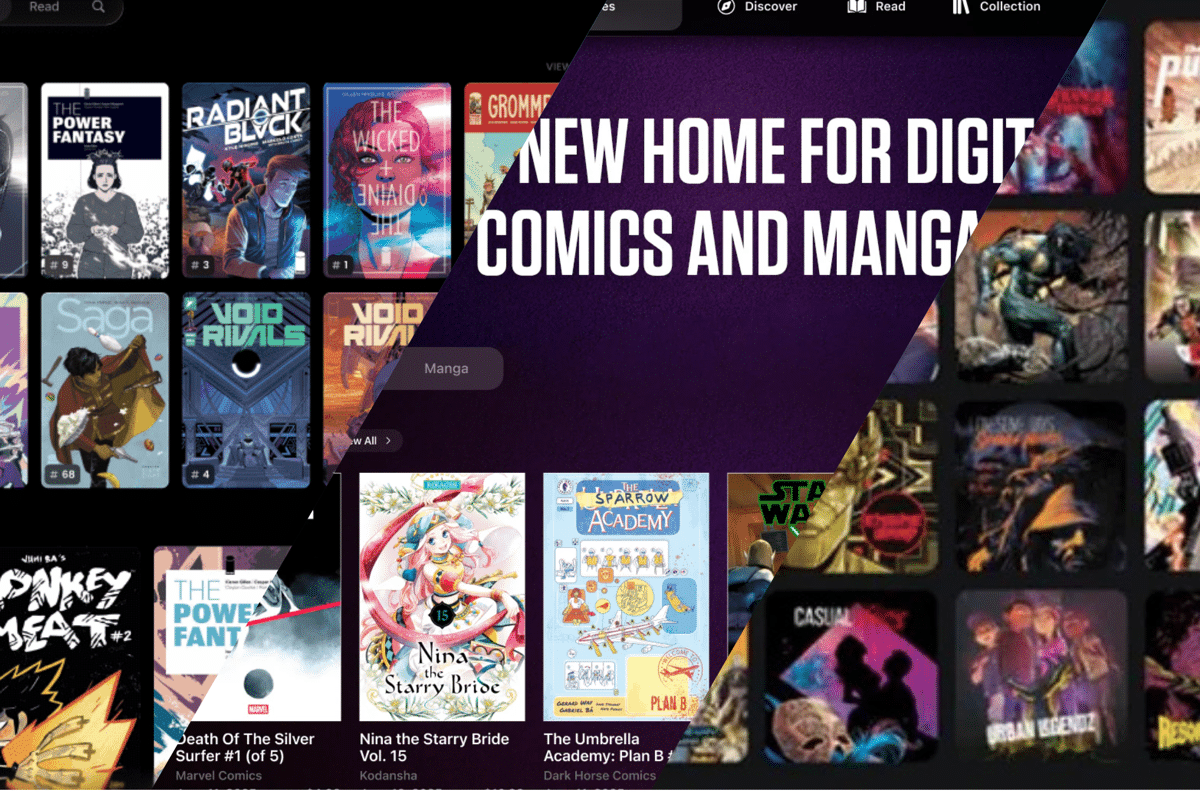

It’s been a minute, so it’s time to check in on the digital comics wars. (Not webcomics, the digital editions of print comics.)
The presumptive leader in digital comics, despite increasingly aggressive competition, is still Amazon. They have the widest selection of major publishers (I’ll come back to that in a bit). They have the customer momentum with large collections that accumulated during the Comixology years. They appear to still be on top of the hill.
One thing that I haven’t seen discussed much is Amazon’s tendency to not have all titles ready to be purchased at the same time those comics are available for print. There’s usually at least a handful each week. The chapter serializations of manga seem the most likely to be delayed, but even DC and Marvel will occasionally have a book get delayed for a week in digital edition. Publishers and creators should be advised to verify that their comics are available for purchase in digital on the release date.
While this isn’t what people normally talk about when digital comics sales pop up, you can still get a wide selection at Apple Books, (Barnes & Noble) Nook and Google Play. Those haven’t gone away.
No, what we normally talk about for digital comics are the independent platforms.
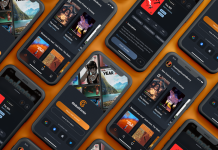
Neon Ichiban is David Steinberger and Chip Mosher from Comixology getting back in the game with a new digital comics platform. Their current twist is adding some collectability to the format. You can buy and sell their digital comics in a way I would liken to a private-ledger version of an NFT. (I’m sure Chip will wince at that description, but that’s what it looks like to me.) They also have enabled autographing and sketches / remarques on digital comics for something new and different. There is some PDF downloading available, but that’s probably dependent upon the rights holder allowing it and your more corporate rights owners are desperate to keep that DRM locked in, so don’t blame David and Chip for that part. They also have most of the usual print publishing suspects you’d look for, with the exception of Image and BOOM!. They also have Rebellion (which most don’t) and DSTLRY, which they also own.
Neon Ichiban initially launched without an app, which was a bit of a surprise to me. The iOS app is now available, but I haven’t seen an android version of it yet.
Global Comix has been in the news with VC money lately. They’ve gotten a couple large rounds of funding. With the latest influx, co-founder Christopher Carter moves over to “leading innovation and technology development” with Henrik Rydberg, a veteran of the startup world, moving into the CEO seat. I cannot stress enough that there is nothing weird about that shuffle when the VC money comes in. If anything, the founders do not always remain with the company when the industry veteran enters the scene.
Global also acquired INKR, a similar manga-focused platform with a portfolio of AI-assisted tools for things like translation.
Global also has a couple modes that it operates in: a library/Netflix style “all you can read” subscription and single issue sales. (Spoiler: DC and Marvel really like single issue sales.) Global also has pretty much all of the usual publishing suspects…except BOOM!
Then there’s the newest kid on the block, Sweet Shop from Kenny Meyers. Sweet Shop doesn’t have DC or Marvel, but they have a selection of indie publishers and they are currently the only startup comics platform to have Image that I’m aware of. It also appears that Kenny’s either been bootstrapping or using angel investing to fund Sweet Shop, which frees him from some of the odder demands that investors have been known to make on founders.
Drive-Thru Comics is often under the radar. They’ve been around forever and are something of the OG for downloadable comics. It’s a smaller lineup, but they have Dark Horse, Dynamite, Rebellion and Top Cow, among others.
That’s what the landscape is looking like, but let’s talk about what’s bubbling under the surface.
The Tower of Babel Problem – or – Why Can’t I Read Everything In One App?
It used to be the “moat” (as the MBA’s would say) protecting Amazon was their exclusive with Marvel for single issues. That no longer exists. If you want to operate at scale, it’s awfully hard to run a comics anything without at least one of DC or Marvel. That’s not so much of a problem anymore. If you can gain the confidence of DC and Marvel (and, you know, offer a guaranteed minimum monthly fee…) you can get their product. Global did so by hanging around several years and proving some staying power. Neon was more a case of David and Chip announcing their intentions, since Comixology was a known quantity. I suspect Sweet Shop will get the big guys in a year or two.
Gosh, I can’t imagine why publishers have grown wary of having all their eggs in one distribution basket in the last couple years, but redundancy is becoming the name of the game in digital and that should be a good thing.
There’s just one little wrinkle. An awful lot of fans are going to want all their comics in one app. We are closer to having this be a non-issue (pun intended), but with DRM still frequently locking the reader into a browser, there is still a game of “but do they have everything I want to read?” This is why the portability of non-DRM’d .MP3s changed the game for music.
Right now, it looks like Boom! Is on Amazon and the bookstore-type platforms, but not the startup platforms. Is this the same as when Marvel was Amazon-exclusive? Not really, no. It is, however, a large enough publisher to give Amazon an advantage with readers who read widely among indie publishers. (Although one could argue how indie a Random House imprint might be, I suppose.)
Is this setting the stage for an actual exclusivity agreement? Unclear. Boom has an exclusive with Webtoons, but the announcement I saw was exclusivity for vertical scroll, not “normal” comic book format. Whatever the reason, I sure didn’t have BOOM! holding out on my bingo card. (Editor’s note: Boom has also been removed from the various digital comics platforms that serve libraries. Time to get to the bottom of this.)
Still, we’ve at least got some progress on this front.
What Will The Market Support?
Is the digital comics market big enough to support Amazon, the various bookstore apps and multiple “full service” comics apps? We’re going to find out.
The startup answer to this should be “we’ll grow the audience.” And you know what? If they can, that’s good for everybody.
When you start taking in VC money, the investors want to see rapid growth and then they want an exit. Since I’m not really sure who you sell a comics app to in the current environment, that likely means getting big enough to IPO.
In an ideal world, there would be at least a couple non-Amazon platforms. (I think the publishers would enthusiastically agree with me on that.) Over the next year, we find out if the numbers will bear that out. Perhaps the power of manga will carry the day, too? Everyone’s interested in getting more manga on their platform.
Those Annoying Add-Ons
I expect a lot of people had their blood pressure elevate when reading words like “NFT” and “AI.” Some stone cold truth about that. However you feel about it, if you’re going after venture capital funding, you’re going to have a much easier path if you’ve got the buzzwords in your pitch. That’s just how it is. Always has been, really. It’s just that the buzzwords didn’t annoy the non-tech population nearly as much. Ten years ago, everyone was adding the word “social” to their pitches. Then it was variations on “blockchain.” Now it’s “AI.” In a few years, there will be another spot on the buzzword bingo card getting all the attention.
Todd Allen has spent way too much time in the digital world and has been in a couple of those startups. You might enjoy his novel The Cursed Apps, a snarky horror detective story about startups, tech investors and necromancers. Think Hellblazer as satire. The audiobook is performed by Erik Braa, who also voices Moon Knight in Marvel Rivals.